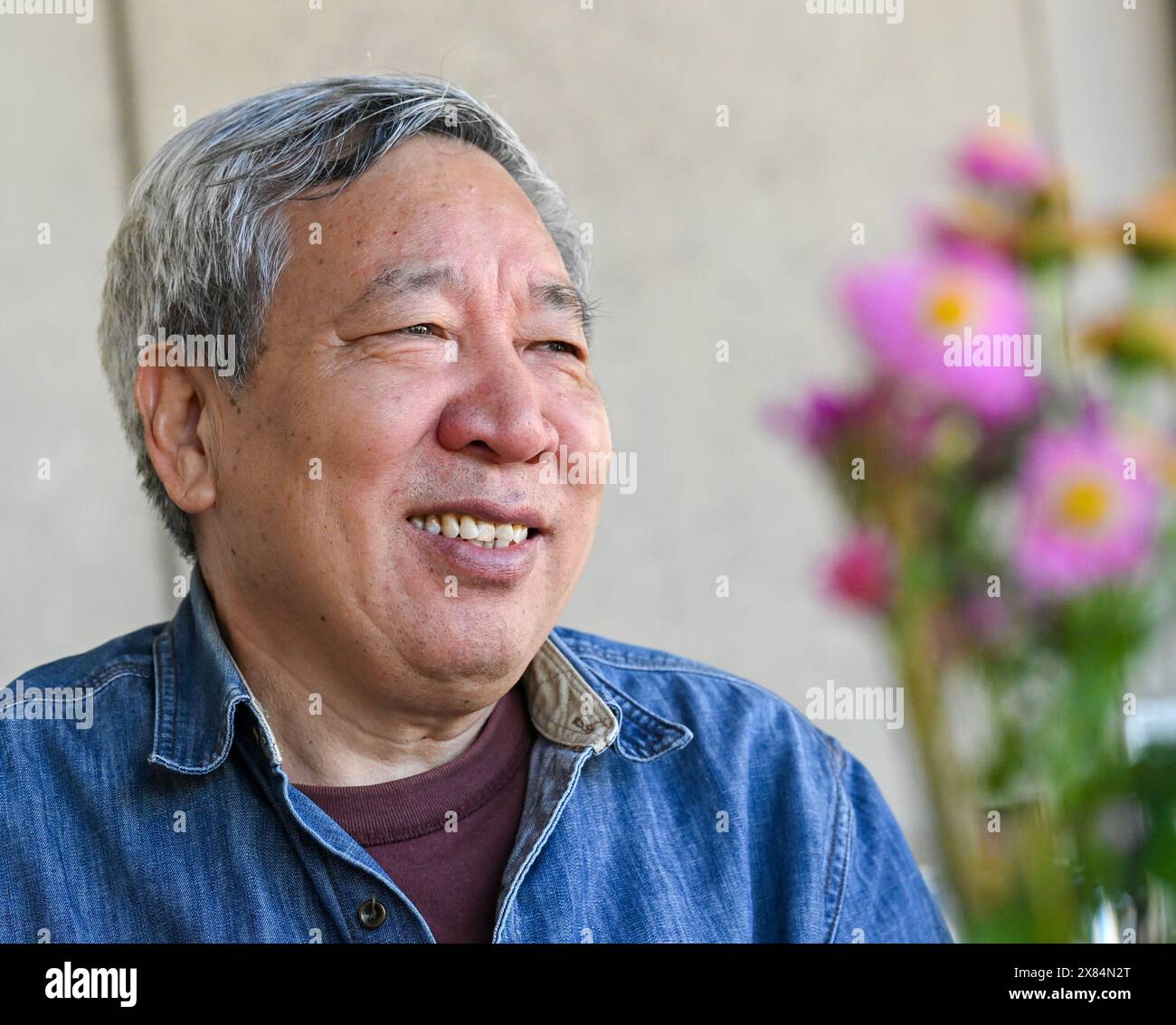
Yan Lianke
 China
Chinawriter•military personnel•translator
Also known as: 阎连科
Birthday
August 24, 1958
Birth Sign
Virgo
Birthplace
Song County, Luoyang, Henan, China
Age
68 years old
About
Yan Lianke is a Chinese novelist and short-story writer whose satirical, mythorealist fiction has made him one of the most significant literary voices of his generation, even as censorship has kept much of his work from Chinese readers. Based in Beijing, he has published over a dozen novels and ten short-story collections, with translations in more than 20 languages. He won the Franz Kafka Prize in 2014 and has twice been a finalist for the Man Booker International Prize.
Yan's distinctive style, which he calls "mythorealism," fuses surreal, absurdist elements with the harsh realities of contemporary Chinese life. His novels such as Serve the People!, Dream of Ding Village, and The Four Books have drawn international acclaim for their unflinching critique of authoritarianism. Though several of his books are banned in China, he continues to write and teach, joining the Hong Kong University of Science and Technology as a faculty member in 2019. He is frequently mentioned as a contender for the Nobel Prize in Literature.
Early Life & Background
Yan Lianke was born on August 24, 1958, in Song County, a poor rural area in Henan Province. His parents were farmers, and he grew up experiencing the hardships of peasant life, which later became a recurring theme in his fiction. In 1978, at age 20, he joined the Chinese People's Liberation Army, a decision that would shape his early career. During his military service, he wrote propaganda texts, gaining firsthand insight into the intersection of ideology and storytelling.
He published his first story in 1979 at age 21, while still serving in the army. He later studied at the PLA Academy of Art, where he developed his craft as a writer. The combination of rural upbringing and military indoctrination gave him a unique perspective on Chinese society, one that he would later turn into sharp satire.
Career Growth
Yan's breakthrough came with the 2005 novella Serve the People!, a satirical story about a general's wife and a young soldier that was banned in China. He followed with Dream of Ding Village (2006), which exposed the AIDS epidemic caused by blood-selling in rural Henan, winning the Man Asian Literary Prize in 2007. His 2012 novel Lenin's Kisses told the surreal story of a village building a statue of Lenin to attract tourism, and in 2014 he won the Franz Kafka Prize, the first Chinese author to do so.
He continued to push boundaries with The Four Books (2014), set in a labor camp during the Great Leap Forward, and The Explosion Chronicles (2016), a history of modern China through a village. The Day the Sun Died (2018) depicted violent sleepwalkers terrorizing a town. His 2021 novel Hard Like Water satirized Maoist rhetoric. In 2019 he joined HKUST as a faculty member, and in 2024 he published Discovering Fiction, a work of literary criticism.
Career Timeline
Public Image & Style
Yan Lianke is portrayed in Western media as a courageous, controversial figure who uses absurdist satire to critique authoritarianism. His signature style is mythorealism, blending the surreal with the mundane to expose political absurdities. He does not have an official fandom name, and his readership is largely among literary audiences and academics rather than mass-market fans. His tone is serious, philosophical, and often darkly humorous. In China, he is known as a "literary anarchist," a label he rejects in favor of artistic integrity.
Fame & Fandom (iFAMOUS Rankings)
Yan Lianke commands a readership that defies the metrics of celebrity culture. His audience consists not of screaming crowds or digital armies, but of scholars, translators, and literary critics who dissect his mythorealist fiction in quiet study halls and academic journals. There is no organized fanbase, no official fandom name, and no viral campaigns to rally behind his banned novels like The Four Books or Dream of Ding Village. His influence flows through the heavy current of political satire rather than the shallow waves of pop stardom. While Western media often labels him "China's most censored author," Yan himself has rejected this tag as a reductive marketing tool, preferring to be seen simply as a writer navigating the complex realities of artistic integrity under authoritarianism. He does not hold meet-and-greets, nor do fans erect billboards for his birthday; his legacy is built on the enduring power of text that challenges state narratives. Despite his global stature as a finalist for the Man Booker International Prize and winner of the Franz Kafka Prize, he remains an intellectual figure rather than a household name. iFANN's Global Fame Engine has evaluated his profile based on worldwide consumption signals, media coverage, and search data. Yan Lianke is currently evaluated as unranked by iFANN's Global Fame Engine and does not hold a placement in the published rankings (Global Top 1,000 or a Top-100 scope list).
Interesting Facts and Legends
Yan Lianke admitted to practicing self-censorship to navigate China's strict publishing landscape, a candid confession made during various interviews. He coined the term "mythorealism" to define his unique narrative style, which fuses surreal absurdity with harsh contemporary realities, viewing it as the future of Chinese fiction. In a 2024 interview, he expressed frustration at being labeled "China's most censored author," insisting that such titles oversimplify his struggle for artistic integrity. Before his works were banned, he won four national literary prizes, a fact he recalls with wry humor. His translator Carlos Rojas has been instrumental in bringing these stories to English-speaking audiences. A defining legend surrounding Yan is his transformation from a soldier writing propaganda texts for the People's Liberation Army to a dissident satirist exposing the hypocrisies of the Mao era. This journey forms the core of his modern mythology as a "literary anarchist." Another enduring story involves his public rejection of the "most censored" moniker in April 2024, where he argued that his work was about more than just censorship, it was about the survival of imagination itself. These moments have cemented his reputation not as a celebrity, but as a survivor of the state apparatus who turned forbidden words into global literature.
Notable Quotes
“I believe that navigating the narrow path between censorship and artistic choice and writing with such adaptability may one day yield a timeless literature.”
“The situation for writers in China is complex.”
Family & Personal Life
Yan Lianke grew up in a farming family in Henan Province. His parents were farmers, and he has spoken about the poverty of his childhood. He is married, though his wife's identity is not publicly documented. The couple has one daughter. In interviews, Yan has emphasized the importance of family support in sustaining his career through censorship challenges. He keeps his personal life private, rarely discussing family details in public.
Notable Connections
Relationships & Dating History
Yan Lianke's personal life has remained notably private. He is married, though his wife's identity is not publicly documented. The couple has one daughter. There are no public records of prior marriages, divorces, or high-profile romantic relationships. In interviews, Yan has spoken about the importance of family support in sustaining his career through censorship challenges. As of 2026, he is reportedly still married, though he has not publicly discussed his current marital status in recent years.
- MarriedCurrentYan Lianke is married, but his wife's identity is not publicly documented.
Salary, Net Worth In 2026
$1 Million
iFANN Editorial Team estimate
iFANN currently estimates Yan Lianke's net worth at $1 Million as of 2026. As a literary author rather than a commercial entertainer, his income derives primarily from book royalties, teaching salaries, and international translation advances. His books have been translated into more than 20 languages, generating modest but steady international royalties. He holds a faculty position at HKUST, which provides a stable academic salary. Public financial data for Chinese authors is extremely limited, so this estimate is based on typical earnings for internationally published literary authors of his stature.
Awards Won (2)
Yan Lianke has received prestigious international recognition for his fiction. In 2014, he won the Franz Kafka Prize, becoming the first Chinese author to receive that honor. His novel Dream of Ding Village won the Man Asian Literary Prize in 2007. He has also won four national literary prizes in China before his works were banned.
2014 · International
Body of work
2007 · Literary
Dream of Ding Village
Known For
Serve the People!
2005 · Author
Dream of Ding Village
2006 · Author
Lenin's Kisses
2012 · Author
The Four Books
2014 · Author
The Explosion Chronicles
2016 · Author
The Day the Sun Died
2018 · Author
Keywords
Sources
Quick Facts
- Profession
- writer, military personnel, translator
- Born
- August 24, 1958
- Birthplace
- Song County, Luoyang, Henan, China
- Gender
- Male
- Birth Sign
- Virgo
Personal Details
- Full Name
- 阎连科
- Children
- 1 daughter
- Education
- PLA Academy of Art
Frequently Asked Questions
Is Yan Lianke banned in China?
What is Yan Lianke's net worth?
Is Yan Lianke married?
Did Yan Lianke win the Nobel Prize?
What is Yan Lianke's writing style?
Similar People
Join the community
fans discussing