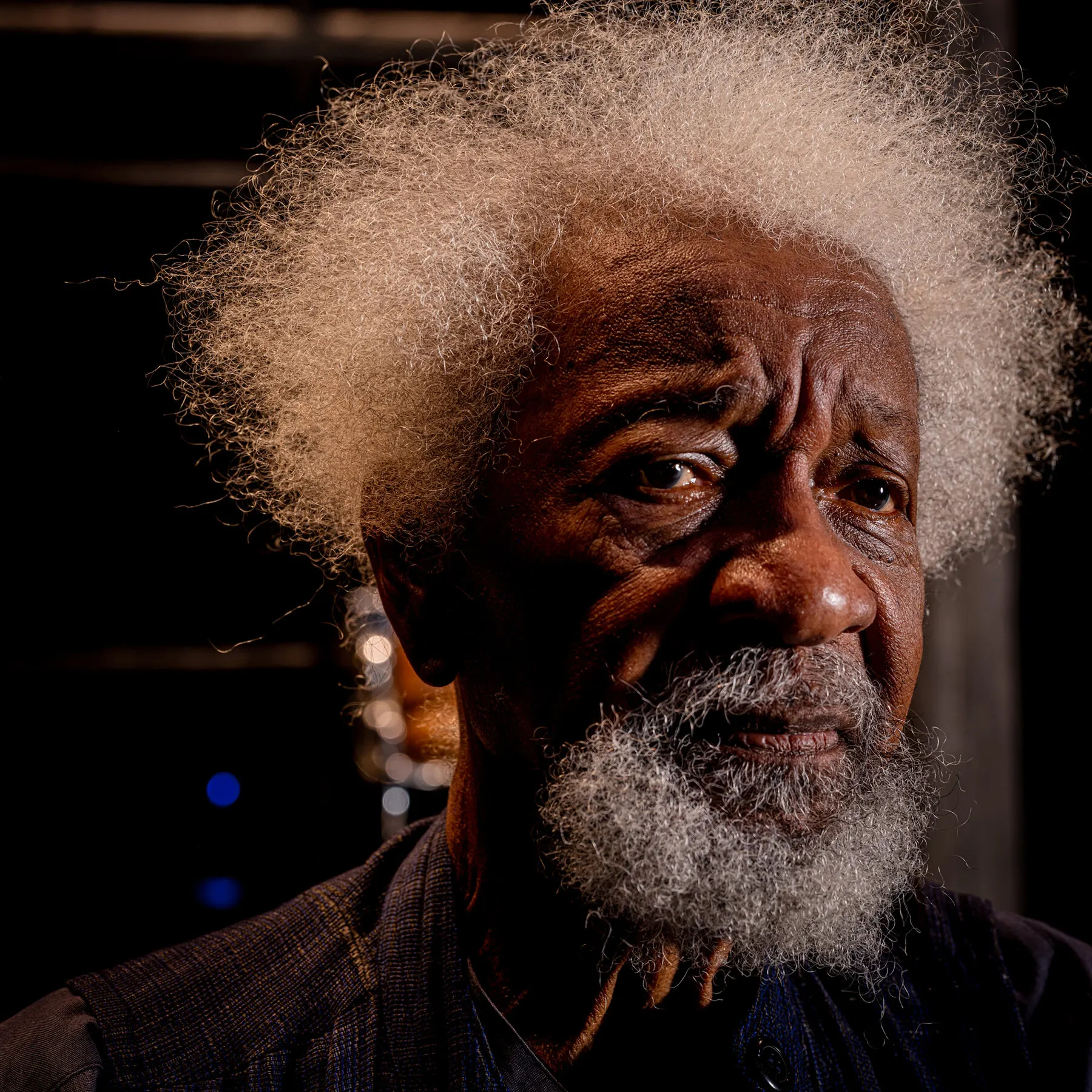
Wole Soyinka
 Nigeria
Also known as: Akinwande Oluwole Soyinka, Kongi
Birthday
July 13, 1934
Birth Sign
Cancer
Birthplace
Abeokuta, Ogun State, Nigeria
Age
92 years old
Height
5 ft 9 in (175 cm)
About
Wole Soyinka is a Nigerian playwright, poet, novelist, and essayist. He became the first African to win the Nobel Prize in Literature in 1986, an honour that recognised his "wide cultural perspective and poetic overtones fashioning the drama of existence." His works, which include plays like Death and the King's Horseman and novels such as The Interpreters, are studied worldwide for their fusion of Yoruba tradition with Western dramatic forms.
Today, at 92, Soyinka remains an active public intellectual. He continues to write, lecture, and comment on Nigerian and global politics. His voice carries the weight of decades of activism, from opposing military dictatorships to championing democratic governance. He is a towering figure in African letters, and his influence extends far beyond the page into the very fabric of cultural and political life on the continent.
Early Life & Background
Soyinka was born in Abeokuta, Nigeria, the second of seven children. His father, Samuel Ayodele Soyinka, was an Anglican minister and headmaster, while his mother, Grace Eniola, a shopkeeper and social activist, was nicknamed "Wild Christian" for her forceful personality. The household was intellectually lively, with education and religious values deeply emphasised, though Soyinka would later develop a critical view of organised religion.
He attended St. Peter's Primary School and then Abeokuta Grammar School, where his talent for writing and drama emerged early. In 1952 he moved to University College, Ibadan, studying English, history, and Greek, and getting involved in the drama society. Two years later he transferred to the University of Leeds in England, where the critic G. Wilson Knight mentored him. At Leeds he edited the student magazine The Eagle and graduated in 1957.
After university, Soyinka worked as a play reader at the Royal Court Theatre in London, soaking up the mechanics of professional theatre. His first play, The Swamp Dwellers, was staged in Nigeria in 1958, followed by The Lion and the Jewel, which premiered at the Royal Court in 1959, a remarkable feat for a young African playwright. These early works established his signature blend of Yoruba mythology, Western technique, and sharp social critique.
Career Growth
Returning to Nigeria in 1960, Soyinka founded the 1960 Masks theatre company and wrote A Dance of the Forests for the country's independence celebrations. He co-founded the Orisun Theatre Company in 1962 and began teaching at the University of Ife. His first novel, The Interpreters, appeared in 1965.
During the Nigerian Civil War, Soyinka was arrested in 1967 for allegedly supporting Biafra and spent 22 months in prison, an experience he chronicled in The Man Died. After his release he continued to produce major works, including Season of Anomy (1973) and his masterpiece Death and the King's Horseman (1976). In 1986 he won the Nobel Prize, the first African to do so.
He held professorships at Cornell, Harvard, and Emory universities. His later works include the poetry collection Harmattan Haze on an African Spring (2012) and the novel Chronicles from the Land of the Happiest People on Earth (2021). In 2026, his play The Swamp Dwellers returned to the UK stage for the first time since 1975, staged at the Utopia Theatre in Sheffield.
Career Timeline
Public Image & Style
Soyinka's public image is that of a towering intellectual and moral conscience, often described as "Africa's conscience." He is known for his distinctive grey beard and flowing agbada robes, frequently photographed with a walking staff. His demeanour is serious and uncompromising, though those close to him describe a warm and playful personality. His fandom includes academics, students, theatre practitioners, and African literature enthusiasts, who engage through literary festivals and the annual Wole Soyinka International Cultural Exchange held on his birthday. On social media, he shares reflective thoughts on spirituality, politics, and the artist's role in society.
Fame & Fandom
Wole Soyinka commands a global attention that spans continents, measured through decades of literary output and political engagement rather than fleeting viral moments. According to the iFANN Global Fame Rankings, he is currently the 35th most famous person in Nigeria, a position holding steady from the previous cycle. His standing as a cultural icon extends beyond his birthplace, placing him at the 24th most famous person from Nigeria globally. Within the broader African continent, he registers as the 26th most famous person in Africa, maintaining this rank with consistent authority across recent assessments. These placements reflect a sustained presence in media coverage, search trends, and consumption signals worldwide, underscoring his enduring relevance in public discourse. The fanbase associated with Soyinka does not possess a formal name or organized structure typical of pop culture movements. Instead, his audience comprises academics, students, theatre practitioners, and political activists who engage with his work through scholarly study, attendance at lectures, and participation in literary festivals. This group interacts with his legacy through intellectual exchange rather than commercialized campaigns or fan-driven rituals.
Interesting Facts and Legends
Wole Soyinka survived a plane crash in 2019 when an aircraft crash-landed in Lagos, emerging with only minor injuries. That same year, he returned his Nigerian national honour, the Commander of the Order of the Federal Republic (CFR), to protest government policies. A polyglot fluent in Yoruba and English with working knowledge of several other languages, he has penned over 20 major works spanning drama, fiction, poetry, and memoir. His nickname Kongi derives directly from his play Kongi's Harvest, while the asteroid 3618 Soyinka bears his name in recognition of his contributions. Beyond these documented facts, his legend includes being the first African to win the Nobel Prize in Literature in 1986, an event that cemented his status as a towering figure in world literature. His imprisonment during the Nigerian Civil War for attempting to mediate peace between warring factions remains a core part of his narrative as a fearless dissident. More recently, the revocation of his U.S. visa by the Trump administration in late October 2025 following his criticism of Donald Trump generated significant international condemnation, reinforcing his reputation as a provocateur whose critiques of power carry consequences even decades after his rise to fame. As of mid-to-late 2026, his continued activity, including a review of The Swamp Dwellers described as a total revelation by The Guardian, proves his influence remains undiminished.
Notable Quotes
“The greatest threat to freedom is the absence of criticism.”
“Words are the most potent weapon in the world. They can build bridges or burn them.”
“I am not African because I was born in Africa, but because Africa was born in me.”
“The man dies in all who keep silent in the face of tyranny.”
“Spirituality is a personal, sacred observance; religion is organised, public, and often political.”
Family & Personal Life
Soyinka's father, Samuel Ayodele Soyinka, was an Anglican minister and headmaster; his mother, Grace Eniola, was a shopkeeper and social activist known as "Wild Christian." He was the second of seven children in a Yoruba family in Abeokuta. He has been married three times. His first wife, Barbara Dixon, a British woman, bore his son Olaokun. His second wife, Olaide Idowu, a Nigerian, had three children: Moremi, Ilemakin, and Peculiar. Since 1989 he has been married to Folake Doherty Soyinka, with whom he has a daughter, Muyiwa. His son Olaokun has served as Commissioner for Health in Ogun State.
Notable Connections
Soyinka's mentor at Leeds was the critic G. Wilson Knight. He is a contemporary and peer of fellow Nigerian writer Chinua Achebe and Kenyan author Ngũgĩ wa Thiong'o. Nigerian President Bola Tinubu has publicly honoured him. Author Onyeka Nwelue has spoken of Soyinka's private generosity. His wife, Folake Doherty Soyinka, has been his partner for over three decades.
Relationships & Dating History
Soyinka's first marriage was to Barbara Dixon, a British woman, in 1958 while he lived in England. They had a son, Olaokun, before divorcing in the early 1960s as Soyinka returned to Nigeria. His second wife was Olaide Idowu, a Nigerian, whom he married in 1963. They had three children: Moremi, Ilemakin, and Peculiar. That marriage ended in divorce in the 1970s, strained by his demanding career and political activism during the civil war. In 1989 he married Folake Doherty, his current wife. They have one daughter, Muyiwa. As of 2026, Soyinka and Folake remain married, having been together for over 35 years.
- MarriedBarbara Dixon1958 - 1962First wife, British; mother of his son Olaokun; divorced as Soyinka returned to Nigeria.
- MarriedOlaide Idowu1963 - 1975Second wife, Nigerian; mother of Moremi, Ilemakin, and Peculiar; marriage ended in divorce.
- MarriedFolake Doherty Soyinka1989 - presentCurrentThird wife; mother of Muyiwa; together for over 35 years.
Salary, Net Worth In 2026
$8 Million
iFANN Editorial Team estimate
Per iFANN's editorial analysis, Wole Soyinka's net worth in 2026 stands at $8 million. This financial standing stems primarily from decades of book royalties, as his plays and novels remain in print and are studied worldwide. He has earned significant speaking fees from global lecture tours, typically ranging from $20,000 to $50,000 per appearance. His academic positions at institutions such as Cornell and Emory have provided steady salaries throughout his career. He does not hold major commercial endorsements or business ventures outside of his literary and academic pursuits. The Wole Soyinka Foundation, which promotes literature and social justice, operates as a non-profit entity generating modest income through cultural events. His real estate holdings remain undocumented in public records.
Awards Won (16)
Soyinka's most celebrated honour is the 1986 Nobel Prize in Literature, making him the first African laureate. He also won the Anisfield-Wolf Book Award in 1983 for Ake, the International Humanist Award in 1994, and the Golden Wreath Award at Struga Poetry Evenings in 2017. He has received numerous honorary doctorates and lifetime achievement honours from institutions worldwide.
1986 · Literature
For his wide cultural perspective and poetic overtones fashioning the drama of existence
1983 · Nonfiction
Ake: The Years of Childhood
Known For
Death and the King's Horseman
1976 · Playwright
The Interpreters
1965 · Author
The Lion and the Jewel
1959 · Playwright
Ake: The Years of Childhood
1981 · Author
Chronicles from the Land of the Happiest People on Earth
2021 · Author
Keywords
Sources
Quick Facts
- Profession
- playwright, poet, translator
- Born
- July 13, 1934
- Birthplace
- Abeokuta, Ogun State, Nigeria
- Gender
- Male
- Spouse
- Folake Doherty Soyinka
- Birth Sign
- Cancer
- Nobel Prize
- 1986 Literature
- Height
- 5 ft 9 in (175 cm)
Personal Details
- Full Name
- Akinwande Oluwole Babatunde Soyinka
- Height
- 5 ft 9 in (175 cm)
- Spouse
- Folake Doherty Soyinka
- Children
- Olaokun, Moremi, Ilemakin, Peculiar, Muyiwa, Bisi
- Education
- University of Ibadan; University of Leeds (BA, English)
Frequently Asked Questions
Is Wole Soyinka still alive?
What is Wole Soyinka's net worth in 2026?
Why is Wole Soyinka famous?
Is Wole Soyinka still writing?
How does Wole Soyinka compare to Chinua Achebe?
Social Media
Similar People
Join the community
fans discussing