 Nigeria
About
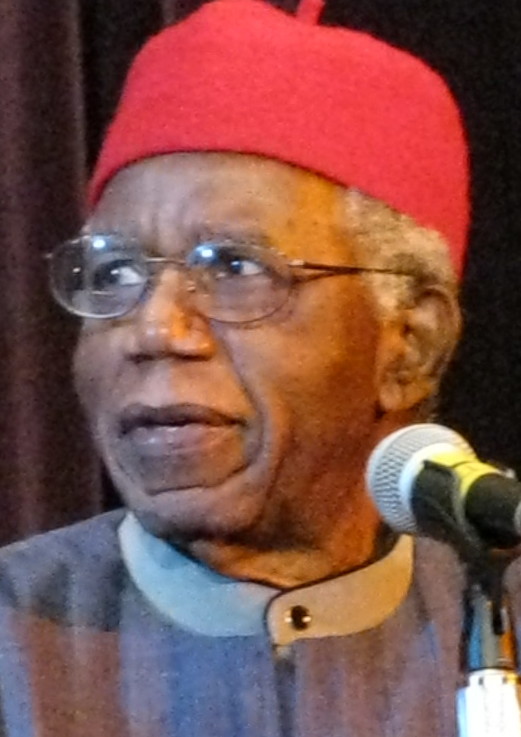
Chinua Achebe was a Nigerian novelist, poet, essayist, and critic, widely regarded as the father of modern African literature. His debut novel, Things Fall Apart, published in 1958, has sold more than 20 million copies and been translated into over 50 languages, making it the most widely read and studied African novel ever written.
Achebe's work challenged colonial narratives and restored dignity to African storytelling, drawing on Igbo oral traditions to portray the complexities of African societies. He wrote five novels, including No Longer at Ease, Arrow of God, and Anthills of the Savannah, along with poetry, essays, and children's books. His influence extended beyond literature into academia, where he taught at universities in Nigeria and the United States.
He won the Man Booker International Prize in 2007, among other honors. Achebe died on March 21, 2013, in Boston, Massachusetts, leaving behind a literary legacy that continues to shape global understanding of African experience.
Early Life & Background
Born at Saint Simon's Church in Nneobi, near the Igbo village of Ogidi, Achebe was the fifth of six children. His father, Isaiah Okafo Achebe, was a teacher and evangelist for the Church Mission Society, while his mother, Janet Anaenechi Iloegbunam, was a leader among church women and a vegetable farmer. Both parents straddled traditional Igbo culture and Christian influence, a tension that would permeate his writing.
Achebe began his education at a Christian mission school, learning English at age eight. At fourteen, he won a scholarship to Government College Umuahia, one of West Africa's best schools. In 1948, he was among the first students at the new University College, Ibadan, initially planning to study medicine before switching to English literature.
While at Ibadan, he rejected his English name Albert, adopting Chinualumogu, saying he and Queen Victoria had both "lost their Albert." His mother and sister Zinobia Uzoma told him traditional Igbo stories that would later shape his fiction. After graduating in 1953, he taught briefly before joining the Nigerian Broadcasting Corporation in 1954.
Career Growth
Achebe's breakthrough came in 1958 with Things Fall Apart, a novel that redefined African literature by telling the story of colonization from an African perspective. It remains a global classic, studied in schools and universities worldwide.
He followed with No Longer at Ease (1960), Arrow of God (1964), and A Man of the People (1966), a political satire. During the Nigerian civil war, he supported Biafra and cofounded a publishing company with poet Christopher Okigbo, who died in the conflict. In 1969, he toured the US with Gabriel Okara and Cyprian Ekwensi.
His later career included teaching at the University of Massachusetts Amherst, the University of Nigeria, and Bard College after fleeing Nigeria in 1994. His final novel, Anthills of the Savannah, appeared in 1987. He won the Man Booker International Prize in 2007.
Career Timeline
Public Image & Style
Achebe was celebrated as the central figure of modern African literature, though he rejected the title of "father." His writing was praised for its unsentimental portrayal of the clash between traditional African society and Western colonialism, and for its moral clarity about justice and power.
He was a titled Igbo chief and an outspoken critic of political corruption in Nigeria. Nelson Mandela once said that Achebe was someone "in whose company the prison walls fell down." His public persona was that of a dignified, principled intellectual who used his voice to restore African dignity.
Fame & Fandom
Chinua Achebe's audience is not a gathering of screaming fans or a digital legion with a specific handle, but a global community of scholars, students, and readers who treat his work as essential literature. There is no formal name for this collective; they are simply those who engage with the complexities of African storytelling. While celebrity culture often demands ritualistic adoration, Achebe's legacy is sustained through institutional respect and academic study rather than viral campaigns or fan conventions. His influence sparked tangible cultural preservation, such as the 2026 unveiling of a community-funded statue in Anambra State, Nigeria, which stands as a modern tribute to his moral stature. This organic reverence reflects a deep public connection that transcends the typical boundaries of fandom, rooted instead in the enduring power of his words. The intellectual battle he waged against colonial narratives remains a defining pillar of his lore, ensuring his voice resonates long after his passing in 2013. Today, his quote about lions and historians serves as a daily touchstone for educational initiatives worldwide. As of August 2026, this enduring global attention places him firmly within the iFANN Global Fame Rankings. He holds the position of the 20th most famous person from Nigeria, a ranking that has remained steady since the previous cycle.
Interesting Facts and Legends
Born Chinualumogu, a name meaning "God is fighting on my behalf," the author once joked that he and Queen Victoria had both lost their Alberts when he abandoned his English given name. His father was the nephew of a titled leader in Ogidi, while his mother descended from a blacksmith in Awka. During the Nigerian civil war, a tense confrontation occurred between Achebe and fellow writer John Pepper Clark in London over their opposing allegiances; though they were friends again later, the dedication of *A Man of the People* was eventually restored. A photograph from April 1980 captures him alongside James Baldwin in Gainesville, Florida. A scene depicting his own childhood found its way into his debut novel, *Things Fall Apart*. Beyond these documented facts, a powerful legend surrounds his literary courage. Achebe famously challenged Joseph Conrad, arguing that until lions have their own historians, the history of the hunt will always glorify the hunter. This stance against colonial depictions of Africans as savages became a central mythos of post-colonial resistance. Another enduring story involves his decades-long exile during the Biafran War, where he lived abroad yet remained a vocal critic of military rule, cementing his image as the nation's moral conscience.
Notable Quotes
“If you don't like someone's story, write your own.”
“The white man is very clever. He came quietly and peaceably with his religion. We were amused at his foolishness and allowed him to stay. Now he has won our brothers, and our clan can no longer act like one.”
“A man who makes trouble for others is also making trouble for himself.”
“When a man is at peace with his gods and his ancestors, his harvest will be good or bad according to the strength of his arm.”
Family & Personal Life
Achebe married Christie Okoli, to whom he dedicated his second novel, No Longer at Ease, in 1960. They had four children together. The family lived in Nigeria and later in the United States, where Achebe taught at Bard College.
His parents, Isaiah and Janet, were devout Christians who balanced traditional Igbo values with their new faith. His sister Zinobia Uzoma was a significant influence, sharing folktales that shaped his storytelling. Achebe's family remained largely private, with few public details about his children.
Notable Connections
Achebe's circle included poet Christopher Okigbo, with whom he cofounded a publishing company; fellow writers Gabriel Okara and Cyprian Ekwensi, who toured the US with him in 1969; and John Pepper Clark, with whom he had a wartime rift that later healed. He was also photographed with James Baldwin in 1980. His wife, Christie, was the dedicatee of No Longer at Ease.
Relationships & Dating History
Chinua Achebe married Christie Okoli, to whom he dedicated No Longer at Ease in 1960. They remained together until his death in 2013, raising four children. Their marriage was a stable and private partnership, with Christie supporting his literary career.
No other public relationships are documented. Achebe's personal life was notably free of scandal, and he maintained a devoted family life throughout his career.
- MarriedChristie Okoli1960 - 2013Married for over 50 years; dedicated No Longer at Ease to her.
Death & Aftermath
Died
March 21, 2013 (aged 82)
Death Place
Boston, Massachusetts, USA
Cause of Death
Complications from undisclosed illness
Chinua Achebe died on March 21, 2013, at a hospital in Boston, Massachusetts. The renowned novelist had been receiving treatment for an undisclosed illness after falling ill during a visit to the United States earlier that year. His final public appearance occurred just weeks prior at the University of Pennsylvania, where he participated in a reading before his condition required hospitalization. Medical officials and family statements attributed his passing to complications arising from the illness. The literary world responded with immediate and profound tributes. Nigerian President Goodluck Jonathan declared a national day of mourning and ordered flags flown at half-mast, while peers like Wole Soyinka and Salman Rushdie honored him as the father of African literature.
Institutions including Columbia University and the British Library organized vigils, and sales of his works surged globally, with Things Fall Apart re-entering bestseller lists within weeks of his death. A private funeral took place on April 6, 2013, in Ogidi, Anambra State, Nigeria. The ceremony was held at his family compound following Igbo traditional customs and featured readings from his novels alongside eulogies delivered by dignitaries and close friends. The event remained intimate per the family's wishes, focusing on his contributions to African identity rather than public spectacle. In the years since, his legacy has been actively preserved through new initiatives.
In August 2026, United Nigeria Airlines funded a bronze sculpture in Ogidi and committed N20 million over a decade to sustain the Chinua Achebe Prize for Fiction. Penguin Random House and We Need Diverse Books also launched the inaugural Chinua Achebe Award in 2026, cementing his enduring influence on contemporary literature.
Net Worth (Estate Value)
$10 Million
iFANN Editorial Team estimate
The estate of Chinua Achebe continues to generate revenue from the enduring sales of his books, particularly *Things Fall Apart*, which has moved more than 20 million copies globally. Royalties derived from translations, academic editions, and reprints provide a consistent financial stream. Per iFANN's editorial analysis, the estate's net worth stands at $10 Million as of 2026, reflecting the lasting commercial and cultural value of his literary contributions. Family members manage the estate, overseeing licensing agreements and publishing rights. Although Achebe did not amass vast personal wealth while alive, the continuous global study of his novels ensures his estate remains financially secure.
Awards Won (61)
Achebe won the Commonwealth Poetry Prize in 1972, the Man Booker International Prize in 2007, the German Booksellers Peace Prize, and the Dorothy and Lillian Gish Prize. He also received over 20 honorary degrees from universities worldwide.
2007 · Fiction
Lifetime achievement
1972 · Poetry
Beware, Soul-Brother, and Other Poems
Known For
Things Fall Apart
1958 · Author
No Longer at Ease
1960 · Author
Arrow of God
1964 · Author
A Man of the People
1966 · Author
Anthills of the Savannah
1987 · Author
Keywords
Sources
Quick Facts
- Born
- November 16, 1930, Ogidi, Nigeria
- Died
- March 21, 2013, Boston, Massachusetts
- Nationality
- Nigerian
- Occupation
- Novelist, poet, essayist
- Notable Works
- Things Fall Apart, No Longer at Ease, Arrow of God
- Spouse
- Christie Okoli (m. 1960)
- Children
- 4
Personal Details
- Full Name
- Albert Chinụalụmọgụ Achebe
- Spouse
- Christie Okoli
- Children
- 4
- Education
- University College, Ibadan (BA, 1953)
Frequently Asked Questions
Why did Chinua Achebe reject the name 'Albert'?
What is Chinua Achebe's most famous book?
When and where did Chinua Achebe die?
How many children did Chinua Achebe have?
What awards did Chinua Achebe win?

Join the community
fans discussing