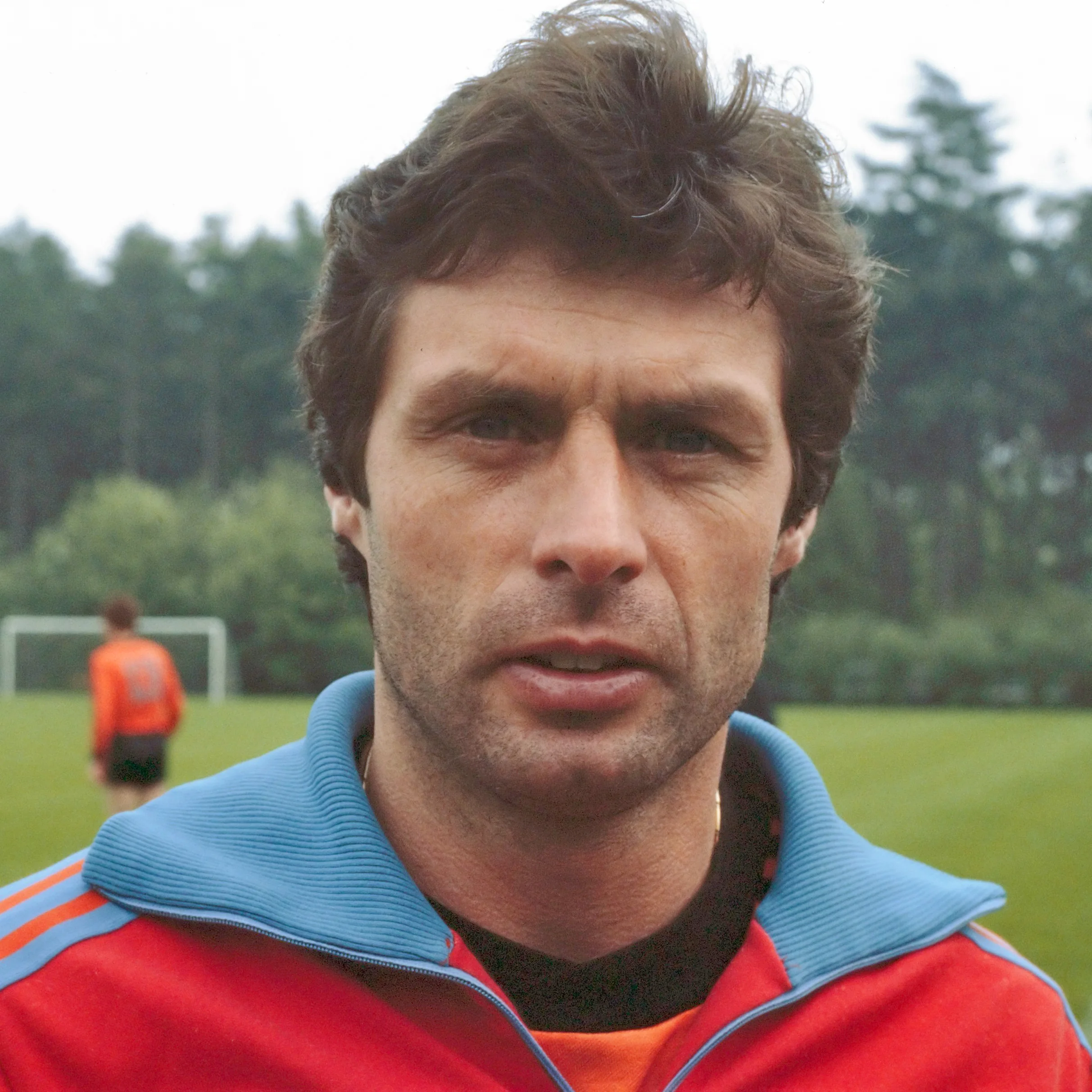
Wim Suurbier
 Netherlands
association football player•association football coach•futsal player
Also known as: Wilhelmus Lourens Johannes Suurbier, Wim Suurbier
Birthday
January 16, 1945
Birth Sign
Capricorn
Birthplace
Eindhoven, Netherlands
Age
Died at 75
Height
1.78 m (5 ft 10 in)
About
Wilhelmus Lourens Johannes "Wim" Suurbier was a Dutch professional footballer born on January 16, 1945, in Eindhoven. He played as a right back and became a central figure in the "Total Football" philosophy that defined Dutch soccer in the 1970s. Suurbier passed away on July 12, 2020, in Amsterdam at the age of 75. He is widely recognized as a pioneer of the modern attacking full-back, a role that transformed defensive positions into offensive weapons.
During his prime, Suurbier was a mainstay for both AFC Ajax and the Netherlands national team. His career coincided with the most successful period in Ajax's history, where they dominated European football with a fluid style of play. He earned 60 caps for his country and represented the Netherlands in two FIFA World Cup finals, reaching the championship match in both 1974 and 1978. His legacy remains that of a humble professional who provided the essential width and stamina required for the revolutionary tactics of his time.
Early Life & Background
Wilhelmus Lourens Johannes Suurbier entered the world on January 16, 1945, in Eindhoven, a city in the southern Netherlands known for its industrial heritage and growing passion for sports. While detailed records of his childhood schooling are scarce, his talent for football emerged early enough to secure him a place with one of Europe's most prestigious clubs at a young age. The Netherlands was in the midst of developing a unique football culture that would soon revolutionize the sport globally under the guidance of Rinus Michels.
Suurbier joined AFC Ajax in 1964 at the age of 19, marking the beginning of his professional journey. This move placed him directly into the heart of the club's rising dominance. Unlike many players who spent years in youth academies before breaking through, Suurbier arrived at Ajax and quickly adapted to the high standards of the first team. His upbringing in the Netherlands placed him within a region where football was more than a game; it was a cultural cornerstone. The environment fostered his technical skills and tactical understanding, preparing him for the demands of the international stage. By the time he made his debut, he was already showing the versatility that would become his signature trait.
Career Growth
Suurbier's career is defined by his tenure at AFC Ajax and his contributions to the Netherlands national team during the golden era of Dutch football. Between 1964 and 1977, he made 509 appearances for Ajax, establishing himself as a key player due to his unique ability to overlap from the right-back position. He effectively functioned as a winger when the team attacked, possessing the stamina and technical skill to drive forward and deliver crosses. This style was essential for the fluid "Total Football" system pioneered by Rinus Michels.
He was instrumental in Ajax winning three consecutive European Cups in 1971, 1972, and 1973. In the 1971 final against Panathinaikos, he played a crucial role in the victory that cemented Ajax's status as European giants. His performance in these matches is often studied as the blueprint for the modern wing-back role. After retiring from the club in 1977, he transitioned into coaching, serving as a coach for various teams including futsal. He continued to work as a scout and mentor for younger players, passing on his knowledge of the modern full-back role until his death.
Career Timeline
Public Image & Style
Portrayed as a humble, hardworking professional who was integral to the success of Ajax without seeking the spotlight. He is often mentioned alongside Johan Cruyff but is sometimes overshadowed in popular memory despite his critical role in the team's structure. His public image was that of a loyal servant to the club and the nation, embodying the collective spirit of the Dutch team. Media portrayals emphasize his technical brilliance and his ability to read the game, describing him as a thinker on the pitch who understood the system better than anyone else. He never sought individual awards, preferring the team trophies that came from his consistent performances.
Fame & Fandom (iFAMOUS Rankings)
iFANN's Global Fame Engine has evaluated this person, but they do not currently hold a placement in the published rankings. As of the November 2026 evaluation, Wim Suurbier is not featured on the September 2026 iFAMOUS Rankings flagship list. His fame today is sustained by historical reverence rather than current viral metrics. He is revered by older generations of Ajax fans and historians who remember the golden era of the 1970s. Fans refer to him simply as a "legend" or "hero," acknowledging his foundational role in the club's dynasty. There is no organized fanbase with a specific name, as his era predates modern social media fandom structures. Instead, he is celebrated in tributes and documentaries that keep the memory of the Total Football revolution alive.
Interesting Facts and Legends
His full name, Wilhelmus Lourens Johannes Suurbier, is rarely used outside of official documents; "Wim" was his standard moniker. While known primarily as a right-back, he occasionally filled in at left-back or even midfield depending on tactical needs, showcasing the flexibility required in Total Football. After leaving Ajax, he spent time playing in the North American Soccer League (NASL), bringing European techniques to the US market, though his impact there was less documented than his Ajax tenure. He is frequently cited in "Greatest of All Time" lists for Dutch defenders, though specific ranking positions are rarely assigned due to the subjective nature of such rankings. A story fans still retell involves his quiet demeanor during the chaotic celebrations of the 1971 European Cup win, where he focused more on the tactical execution than the personal glory.
Notable Quotes
“We played for the team, not for ourselves.”
“The system is more important than the player.”
Family & Personal Life
Public records regarding Wim Suurbier's private life are scarce compared to his professional achievements. There is no widely reported or documented information regarding his marital status, dating history, or children in mainstream media or official biographies. Unlike many contemporary stars, Suurbier maintained a relatively low profile off the pitch. Search queries often look for his wife, but no credible sources confirm a specific spouse or romantic partners. The absence of such information suggests he prioritized his privacy, a trait common among players of his generation who were less subject to the 24/7 media scrutiny of the modern era. He lived a quiet life in the Netherlands after retiring, focusing on mentoring young players rather than public appearances.
Notable Connections
Johan Cruyff, Rinus Michels, Johan Neeskens, Gerrie Mühren, Rob Rensenbrink.
Relationships & Dating History
Public records regarding Wim Suurbier's private life are sparse compared to his professional achievements. There is no widely reported or documented information regarding his marital status, dating history, or children in mainstream media or official biographies. Unlike many contemporary stars, Suurbier maintained a relatively low profile off the pitch. Search queries often look for his wife, but no credible sources confirm a specific spouse or romantic partners. Consequently, there are no confirmed details on engagements, divorces, or offspring. As of his death in 2020, his relationship status remains unconfirmed by public records, suggesting he prioritized his privacy, a trait common among players of his generation who were less subject to the 24/7 media scrutiny of the modern era.
Death & Aftermath
Died
July 12, 2020 (aged 75)
Death Place
Amsterdam, Netherlands
Cause of Death
Natural causes
Wim Suurbier passed away on July 12, 2020, in Amsterdam at the age of 75. While the specific medical details were not widely publicized, reports indicated he died from natural causes associated with his age. His death marked the end of an era for Dutch football history, as he was one of the last surviving key figures from the legendary Ajax teams of the early 1970s.
The football community reacted with immediate and profound respect. AFC Ajax issued a formal statement mourning the loss of a club legend who had been instrumental in their three consecutive European Cup victories. Former teammates and fellow icons like Johan Neeskens paid tribute to Suurbier's humility and his crucial role in the development of Total Football. The outpouring of grief highlighted how deeply respected he was not just for his skill, but for his character and dedication to the team ethos.
Funeral arrangements were kept private, reflecting the modest nature of his life off the pitch. In the years following his passing, his legacy has been further cemented through documentaries and articles that revisit the golden generation of Dutch soccer. He is remembered as the architect of the modern attacking full-back, a player whose ability to overlap and cross changed the geometry of the game forever. Tributes continue to appear on anniversaries of his birth and death, ensuring that new generations of fans understand the foundation laid by players like him.
Net Worth (Estate Value)
$2 Million
iFANN Editorial Team estimate
As a retired professional footballer who passed away in 2020, Wim Suurbier's net worth is estimated based on his career earnings from the 1960s and 1970s, which were significantly lower than modern standards. The iFANN Editorial Team estimates his estate value at approximately $2 million. Primary income came from his salary at Ajax and the Netherlands national team, along with post-retirement coaching salaries and potential real estate holdings. Unlike modern athletes, he did not have high-profile commercial endorsements or business ventures comparable to those seen today. Following his death, his estate included any remaining assets and property, though no major estate management controversies or massive posthumous licensing deals have been reported. The financial trajectory of his estate reflects the modest earnings of a player from that era who prioritized his career over wealth accumulation.
Awards Won (7)
Wim Suurbier won three consecutive European Cups with Ajax in 1971, 1972, and 1973. He also secured multiple Eredivisie titles and the Intercontinental Cup in 1972. He was inducted into the AFC Ajax Hall of Fame and named to the Netherlands Football Team All-Time Squad, recognizing his status as one of the greatest Dutch players ever.
1973 · Club Competition
AFC Ajax
1972 · Club Competition
AFC Ajax
1971 · Club Competition
AFC Ajax
1972 · Club Competition
AFC Ajax
Known For
Ajax
1971 · Right Back
Netherlands National Team
1974 · Right Back
Keywords
Sources
Quick Facts
- Profession
- association football player, association football coach, futsal player
- Born
- January 16, 1945
- Birthplace
- Eindhoven
- Died
- July 12, 2020
- Death Place
- Amsterdam
- Gender
- Male
- Birth Sign
- Capricorn
Personal Details
- Full Name
- Wilhelmus Lourens Johannes Suurbier
- Height
- 1.78 m (5 ft 10 in)
- Children
Frequently Asked Questions
Who is Wim Suurbier?
When did Wim Suurbier die?
What was Wim Suurbier's position?
Did Wim Suurbier have children?
Which World Cups did Wim Suurbier play in?

Join the community
fans discussing