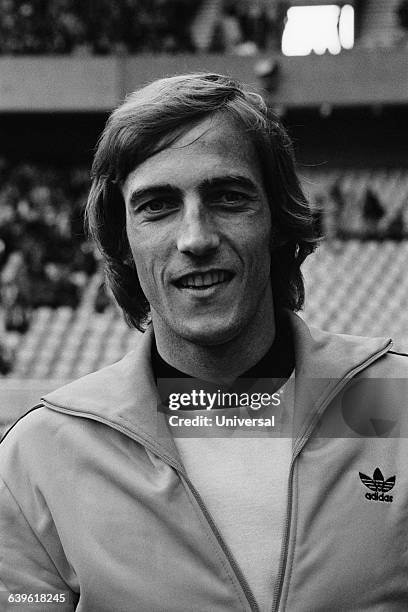
Johan Neeskens
association football player•association football coach•sports executive
Also known as: Johan Segundo, El Toro
Birthday
September 15, 1951
Birth Sign
Virgo
Birthplace
Heemstede
Age
Died at 73
Height
5 ft 10 in (178 cm)
About
Johannes Jacobus Neeskens, known as Johan Neeskens, was a Dutch footballer widely regarded as one of the greatest midfielders in history. Born September 15, 1951, in Heemstede, he became a symbol of Total Football through his tireless energy, precise passing, and knack for scoring crucial goals. Neeskens played a key role in the Netherlands national team that reached back-to-back World Cup finals in 1974 and 1978, scoring a penalty in the 1974 final. At club level, he won three consecutive European Cups with Ajax, starred for Barcelona, and later played in the United States and Switzerland. FIFA named him one of the 125 Greatest Living Footballers in 2004, and FourFourTwo ranked him 64th among all-time greats in 2017. After retiring as a player in 1991, Neeskens became a trusted assistant coach under Guus Hiddink and Frank Rijkaard, and also managed clubs in the Netherlands and South Africa. He passed away on October 6, 2024, in Algeria while working on a coaching project.
Early Life & Background
Neeskens grew up in Heemstede, North Holland, in a family marked by his parents' divorce. Due to lack of space in the family home, he slept in a corridor. He showed athletic talent early, excelling in gymnastics and even representing the Netherlands at a youth European Championship in baseball. He started playing football at local club RCH (Racing Club Heemstede), where coach Piet Peeman initially deployed him as a central defender. Neeskens made his senior debut for RCH in 1968 as a right-back in the Dutch second tier. Over two seasons, he made 68 appearances and scored one goal, catching the attention of legendary coach Rinus Michels. At age 18, Neeskens joined Ajax in 1970, not as a product of their famed youth system but as a rough diamond plucked from a smaller club.
Career Growth
At Ajax, Neeskens won three consecutive European Cups (1971, 1972, 1973), the Intercontinental Cup in 1972, and multiple domestic titles. He followed Johan Cruijff to Barcelona in 1974, spending five seasons and making 140 appearances, scoring 35 goals. Barcelona fans nicknamed him Johan Segundo and El Toro for his aggressive style. He played in two World Cup finals with the Netherlands: in 1974, losing 2-1 to West Germany after scoring a first-minute penalty, and in 1978, losing 3-1 to Argentina after extra time. After Barcelona, he moved to the New York Cosmos in 1979, playing 94 games and scoring 17 goals. He returned to the Netherlands briefly with Groningen in 1984 and ended his playing career with South Florida Sun in 1985. Neeskens made 49 international appearances, scoring 17 goals. After retiring in 1991, he became a coach, assisting Guus Hiddink with the Dutch and Australian national teams, and Frank Rijkaard at the Netherlands, Barcelona, and Galatasaray. He also managed NEC Nijmegen, the Netherlands B team, and Mamelodi Sundowns. In his later years, he served as an ambassador for KNVB WorldCoaches, training coaches in developing countries.
Career Timeline
Public Image & Style
Neeskens was known for his tireless energy, precise passing, and knack for scoring crucial goals. He carried an aggressive yet committed swagger on the pitch, described as having a gladiatorial aplomb. The KNVB called him a compassionate, driven, and wonderful person. His playing style, characterized by tenacity and ferocity in duels, made him a perfect fit for Rinus Michels' offside trap and Total Football system. He was beloved in Amsterdam, Barcelona, and New York, where fans appreciated his work rate and leadership.
Fame & Fandom (iFAMOUS Rankings)
Johan Neeskens stands as a foundational pillar of the Clockwork Orange, his legacy etched into the collective memory of football through the sheer weight of his contributions to Total Football. His influence transcends mere statistics, resonating with fans who revere him as an essential component of the Dutch national team alongside Johan Cruyff. The global community mourned his passing in October 2024 with an outpouring of grief that blurred the lines between club loyalty and personal adoration, as seen in official tributes from FC Barcelona, Ajax, and the KNVB. Despite this enduring reverence, iFANN's Global Fame Engine evaluated his current standing in August 2026 and found that he does not currently hold a placement in the published rankings, including the Global Top 1,000 or any Top-100 scope list. This absence of a specific rank reflects a unique status where his historical importance remains absolute even without a numerical position in contemporary fame metrics. His fanbase consists primarily of supporters from his two great clubs and the Netherlands, united by a shared history rather than a formal branded name. The emotional depth of his connection to the sport is best illustrated by the story of his forced departure from Barcelona in 1979, a moment fans still recount with sadness over the political rules that ended his tenure there. While no organized fan rituals or specific campaigns exist solely for him, the narrative that he deserves a place next to Cruyff in the pantheon of legends remains the definitive summary of his cultural impact, echoed by millions who remember his heart and unwavering commitment.
Interesting Facts and Legends
Neeskens once represented the Netherlands at a youth European Championship in baseball, a rare sporting crossover for a future legend. As a child, he slept in a corridor due to cramped living conditions after his parents' divorce. At Barcelona, he was known as Johan Segundo (the second Johan, after Cruijff) and El Toro (the Bull) for his aggressive, gladiatorial style. A famous photograph shows Neeskens standing over a writhing Paul Breitner during El Clásico in 1975. He scored one of the fastest goals in World Cup final history, a penalty in the first minute of the 1974 final. After his playing career, he lived in Switzerland for most of the year. Fans frequently retell the story of his emotional departure from Barcelona in 1979, describing him as a casualty of rules and politics when he was forced to leave due to Spanish government regulations on foreign players. Another widely cited legend highlights his versatility; despite being only 1.72 meters tall, he dominated the midfield as a compact force. His brief stint in American baseball after retiring from soccer remains a unique chapter discussed in tributes. The football world also remembers his sudden death while working in Algeria for the KNVB WorldCoaches program, an event that caused immediate condolences from major clubs like Real Madrid and Ajax.
Notable Quotes
“The most beautiful football doesn't always win. But it's incredible to me that people all over the world still talk about that Dutch team. The best and most beautiful football, total football.”
Family & Personal Life
Neeskens was survived by his wife Marlis and their children. The KNVB's statement following his death specifically mentioned Marlis among those in their thoughts. Details about his children's names or numbers have not been publicly disclosed. His parents divorced when he was young, and he grew up with limited space in the family home.
Notable Connections
Neeskens was closely associated with Johan Cruijff, his teammate at Ajax and Barcelona and his childhood idol. He worked under Rinus Michels, the coach who brought him to Ajax and later managed the Netherlands. He served as assistant coach to Guus Hiddink for the Dutch and Australian national teams, and to Frank Rijkaard at the Netherlands, Barcelona, and Galatasaray. German opponent Paul Breitner is famously pictured with Neeskens standing over him during an El Clásico match.
Relationships & Dating History
Neeskens was married to Marlis Neeskens. The KNVB's statement following his death in October 2024 specifically mentioned his wife Marlis among those in their thoughts. No details about their courtship, wedding date, or marriage duration are publicly available. As of his death, they were still married. He is survived by his wife and children.
- MarriedMarlis NeeskensCurrentNeeskens was married to Marlis at the time of his death. The KNVB mentioned her in their statement.
Death & Aftermath
Died
October 6, 2024 (aged 73)
Death Place
Unknown
Cause of Death
Unknown
Johan Neeskens was in Algeria on October 6, 2024, working with the KNVB WorldCoaches program when he passed away suddenly. The Royal Dutch Football Association confirmed the news but offered no further details regarding the specific location within the country or whether a hospital was involved. The football world reacted with immediate grief and widespread tributes. FC Barcelona issued a formal statement mourning the loss of one of its most iconic players from their 1974 to 1979 tenure, while Real Madrid also released an official announcement expressing condolences. The Netherlands national team organization highlighted his contributions as a key figure in the "Clockwork Orange" teams alongside Johan Cruyff.
Jonathan Wilson of The Guardian published an obituary asserting that Neeskens deserved a place next to Cruyff in the pantheon of Total Football. Public coverage from major outlets like ESPN, The New York Times, and Yahoo Sports indicated a global outpouring of sorrow. While specific details of fan vigils, memorial murals, or private ceremony arrangements have not been publicly disclosed, the volume of coverage confirms the magnitude of the loss. His legacy continues to be celebrated through documentaries and retrospectives detailing his career at Ajax and Barcelona.
Awards Won (1)
Neeskens won three European Cups, one Intercontinental Cup, two Eredivisie titles, and two KNVB Cups with Ajax. He was named one of FIFA's 125 Greatest Living Footballers in 2004 and ranked 64th in FourFourTwo's 100 Greatest Players of All Time in 2017.
2004 · Honor
Career
Known For
1974 FIFA World Cup
1974 · Midfielder for Netherlands
1978 FIFA World Cup
1978 · Midfielder for Netherlands
Ajax European Cup wins
1971 · Midfielder
Barcelona
1974 · Midfielder
Keywords
Sources
Quick Facts
- Profession
- association football player, association football coach, sports executive
- Born
- +1951-09-15
- Birthplace
- Heemstede
- Died
- +2024-10-06
- Death Place
- Algiers
- Gender
- Male
- Birth Sign
- Virgo
Personal Details
- Full Name
- Johannes Jacobus Neeskens
- Height
- 5 ft 10 in (178 cm)
- Spouse
- Marlis Neeskens
Frequently Asked Questions
How old was Johan Neeskens when he died?
What teams did Johan Neeskens play for?
Did Johan Neeskens win the World Cup?
How many goals did Johan Neeskens score for the Netherlands?
What was Johan Neeskens' cause of death?
Join the community
fans discussing