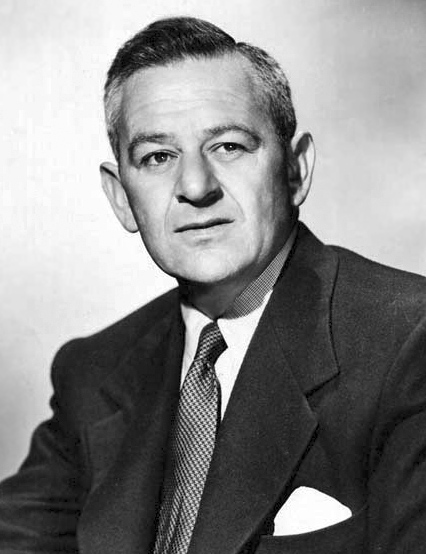
William Wyler
 France
film director•producer•screenwriter
Also known as: Willi Wyler, Forty-Takes Willy
Birthday
July 1, 1902
Birth Sign
Cancer
Birthplace
Mulhouse, Alsace-Lorraine (now France)
Age
Died at 79
Height
5 ft 10 in (178 cm)
About
William Wyler was a German-born American film director and producer who became one of the most acclaimed and technically innovative figures in cinema history. Born Willi Wyler on July 1, 1902, in Mulhouse, Alsace-Lorraine, he moved to the United States in 1920 and quickly rose through the ranks of Hollywood studios. By the time he directed Hell's Heroes in 1929, he had already established a reputation for technical innovation and demanding perfection from his casts. His career spanned five decades, during which he helmed over 40 films across drama, romance, war, and western genres. Wyler holds the record for the most Academy Award nominations for Best Director with twelve, winning three times for Mrs. Miniver, The Best Years of Our Lives, and Ben-Hur. All three winning films also secured the Academy Award for Best Picture. His ability to guide actors like Bette Davis, Katharine Hepburn, and Audrey Hepburn to career-defining performances remains a benchmark for the craft. A staunch advocate for deep focus cinematography, he transformed theatrical staging into dynamic cinematic environments through innovative camera movement. He appeared on the cover of Time magazine in 1950, highlighting his influence on Hollywood and his role in shaping the industry's narrative style.
Early Life & Background
Willi Wyler was born into a Jewish family in Mulhouse, then part of the German Empire and now located in France. His early life was marked by a restless energy that led him away from traditional academic paths. He briefly attended the University of Strasbourg but left to pursue his passion for filmmaking. When World War I broke out, he served in the French army, an experience that exposed him to the brutal realities of trench warfare. This exposure likely influenced his later anti-war sentiments and his ability to portray human struggle with authenticity. In 1920, at the age of 18, Wyler immigrated to the United States, arriving in New York City with little more than ambition. He took a job as an errand boy at Universal Studios, a humble start that would soon evolve into a meteoric rise. Within just five years, he had worked his way up the ladder to become the youngest director at Universal in 1925 at the age of 23. His early work included short films and serials, where he honed his skills in editing and storytelling. He directed his first sound feature, Hell's Heroes, in 1929, a project notable for being filmed entirely on location, a rarity for the era that showcased his willingness to take risks. His early interest in the arts was nurtured by his family, and he began working in film production shortly after arriving in America.
Career Growth
Wyler's breakthrough came with his ability to blend technical precision with deep emotional resonance. The 1940s marked the peak of his critical acclaim. In 1942, he won his first Oscar for Mrs. Miniver, a wartime drama that resonated deeply with audiences. Four years later, he swept the awards season with The Best Years of Our Lives, capturing the struggles of soldiers returning home. This film is often cited as one of the greatest ever made and won him the BAFTA Award for Best Film from any Source, the Golden Globe for Best Director, and the DGA Outstanding Directorial Achievement award. His final Oscar win came in 1959 for Ben-Hur, a massive epic that set new standards for scale and production value. The chariot race sequence in the film remains iconic to this day, featuring real chariots and horses despite several accidents on set. Throughout the 1950s and 1960s, he continued to direct high-profile projects, including Roman Holiday and Friendly Persuasion. He received the Irving G. Thalberg Memorial Award in 1962 and the Cecil B. DeMille Award in 1963, recognizing his consistent excellence. Even as the studio system declined, Wyler adapted, maintaining his status as a respected elder statesman of Hollywood until his death. He was inducted into the Hollywood Walk of Fame and named one of the "Greatest Directors of All Time" by various publications.
Career Timeline
Public Image & Style
Wyler was portrayed as a serious, dedicated artist who prioritized the integrity of the story above all else. He was respected by his peers for his technical mastery and his ability to handle large-scale productions with precision. Known affectionately and sometimes fearfully as "Forty-Takes Willy," he earned this nickname for his relentless pursuit of subtle emotional nuances, often requiring dozens of retakes to capture the perfect moment. One famous anecdote involves him shooting over 40 takes of a single scene in The Best Years of Our Lives to capture the perfect emotional beat. He was seen as a master craftsman who understood the power of cinema to influence public opinion and shape cultural narratives. Many actors found his perfectionism frustrating but ultimately rewarding. Davis famously noted that Wyler could make her cry when she didn't want to, highlighting his unique ability to extract raw emotion.
Fame & Fandom (iFAMOUS Rankings)
iFANN has not yet collected fame data for William Wyler, so no current global ranking is available. While he does not appear on the September 2026 iFAMOUS Rankings flagship list, his historical significance ensures his place in cinema history. Classic film enthusiasts and students of cinema deeply admire his work, often citing him as a master of the craft. Fan campaigns typically focus on preserving his films and promoting their study in film schools. There is no formal fandom name for Wyler specifically, as he is a historical figure rather than a contemporary celebrity. However, the reverence for his work among film scholars and historians is profound, with his techniques still taught in film programs worldwide. A PBS special titled "William Wyler: Forty Takes Willy" was released recently, exploring his legendary perfectionism and impact on the industry. The American Film Institute ranked him among the top directors in their "AFI's 100 Years... 100 Cheers" list.
Interesting Facts and Legends
Wyler was known for his meticulous preparation, often rehearsing scenes extensively before filming began. He was a staunch advocate for the use of deep focus cinematography, which allowed for greater depth of field and more complex staging within a single shot. He was a close friend and collaborator with many of Hollywood's biggest stars, including Montgomery Clift, Charlton Heston, Bette Davis, Katharine Hepburn, and Audrey Hepburn. Despite his success, he was somewhat reclusive and private about his personal life, preferring to let his work speak for itself. He once stated, "I don't believe in luck. I believe in hard work." Another famous quote from him regarding his craft was, "If you're going to make a picture, you've got to make it right." He believed that "The actor is the most important element in the film." His dedication to realism led to injuries on the set of Ben-Hur due to the use of real chariots. He was also a frequent collaborator with Bette Davis, who said he could make her cry when she didn't want to.
Notable Quotes
“I don't believe in luck. I believe in hard work.”
“If you're going to make a picture, you've got to make it right.”
“The actor is the most important element in the film.”
Family & Personal Life
William Wyler was married twice. His first marriage was to actress Margaret Sullavan in 1932, but the relationship was tumultuous, and they divorced in 1934. There were no children from this union. His second marriage was to Margaret Tallichet, a former actress and model, in 1937. They remained together until his death in 1981. They had one daughter, Judith Sheldon, born in 1939. Judith became a prominent philanthropist and art patron in San Francisco. Tragically, in June 2026, Judith and her husband Wylie Sheldon were found dead inside a running car near Redding, California, in an incident ruled as a suicide pact or accidental carbon monoxide poisoning. This event brought renewed media attention to the Wyler family legacy. Wyler stood approximately 5 feet 10 inches (178 cm) tall. He was known to be somewhat reclusive and private about his personal life, preferring to let his work speak for itself. Despite his success, he maintained close friendships with many of Hollywood's biggest stars.
Notable Connections
Relationships & Dating History
William Wyler was married twice during his lifetime. His first marriage was to actress Margaret Sullavan in 1932. The couple wed in a whirlwind romance, but the relationship proved difficult, and they divorced in 1934. There were no children from this union. His second marriage was to Margaret Tallichet, a former actress and model, in 1937. They remained together until Wyler's death in 1981. They had one daughter, Judith Sheldon, born in 1939. Judith became a prominent philanthropist and art patron in San Francisco. Tragically, in June 2026, Judith Sheldon and her husband, Wylie Sheldon, were found dead inside a running car near Redding, California, in an incident ruled as a suicide pact or accidental carbon monoxide poisoning, though official reports vary slightly on the exact circumstances. This event brought renewed media attention to the Wyler family legacy.
- DivorcedMargaret Sullavan1932 - 1934Actress; no children from this union
- WidowedMargaret Tallichet1937 - 1981Former actress and model; had one daughter together
Death & Aftermath
Died
July 27, 1981 (aged 79)
Death Place
Los Angeles, California, USA
Cause of Death
complications from pneumonia
William Wyler passed away peacefully in his sleep on July 27, 1981, at the age of 79. The official cause of death was complications stemming from pneumonia following a period of declining health. He died at his home in Los Angeles, where he had lived for decades. His funeral services were held shortly after in the city, and he was laid to rest at Hillside Memorial Park Cemetery in Culver City. Tributes poured in from across the industry, with peers and institutions honoring him as a master craftsman who had fundamentally shaped modern cinema. The American Film Institute recognized his immense contribution just two years prior to his passing by awarding him the Life Achievement Award in 1979, a testament to his enduring impact on the art form. Following his death, his estate continued to manage his vast catalog of films, which remained popular through theatrical re-releases, television broadcasts, and later home video formats. Classics like Ben-Hur, The Best Years of Our Lives, and Roman Holiday generated steady royalties that sustained the family legacy for generations. The tragic death of his daughter Judith Sheldon and her husband Wylie in June 2026 brought renewed media attention to the Wyler name, though the focus remained on the father's cinematic achievements rather than the family tragedy.
Net Worth (Estate Value)
$45 Million
iFANN Editorial Team estimate
As William Wyler is deceased, his net worth is represented by the value of his estate. Specific figures for his estate as of 2026 are not publicly disclosed in detail, but estimates suggest his estate continues to generate revenue through royalties from his extensive filmography, licensing deals, and merchandise. The value of his estate is estimated to be in the tens of millions of dollars, driven by the enduring popularity of classics like Ben-Hur, The Best Years of Our Lives, and Roman Holiday. Revenue sources include DVD/Blu-ray sales, streaming rights, and international distribution licenses. The iFANN Editorial Team's analysis of Wyler's earnings, ventures and assets points to roughly $45 Million, reflecting the ongoing commercial viability of his work decades after his passing. Official pages dedicated to his legacy are managed by his estate or film preservation organizations, ensuring his financial footprint remains active through these channels.
Awards Won (29)
William Wyler won three Academy Awards for Best Director for Mrs. Miniver, The Best Years of Our Lives, and Ben-Hur. He also received the Irving G. Thalberg Memorial Award for consistent high-quality production. His accolades include two BAFTA Awards and one Golden Globe Award. He was honored with the Directors Guild of America Lifetime Achievement Award and the American Film Institute Life Achievement Award.
1960 · Best Director
Ben-Hur
1947 · Best Director
The Best Years of Our Lives
1943 · Best Director
Mrs. Miniver
1947 · Best Director
The Best Years of Our Lives
Known For
Ben-Hur
1959 · Director
The Best Years of Our Lives
1946 · Director
Mrs. Miniver
1942 · Director
Roman Holiday
1953 · Director
Wuthering Heights
1939 · Director
Keywords
Sources
Quick Facts
- Profession
- film director, producer, screenwriter
- Born
- July 1, 1902
- Birthplace
- Mulhouse, Alsace-Lorraine
- Died
- July 27, 1981
- Death Place
- Los Angeles, California
- Gender
- Male
- Spouse
- Margaret Sullavan, Margaret Tallichet
- Birth Sign
- Cancer
Personal Details
- Full Name
- Willi Wyler
- Height
- 5 ft 10 in (178 cm)
- Spouse
- Margaret Tallichet
- Children
- Judith Sheldon
- Education
- University of Strasbourg (briefly)
Filmography
42
Total
40
Film
2
TV
Frequently Asked Questions
Who was William Wyler?
How many Oscars did William Wyler win?
When did William Wyler die?
Was William Wyler married?
Did William Wyler have children?
Similar People


Join the community
fans discussing