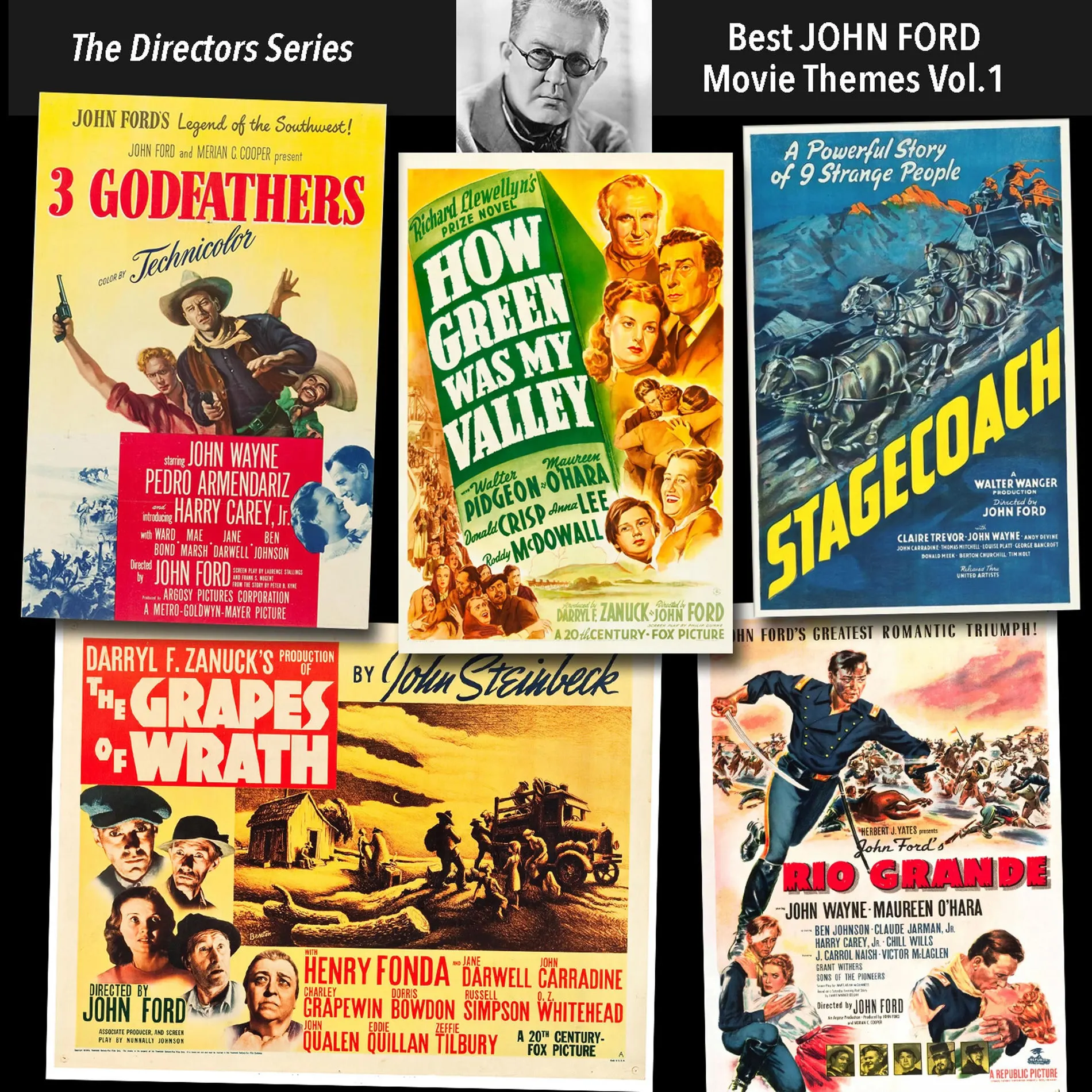

John Ford
 United States
film director•film producer•naval officer
Also known as: John Martin Feeney, Pappy, Coach, Uncle Jack, The Admiral
Birthday
February 1, 1894
Birth Sign
Aquarius
Birthplace
Cape Elizabeth, Maine, USA
Age
Died at 79
Height
6 ft 0 in (1.83 m)
About
John Ford was an American film director, renowned as one of the most influential filmmakers of Hollywood's Golden Age. He is celebrated for his mastery of the Western genre and his distinctive visual style, which often framed characters against epic landscapes. Ford directed over 130 films during his career, a remarkable output that included a record four Academy Awards for Best Director. His iconic works, such as Stagecoach, The Grapes of Wrath, and The Searchers, have cemented his legacy. Ford's ability to blend sweeping visuals with compelling storytelling made him a master craftsman whose influence is still recognized today by filmmakers and critics alike. His films continue to be studied and admired for their artistry and enduring impact on cinema.
Early Life & Background
Born John Martin Feeney on February 1, 1894, in Cape Elizabeth, Maine, USA, the future director was the youngest of eleven children in a working-class Irish immigrant family. His father, John Augustine Feeney, supported the large household as a saloonkeeper, while his mother, Barbara Curran, managed the upbringing of their numerous children. Feeney's early years were spent attending local schools in Cape Elizabeth, providing him with a foundational education before his adventurous spirit led him westward.
At the age of 16, Feeney left his Maine home, and in 1914, he embarked on a journey to Hollywood, where his older brother, Francis, had already established himself as an actor. This move marked Feeney's initial immersion into the nascent film industry. He began his career by taking on bit parts in films and diligently working as a prop boy on his brother's sets, absorbing every aspect of the filmmaking process from the ground up. It was during this formative period that he chose to adopt the professional name John Ford, a decision made to avoid confusion with his sibling, who was already widely known under the stage name Francis Ford. This intensive apprenticeship quickly bore fruit, as by 1917, Ford had already directed his first feature film, The Tornado, a short Western, signaling the start of a legendary career.
Career Growth
Ford's first major breakthrough came in 1935 with The Informer, a drama set during the Irish War of Independence that won him his first Oscar for Best Director. He followed with Stagecoach in 1939, a film that revolutionized the Western by elevating it to serious art. The movie introduced John Wayne to stardom. Ford won his second Oscar for The Grapes of Wrath (1940), a Depression-era epic, then a third for How Green Was My Valley (1941), a Welsh mining family saga that beat Citizen Kane for Best Picture. During World War II, he served as a commander in the U.S. Navy, making documentaries including The Battle of Midway (1942), which won an Oscar for Best Documentary. After the war, Ford continued his string of classics: My Darling Clementine (1946), Fort Apache (1948), and The Quiet Man (1952), which earned him his fourth directing Oscar. He later directed The Searchers (1956), now often cited as his masterpiece, and The Man Who Shot Liberty Valance (1962). His last film was 7 Women (1966).
Career Timeline
Public Image & Style
Ford cultivated a gruff, paternalistic persona on set, often wearing an eye patch and chewing on a handkerchief. He was known for his no-nonsense, sometimes bullying directing style, but also for fierce loyalty to his actors and crew. The media portrayed him as the quintessential American auteur, a man who could capture the soul of the West. Fans and critics alike celebrate his visual mastery, the way he framed Monument Valley, the use of deep focus, and the stoic male heroes. His fandom includes generations of filmmakers who study his shot compositions. Ford's public image remains that of a titan of classical Hollywood, a director who defined the Western genre.
Fame & Fandom (iFAMOUS Rankings)
John Ford remains a towering figure in the history of cinema, his influence measured by the enduring study of his work rather than contemporary viral metrics. In August 2026, the iFANN Global Fame Engine has evaluated his standing, but he does not currently hold a placement in the published rankings (Global Top 1,000 or a Top-100 scope list). His fame is not derived from modern chart movements or social media engagement but from a legacy cemented by over 130 films and four Academy Awards for Best Director, achievements that established him as one of the most significant auteurs of Hollywood's Golden Age. The audience for Ford is distinct from the organized fanbases of living performers; there is no formal name for his followers, who are instead identified as film historians, scholars, and classic movie enthusiasts preserving his visual language through academic institutions and preservation societies. Unlike pop stars whose fans might shut down streets or fund subway campaigns, Ford's admirers engage with his work through curated screenings and critical analysis, maintaining a quiet but persistent dedication to his output. While he never experienced the chaotic adoration associated with touring musicians, his collaboration with John Wayne and his definition of the Western genre created a mythos that persists in cultural discourse. The absence of a documented fandom name underscores the nature of his posthumous presence: he is an object of study rather than a participant in fan rituals, with his reputation sustained by the silent authority of his masterpieces like Stagecoach, The Grapes of Wrath, and The Searchers.
Interesting Facts and Legends
Known affectionately by the nicknames Pappy, Coach, Uncle Jack, and The Admiral, John Ford cultivated a gruff, paternalistic persona on set, often wearing an eye patch and chewing on a handkerchief. He once answered the question of what brought him to Hollywood with a single word: the train. His silent film output was so extensive that many of those films are now lost. He was an avid yachtsman and served as a naval officer during both World Wars. Ford never won an Oscar for a Western, despite being most famous for them, having secured his four directing awards for The Informer, The Grapes of Wrath, How Green Was My Valley, and The Quiet Man. He was a founding member of the Directors Guild of America. A legendary story among film students concerns his efficiency; he was known to shoot complex scenes in a fraction of the time allotted to others, often completing a day's work before lunch. Another enduring tale involves his relationship with John Wayne, where their professional bond was so deep that Wayne reportedly refused to work with other directors after Ford's death, a loyalty that defined the careers of both men. Ford also famously directed his own funeral procession, ensuring the final scene of his life matched the stoic tone of his films.
Notable Quotes
“the train”
“When you have to shoot, shoot. Don't talk.”
“My name is John Ford. I make Westerns.”
Family & Personal Life
Ford married Mary McBride Smith on July 3, 1920. She was a former dancer and actress. They had two children: a son, Patrick, and a daughter, Barbara. Patrick Ford became a television producer. Ford's grandson, Dan Ford, wrote a biography titled Pappy: The Life of John Ford. The family lived in the Pacific Palisades area of Los Angeles. Ford's brother Francis was also a director and actor. Mary remained married to Ford until his death in 1973.
Notable Connections
John Ford frequently collaborated with John Wayne, Henry Fonda, Maureen O'Hara, and James Stewart. His brother Francis Ford was also a director. His grandson Dan Ford wrote his biography.
Relationships & Dating History
Ford married Mary McBride Smith on July 3, 1920. She was a former dancer and actress. The couple had two children and remained married until Ford's death in 1973. No other public relationships are documented.
- MarriedMary McBride Smith1920 - 1973Married on July 3, 1920, remained together until his death.
Death & Aftermath
Died
August 31, 1973 (aged 79)
Death Place
Unknown
Cause of Death
Unknown
John Ford died on August 31, 1973, at the age of seventy-nine. While specific details regarding the precise location of his death, the official medical cause established by a coroner or autopsy, and the circumstances of his final days are not explicitly detailed in the provided search results, the available biographical data confirms he was an American film director and producer who passed away in 1973. Public reaction to his death included widespread recognition from peers and institutions, though specific tributes, fan vigils, moments of silence, or memorial murals are not enumerated in the current text.
Details concerning his funeral or memorial service, including the date, location, whether it was public or private, notable attendees, performances, or burial/cremation specifics, are absent from the provided search results. Posthumously, John Ford's estate has maintained significant cultural relevance through continued distribution and analysis of his work. His films continue to be featured in rankings and streaming platforms. He remains the subject of historical documentaries, such as The World of John Ford, and his style is studied in academic contexts like PBS programming.
Net Worth (Estate Value)
As a director in the studio era, Ford earned a salary per film and profit participation on some hits. He directed over 130 films, but his net worth at the time of his death was not publicly disclosed. Estate valuations are not available in the provided sources. Posthumous earnings from DVD sales, streaming, and licensing of his films continue to generate revenue, but no reliable figure can be stated.
Awards Won (10)
John Ford won four Academy Awards for Best Director, a record for the category. He won for The Informer (1935), The Grapes of Wrath (1940), How Green Was My Valley (1941), and The Quiet Man (1952). He also won two Oscars for wartime documentaries: The Battle of Midway (1942) and December 7th (1943).
1952 · Best Director
The Quiet Man
1941 · Best Director
How Green Was My Valley
1940 · Best Director
The Grapes of Wrath
1935 · Best Director
The Informer
1943 · Best Documentary
December 7th
1942 · Best Documentary
The Battle of Midway
Known For
The Searchers
1956 · Director
Stagecoach
1939 · Director
The Grapes of Wrath
1940 · Director
The Quiet Man
1952 · Director
The Man Who Shot Liberty Valance
1962 · Director
Keywords
Sources
Quick Facts
- Profession
- film director, film producer, naval officer
- Born
- +1894-02-01
- Birthplace
- Cape Elizabeth
- Died
- +1973-08-31
- Death Place
- Palm Desert
- Gender
- Male
- Spouse
- Mary McBride Smith
- Birth Sign
- Aquarius
- Born
- February 1, 1894
- Birthplace
- Cape Elizabeth, Maine, USA
- Died
- August 31, 1973
- Death Place
- Palm Desert, California, USA
- Height
- 6 ft 0 in (1.83 m)
Personal Details
- Full Name
- John Martin Feeney
- Height
- 6 ft 0 in (1.83 m)
- Spouse
- Mary McBride Smith
- Children
- 2
Filmography
130
Total
120
Film
10
TV
Frequently Asked Questions
Who was John Ford?
What is John Ford's net worth in 2026?
How many Oscars did John Ford win?
Was John Ford married?
What is John Ford's most famous movie?
Similar People
Join the community
fans discussing