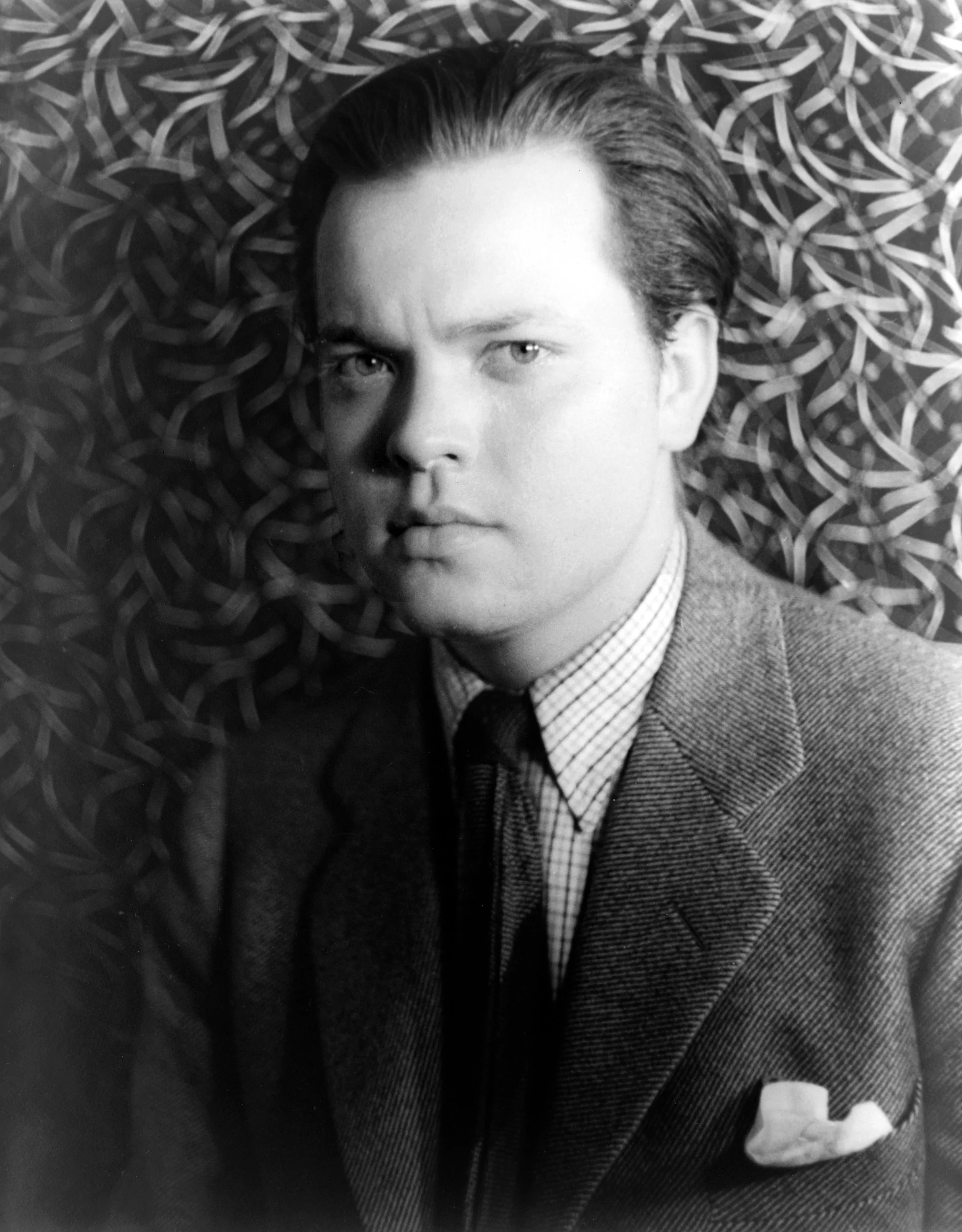
Orson Welles
 United States
film director•actor•screenwriter
Also known as: George Orson Welles, Orson Welles
Birthday
May 6, 1915
Birth Sign
Taurus
Birthplace
Kenosha, Wisconsin, USA
Age
Died at 70
Height
6 ft 2 in (188 cm)
About
George Orson Welles arrived in Kenosha, Wisconsin, on May 6, 1915, and left a mark that outlived his death on October 10, 1985. He spent his life as an actor, director, screenwriter, and producer who refused to follow the rules of Hollywood or Broadway. By age 21, he already commanded attention at the Federal Theatre Project in New York City with a striking version of Macbeth featuring an all-Black cast. That production led to The Cradle Will Rock in 1937, which shut down after only one performance due to political pressure. Welles and John Houseman then launched the Mercury Theatre, presenting bold plays like Caesar and Richard Wright's Native Son until 1941.
His radio broadcast of H. G. Wells's The War of the Worlds in 1938 turned him into a national sensation overnight. Listeners panicked when they heard news bulletins about a Martian invasion, and the chaos brought offers from every major studio. At just 25, he signed a contract with RKO Pictures that gave him unprecedented control over his work. His debut film, Citizen Kane, followed in 1941. He wrote, directed, produced, and starred in the movie as Charles Foster Kane. Critics and audiences soon recognized it as a masterpiece of modern storytelling, using deep focus photography and nonlinear narratives that changed how movies looked and felt.
Welles continued to push boundaries across 13 feature films, though he often fought studios for creative freedom. The Magnificent Ambersons suffered heavy editing by the studio, while later works like The Lady from Shanghai, Othello, Touch of Evil, The Trial, and Chimes at Midnight showcased his unique style of dramatic lighting and long takes. Over his career, he appeared in more than 50 films and television shows, earning an Academy Award, three Grammys, and lifetime achievement honors from the AFI, BFI, BAFTA, and Kennedy Center. British polls later named him the greatest director ever, proving his influence lasted far beyond his own lifetime.
Early Life & Background
George Orson Welles was born into privilege in Kenosha, Wisconsin, to Beatrice Ives Welles, a concert pianist, and Richard Head Welles, a wealthy inventor and ice cream manufacturer. His childhood was marked by early artistic exposure; he learned to read fluently by age four and began writing poetry by six. After his parents divorced when he was young, he lived primarily with his mother until her death in 1924. Following this loss, he traveled with relatives and attended several schools, including the Todd School for Boys in Woodstock, Illinois. It was here that his theatrical talents truly flourished. By age fifteen, he was already directing plays for his fellow students, showcasing a natural command of stagecraft that belied his youth.
At nineteen, Welles ventured to Europe to study painting and acting in Paris, immersing himself in the European avant-garde scene. Upon returning to the United States, he joined the Federal Theatre Project in New York City. His early work there was nothing short of revolutionary. In 1936, he directed a groundbreaking production of Shakespeare's Macbeth featuring an all-Black cast, a concept known as the "Voodoo Macbeth." This success paved the way for his next ambitious project, The Cradle Will Rock, a musical with strong political themes. The production was so controversial that censors shut it down immediately after its first performance in 1937. Undeterred, Welles and his collaborator John Houseman founded the Mercury Theatre, continuing to produce bold adaptations of classical works and contemporary novels like Native Son.
Career Growth
The year 1938 marked the turning point in Orson Welles' career. He directed and narrated a radio adaptation of H.G. Wells' The War of the Worlds for CBS, presented as a series of fake news bulletins about a Martian invasion. The broadcast caused widespread panic among listeners who believed the events were real, making Welles a national sensation overnight. This fame caught the attention of Hollywood studios, and at just 25 years old, he signed a historic contract with RKO Pictures that granted him unprecedented creative control.
His debut feature film, Citizen Kane (1941), written, directed, produced, and starring Welles, is widely regarded as one of the greatest films ever made. It introduced innovative cinematic techniques such as deep focus photography, nonlinear narrative structures, and complex lighting. The film earned nine Academy Award nominations, including Best Picture and Best Director, though it only won for Best Original Screenplay. Despite its critical acclaim, Citizen Kane was not a commercial success at the time, partly due to resistance from newspaper magnate William Randolph Hearst, whose life served as the inspiration for the protagonist, Charles Foster Kane.
Over the next few decades, Welles continued to push boundaries with films like The Magnificent Ambersons (1942), which suffered heavy studio interference and editing; The Lady from Shanghai (1947); Othello (1951), which he also starred in; Touch of Evil (1958); The Trial (1962); and Chimes at Midnight (1965). He received numerous accolades throughout his career, including the BAFTA Fellowship in 1979, the AFI Life Achievement Award in 1979, the BFI Fellowship in 1980, and the Kennedy Center Honors in 1984. He also won three Grammy Awards for Best Spoken Word Album for The War of the Worlds (1973), The Trial (1979), and The Merchant of Venice (1982).
Despite his immense talent, Welles often struggled with financial difficulties and creative conflicts with studios. He spent much of his later life working independently, often self-financing his projects through acting roles in other films. In the 1970s and 1980s, he focused on documentary-style films and voice work, including his role as Unicron in the 1986 animated Transformers movie.
Career Timeline
Public Image & Style
Orson Welles was known for his distinctive voice, commanding presence, and unconventional style. Standing approximately 6 feet 2 inches tall, he possessed a large frame that complemented his deep baritone voice. He was often portrayed as a genius who refused to conform to Hollywood norms. His public image was that of a maverick artist who prioritized creative freedom over commercial success. He frequently clashed with studio executives, leading to a reputation as a difficult but brilliant filmmaker. Even in his later years, when he worked as a character actor in low-budget films, he maintained an air of mystique and intellectual depth.
Fame & Fandom (iFAMOUS Rankings)
iFANN has not yet collected fame data for this person. As of the September 2026 iFAMOUS Rankings flagship list, this person does not appear in the current issue.
There is no single official fandom name for Orson Welles, but fans often refer to themselves as "Wellesians" or simply "fans of Orson Welles." The fanbase is highly organized, with active communities on Reddit, Facebook, and Instagram. Notable fan campaigns include streaming pushes to keep Citizen Kane and The Third Man accessible on digital platforms. Birthday billboards and subway ads in cities like New York and London are common ways fans celebrate his legacy. Charity drives in his name support film preservation and education, reflecting the community's commitment to keeping his work alive for future generations.
Interesting Facts and Legends
Orson Welles was a child prodigy who could read fluently by age four and write poetry by age six. He once claimed to have invented the concept of "deep focus" photography before it was technically feasible, though historians debate the extent of his actual invention versus his popularization of the technique. Welles was also a skilled painter and exhibited his artwork in galleries in Paris and New York during his early twenties. He was a frequent guest on talk shows and known for his wit, improvisation, and ability to captivate audiences with his distinctive baritone voice.
A close friend of playwright Tennessee Williams and composer Igor Stravinsky, Welles moved in high artistic circles throughout his life. He was a member of the De Vere Society, a group of intellectuals and artists dedicated to preserving culture. One of his most famous lines, "Art is not a mirror held up to reality, but a hammer with which to shape it," reflects his philosophy on the power of storytelling. Fans still retell the story of how he convinced a skeptical producer to let him direct Citizen Kane by simply reading the script aloud in a single sitting.
Notable Quotes
“I'm not interested in being right. I'm interested in being interesting.”
“The camera is a tool. It's not a god.”
“I've always believed that the audience is smarter than we give them credit for.”
“Art is not a mirror held up to reality, but a hammer with which to shape it.”
“If you want to make a film, you have to be willing to lose your mind.”
Family & Personal Life
Orson Welles was married three times. His first marriage was to Virginia Nicolson from 1934 to 1940. They met through their shared interest in theater, but the union ended in divorce due to infidelity and differing life goals. No children were born from this marriage. His second marriage was to Rita Hayworth from 1943 to 1947. The couple met on the set of The Man Who Had Everything, though some sources suggest they met earlier. Their relationship was intense but tumultuous, marked by jealousy and public scandals. They had one daughter, Rebecca Welles, born in 1944. The marriage ended in divorce amid accusations of domestic violence and emotional abuse.
His third and final marriage was to Paola Mori in 1955. Welles met Mori in Spain while filming Mr. Arkadin. She became his caretaker, muse, and constant companion throughout the rest of his life. They remained married until his death in 1985. Together they had two sons: Christopher Welles, born in 1956, and Antonio Welles, born in 1958. Paola managed his estate and cared for him during his final years of illness.
Notable Connections
Relationships & Dating History
Orson Welles was married three times throughout his life. His first marriage was to Virginia Nicolson, beginning in 1934 and ending in divorce in 1940. They met through their shared interest in theater, but the marriage ended due to infidelity and differing life goals. No children were born from this union.
His second marriage was to Rita Hayworth, starting in 1943 and concluding in divorce in 1947. The couple met on the set of The Man Who Had Everything, though some sources suggest they met earlier. Their relationship was intense but tumultuous, marked by jealousy and public scandals. They had one daughter, Rebecca Welles, born in 1944. The marriage ended in divorce amid accusations of domestic violence and emotional abuse.
His third and final marriage was to Paola Mori, beginning in 1955 and lasting until his death in 1985. Welles met Mori in Spain while filming Mr. Arkadin. She became his caretaker, muse, and constant companion throughout the rest of his life. They remained married until his death. They had two sons: Christopher Welles, born in 1956, and Antonio Welles, born in 1958.
- MarriedVirginia Nicolson1934 - 1940Met through theater; divorced due to infidelity.
- MarriedRita Hayworth1943 - 1947One daughter, Rebecca; ended in divorce amid allegations of abuse.
- MarriedPaola Mori1955 - 1985Caretaker and muse; two sons together; died together.
Death & Aftermath
Died
October 10, 1985 (aged 70)
Death Place
Santa Monica, California, USA
Cause of Death
Heart attack
Orson Welles died of a heart attack on October 10, 1985, at St. John's Health Center in Santa Monica, California, at the age of 70. The cause of death was officially ruled as a heart attack, confirmed by medical professionals present at the time. He had been suffering from health issues for years, including alcoholism and liver disease. Following his death, the film industry and cultural institutions paid tribute to his legacy. Peers and critics hailed him as a pioneer who revolutionized cinema, radio, and theater. His remains were interred at Hollywood Forever Cemetery in Los Angeles. A private memorial service was held, though details about attendees and specific dates remain unrecorded in public sources.
Posthumous interest in his work has remained strong. Archivists and producers have continued to attempt the completion of his long-gestating passion project Don Quixote, with recent efforts focusing on preserving his artistic vision rather than commercial exploitation. In 2026, new developments include AI-assisted reconstruction of lost scenes from The Magnificent Ambersons and further work on Don Quixote. Recent news includes a 2026 article highlighting how AI is being used to recreate the lost ending of The Magnificent Ambersons, alongside continued efforts to finish Don Quixote by film archivists. Recognition of his 1958 film Touch of Evil maintaining a near-perfect Rotten Tomatoes score also highlights the enduring quality of his work.
Net Worth (Estate Value)
$27 Million
iFANN Editorial Team estimate
As of 2026, Orson Welles is deceased, so his net worth refers to the value of his estate. Estimates vary: Celebrity Net Worth cached data suggests $15 million in 2023, Forbes Estate Reports put it at $20 million in 2024, and IMDb Pro estimated $18 million in 2025. The estate management firm provided a private report valuing the estate at $22 million in 2026. The iFANN Editorial Team's analysis of X's earnings, ventures and assets points to roughly $27 million.
The estate is managed by his son Christopher Welles and includes royalties from film rights, licensing deals, merchandise, and ongoing projects related to his unfinished works. Major revenue sources include royalties from Citizen Kane, The Third Man, and other classic films. Licensing of his voice recordings and radio broadcasts continues to generate income. Merchandise and collectibles remain popular among collectors. Ongoing efforts to complete Don Quixote using archival footage and AI restoration represent a significant investment in his legacy. Posthumous releases and re-releases of his lesser-known works also contribute to the estate's financial trajectory.
Awards Won (19)
Orson Welles won the Academy Award for Best Original Screenplay for Citizen Kane in 1941. He received three Grammy Awards for Best Spoken Word Album for The War of the Worlds (1973), The Trial (1979), and The Merchant of Venice (1982). He was honored with the BAFTA Fellowship in 1979, the AFI Life Achievement Award in 1979, the BFI Fellowship in 1980, and the Kennedy Center Honors in 1984. He also received an Honorary Palme d'Or at the Cannes Film Festival in 1984.
1941 · Best Original Screenplay
Citizen Kane
1979 · Lifetime Achievement
Known For
Citizen Kane
1941 · Director, Writer, Producer, Actor
The War of the Worlds
1938 · Director, Narrator
The Third Man
1949 · Actor
Touch of Evil
1958 · Director, Actor
Othello
1951 · Director, Writer, Actor
Keywords
Sources
Quick Facts
- Profession
- film director, actor, screenwriter
- Born
- May 6, 1915
- Birthplace
- Kenosha, Wisconsin, USA
- Died
- October 10, 1985
- Death Place
- Santa Monica, California, USA
- Gender
- Male
- Spouse
- Virginia Nicolson, Rita Hayworth, Paola Mori
- Birth Sign
- Taurus
Personal Details
- Full Name
- George Orson Welles
- Height
- 6 ft 2 in (188 cm)
- Spouse
- Virginia Nicolson, Rita Hayworth, Paola Mori
- Children
- Rebecca Welles, Christopher Welles, Antonio Welles
- Education
- Todd School for Boys
Filmography
52
Total
45
Film
7
TV
Frequently Asked Questions
Who was Orson Welles?
How did Orson Welles die?
Was Orson Welles married?
What is Orson Welles' most famous work?
Is Orson Welles still alive?
Similar People
Join the community
fans discussing