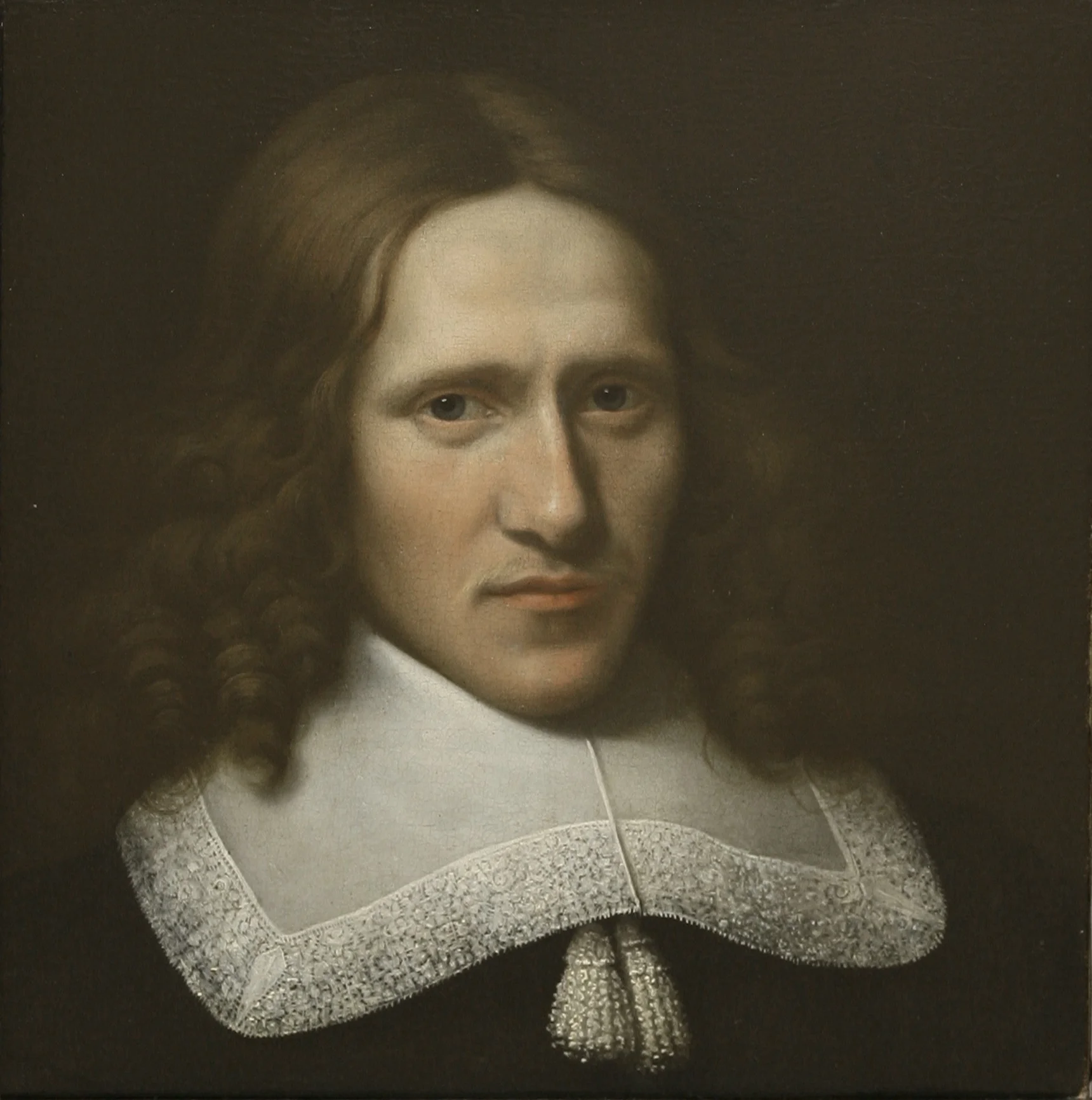
John Milton
Also known as: Johannes Miltonus
Birthday
December 9, 1608
Birth Sign
Sagittarius
Birthplace
Cheapside, London
Age
Died at 65
About
John Milton was an English poet, polemicist, and civil servant widely regarded as one of the most significant authors in the English language. Born in Cheapside, London, into a prosperous middle-class family, he lived during a period of intense religious and political upheaval that defined his life's work. His father, also named John Milton, was a successful scrivener and composer, providing the younger Milton with a rigorous education in music and literature from an early age. He attended St. Paul's School in London, graduating at fourteen, before entering Christ's College, Cambridge, where he earned his Bachelor of Arts degree in 1629 and his Master of Arts in 1632.
Milton's career evolved from a private scholar to a public intellectual and statesman. In the 1630s, he traveled to Italy, meeting the astronomer Galileo Galilei, an experience that broadened his perspective on liberty and science. Upon returning to England, he began writing prose tracts defending divorce and later served as Secretary for Foreign Tongues to the Council of State under Oliver Cromwell. His most famous political tract, Areopagitica (1644), remains a seminal defense of freedom of the press. As his political career progressed, Milton suffered a gradual loss of sight, becoming completely blind by 1652, yet he continued to dictate his works to scribes.
After the Restoration of the monarchy in 1660, Milton faced danger but survived to focus on his greatest literary achievements. His post-Restoration period produced three great epic poems: Paradise Lost (1667), Paradise Regained (1671), and Samson Agonistes (1671). Paradise Lost, written in blank verse without rhyme, retells the biblical story of the Fall of Man and is considered one of the greatest works of world literature. Milton died on November 8, 1674, leaving behind a body of work that cemented his status as a master of the English language.
Early Life & Background
John Milton was born on December 9, 1608, in Cheapside, London, the son of John Milton Sr., a wealthy scrivener and composer, and Sarah Jeffreys. His father's profession ensured that young John received an excellent education, beginning at St. Paul's School where he demonstrated exceptional proficiency in Latin and Greek, graduating at the tender age of fourteen. In 1625, he entered Christ's College, Cambridge, immersing himself in classical studies and theology. During his time at Cambridge, he wrote several notable poems in Latin, Italian, and English, including L'Allegro and Il Penseroso, which established his reputation for mastering classical forms while infusing them with Christian humanist ideals.
Following his graduation in 1632, Milton spent six years at his father's country estate in Horton, Buckinghamshire. This period of retreat allowed him to engage in intensive self-study in theology, philosophy, history, and languages, refining his poetic voice before entering public life. He traveled extensively in Europe between 1638 and 1639, visiting France and Italy, where he met prominent intellectuals like the astronomer Galileo Galilei. These travels exposed him to diverse cultural and scientific ideas, shaping his worldview and reinforcing his commitment to liberty and learning. Upon returning to England in 1639, he began writing prose tracts defending divorce, reflecting his personal turmoil and radical views on marriage equality, marking the transition from a private scholar to a public voice.
Career Growth
Milton's career shifted dramatically with the outbreak of the English Civil War. He abandoned poetry for politics, serving as a pamphleteer for the Parliamentarian cause. He held various government posts under the Commonwealth and the Protectorate of Oliver Cromwell, eventually becoming Secretary for Foreign Tongues (Latin Secretary) to the Council of State. In this role, he defended the regicide of Charles I and argued against monarchical tyranny. His most famous political tract, Areopagitica (1644), remains a seminal defense of freedom of the press, arguing against pre-publication censorship.
As his political career progressed, Milton suffered a gradual loss of sight, likely due to overwork and poor eyesight exacerbated by his extensive reading. By 1652, he was completely blind, yet he continued to dictate his works to scribes, including friends and relatives. After the Restoration of the monarchy in 1660, Milton faced danger; he was briefly imprisoned and fined for his past writings supporting the republic. Despite these hardships, he survived and retired to a quiet life, focusing on his greatest literary achievements. His post-Restoration period produced his three great epic poems: Paradise Lost (1667), Paradise Regained (1671), and Samson Agonistes (1671). Paradise Lost, written in blank verse without rhyme, retells the biblical story of the Fall of Man, Satan's temptation of Adam and Eve and their expulsion from Eden. It is considered one of the greatest works of world literature, praised by contemporaries like Samuel Johnson and later by Romantic poets such as William Blake and Percy Bysshe Shelley.
Career Timeline
Public Image & Style
Milton is described in contemporary portraits and accounts as having a tall, slender build with a dignified bearing. As he aged, his blindness forced him to rely on others for daily tasks, but his mental acuity remained sharp. His signature style was characterized by complex syntax, Latinate vocabulary, and the use of unrhymed iambic pentameter (blank verse), which he elevated to a new level of grandeur. He often wore simple, sober clothing, reflecting his Puritanical values. Media perception of him has shifted over centuries, from a controversial republican to a revered literary giant. His public persona was that of a serious intellectual and moral authority, unafraid to challenge power structures with his pen.
Fame & Fandom (iFAMOUS Rankings)
iFANN has not yet collected fame data for this person. While Milton does not appear in the September 2026 September 2026 iFAMOUS Rankings flagship list, his influence remains pervasive in academic and literary circles. He possesses a vast and dedicated community of scholars, students, and literary enthusiasts known collectively as "Miltonists." These groups organize conferences, publish journals, and maintain societies dedicated to studying his life and works. Notable fan campaigns include the annual celebration of National Poetry Month, where universities and libraries highlight his contributions, and the ongoing digital projects that make his complete works accessible online. His influence extends beyond literature into political philosophy, where his arguments for liberty continue to be cited in debates about free speech and governance.
Interesting Facts and Legends
John Milton was a skilled musician and composed several madrigals and songs, reflecting his father's influence. He was the first major English poet to write a full-length epic poem in blank verse, a form previously used primarily in drama. Despite being blind, he dictated his entire Paradise Lost to various amanuenses, including his daughters and friends. He was a staunch defender of the right to divorce, arguing that marriage should be based on mutual compatibility rather than just procreation. A story often told about him involves his ability to recite long passages of poetry from memory despite his blindness, showcasing his remarkable mental acuity. His use of complex syntax and Latinate vocabulary created a style that felt both ancient and modern, influencing generations of writers.
Notable Quotes
“The mind is its own place, and in itself can make a heaven of hell, a hell of heaven.”
“A good book is the precious life-blood of a master-spirit, embalmed and treasured up on purpose to a life beyond life.”
“They also serve who only stand and wait.”
Family & Personal Life
John Milton was married three times. His first marriage was to Mary Powell in 1642. The union was short-lived and tumultuous; Mary returned to her Royalist family shortly after the wedding, leaving Milton alone for three years. They reconciled in 1645, but she died in childbirth in 1652, leaving behind four children (three daughters and a son who died young). Milton's second wife was Katherine Woodcock, whom he married in 1656. She died less than a year later in 1658, also giving birth to a daughter who did not survive. Following her death, Milton's household was managed by his sister Anne and other female relatives. His third marriage was to Elizabeth Minshull in 1663, a woman from a wealthy Cheshire family who was significantly younger than him. They remained together until his death. Elizabeth outlived him and managed his estate. Milton had no surviving sons; his only son, John, died in infancy.
Notable Connections
Relationships & Dating History
John Milton was married three times. His first marriage was to Mary Powell in 1642. The union was short-lived and tumultuous; Mary returned to her Royalist family shortly after the wedding, leaving Milton alone for three years. They reconciled in 1645, but she died in childbirth in 1652, leaving behind four children (three daughters and a son who died young). Milton's second wife was Katherine Woodcock, whom he married in 1656. She died less than a year later in 1658, also giving birth to a daughter who did not survive. Following her death, Milton's household was managed by his sister Anne and other female relatives. His third marriage was to Elizabeth Minshull in 1663, a woman from a wealthy Cheshire family who was significantly younger than him. They remained together until his death. Elizabeth outlived him and managed his estate. Milton had no surviving sons; his only son, John, died in infancy.
- MarriedMary Powell1642 - 1652Died in childbirth; left four children.
- MarriedKatherine Woodcock1656 - 1658Died shortly after childbirth; daughter did not survive.
- MarriedElizabeth Minshull1663 - 1674Remained together until his death; managed his estate.
Death & Aftermath
Died
November 8, 1674 (aged 65)
Death Place
Bunhill Fields, London
Cause of Death
Complications from gout and heart failure
John Milton passed away on November 8, 1674, at his residence in Bunhill Fields, London. The final years of his life were marked by declining health, with historical accounts citing severe gout and heart failure as the primary causes of his death. He had been blind for over two decades, relying entirely on amanuenses to transcribe his thoughts, a physical limitation that did not diminish his intellectual output until the end. His funeral was a modest affair held at St Giles Cripplegate churchyard, attended only by a small circle of friends and colleagues. The public reaction was initially restrained given his history as a staunch defender of the regicide and a critic of the monarchy, which made him a controversial figure among Royalists.
Despite the muted immediate response, Milton's reputation underwent a rapid transformation in the decades following his death. By the late 17th century, he began to be recognized as a national literary icon, particularly revered by Romantic poets like William Blake and Percy Bysshe Shelley who saw in his work a profound vision of liberty and spiritual struggle. His widow, Elizabeth Minshull, managed his estate with diligence, ensuring the publication of his collected works shortly after his passing. No legal disputes or investigations marred the settlement of his affairs, and his literary legacy grew steadily through the centuries. Today, his works remain central to English literature curricula worldwide, and his name is synonymous with the highest achievements in poetic form and political philosophy.
Net Worth (Estate Value)
$0
iFANN Editorial Team estimate
As a historical figure who died in 1674, John Milton does not have a net worth in the modern sense of liquid assets or current market valuation. However, his literary estate has generated continuous revenue through copyright royalties (though his works are now in the public domain), licensing deals, and educational usage. Since his death, his works have been published in millions of copies globally, translated into dozens of languages, and adapted into operas, plays, and films. The value of his intellectual property today is incalculable in terms of cultural capital, but direct financial earnings to his heirs ceased long ago. The primary source of "wealth" associated with him today is the enduring commercial success of his texts in the publishing industry and academic markets.
Awards & Accolades
View 7 records, honours and achievementsKnown For
Paradise Lost
1667 · Author
Areopagitica
1644 · Author
Samson Agonistes
1671 · Author
Keywords
Sources
Quick Facts
- Profession
- poet, writer, politician
- Born
- December 9, 1608
- Birthplace
- Cheapside, London
- Died
- November 8, 1674
- Death Place
- Bunhill Fields, London
- Gender
- Male
- Spouse
- Mary Powell, Elizabeth Minshull, Katherine Woodcock
- Birth Sign
- Sagittarius
Personal Details
- Full Name
- John Milton
- Spouse
- Mary Powell, Katherine Woodcock, Elizabeth Minshull
- Children
- Three daughters (Anne, Mary, Deborah) and one son (John, who died in infancy)
- Education
- St Paul's School; Christ's College, Cambridge
Frequently Asked Questions
What is John Milton best known for?
How did John Milton go blind?
Who was John Milton married to?
Did John Milton die in poverty?
What is the significance of Areopagitica?
Similar People
Join the community
fans discussing