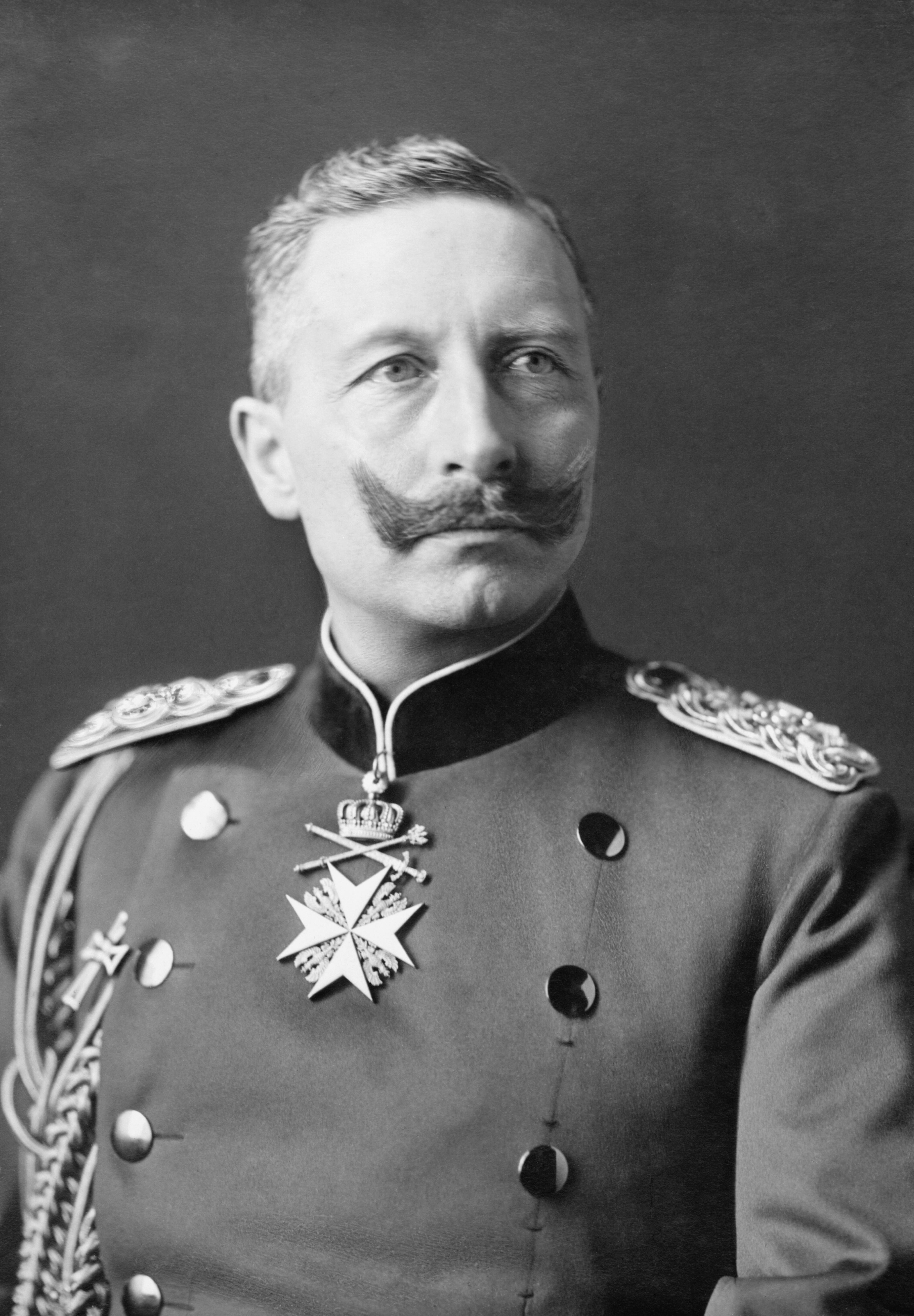
Wilhelm II
 Germany
Birthday
+1859-01-27
Birth Sign
Sagittarius
Birthplace
Kronprinzenpalais
Age
Died at 82
About
Born in Berlin on January 27, 1859, Wilhelm II was the final German Emperor and the last head of state of the Kingdom of Prussia. His reign, from 1888 to 1918, brought an end to the German Empire and the centuries-old rule of the Hohenzollern dynasty. As the eldest grandson of Queen Victoria of the United Kingdom, Wilhelm's lineage placed him at the center of European royalty. He ascended to the throne after the remarkably short 99-day reign of his father, Frederick III, who died in 1888.
Fame & Fandom
Wilhelm II remains a figure whose legacy is defined not by a modern cult following, but by the enduring weight of his historical footprint. While he never cultivated a fanbase in the contemporary sense, no organized campaigns, no birthday billboards, and no social media tribes to rally around his persona, the sheer scale of his impact ensures he remains a subject of intense global attention. His story has become the archetype for discussions on imperial overreach, with his life serving as a cautionary tale that resonates across generations. This unique position allows him to command a different kind of reverence, one rooted in historical necessity rather than pop culture devotion. The absence of a formal fandom name reflects his status as a monarch who ruled through authority rather than charisma-driven engagement, leaving his supporters as political subjects rather than adoring fans. Yet, his presence in the cultural consciousness is undeniable, tracked by metrics that span centuries of media coverage, search trends, and consumption signals worldwide. These measurements place him firmly within the pantheon of influential figures. According to the iFANN Global Fame Rankings, Wilhelm II is currently the 14th most famous person in Germany, a standing he has maintained from the previous cycle. He also holds the position of the 42nd most famous person from Germany, reflecting his deep roots in the nation's history. Furthermore, his contributions to the arts secure him a spot at the 18th most famous person in Art & Design, acknowledging his prolific work as a painter and collector. These rankings confirm that while the world may have moved past empires, the man who ended one remains a titan of historical fame.
Interesting Facts and Legends
Wilhelm II was the final German Emperor and last head of state of the Kingdom of Prussia, ascending to the throne after his father Frederick III reigned for only 99 days in 1888. As the eldest grandson of Queen Victoria, his lineage placed him at the center of European royalty, yet his reign ultimately brought an end to the Hohenzollern dynasty. Beyond politics, he was a dedicated painter and art collector who spent much of his exile creating landscapes. A major legend surrounding his life is the "Madman" narrative, which mythologizes him as a narcissist autocrat solely responsible for World War I, though historians now view this as a nuanced reality where he exacerbated tensions alongside other powers. His dramatic fall from power is another iconic moment; after abdicating on November 9, 1918, he fled to the Netherlands to live in exile at Huis Doorn until his death in 1941. During these final decades, he engaged in a notable legal battle in 1926 regarding property in South-West Africa, a story that highlights his persistent desire to reclaim assets despite his loss of sovereignty. His obsession with the military often saw him in uniform, promoting Germany's rise as a naval power, a persona that became synonymous with the era's militarism.
Death & Aftermath
Died
+1941-06-04 (aged 82)
Death Place
Huis Doorn, Netherlands
Cause of Death
Reported as a ruptured aneurysm
Wilhelm II, the last German Emperor and King of Prussia, died on June 4, 1941, at Huis Doorn in the Netherlands, where he had lived in exile since abdicating the throne. He was 81 years old. His death occurred after suffering from chronic respiratory issues and a severe limp caused by a childhood injury. The cause of death was reported as a ruptured aneurysm resulting from long-term complications related to his health. Medical examination by his personal physician confirmed the ruling based on the attending physician's assessment and family members present at the estate. There were no records of a specific last public appearance in the weeks before his death, as he had been reclusive in his later years.
He died in the presence of his family. Public reaction to the death of Wilhelm II was muted globally, particularly compared to the fervor surrounding the death of other monarchs. Official tributes were sparse. The Nazi regime issued brief, restrained statements acknowledging his death without celebrating his life. Monarchist sympathizers held small private memorials. Newspapers reported his death factually. The funeral took place on June 8, 1941, at St. Mary's Church in Doorn, Netherlands. The service was private. His wife, Empress Augusta Victoria, and their children were present. Representatives from the Dutch royal family were absent. Wilhelm II was buried in the garden of Huis Doorn. Following his death, his memoirs continued to be studied by historians.
Awards & Accolades
Keywords
Quick Facts
- Profession
- monarch, painter, art collector
- Born
- +1859-01-27
- Birthplace
- Kronprinzenpalais
- Died
- +1941-06-04
- Death Place
- Huis Doorn
- Gender
- Male
- Spouse
- Augusta Victoria of Schleswig-Holstein, Princess Hermine Reuss of Greiz
- Birth Sign
- Sagittarius
Personal Details
- Spouse
- Augusta Victoria of Schleswig-Holstein, Princess Hermine Reuss of Greiz
Join the community
fans discussing