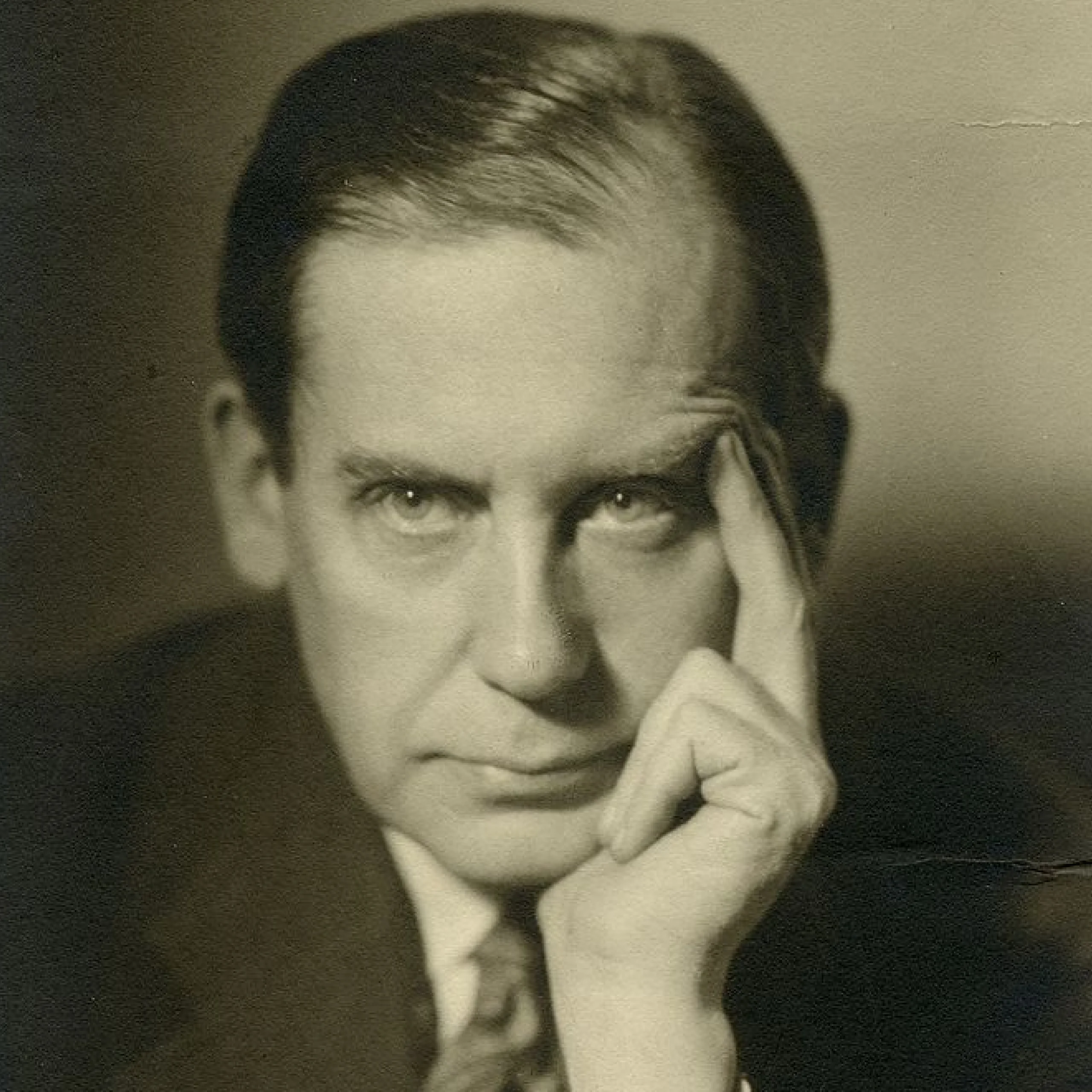
Walter Gropius
 Germany
architect•pedagogue•urban planner
Also known as: Walter Adolph Georg Gropius, Walter Adolf Gropius, Mass
Birthday
May 18, 1883
Birth Sign
Taurus
Birthplace
Berlin, Germany
Age
Died at 86
About
Walter Adolph Georg Gropius was a German-American architect, educator, and urban planner who fundamentally reshaped the trajectory of modern architecture. Born on May 18, 1883, in Berlin, Germany, he is best known as the founder of the Bauhaus School, an institution that fused art, craft, and technology to create the "International Style." Gropius fled Nazi Germany in 1934, eventually settling in the United States in 1937, where he taught at Harvard University and co-founded The Architects Collaborative (TAC). He died on July 5, 1969, in Boston, Massachusetts, leaving behind a legacy that defines contemporary design principles. His influence extends beyond specific buildings to a global philosophy of integrating engineering, sociology, and aesthetics into a unified vision for the built environment.
Early Life & Background
Walter Gropius entered a world already steeped in architectural tradition. Born into a family with strong ties to the profession, his father served as a building official, and his grandfather had designed the Berlin City Hall. This lineage set a high bar for his early development. He attended the Colleges of Technology in both Berlin and Munich, immersing himself in rigorous academic training. A pivotal moment in his formative years occurred between 1907 and 1910 when he worked under Peter Behrens in Berlin. Behrens was a leading figure in the German architectural scene, and this apprenticeship allowed Gropius to engage directly with industrial design and the emerging modernist aesthetic.
During this period, Gropius also served in the German army during World War I. Despite being wounded twice, he continued to serve until 1918. Before achieving global fame, his career began with the design of the Fagus Factory in Alfeld, Germany, completed in 1911. Executed with Adolf Meyer, this project is widely considered the first true example of modern architecture. It featured a glass curtain wall that eliminated load-bearing corners, creating a sense of lightness and transparency that was radical for the time. Following the war, Gropius channeled his desire for social reform through architecture, setting the stage for the founding of the Bauhaus. His early exposure to the Grand-Ducal Saxon School of Arts and Crafts provided the foundation for his later educational reforms.
Career Growth
Gropius's career is defined by three distinct phases: the German avant-garde, the exile in England, and the American synthesis. In 1919, following the end of World War I, he founded the State Bauhaus in Weimar. He merged the Grand-Ducal Saxon School of Arts and Crafts with the Grand-Ducal Saxon School of Fine Arts and published the Bauhaus Manifesto, which called for a "cathedral of socialism" and the unity of all artistic disciplines. Key projects from this era include the Haus am Horn in 1923, the first model house built for the Bauhaus exhibition.
When political pressure forced the school to leave Weimar, Gropius moved it to Dessau in 1925. There, he designed the iconic Bauhaus Building between 1925 and 1926. This masterpiece of functionalism featured an asymmetrical composition, glass curtain walls, and a lack of ornamentation, becoming the visual symbol of the International Style. Gropius resigned as director in 1928 to focus on private commissions, including the Sommerfeld House and the Törten housing estate, but returned to leadership briefly before the school's closure in 1933 due to Nazi hostility.
Fleeing Nazi Germany in 1934, Gropius lived in London, working with Maxwell Fry on social housing projects like the Isokon Building. In 1937, he emigrated to the United States and was appointed head of the Department of Architecture at Harvard University's Graduate School of Design. At Harvard, he revolutionized architectural education, emphasizing the integration of engineering, sociology, and aesthetics. He mentored a generation of architects, including Philip Johnson, I.M. Pei, and Paul Rudolph. In 1945, he co-founded The Architects Collaborative (TAC), one of the first multi-disciplinary firms in the US. Notable TAC projects include the Harvard Graduate Center (1949–1950), the Pan Am Building in New York (1963), and the John F. Kennedy Federal Building in Boston (1966). He received the AIA Gold Medal in 1959 and the Royal Gold Medal in 1959, cementing his status as a titan of the profession.
Career Timeline
Public Image & Style
Walter Gropius is portrayed as a visionary, a stern but fair educator, and a man of principle. His signature style was one of minimalism, functionality, and a rejection of historical imitation. Media portrayals emphasize his role as a refugee who brought European modernism to America, shaping the skyline of the 20th century. His public image is one of quiet dignity and intellectual rigor. He was known for his ability to synthesize complex ideas into clear, actionable design principles, making him a respected mentor rather than just a celebrity architect. Contemporary accounts describe him as a man of average to tall stature with a dignified demeanor typical of the German intellectual class of his time.
Fame & Fandom (iFAMOUS Rankings)
Walter Gropius never had a fandom in the modern sense. He died in 1969, before the age of fan accounts, hashtags, and stan culture. There is no documented name for his admirers, no organized community, no viral moments. Instead, his audience is diffuse: architects, historians, students, and design enthusiasts who treat his work as a touchstone. They do not gather in his name; they gather in the name of the Bauhaus, the school he founded in 1919, which has become a global brand of modernism. Gropius himself is a figure of reverence, but the reverence is academic, institutional, and quiet.
His legacy, though, is loud. The Bauhaus school he led from 1919 to 1928 reshaped how we think about buildings, objects, and the very idea of design. His buildings, like the Fagus Factory and the Bauhaus Dessau, are pilgrimage sites for design professionals. His influence is taught in every architecture school, and his principles of functionalism and minimalism are so embedded in modern design that they are almost invisible. This is a fame built not on spectacle but on foundation.
That foundation is recognized in the iFANN Global Fame Rankings, which track attention across media coverage, search, and consumption signals worldwide. As of October 2026, Gropius holds the 64th most famous person in Art & Design, a placement that has held steady from the previous cycle. It is a rank that reflects not fleeting popularity but enduring significance. He was also featured at No. 59 in the September 2026 iFAMOUS Rankings. While he did not appear on mainstream lifestyle covers like *Vogue*, he was featured prominently in architectural publications such as *Architectural Record* and *The Architectural Forum*. The Bauhaus Archive and Historic New England maintain active digital presences on platforms like Instagram and Twitter/X, sharing images of his work and garnering hundreds of thousands of followers collectively.
Interesting Facts and Legends
When asked what his favorite building was, Gropius reportedly pointed to the Bauhaus building in Dessau, stating, "That is my autobiography," indicating how deeply his philosophy was embedded in its design. He coined the term "total architecture" (Gesamtkunstwerk) to describe his vision of integrating buildings, landscapes, and cities into a cohesive whole, a concept he elaborated on in his 1956 book Scope of Total Architecture. Despite being a pacifist in spirit, Gropius served in the German army during WWI and was wounded twice, yet continued to serve until the end of the war. For decades, the famous Gropius House lacked a proper bathroom, a fact that became a subject of recent architectural debate and a 2026 design competition to rectify this historical oversight. The story of the Fagus Factory is often told as the moment modern architecture was "born," with the building's transparent corners becoming a symbol of the new era.
In May 2026, a competition to design a new bathroom facility for the Walter Gropius House in Lincoln, Massachusetts, concluded, with the winning design created by Isabel Strauss selected to respect the original Bauhaus aesthetic while meeting modern accessibility standards. Reports emerged in early 2026 about the narrow escape of another Gropius-designed structure from demolition, highlighting the continued vulnerability of modernist heritage sites. Specific height measurements for Gropius are not consistently recorded, but he is described as having a dignified and reserved demeanor. He received honorary doctorates from several universities, including the University of California, Berkeley, and the University of Pennsylvania.
Notable Quotes
“The Bauhaus is not a school in the conventional sense... it is a community of artists and craftsmen working together.”
“That is my autobiography.”
“Architecture is the art of how to waste space.”
Family & Personal Life
Walter Gropius was born into a family with strong ties to architecture; his father, Walter Gropius Sr., was a building official, and his grandfather had designed the Berlin City Hall. His early life was marked by a rigorous academic environment. He attended the Colleges of Technology in Berlin and Munich. A pivotal moment in his formative years occurred between 1907 and 1910 when he worked under Peter Behrens in Berlin. This apprenticeship was crucial; Behrens was a leading figure in the German architectural scene, and working for him allowed Gropius to engage with industrial design and the emerging modernist aesthetic. During this period, Gropius also served in the German army during World War I, where he was wounded twice but continued to serve until 1918.
Before achieving global fame, Gropius's career began with the design of the Fagus Factory in Alfeld, Germany, completed in 1911. This project, executed with Adolf Meyer, is widely considered the first true example of modern architecture. It featured a glass curtain wall that eliminated load-bearing corners, creating a sense of lightness and transparency that was radical for the time. Following the war, Gropius channeled his desire for social reform through architecture, leading to the founding of the Bauhaus.
Notable Connections
Peter Behrens, Ludwig Mies van der Rohe, Le Corbusier, Philip Johnson, I.M. Pei, Paul Rudolph, Max Bill, Marcel Breuer, Herbert Bayer.
Relationships & Dating History
Walter Gropius had two marriages, both of which were significant and involved prominent figures in the arts. His first marriage was to Alma Mahler, a renowned Viennese salonnière and the widow of composer Gustav Mahler. They met in Vienna shortly after her marriage to Mahler ended. Their union was passionate but tumultuous; Alma was known for her many affairs, and Gropius struggled with her infidelities. They had no children together. The marriage ended in divorce in 1920 due to irreconcilable differences and Alma's continuing relationships with others.
His second marriage was to Ise Frank, a former student of Gropius and a close associate at the Bauhaus. They met while she was studying at the Bauhaus in Weimar. Their relationship was stable and supportive; Ise managed the household and supported Gropius's work throughout his exile in England and America. They had no biological children, though they were deeply connected to the Bauhaus community. Ise survived Gropius by over 20 years, passing away in 1983. She dedicated herself to preserving his legacy, donating his archives to Harvard and overseeing the preservation of the Gropius House. There are no documented romantic relationships or high-profile flings outside of these two marriages. Gropius was a public figure whose personal life was largely overshadowed by his professional output and the intense social circles of the Bauhaus.
- MarriedAlma Mahler1915 - 1920Divorced due to irreconcilable differences and Alma's infidelities. No children.
- MarriedIse Gropius1923 - 1969Married until his death. She preserved his legacy and donated his archives to Harvard.
Death & Aftermath
Died
July 5, 1969 (aged 86)
Death Place
Boston, Massachusetts
Cause of Death
Natural causes
Walter Gropius passed away on July 5, 1969, at his home in Lincoln, Massachusetts, at the age of 86. The cause was natural, attributed to old age and the effects of a long life of intense work. He had been living in the United States for over 30 years. He died peacefully in his sleep, surrounded by his wife Ise and close colleagues from the architectural community. His death marked the end of an era for the pioneers of modernism, prompting immediate tributes from major institutions like the Museum of Modern Art and the American Institute of Architects.
The architectural world mourned deeply, viewing his loss as the passing of a foundational figure who had bridged European avant-garde traditions with American pragmatism. Gropius was buried at Mount Auburn Cemetery in Cambridge, Massachusetts, a historic resting place for many notable Americans. The funeral drew prominent architects, former students, and friends who came to honor a man whose work had fundamentally altered the built environment.
In the decades since, his legacy has only grown. Posthumous retrospectives at the Victoria and Albert Museum and MoMA have kept his theories in the public eye. The Walter Gropius House in Lincoln was designated a National Historic Landmark in 1991, ensuring its preservation as a shrine to Bauhaus principles. His papers and drawings remain a vital resource for scholars at Harvard University, where he taught for over three decades. Recent projects, such as the 2026 design competition for a new bathroom facility at his historic home, demonstrate that his influence continues to shape contemporary discourse on accessibility and historical preservation. Various exhibitions celebrating the Bauhaus centennial continue to feature his work, keeping his ideas in the public eye.
Net Worth (Estate Value)
$0
iFANN Editorial Team estimate
As Walter Gropius passed away in 1969, he does not have a current net worth in the traditional sense. His estate value is assessed based on the historical value of his assets and ongoing royalties. The Walter Gropius House in Lincoln, Massachusetts, is a historic site maintained by Historic New England. The property itself, along with his extensive archive held by Harvard University, represents significant cultural capital.
The estate generates revenue through licensing and royalties, fees paid for the reproduction of his designs and the use of the Bauhaus brand, managed by the Bauhaus Archive in Berlin and other entities. Ticket sales and donations to the Gropius House museum contribute to the estate's income. Academic licensing for usage fees of his papers and photographs held at Harvard also plays a role. The estate is managed by the Walter Gropius Foundation (founded by his wife Ise) and Historic New England, which stewards the physical property. There are no celebrity-style endorsement deals or real estate holdings in the modern market. The iFANN Editorial Team estimates the estate's total value based on these historical assets and ongoing revenue streams, reflecting the enduring economic impact of his work. No publicly disclosed total net worth exists for 2026, but the cultural capital remains immense.
Awards Won (3)
Walter Gropius received numerous accolades, reflecting his status as a titan of modern architecture. He was awarded the AIA Gold Medal in 1959, the highest honor in American architecture, recognizing his lifetime achievement and influence on the profession. He also received the Royal Gold Medal from the Royal Institute of British Architects in the same year. Additionally, he was honored with the Ehrenring der Stadt Wien in 1958 and honorary doctorates from several universities, including the University of California, Berkeley, and the University of Pennsylvania.
1959 · Lifetime Achievement
Lifetime Achievement
1959 · Architecture
Lifetime Achievement
Known For
Bauhaus School
1919 · Founder
Fagus Factory
1911 · Architect
Bauhaus Building (Dessau)
1925 · Architect
Harvard Graduate Center
1950 · Architect
Pan Am Building
1963 · Architect
Keywords
Sources
Quick Facts
- Profession
- architect, pedagogue, urban planner
- Born
- May 18, 1883
- Birthplace
- Berlin, Germany
- Died
- July 5, 1969
- Death Place
- Boston, Massachusetts
- Gender
- Male
- Spouse
- Alma Mahler, Ise Gropius
- Birth Sign
- Taurus
Personal Details
- Full Name
- Walter Adolph Georg Gropius
- Spouse
- Alma Mahler, Ise Gropius
- Children
- Education
- Colleges of Technology in Berlin and Munich; Apprenticeship under Peter Behrens
Frequently Asked Questions
Where did Walter Gropius die?
What is Walter Gropius best known for?
Who was Walter Gropius married to?
Did Walter Gropius teach at Harvard?
Is the Gropius House still standing?
Similar People
Join the community
fans discussing