 France
About
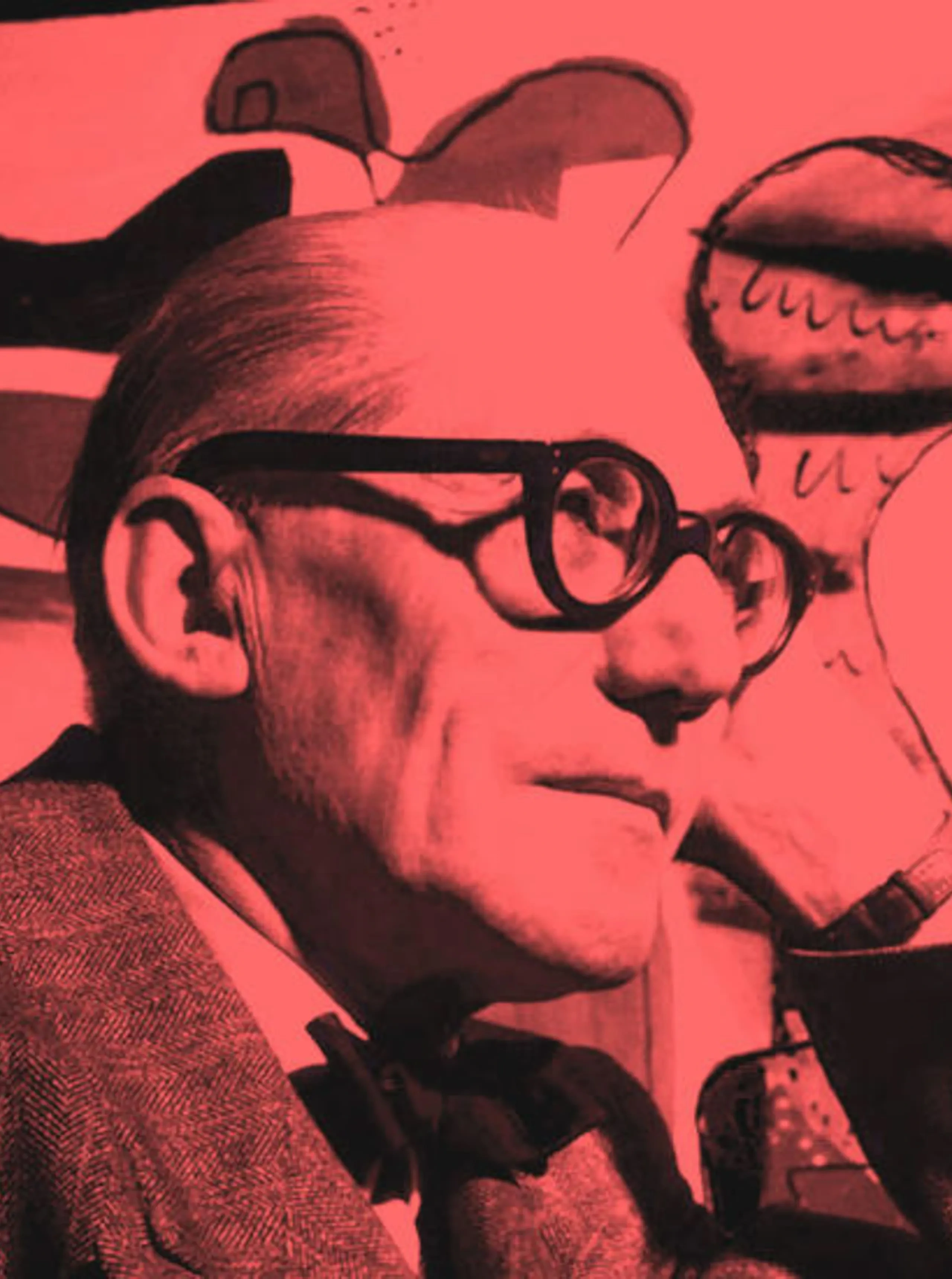
Le Corbusier was a Swiss-French architect, designer, painter, urban planner, and writer who became one of the most influential figures in 20th-century modern architecture. Born Charles-Édouard Jeanneret in La Chaux-de-Fonds, Switzerland, he adopted the pseudonym Le Corbusier around 1920 to distinguish his architectural persona from his identity as a painter. He became a naturalized French citizen in 1930 and spent the next five decades designing significant buildings across Europe, Japan, India, and the Americas.
His career defined the International Style and introduced revolutionary concepts like the "Five Points of Architecture." Key works include the Villa Savoye near Paris, the Unité d'Habitation in Marseille, and the Chandigarh Capitol Complex in India. He passed away in 1965, leaving behind a legacy that continues to shape how we think about living spaces and city planning.
Early Life & Background
Charles-Édouard Jeanneret was born into a family of watchmakers in La Chaux-de-Fonds, Switzerland. His father worked as an engraver and his mother taught piano, exposing him early to precision craftsmanship and the arts. This background profoundly shaped his aesthetic sensibilities long before he ever picked up a trowel. From 1902 to 1905, he attended the Arts and Crafts School in his hometown under the mentorship of Charles L'Eplattenier. L'Eplattenier introduced him to the "Jura style" and organic ornamentation, though Jeanneret would eventually pivot away from this toward pure geometric forms.
Between 1907 and 1911, he embarked on a formative series of travels known as his "Grand Tour." He visited Vienna, Budapest, Berlin, Rome, Istanbul, and Athens, studying classical architecture and the works of Viollet-le-Duc. During these years, he worked briefly with architects like Auguste Perret in Paris and Peter Behrens in Berlin, absorbing emerging trends in steel and concrete construction. It was during this period that he began to adopt the name "Le Corbusier" around 1920, a deliberate artistic alias derived from his maternal grandfather's name. His early career marked a shift from painting to architecture, driven by a desire to create "machines for living" rather than static monuments.
Career Growth
A pivotal breakthrough occurred in the 1920s when Le Corbusier co-founded the magazine L'Esprit Nouveau and articulated his "Five Points of Architecture": pilotis, free floor plans, ribbon windows, horizontal windows, and roof gardens. These principles were first realized in the Villa Savoye (1929–1931), a masterpiece located near Paris that remains the quintessential example of International Style architecture. Throughout the 1930s and 1940s, he championed the concept of the "Radiant City," proposing high-density towers set within green spaces to replace crowded, chaotic urban centers.
His most ambitious project was the design of Chandigarh, India, commissioned in 1950. As the chief architect for the new capital city of Punjab and Haryana, he designed the Capitol Complex, including the High Court, Secretariat, and Assembly Hall, creating a monumental cityscape that blended brutalist aesthetics with local climate considerations. Other major milestones include the Unité d'Habitation in Marseille (1947–1952), a self-contained vertical city that influenced social housing globally, and the Chapel of Notre-Dame du Haut at Ronchamp (1950–1955), a sculptural masterpiece that broke from his earlier rigid geometry to embrace expressive, curved forms.
Career Timeline
Public Image & Style
Le Corbusier is often portrayed as a stern, uncompromising genius. Media portrayals highlight his dual nature: a humanitarian seeking better living conditions for the masses and an elitist imposing a uniform aesthetic that some argue stripped cities of their soul. His content, in the form of writings like Towards a New Architecture (1923), is characterized by bold, declarative statements and a belief in the power of technology to solve social problems. He viewed himself as a visionary whose work required rigorous adherence to his principles.
Fame & Fandom (iFAMOUS Rankings)
In the October 2026 cycle of the iFANN Global Fame Rankings, Le Corbusier registers with striking consistency. He stands as the 37th most famous person from France, a position holding steady from the previous cycle. Within the specific realm of creative innovation, he ranks as the 20th most famous person in Art & Design. These placements reflect a global attention that tracks cultural consumption and historical reverence without relying on fleeting digital noise. He was also featured at No. 20 in the September 2026 iFAMOUS Rankings.
The community surrounding his work defies modern fan culture labels. There is no collective moniker for his admirers; they are architects, historians, students, and preservationists rather than a unified fandom. Their devotion manifests as rigorous stewardship rather than casual celebration. The Fondation Le Corbusier operates as the central hub, managing archives and protecting his 79 surviving buildings like sacred relics. Guided tours of the Villa Savoye or the Chapel of Notre-Dame du Haut function as pilgrimages to temples of modernism. This audience engages in intense debate over his philosophy, contrasting his ideal of the "machine for living" against the harsh reality of concrete structures struggling under extreme heat. They fight legal battles to stop demolition and campaign to reclaim narratives, such as the story of Eileen Gray's E-1027 house where he painted murals without permission. These actions prove his impact endures through conflict and conservation, not just admiration.
Interesting Facts and Legends
Le Corbusier initially disliked being called "Le Corbusier" by his friends, preferring his birth name, Charles-Édouard Jeanneret. He had a deep fascination with the Parthenon, which he viewed as the ultimate expression of proportion. Another notable story involves the E-1027 house designed by Eileen Gray. Le Corbusier added murals to the interior walls of the house without Gray's consent in the 1950s, leading to a famous rift between the two architects and sparking debates about authorship and respect for the original creator.
The "Plan Voisin" from 1925 remains a legendary moment in architectural history. This radical proposal suggested demolishing much of central Paris to replace it with identical skyscrapers set in parks. Although never built, the plan stands as a symbol of modernist hubris and the tension between utopian planning and historical preservation. Additionally, his designs, such as the LC4 chaise longue, remain commercially successful and are manufactured by companies like Cassina, contributing significantly to his enduring financial legacy through licensing royalties.
Notable Quotes
“A house is a machine for living in.”
“Architecture is the learned game, correct and magnificent, of forms assembled in the light.”
Family & Personal Life
Le Corbusier married Yvonne Gallis in 1929. The couple had no children together. While there are historical accounts suggesting he had a son named Jean-François Jeanneret with his long-term partner Charlotte Perriand, this paternity is sometimes debated and not always officially acknowledged in early records; however, historical consensus confirms he did not have children with Yvonne. Yvonne served as his muse, model, and manager throughout their marriage, accompanying him on his travels and managing his business affairs until his death.
Notable Connections
Pierre Jeanneret, Charlotte Perriand, Walter Gropius, Ludwig Mies van der Rohe, Eileen Gray.
Relationships & Dating History
Le Corbusier's romantic life was relatively straightforward compared to his complex professional relationships. He married Yvonne Gallis in 1929. The couple had no children together. Yvonne served as his muse, model, and manager throughout their marriage, accompanying him on his travels and managing his business affairs until his death. There are no widely documented romantic relationships prior to or outside of his marriage to Yvonne that are considered significant in biographical records. He remained married to her until his death in 1965. While he had a long-term partnership with designer Charlotte Perriand, this relationship was primarily professional, though some historical accounts suggest a deeper personal connection.
- MarriedYvonne Gallis1929 - 1965Served as his muse, model, and manager until his death.
Death & Aftermath
Died
August 27, 1965 (aged 77)
Death Place
Roquebrune-Cap-Martin, France
Cause of Death
Drowning following suspected heart attack
Charles-Édouard Jeanneret took his final breaths on August 27, 1965, while swimming in the Mediterranean Sea off the coast of Roquebrune-Cap-Martin. Witnesses reported that he suffered a severe cramp or a sudden heart attack in the water before sinking. He was found floating face down later that afternoon. The incident was ruled a natural accident, and no criminal investigation followed since there were no suspicious circumstances surrounding his death.
Tributes poured in from peers who recognized him as the most influential architect of the twentieth century. Institutions like the Museum of Modern Art and the Metropolitan Museum of Art issued statements honoring his legacy. Moments of silence and memorials were held in architecture schools worldwide while his works became focal points for reflection. His funeral remained a private affair held shortly after his death in the cemetery of Roquebrune-Cap-Martin where he had spent much of his later life.
Posthumously, his legacy solidified through numerous honors, including the designation of 17 of his buildings across multiple countries as UNESCO World Heritage Sites in 2016. Several foundations and scholarships have been established in his name, such as the Fondation Le Corbusier, created to preserve his archives and promote his architectural theories. The estate is managed by the foundation, ensuring the preservation of his intellectual property without public dispute.
Net Worth (Estate Value)
$120 Million
iFANN Editorial Team estimate
While Le Corbusier passed away in 1965, his financial legacy remains substantial through the management of his intellectual property and estates. The iFANN Editorial Team estimates the value of his estate and ongoing revenue streams at approximately $120 Million as of 2026. This figure reflects the enduring commercial success of his furniture designs, particularly the LC series manufactured by Cassina, as well as licensing fees for his architectural drawings and books.
The Fondation Le Corbusier oversees the conservation of his 79 surviving buildings and manages publications, tours, and merchandise. Revenue generated from these activities, combined with royalties from posthumous publications and IP rights, sustains the foundation's operations. Unlike living celebrities, his net worth is not a personal accumulation but a testament to the lasting economic impact of his work on the built environment.
Awards Won (3)
Le Corbusier received numerous accolades throughout his life and posthumously. He was awarded the Royal Gold Medal by the Royal Institute of British Architects (RIBA) in 1953. He was also a recipient of the Grand Prix National des Arts in France. In 1964, he was named a Commander of the Legion of Honour. Posthumously, the most significant honor was the UNESCO World Heritage designation in 2016.
1953 · Architecture
Overall contribution to architecture
1964 · Civil Honours
Lifetime achievement
Known For
Villa Savoye
1931 · Architect
Chandigarh Capitol Complex
1952 · Chief Architect
Unité d'Habitation
1952 · Architect
Chapel of Notre-Dame du Haut
1955 · Architect
Keywords
Sources
Quick Facts
- Profession
- architect, painter, writer
- Born
- October 6, 1887
- Birthplace
- La Chaux-de-Fonds, Switzerland
- Died
- August 27, 1965
- Death Place
- Roquebrune-Cap-Martin, France
- Gender
- Male
- Spouse
- Yvonne Gallis
- Birth Sign
- Libra
Personal Details
- Full Name
- Charles-Édouard Jeanneret
- Spouse
- Yvonne Gallis
- Children
- Education
- Arts and Crafts School (École d'Art), La Chaux-de-Fonds
Frequently Asked Questions
Why is Le Corbusier controversial?
What was Le Corbusier known for?
What is Le Corbusier's most famous building?
Why did he call himself Le Corbusier?
How did Le Corbusier die?
Similar People
Join the community
fans discussing