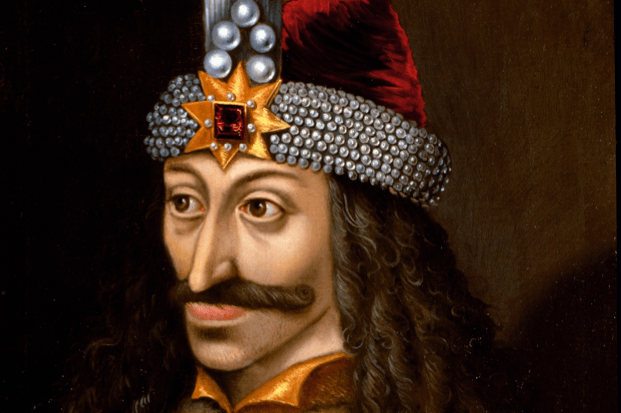
Vlad the Impaler
Also known as: Vlad Țepeș, Vlad Dracula, Vlad III, Vlad the Impaler
Birthday
1431
Birth Sign
Unknown
Birthplace
Sighișoara, Transylvania
Age
Died at 45
About
Vlad III, known historically as Vlad the Impaler (Romanian: Vlad Țepeș) and by his father's name as Vlad Dracula (Drăculea), was a Voivode of Wallachia who ruled during three separate periods in the 15th century: briefly in 1448, from 1456 to 1462, and again in late 1476. Born in Sighișoara, Transylvania, around 1431, he spent his life navigating the brutal geopolitics of the Ottoman Empire's expansion into Europe. His reign is defined by fierce resistance against foreign domination and extreme measures taken to consolidate power within his own lands. He is best remembered for his conflict with Sultan Mehmed II, where he employed strategies of scorched earth and psychological warfare to defend his territory.
His early life was marked by trauma and exile. Held as hostages at the Ottoman court from roughly 1442 to 1448, Vlad witnessed the harsh realities of Ottoman rule and developed a reputation for resilience. When his eldest brother Mircea was buried alive and his father was murdered by Hungarian nobles in 1447, Vlad returned from exile to claim his birthright. He seized the throne in 1456 and immediately began dismantling the power of the local boyar aristocracy through ruthless executions.
In 1462, Vlad launched a strategy of psychological warfare, displaying thousands of prisoners on stakes outside Târgoviște to demoralize the invading army. Although he achieved a tactical victory in the Night Attack at Târgoviște, internal betrayal led to his capture and imprisonment in Hungary for over a decade. Released in 1475, he attempted one final campaign to reclaim his throne in late 1476 but died in battle near Snagov Monastery.
Early Life & Background
Vlad III entered the world in Sighișoara, Transylvania, around 1431 as the second son of Vlad II Dracul, a member of the Order of the Dragon. His childhood was overshadowed by the looming threat of the Ottoman Empire and the volatile politics of Eastern Europe. To ensure his father's loyalty to the Sultan, Vlad and his younger brother Radu were taken as hostages to the Ottoman court around 1442. These six years of captivity were formative. Young Vlad observed the brutality of Ottoman rule firsthand and learned the intricacies of power dynamics that would later define his own reign.
The stability of his family shattered in 1447 when Hungarian nobles captured his eldest brother Mircea and buried him alive. Shortly after, Vlad II was murdered. These catastrophic losses propelled the young Vlad into a desperate struggle for survival. He fled into exile, living among various courts and gathering support for his eventual return. For nearly a decade, he navigated a treacherous political landscape, seeking allies like John Hunyadi to help him reclaim his family's title. This period of exile shaped his worldview, instilling a deep distrust of nobility and a reliance on absolute authority to maintain order.
By 1456, Vlad had gathered enough military strength to return to Wallachia. His ascent to power was not merely a restoration of lineage but a conquest against those who had betrayed his family. Upon seizing the throne, he wasted no time in consolidating his authority. His first major act involved inviting hundreds of boyars to a feast in Târgoviște, only to execute or impale them. This decisive action broke the power of the aristocracy and centralized the state under his control, setting the stage for his famous conflicts with the Ottomans.
Career Growth
Vlad III's rise to power culminated in his permanent seizure of the Wallachian throne in 1456. His early reign focused on internal consolidation, where he ruthlessly suppressed the boyar class to establish a unified state. In 1460, he captured the strategic city of Brăila and fortified defenses along the Danube to resist Ottoman encroachment. By 1462, he launched a strategy of scorched earth and psychological warfare, creating the infamous "Forest of the Impaled" outside Târgoviște where thousands of Ottoman soldiers were displayed on stakes.
The defining moment of his military career occurred in June 1462 during the invasion by Sultan Mehmed II. Vlad executed a daring Night Attack on the Sultan's camp, a maneuver considered one of history's most audacious military operations. Despite this tactical success, he was betrayed by his brother Radu the Fair and King Matthias Corvinus of Hungary, leading to his capture. Vlad spent over a decade imprisoned in Visegrád, Hungary, from approximately 1462 to 1475. During this time, tales of his cruelty circulated across Europe, fueling legends that would eventually inspire Bram Stoker's Dracula.
Released in 1475 under pressure from Stephen III of Moldavia, he attempted one final campaign to reclaim his throne. In late 1476, he fought alongside Hungarian forces against the Ottomans and the rival Basarab Laiotă cel Bătrân. His efforts ended in his death near Snagov Monastery, marking the conclusion of a reign characterized by bloodshed and desperate resistance.
Career Timeline
Public Image & Style
Vlad's public image has oscillated between "monster" and "hero." In Western Europe during the 15th and 16th centuries, he was portrayed as a bloodthirsty tyrant, a characterization amplified by German pamphlets and Italian chroniclers. His signature aesthetic is one of medieval brutality and martial prowess, often depicted in art and film with dark, brooding tones and imagery of spikes and blood. The media of his time emphasized his cruelty to justify his removal from power.
In contrast, within Romania, he has been reclaimed as a national hero and a symbol of resistance against foreign domination. Statues of him stand in Bucharest and Sighișoara, and he is celebrated in Romanian historiography as a defender of Christian Europe. In 2019, the Romanian government officially recognized him as a national symbol. His legacy is frequently invoked in discussions about Romanian identity and sovereignty, transforming him from a feared tyrant into a patriotic icon.
Fame & Fandom (iFAMOUS Rankings)
iFANN has not yet collected fame data for this person. Vlad does not appear on the September 2026 iFAMOUS Rankings flagship list. Fandoms for Vlad the Impaler are primarily academic and enthusiast-based, focusing on medieval history, Romanian nationalism, and the Dracula mythos. There is no organized fan club with rituals or campaigns, but the "Dracula fandom" often overlaps with interest in Vlad's life. Notable fan projects include historical reenactments, documentary productions, and online forums dedicated to separating fact from fiction regarding his reign.
Interesting Facts and Legends
The name "Dracula" translates to "Son of the Dragon," derived from his father's membership in the Order of the Dragon. Chemical analysis of letters written by Vlad suggests he may have suffered from porphyria, a condition that could explain historical reports of him shedding tears of blood, though this remains speculative. Modern pop culture has cemented his image as a vampire-like figure, particularly through Bram Stoker's 1897 novel Dracula, although historically he was a human ruler who practiced extreme punishment rather than supernatural predation.
A legendary incident involves his confrontation with Ottoman envoys; when they refused to remove their turbans in his presence, he ordered them to be impaled. This event is often cited as the catalyst for the war between Vlad and Mehmed II. Another widely retold story concerns the "Forest of the Impaled" in 1462, where it is said he impaled up to 20,000 Ottoman soldiers to halt their advance. Whether the number is accurate or exaggerated by propaganda is debated, but the image of the forest became a defining symbol of his terror tactics.
Vlad's personal life included at least two marriages. His first wife was Ilona Szilágyi, whom he married around 1457. His second wife is less well-documented but is believed to have been Cneajna, daughter of Alexander the Good of Moldavia. There are no confirmed children from either marriage, though some legends suggest he had a son named Vlad IV, whose existence is unverified.
Notable Quotes
“It is better to die with honor than to live in shame.”
“I do not want to see a thief living in my country.”
“The blood of the innocent cries out for justice.”
Family & Personal Life
Vlad III was the second son of Vlad II Dracul, a prominent Wallachian voivode and member of the Order of the Dragon. His eldest brother, Mircea, was executed by being buried alive in 1447 by Hungarian nobles, an event that deeply affected Vlad's psyche. His younger brother, Radu the Fair, initially served as a hostage alongside him but later turned against Vlad, siding with the Ottomans to usurp the throne. These familial betrayals and losses defined much of Vlad's adult life and his ruthless approach to leadership.
Vlad married twice. His first wife was Ilona Szilágyi, a Hungarian noblewoman and sister of Elizabeth Szilágyi, the mother of King Matthias Corvinus. This marriage was politically motivated to strengthen ties with Hungary. They had no children together. His second wife is believed to have been Cneajna, daughter of Alexander the Good of Moldavia, though details of this union remain disputed by historians. No confirmed children exist from either marriage, leaving his direct lineage unverified.
Notable Connections
Relationships & Dating History
Vlad III's personal life was deeply intertwined with the political machinations of 15th-century Europe. His primary marriage was to Ilona Szilágyi, a Hungarian noblewoman, around 1457. This union was strategically arranged to strengthen ties with the Kingdom of Hungary and solidify his position against the Ottomans. Ilona was the sister of Elizabeth Szilágyi, the mother of King Matthias Corvinus, making her a key figure in the regional power structure. The couple had no confirmed children together.
Historical records regarding his second wife are sparse and sometimes contradictory. She is believed to have been Cneajna, the daughter of Alexander the Good of Moldavia. Some historians dispute the details of this union, suggesting it may have been a short-lived arrangement or a political gesture rather than a formal marriage. Regardless of the specifics, there are no confirmed children from either marriage, though some legends suggest he had a son named Vlad IV, whose existence remains unverified. As a deceased historical figure, he has no current relationship status.
- MarriedIlona Szilágyi1457 - 1476Political marriage to strengthen ties with Hungary; no children.
- MarriedCneajnaUnknown - UnknownBelieved to be daughter of Alexander the Good of Moldavia; details disputed.
Death & Aftermath
Died
December 14, 1476 (aged 45)
Death Place
Near Snagov Monastery, Wallachia
Cause of Death
Killed in combat during ambush
The final chapter of Vlad III's life unfolded in December 1476 near Snagov Monastery. After securing Hungarian support to reclaim his throne from Basarab Laiotă cel Bătrân, the Voivode led a desperate campaign against Ottoman forces and internal rivals. On or around December 14, he fell during a surprise attack while defending his position. Accounts vary on whether he died fighting in the open field or was cut down by assassins sent by his enemies. His head was reportedly severed and sent to Constantinople as proof of his death.
Vlad received a burial at the Snagov Monastery, a site he had favored for retreats earlier in his reign. The exact location of his grave remains uncertain due to centuries of looting and reconstruction of the monastery grounds. Following his death, his estate was quickly absorbed by rival factions without formal probate proceedings. Centuries later, he has transcended his historical role to become a global icon, most notably inspiring Bram Stoker's Dracula and appearing in works ranging from The Dracula Chronicles to the Castlevania series. While modern Romania honors him as a national hero with statues in Bucharest and Sighișoara, the legacy of his violent demise continues to fuel academic interest and cultural fascination.
Net Worth (Estate Value)
$0
iFANN Editorial Team estimate
Vlad the Impaler lived in the 15th century, a time before modern currency, corporate earnings, or celebrity net worth existed. His wealth was measured in land ownership, political control, and tribute collected from vassal states. As a Voivode, he controlled significant territories in Wallachia, which generated revenue through agriculture, trade taxes, and mining operations. However, these assets were lost immediately after his death in 1476, absorbed by rival factions and the Ottoman Empire.
Unlike modern celebrities, Vlad had no salary per project, business ventures, endorsements, real estate investments, or digital assets. His estate did not accumulate value posthumously in the way contemporary fortunes do. Any financial legacy he left behind was purely symbolic, tied to his status as a national hero in Romania rather than monetary accumulation. The concept of a net worth figure for a medieval ruler is anachronistic, as his power was derived from feudal rights and military might rather than liquid assets.
Awards & Accolades
View 9 records, honours and achievementsKnown For
Dracula
1897 · Inspiration for character
The Dracula Chronicles
2011 · Subject
Castlevania
2017 · Character inspiration
Keywords
Sources
Quick Facts
- Profession
- ruler
- Born
- 1431
- Birthplace
- Sighișoara
- Died
- December 14, 1476
- Death Place
- Bucharest
- Gender
- Male
- Spouse
- Ilona Szilágyi
Personal Details
- Full Name
- Vlad III Drăculea
- Spouse
- Ilona Szilágyi
- Children
- None confirmed
- Education
- Ottoman court (hostage years)
Frequently Asked Questions
Who was Vlad the Impaler?
Did Vlad the Impaler really exist?
Is Vlad the Impaler the inspiration for Dracula?
How did Vlad the Impaler die?
Why was he called 'the Impaler'?
Similar People

Join the community
fans discussing