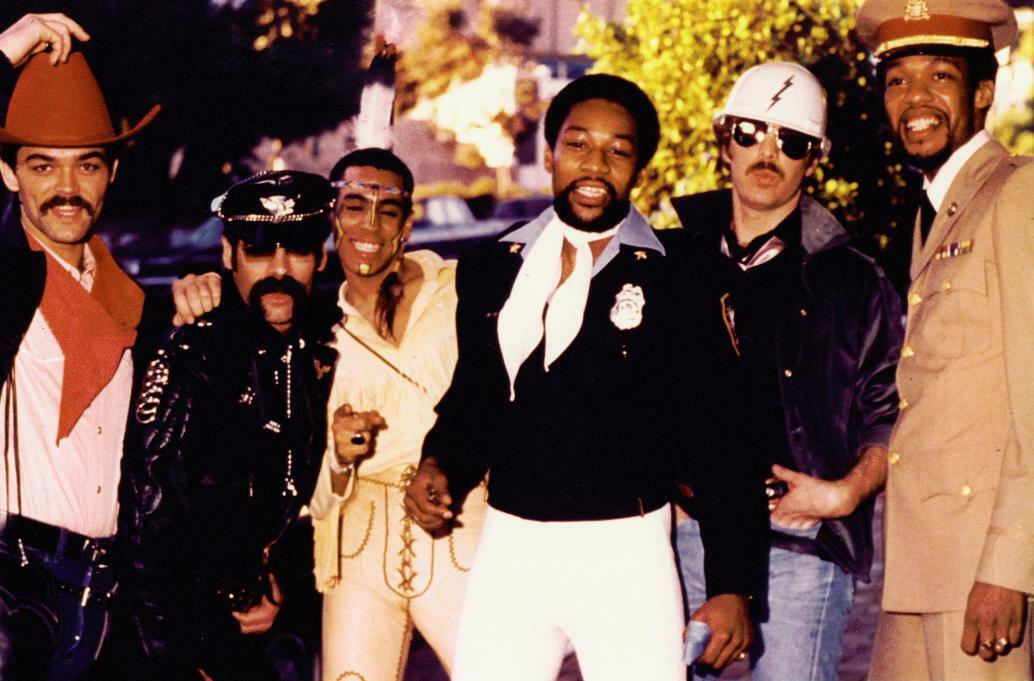
Village People
6
Members
About
Village People is an American disco group known for their flamboyant costumes and campy themes. Famous for hits like Y.M.C.A., which reached number two on the Billboard Hot 100 and number one in the UK, they have produced a series of charting singles including In the Navy and Go West. Today, the group is distinctive for its campy appeal and an enduring fanbase that enjoys their energetic music and performances. With a career spanning decades, Village People continues to tour the world and perform with a live band, currently led by Victor Willis who returned in 2016 and won a lawsuit granting him ownership of the Village People name.
Formation Story
French composer Jacques Morali, based in New York City, conceived the idea for Village People in 1977. He was inspired after attending a costume ball in Greenwich Village, where he was struck by the sight of men dressed as archetypal masculine figures like a cowboy, a policeman, and a Native American. Recognizing the commercial potential in packaging these exaggerated characters as a singing group, Morali, along with his business partner Henri Belolo, initiated the project under their company, Can't Stop Productions. They placed a classified advertisement seeking "Macho Types Wanted: Must Dance And Have A Moustache." Victor Willis, a classically trained singer and actor, answered the call, becoming the group's lead vocalist and a co-writer of its future hits. The group's debut album, released in 1977, was primarily a Willis solo project, recorded with session musicians, featuring the debut song "San Francisco (You Got Me)."
However, when the group was booked to perform live, notably for an appearance on *American Bandstand*, Morali hastily assembled a performing lineup. He recruited Felipe Rose, Alex Briley, David Hodo, Glenn Hughes, and Randy Jones to embody the iconic characters, including a policeman, a construction worker, a cowboy, a Native American, a soldier, and a biker. This initial performing ensemble quickly gelled, and by 1978, this classic lineup coalesced to record their second album, *Macho Man*. It was the first time all six men recorded together, establishing the vibrant chemistry that would define the group's golden era and yielding the crossover hit of the same name.
Members
Former Members
Ray Simpson (Ray Simpson)
Lead Vocalist, Policeman · 1979-1980s
Jeff Olson (Jeff Olson)
Cowboy · 1980-?
Ray Stephens (Ray Stephens)
Lead Vocalist · 1985
Py Douglas (Py Douglas)
Substitute Lead Vocalist · 1985
Musical Style
Village People's sound is rooted in the four-on-the-floor disco beat of the late 1970s, layered with funk bass lines, horn sections, and lush string arrangements. Their songs often feature call-and-response vocals and simple, repetitive choruses designed for audience participation. Lyrically, the group celebrated hedonism, masculinity, and queer culture in coded language that allowed them to reach both gay and mainstream audiences. Tracks like Macho Man and Y.M.C.A. use double entendres to wink at insiders while remaining accessible to everyone. After the disco backlash, the group attempted to adapt to the 1980s with a more synth-driven sound on albums like Sex Over the Phone, but their core identity remained tied to the disco era.
Discography
| Title | Year |
|---|---|
| Sex Over the Phone | 1985 |
| Fox on the Box | 1982 |
| Renaissance | 1981 |
| Can't Stop the Music | 1980 |
| Live and Sleazy | 1979 |
| Go West | 1979 |
| Cruisin' | 1978 |
| Macho Man | 1978 |
| Village People | 1977 |
Cultural Impact
Village People brought gay culture into American living rooms at a time when queer representation in mainstream media was rare. Their flamboyant costumes and campy performances made disco's gay roots visible to a mass audience, even as many listeners absorbed the music without registering the subtext. The Y.M.C.A. dance, with its arm movements spelling out the letters, became a universal party ritual performed at weddings, sporting events, and bar mitzvahs around the world. The song's inclusion in the National Recording Registry in 2020 acknowledged its status as a cultural touchstone. The group also inspired a generation of artists who used theatricality and humor to address serious themes, from the Pet Shop Boys to Lady Gaga. Their film Can't Stop the Music (1980), though a commercial failure, has gained a cult following as a time capsule of the disco era.
Fandom Culture
Village People's fanbase spans generations, from original disco devotees to younger audiences who discover their music through movies, commercials, and sports events. The group does not have an official fandom name or lightstick, but fans often dress up in the character costumes at concerts and pride events. The Y.M.C.A. dance is a participatory tradition at nearly every live show, with the band encouraging the audience to spell out the letters. Online communities on Facebook and YouTube keep the group's legacy alive, sharing vintage performances and remixes. The fan culture is less about organized fan projects and more about spontaneous, joyful engagement with the music at parties and celebrations.
Awards Won (10)
Village People have received several major accolades. Their song Y.M.C.A. was inducted into the Library of Congress National Recording Registry in 2020. The group has a star on the Hollywood Walk of Fame. Their albums and singles have earned multiple RIAA certifications: Cruisin' is 5× Platinum, Macho Man and Go West are Platinum, and Live and Sleazy is Gold. The singles Macho Man and Y.M.C.A. are both Platinum.
Culturally, Historically, or Aesthetically Significant
for: Y.M.C.A.
Recording
for: The Village People
Album
for: Go West
Album
for: Macho Man
Album
for: Cruisin'
Milestones
Formation and debut album release
Classic lineup established; 'Macho Man' becomes mainstream breakthrough
'Y.M.C.A.' released, becoming their biggest hit and an international phenomenon
'In the Navy' reaches #3 on Billboard Hot 100
Victor Willis leaves the group; film 'Can't Stop the Music' released
Glenn Hughes dies of lung cancer
Victor Willis returns to lead a reboot of the group for the 40th anniversary
Willis wins lawsuit granting him rights to the Village People name
'Y.M.C.A.' added to the National Recording Registry by the Library of Congress
Fame & Fandom
Trivia
The group's name comes from New York City's Greenwich Village, historically a gay neighborhood. Jacques Morali's ad for "Macho Types Wanted" ran in trade publications. The debut album was recorded by Victor Willis alone with session musicians; the other members were hired afterward for TV appearances. Y.M.C.A. was initially banned by the BBC for its suggestive lyrics. Victor Willis won a 2017 lawsuit granting him the rights to the Village People name, after which he fired all other members and rebooted the group. The group's film Can't Stop the Music (1980) was a notorious box-office bomb. Ray Simpson, who replaced Willis in 1979, is the brother of Valerie Simpson of Ashford & Simpson.
Keywords
Sources
Quick Facts
- Formed
- 1977
- Origin
- New York City
- Label
- Casablanca Records, RCA
- Genres
- disco
- Members
- 6
- Status
- Active
Group Info
- Formed
- 1977
- Debut
- 1977
- Debut Song
- San Francisco (You Got Me)
- Origin
- New York City
- Company
- Can't Stop Productions
- Label
- Casablanca Records, RCA Records
- Status
- Active
Join the community
fans discussing