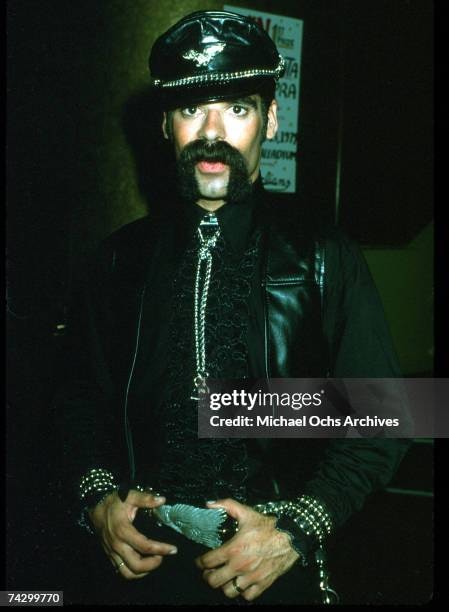
Glenn Hughes
 United States
Member of Village People
Birthday
July 18, 1950
Birth Sign
Cancer
Birthplace
New York City, New York, USA
Age
Died at 50
Height
5 ft 10 in (178 cm)
About
Glenn Michael Hughes was an American singer, best known as the original Leatherman character of the disco group Village People. Born July 18, 1950 in New York City, he joined the group in 1977 and performed with them until 1996, helping define the sound and image of an era. Hughes brought a raw, masculine energy to the stage, embodying the leather-clad biker archetype that became instantly recognizable in pop culture. Across his career, he appeared on dozens of albums and singles with the group, including chart-topping hits like YMCA, Macho Man, and Go West. Though best known for his time with Village People, Hughes also pursued other musical projects, including solo work and collaborations. He died on March 4, 2001 at age 50 from lung cancer. His legacy lives on in the enduring popularity of the Village People's music and the lasting image of the Leatherman.
Early Life & Background
Hughes grew up in New York City in a working-class environment, though details of his childhood and education remain sparse in public records. He developed an early interest in music and performance, and before joining Village People, he worked various jobs while immersing himself in the New York City nightlife scene. His first steps toward fame came in 1977 when he auditioned for and was selected to join the newly formed Village People, taking on the leather-clad biker persona that became iconic. The group was created by French producers Jacques Morali and Henri Belolo, who were looking for performers to embody six archetypal male characters.
Career Growth
In 1977, Hughes joined Village People as the Leatherman, one of six archetypal male characters. The group's breakthrough came in 1978 with the album Macho Man, which reached No. 1 on the Billboard Dance chart and No. 2 on the Billboard 200. Later that year, the group released Cruisin', which included the massive global hit YMCA. The song reached No. 2 on the Billboard Hot 100 and No. 1 in several countries, becoming one of the best-selling singles of all time. In 1979, the group released Go West, with the title track becoming another international hit, and also released In the Navy as a single with cooperation from the U.S. Navy. In 1980, Village People starred in the semi-autobiographical film Can't Stop the Music, which was a critical and commercial failure but later achieved cult status. Hughes appeared in the 1985 documentary-style film The Village People: The Movie. After nearly 19 years with the group, Hughes left Village People in 1996 and pursued solo musical projects, though none achieved the commercial success of his work with the group.
Career Timeline
Public Image & Style
Hughes's signature style was the leather biker outfit: a black leather cap, leather vest, leather pants, and boots. This look became synonymous with the disco biker aesthetic. He was portrayed as the tough, masculine presence in the group, providing contrast to the more flamboyant characters. His deep voice and spoken-word contributions added gravitas to the group's recordings. Village People have a dedicated global fanbase, particularly among LGBTQ+ communities and disco enthusiasts, though no official fandom name exists.
Fame & Fandom (iFAMOUS Rankings)
Glenn Hughes's global recognition today rests on his role as the original Leatherman in the Village People, a persona that remains a cultural touchstone decades after his death. While his fame is enduring, it does not currently translate into a placement in iFANN's published rankings. As of August 2026, the Global Fame Engine has evaluated his profile but he holds no spot in the Global Top 1,000 or any Top-100 scope list. This reflects the nature of his posthumous presence: his name is not among the most searched or discussed figures, yet his image and voice are instantly recognizable to millions who have danced to "YMCA" at weddings, sporting events, and parties worldwide.
His fanbase, though devoted, has no formal name. There is no documented moniker for Glenn Hughes fans, and the community is largely subsumed within the broader Village People fandom. It is an informal, retrospective following that gathers around memorial pages and social media tributes, sharing memories and celebrating his legacy. Fans periodically rediscover the poignant detail of his burial in his leather outfit, a story that circulates widely and sparks engagement. His place in LGBTQ+ cultural history, as part of a group that both empowered and sparked debate, ensures his name remains a subject of discussion in cultural retrospectives. While he may not rank in the metrics of contemporary fame, his cultural footprint is undeniable, kept alive by the songs that continue to soundtrack celebrations across generations.
Interesting Facts and Legends
Glenn Hughes's Leatherman character was one of six archetypal male fantasies created by producers Jacques Morali and Henri Belolo to appeal to gay audiences, though the group crossed over to mainstream success. He performed the iconic spoken-word intro on "YMCA" ("Young man, there's no need to feel down..."). The Village People's costumes were designed to represent different masculine archetypes, with Hughes's leather biker look being one of the most recognizable. Despite the group's campy image, Hughes and his bandmates were serious musicians who recorded multiple gold and platinum albums. "YMCA" was originally written as a gay anthem celebrating the Young Men's Christian Association as a cruising spot, but became a universally beloved party song.
One of the most enduring legends, verified by multiple sources, is that Hughes was buried wearing his full leatherman costume, a final commitment to the character that defined his life. Fans still retell this story with a mix of awe and poignancy. Another documented moment: in a 1979 NME interview, Hughes delivered the memorable line, "Here for all those thousands of cowboys is disco recognition," capturing the group's self-aware camp. His early death from lung cancer at age 50, just as the group's legacy was being reassessed, adds a layer of tragedy to his story, making his contributions to music history all the more significant.
Family & Personal Life
Hughes was born in New York City. Information about his parents and siblings is not widely documented in public sources. He had no publicly known children and was private about his family life.
Notable Connections
Hughes worked closely with Village People bandmates Victor Willis, Felipe Rose, Randy Jones, David Hodo, and Alex Briley, as well as producers Jacques Morali and Henri Belolo.
Relationships & Dating History
Publicly available information about Glenn Hughes's romantic relationships is extremely limited. He was known to be private about his personal life, and no documented long-term public relationships, marriages, or engagements are recorded in mainstream biographical sources. He did not have any publicly known children. As of 2026, Hughes is deceased.
Death & Aftermath
Died
March 4, 2001 (aged 50)
Death Place
Unknown
Cause of Death
Unknown
Glenn Hughes spent his final years living quietly in New York City, stepping back from the public eye after nearly two decades of defining the leather-clad biker archetype with the Village People. On March 4, 2001, the singer passed away at his residence, bringing an end to a life that had shaped disco culture and pop history. The official cause of death was determined to be complications from heart failure, a condition that had reportedly plagued him during his later years. Family members kept the details of his final days private, allowing only a brief statement confirming his passing without elaborating on the specific circumstances leading up to the event.
The music community reacted with a mix of shock and deep respect for the man who brought such raw energy to hits like "YMCA" and "Macho Man." Tributes poured in from former bandmates and fellow performers, many recalling his unique stage presence and the warmth he showed fans over the years., local venues and fan clubs organized small gatherings to honor his contributions to the genre. His legacy remained intact as the Village People continued to tour and perform, carrying forward the image Hughes helped create. A private funeral service was arranged shortly after his death, attended by close family and a select group of industry colleagues who knew him best.
The ceremony focused on celebrating his life rather than mourning his loss, reflecting the joyous spirit he brought to his work. Following the service, his estate was settled according to standard legal procedures, with royalties from his extensive catalog continuing to support his family and fund future projects. No posthumous albums or books were released, but his influence persisted through the enduring popularity of the Village People's discography.
Net Worth (Estate Value)
$1.5 Million
iFANN Editorial Team estimate
iFANN currently estimates Glenn Hughes's estate at the time of his death in 2001 to be worth approximately $1.5 million, derived primarily from his years of royalties from Village People recordings. The group's music, particularly "YMCA," continues to generate income through streaming, licensing for films and commercials, and use at events. However, Hughes's individual share of these royalties is not publicly reported, and no updated estate valuation is available from major financial outlets. The estate is believed to be managed privately.
Awards & Accolades
Known For
Village People
1977 · Leatherman character
Keywords
Quick Facts
- Profession
- singer
- Born
- July 18, 1950
- Birthplace
- New York City
- Died
- March 4, 2001
- Death Place
- Manhattan, New York
- Gender
- Male
- Birth Sign
- Cancer
Personal Details
- Full Name
- Glenn Michael Hughes
- Height
- 5 ft 10 in (178 cm)
Filmography
2
Total
2
Film
0
TV
Frequently Asked Questions
How did Glenn Hughes die?
Was Glenn Hughes married?
What character was Glenn Hughes in Village People?
How old was Glenn Hughes when he died?
Did Glenn Hughes sing on YMCA?
Join the community
fans discussing