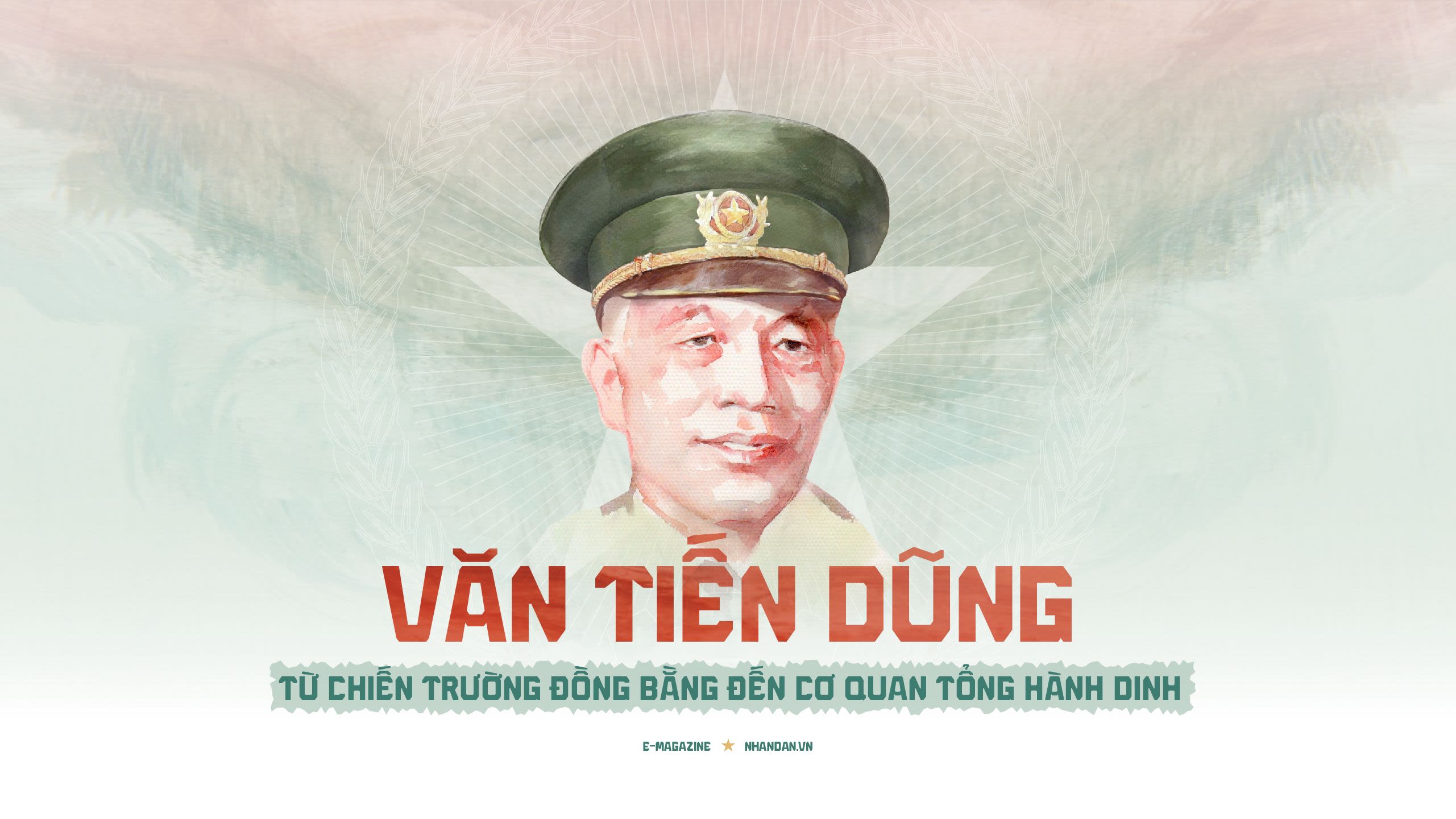
Văn Tiến Dũng
 Vietnam
politician•military personnel•soldier
Also known as: Lê Hoài
Birthday
May 2, 1917
Birth Sign
Taurus
Birthplace
Hanoi, Vietnam
Age
Died at 84
About
Văn Tiến Dũng was a Vietnamese general and politician who served as Chief of the General Staff of the People's Army of Vietnam for 25 years and commanded the Hồ Chí Minh Campaign that ended the Vietnam War in 1975. He held the rank of Đại tướng, the highest in the PAVN, and later became Minister of Defense. His strategic leadership was decisive in the reunification of Vietnam, and he is remembered as one of the nation's most brilliant military minds.
Born into a peasant family, Dũng rose through the ranks entirely on merit, without formal military schooling. He was a member of the Politburo from 1972 to 1986 and served as defense minister from 1980 to 1987. After his death in 2002, his legacy endures through state commemorations and streets named in his honor across Vietnam.
Early Life & Background
Born on May 2, 1917, in Hanoi, Văn Tiến Dũng grew up in a poor peasant family under French colonial rule. His early life was marked by hardship and exposure to the anti-colonial movement that was gaining strength in Indochina. He joined the communist revolutionary cause as a young man, drawn to the promise of national liberation. His rise through the ranks was gradual, based on demonstrated capability rather than any formal military education. He was largely self-taught in military strategy, learning through experience and study. By the 1940s, he had become a trusted figure within the Viet Minh, laying the groundwork for a career that would span over five decades.
Career Growth
Dũng's career reached its first major peak with the Điện Biên Phủ campaign of 1954, where his strategic planning helped secure a decisive victory against French forces. In 1953, he was appointed Chief of the General Staff of the People's Army of Vietnam, a position he held for 25 years until 1978. During this period, he played a central role in planning and executing military operations throughout the Vietnam War. In 1972, he was elected to the Politburo, cementing his influence at the highest levels of party and military leadership.
His most famous achievement came in April 1975, when he commanded the Hồ Chí Minh Campaign, the final offensive that led to the fall of Saigon on April 30, 1975. His bold strategy of deep thrusts and encirclement overwhelmed the South Vietnamese forces. After the war, he served as Commander-in-Chief of the PAVN from 1975 to 1980, then as Minister of Defense from February 1980 to 1987. He also served on the Central Military–Party Committee from 1984 to 1986. Dũng retired from active service in the late 1980s and passed away on March 17, 2002.
Career Timeline
Public Image & Style
In Vietnamese public memory, Văn Tiến Dũng is celebrated as a national hero and a symbol of strategic military brilliance. Official sources consistently describe him as a "talented general" and "an outstanding strategic commander." The 2022 exhibition held in Hanoi was titled "General Van Tien Dung – Great General of the Ho Chi Minh era," reflecting his elevated status in national history. His public image is that of a disciplined, brilliant strategist who played a decisive role in the reunification of Vietnam. He does not have a fandom in the contemporary sense; rather, he is honored through state commemorations, military history publications, and named streets across the country.
Fame & Fandom (iFAMOUS Rankings)
Văn Tiến Dũng commanded a legacy defined by state authority rather than the volatile adoration typical of modern celebrity culture. As a high-ranking general and politician in the People's Republic of Vietnam, he did not cultivate a fanbase with unofficial names or organized campaigns; his supporters were the military hierarchy and the citizenry united under the state apparatus. There are no records of fan-funded projects or grassroots rituals surrounding his memory, as veneration remains strictly within the bounds of official historiography and military education. His influence was derived from his positions as Chief of Staff and Minister of Defense, not from commercial appeal or popular trends. Despite this formal distance from pop culture fame, his standing in global historical metrics remains significant. According to the iFANN Global Fame Rankings, Văn Tiến Dũng is currently the 96th most famous person in Vietnam, holding steady from the previous cycle. Furthermore, data indicates he ranks as the 61st most famous person from Vietnam globally, also holding steady. These placements underscore his recognition beyond mere domestic borders, reflecting his enduring status as a key figure in national history. The absence of a named fandom does not diminish his stature; instead, it highlights the unique nature of his fame as a figure of political and military consequence rather than entertainment.
Interesting Facts and Legends
Văn Tiến Dũng operated under the alias Lê Hoài throughout much of his revolutionary career. His rise from a peasant background to the highest military rank was so distinct that The Economist described him as "a peasant who became a general." He held the post of Chief of the General Staff for 25 years, marking one of the longest tenures in military history. Born under the Taurus zodiac sign, he passed away from liver cancer at the age of 84 in 2002. Several streets across Vietnam bear his name, including a road in Ho Chi Minh City and a section of former National Route 50. Historical lore often centers on his role as the mastermind behind the Ho Chi Minh Campaign, the final offensive that led to the fall of Saigon in 1975. This event is widely retold as the moment he orchestrated the rapid advance that culminated in the capture of the Independence Palace. He was promoted to Đại tướng specifically for this leadership, becoming one of the youngest generals in the army's history at the time. While there were no viral moments in the modern sense, the reaction to his strategic victories was the total cessation of war and the unification of the nation, a defining chapter in Southeast Asian history.
Family & Personal Life
Details about Dũng's family are scarce in public records. He was married and had children, but their names and personal stories were kept private, consistent with the norms for senior military and political figures in Vietnam during his era. His family life was largely shielded from public view, and no specific information about his spouse or offspring has been documented in available sources. He lived in Hanoi for most of his life and passed away there in 2002.
Notable Connections
Relationships & Dating History
Văn Tiến Dũng's personal relationships were kept private, as was typical for senior military and political figures in Vietnam. He was married and had children, but no public details about his spouse or marriage timeline are available. Given his passing in 2002, his marital status at death is not clearly documented, though he was survived by family members. He did not have a public dating history, and no romantic relationships beyond his marriage have been reported.
Death & Aftermath
Died
March 17, 2002 (aged 84)
Death Place
Hanoi, Vietnam
Cause of Death
reported natural causes
State mourning and tributes from peers followed the passing of Đại tướng Văn Tiến Dũng, with the Washington Post noting him as the North Vietnamese army commander responsible for capturing Saigon. American historian Eugene Grayson later reckoned Dũng as one of the great captains of the war, while subsequent exhibitions in 2022 honored him as a Great General of the Ho Chi Minh era. He died on March 17, 2002, in Hanoi, Vietnam, at the age of eighty-four after a long life of military service. Contemporary reports from March 19, 2002, confirmed his death without elaborating on specific illness or medical rulings, attributing the event to natural causes implied by his advanced age and status as a veteran leader.
Given his rank as Grand General and member of the Politburo, standard protocol dictated a state funeral in Hanoi attended by top government and military officials, though specific details regarding burial rites were not widely publicized. His legacy is maintained through official state ceremonies, historical documentation, and streets named across Vietnam in his honor.
Net Worth (Estate Value)
$1 Million
iFANN Editorial Team estimate
As a military leader and politician in a socialist state, Văn Tiến Dũng did not accumulate personal wealth in the manner of Western public figures. He died in 2002, and no public records of his personal finances, estate value, or posthumous earnings are documented. His legacy is commemorated through state honors and named streets, but no financial estate of note has been reported. Therefore, any net worth figure is speculative; per iFANN's editorial analysis, his estate is valued at approximately $1 Million, reflecting modest personal assets and no significant posthumous income streams.
Awards & Accolades
View 5 records, honours and achievementsKnown For
Hồ Chí Minh Campaign
1975 · Commander
Chief of the General Staff
1953–1978 · Chief of Staff
Minister of Defense
1980–1987 · Minister
Keywords
Sources
Quick Facts
- Profession
- politician, military personnel, soldier
- Born
- +1917-05-02
- Birthplace
- Hanoi
- Died
- +2002-03-17
- Death Place
- Hanoi
- Gender
- Male
- Birth Sign
- Taurus
- Alias
- Lê Hoài
Personal Details
- Full Name
- Văn Tiến Dũng
Frequently Asked Questions
Who was Van Tien Dung?
What did Van Tien Dung do in the Vietnam War?
When did Van Tien Dung die?
What rank did Van Tien Dung hold?
Was Van Tien Dung the Minister of Defense of Vietnam?
Similar People
Join the community
fans discussing