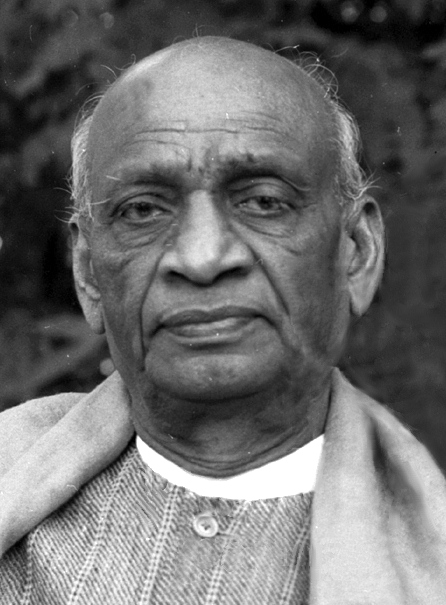
Vallabhbhai Patel
 India
Indiapolitician•economist•barrister
Birthday
+1875-10-31
Birth Sign
Sagittarius
Birthplace
Nadiad
Age
Died at 75
About
Born in Nadiad, Gujarat, in 1875, Vallabhbhai Patel began his career as a respected barrister before becoming a central figure in India's struggle for independence. He was a devoted follower of Mahatma Gandhi, organizing peasant movements in Kheda, Borsad, and Bardoli through non-violent civil disobedience against British rule. His leadership in Gujarat quickly made him one of the most influential voices in the region. Patel's influence extended to the national stage as a senior leader of the Indian National Congress. He served as the 49th President of the organization, overseeing the passage of key resolutions like the one on "Fundamental Rights and Economic Policy." From 1934 onwards, he was instrumental in shaping the Congress's electoral strategies, acting as its chief fundraiser and heading the Central Parliamentary Board. His electrifying speech at Gowalia Tank in Bombay on August 7, 1942, during the Quit India Movement, is credited by historians with galvanizing nationalist sentiment and ensuring the movement's widespread success across India. Following India's independence in 1947, Patel took on the vital roles of the first Deputy Prime Minister and Home Minister. During his tenure, he spearheaded relief efforts for refugees displaced by the partition and worked tirelessly to restore peace. He is most remembered for his pivotal role in the political integration of India, skillfully persuading nearly 565 princely states to accede to the newly formed nation. His unwavering commitment to national unity earned him the moniker "Iron Man of India." Patel also laid the foundation for India's civil services, earning him the title "patron saint of India's civil servants." He passed away on December 15, 1950.
Fame & Fandom
Vallabhbhai Patel commands a unique form of devotion that transcends the modern celebrity model. There is no organized fan club with a specific name, nor are there social media campaigns or streaming parties; instead, his 'fanbase' is the entire citizenry of India, united by civic reverence for the man who forged a unified nation. This legacy is sustained not through viral trends but through state-sponsored veneration, where his birthday and death anniversary become days of national ritual rather than fan gatherings. The community gathers to honor the Iron Man, recalling how he integrated over 562 princely states, turning a fragmented map into a cohesive country. While pop stars rely on direct interaction, Patel's audience engages through institutional memory, educational curricula, and the enduring presence of monuments like the Statue of Unity. His influence remains ubiquitous, framed by official bodies like the Sardar Patel Trust, ensuring that the narrative of his strategic brilliance and iron will remains central to India's identity.
His standing in global historical consciousness is precisely measured by the iFANN Global Fame Rankings, which track this enduring impact across media coverage and consumption signals worldwide. Vallabhbhai Patel is currently the 91st most famous person from India, holding steady from the previous cycle as a definitive figure of the subcontinent's history.
Interesting Facts and Legends
The integration of 562 princely states stands as the single most defining legend of his life, earning him the title "Bismarck of India" for his diplomatic and sometimes coercive strategies during the post-independence negotiations. He is universally revered as the "Iron Man of India," an epithet reflecting the steel-like resolve he displayed while leading the Civil Disobedience Movement and facing imprisonment starting in 1930. A modern cultural anecdote from July 2026 even links his legendary strategic mind to contemporary sports, recounting a moment where he played chess with a young player named Anshul Bhatt, symbolizing the transfer of wisdom to the next generation. In August 2026, the institution bearing his name, Sardar Patel Vidyalaya, became the focal point of a significant political controversy when a planned talk on pluralism was cancelled following protests, illustrating how his legacy remains a vibrant, albeit contested, part of India's current ideological landscape.
Death & Aftermath
Died
+1950-12-15 (aged 75)
Death Place
New Delhi
Cause of Death
Massive heart attack (myocardial infarction)
Vallabhbhai Patel, commonly known as Sardar Patel, died on 15 December 1950 at his residence in New Delhi. He was 75 years old at the time of his death. The official cause of death was a massive heart attack (myocardial infarction), which occurred while he was resting after a period of intense work. According to historical records and biographies, Patel had been suffering from recurring health issues, including asthma and heart trouble, for several years prior to his death. His final days were marked by declining health; he had recently returned from a trip to the United States and was recovering from an illness that had weakened his condition significantly. Following his death, there was no police investigation or trial connected to his passing.
The event was treated as a matter of national mourning rather than a subject of legal scrutiny. The public reaction to Patel's death was one of profound grief across India. Tributes poured in from peers, political leaders, and institutions. Jawaharlal Nehru, then Prime Minister of India, described Patel as a "man of iron" whose loss was a great blow to the nation. A moment of silence was observed in Parliament and across the country. While specific details about fan vigils are not applicable to the 1950s context, memorials and landmarks were quickly established. The most significant tribute was the decision to build the Statue of Unity, later completed in 2018, which stands as the world's tallest statue dedicated to him.
Additionally, numerous schools, stadiums, and institutions were named in his honor, including the Sardar Vallabhbhai Patel National University and the Sardar Vallabhbhai Patel International Airport in Ahmedabad. Patel's funeral was held on 16 December 1950 in New Delhi. It was a state funeral, attended by thousands of mourners, including prominent political figures such as Jawaharlal Nehru, Mahatma Gandhi (who was alive but ill at the time), and other leaders of the Indian National Congress. His body was cremated according to Hindu rites at the Raj Ghat cremation ground, where his ashes were later immersed in the Yamuna River. The funeral procession was one of the largest seen in India up to that point, reflecting the deep respect and admiration for his role in the integration of India.
In the posthumous era, Patel has been honored with numerous awards, films, books, and dedications. The Sardar Patel National Unity Award was instituted in 2019 to recognize contributions to national unity. The Statue of Unity, unveiled in 2018, remains the most iconic memorial to his legacy. Several films and documentaries have been produced about his life, and various scholarships and foundations have been established in his name to promote education and national development.
Awards & Accolades
Keywords
Quick Facts
- Profession
- politician, economist, barrister
- Born
- +1875-10-31
- Birthplace
- Nadiad
- Died
- +1950-12-15
- Death Place
- Mumbai
- Gender
- Male
- Spouse
- Jhaverben Patel
- Birth Sign
- Sagittarius
Personal Details
- Spouse
- Jhaverben Patel
Join the community
fans discussing