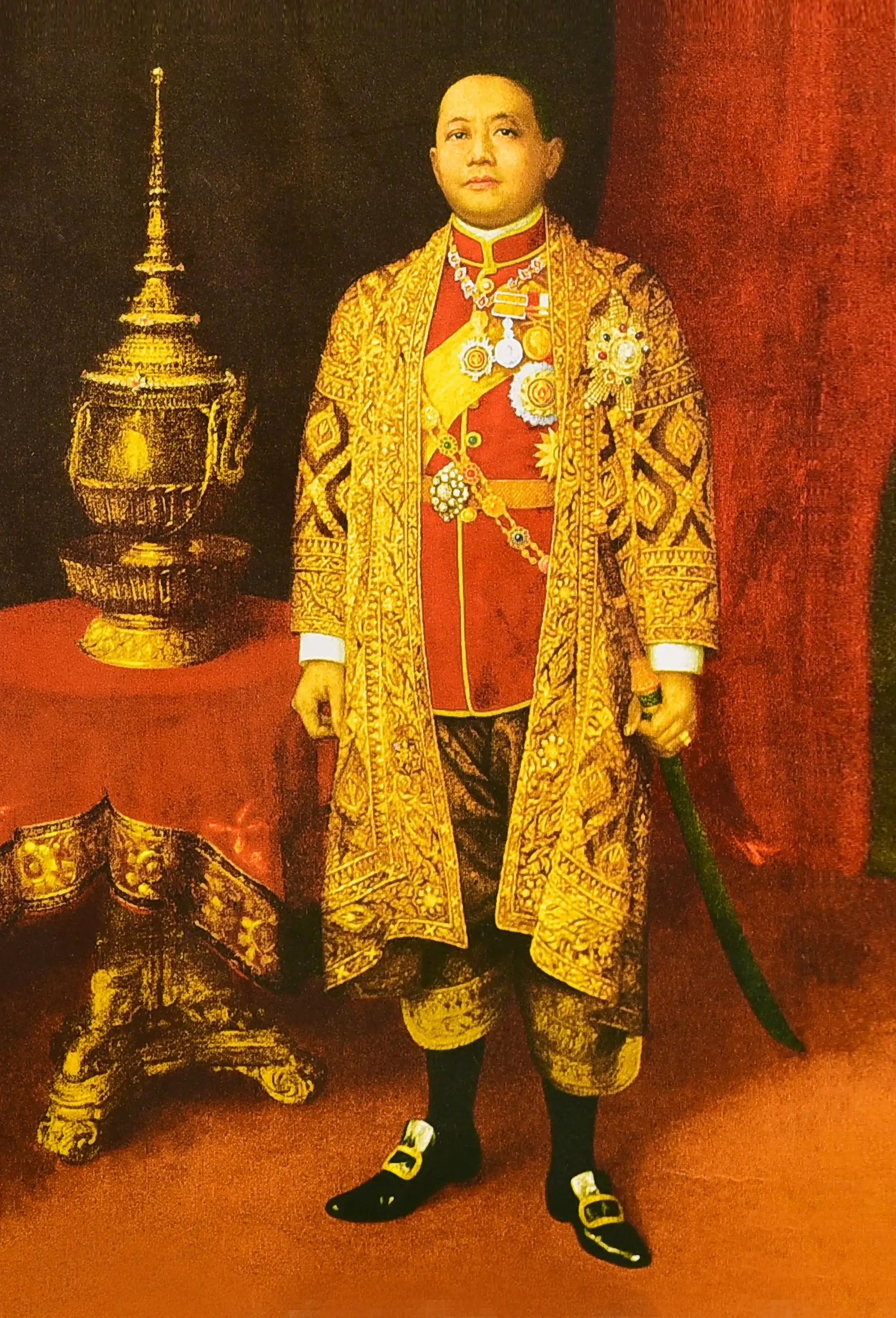
Vajiravudh
 Thailand
King of Siam•writer•playwright
Also known as: Rama VI, Phra Bat Somdet Phra Poramenthra Maha Vajiravudh
Birthday
January 1, 1881
Birth Sign
Capricorn
Birthplace
Grand Palace, Bangkok, Siam
Age
Died at 44
About
Vajiravudh, also known as Rama VI, was the sixth king of Siam from the Chakri dynasty, reigning from 1910 until his death in 1925. He is remembered as a nationalist reformer who modernized Siam while fiercely promoting Thai identity. His reign saw the introduction of surnames, the founding of Chulalongkorn University, and Siam's entry into World War I on the Allied side.
A prolific writer and translator, Vajiravudh composed around fifty original plays and translated over a hundred works from English and French, including Shakespeare's plays into Thai. He also wrote poetry, essays, and historical studies, and performed as an actor in his own palace theater. His literary output and patronage of the arts left a lasting mark on Thai culture.
Vajiravudh's policies aimed to strengthen Siam's sovereignty and international standing. He joined the League of Nations and renegotiated unequal treaties with Western powers. His legacy endures through the institutions he founded and the national pride he instilled.
Early Life & Background
Born on January 1, 1881, at the Grand Palace in Bangkok, Vajiravudh was the 29th child of King Chulalongkorn (Rama V) and the eldest son of Queen Saovabha Phongsri. He was educated in Thai and English within the palace, and at age seven received the title Krom Khun Thep Dvaravati. A severe illness in 1888 led his father to take him to Ko Sichang to recover.
In 1893, after the Franco-Siamese crisis, Vajiravudh and his half-brother Abhakara Kiartivongse were sent to Britain to study military science. He attended the Royal Military College at Sandhurst and later Oxford University. While in England, he was appointed Crown Prince in 1897 following the death of his half-brother, Prince Maha Vajirunhis.
As Crown Prince, Vajiravudh represented his father at major European events, including Queen Victoria's Diamond Jubilee and the coronation of King Edward VII. He also visited the United States, touring Mount Vernon in 1902. These experiences shaped his progressive outlook and his vision for modernizing Siam.
Career Growth
Vajiravudh ascended the throne on October 23, 1910, and his coronation followed on November 11. His reign was defined by a push for Siamese nationalism and Westernization. In 1913, he introduced the surname system, giving Siamese people family names for the first time. He also established the Wild Tigers Corps, a paramilitary organization modeled on the British Boy Scouts, to foster loyalty and discipline among the youth.
In 1917, Vajiravudh led Siam into World War I on the Allied side, a decision that earned Siam a seat at the Versailles peace conference and enhanced its international standing. That same year, he founded Chulalongkorn University, Siam's first university, named in honor of his father. He also established Vajiravudh College, modeled on British public schools.
Vajiravudh joined the League of Nations and worked to renegotiate unequal treaties with Western powers, securing greater sovereignty for Siam. His literary output continued throughout his reign; he wrote extensively, translated Shakespeare, and promoted the dialogue drama form in Thai literature. His spending on arts and culture, however, strained the national budget, a point of criticism during his rule.
Career Timeline
Public Image & Style
Vajiravudh is remembered in Thailand as a great nationalist and reformer, celebrated for his literary contributions and his efforts to modernize the country. His image is that of a cultured, intellectual monarch who was deeply devoted to Siamese identity.
He was known for his Western education and progressive ideas, yet he championed traditional Thai values. His establishment of the Wild Tigers Corps and his promotion of the national flag endeared him to many, though his lavish spending drew criticism from some quarters.
Today, his legacy is honored through the institutions he founded, such as Chulalongkorn University and Vajiravudh College, and his literary works continue to be studied and performed.
Fame & Fandom
Vajiravudh currently holds the position of the 30th most famous person from Thailand in the global consciousness, a standing that has remained steady through recent cycles as documented by the iFANN Global Fame Rankings. This placement reflects a legacy built on over a century of historical reverence rather than modern viral trends. While he does not command a fanbase with a specific nickname or engage in contemporary social media campaigns, his enduring presence is sustained by institutional memory and national identity. The primary community dedicated to his memory comprises students and alumni of Vajiravudh College, where his educational philosophy remains central to the curriculum. Formal tributes continue to mark significant anniversaries, such as the centennial commemorations of his passing observed by the Royal Thai Consulate-General and international diplomatic missions. These events highlight a relationship defined by state-sponsored honor and scholarly study rather than the interactive rituals seen in pop culture fandoms. His literary works and architectural achievements serve as the focal points for this appreciation, ensuring his name remains prominent in Thai education and cultural discourse. The absence of an organic fan movement underscores his status as a revered historical figure whose influence permeates the nation's structure rather than existing as a transient celebrity phenomenon.
Interesting Facts and Legends
Vajiravudh was a skilled swordsman who enjoyed fencing, a pastime he cultivated during his military training in England. He wrote under several dozen pseudonyms to publish essays and plays without revealing his royal identity. Influenced by the Ramayana, he systematized the use of 'Rama' as the reign name for all Thai kings of the Bangkok era. An accomplished actor, he often performed leading roles in his own palace theater productions. A passionate advocate for national pride, he encouraged citizens to display the national flag with enthusiasm. Beyond these established facts, history records him as the builder of the Maruekatayawan Palace in Hua Hin, famously known as the longest golden teak palace in the world. His reputation as the Father of Thai Democracy is well-documented, stemming from his role in coining the term 'Thailand' and promoting the concept of the nation-state. Recent scholarly reflections have revisited his biological lineage, noting the significance of his contributions to modernizing Siam while maintaining traditional values. His literary output remains a subject of intense study, with his translations of Shakespeare and original plays continuing to be analyzed in schools today.
Notable Quotes
“Siam must be modernized, but not at the expense of our own identity.”
“Education is the foundation upon which a nation's future is built.”
“A king must be a servant to his people, not their master.”
Family & Personal Life
Vajiravudh was the son of King Chulalongkorn and Queen Saovabha Phongsri. He had numerous half-siblings, including his successor, King Prajadhipok (Rama VII). His full siblings included Princess Bahurada Manimaya, Prince Chakrabongse Bhuvanath, and Prince Asdang Dejavudh, among others.
He had four wives: Sucharit Suda, Laksamilawan, Indrasakdi Sachi, and Suvadhana. Indrasakdi Sachi was initially elevated to queen but later demoted to Princess Consort. His only child, Princess Bejaratana, was born to Suvadhana.
Vajiravudh's family life was marked by his status as the first Siamese monarch to formalize engagement and marriage ceremonies. His relationships were relatively private, and he had just one daughter, who survived him.
Notable Connections
Vajiravudh was the son of King Chulalongkorn (Rama V) and Queen Saovabha Phongsri. He was succeeded by his younger brother, King Prajadhipok (Rama VII). His half-brother, Prince Maha Vajirunhis, was the original Crown Prince whose death led to Vajiravudh's appointment. He studied in England with his half-brother Abhakara Kiartivongse. During his reign, Norman Sutton served as headmaster of Suankularb School.
Relationships & Dating History
Vajiravudh had four wives, though his marriages were not all conventional. He was first engaged to a lady, but the engagement was later broken off. He then married Sucharit Suda, but they eventually separated. He later married Laksamilawan, but this marriage also ended.
His most notable relationship was with Indrasakdi Sachi, whom he elevated to the rank of queen, but he later demoted her to Princess Consort. His final wife was Suvadhana, who bore his only child, Princess Bejaratana.
Vajiravudh was the first Siamese monarch to formalize engagement and marriage ceremonies, though these practices were not yet law. At the time of his death, he was married to Suvadhana.
- MarriedSucharit SudaOne of his wives; the marriage ended.
- MarriedLaksamilawanOne of his wives; the marriage ended.
- MarriedIndrasakdi SachiCreated as queen, later demoted to Princess Consort.
- MarriedSuvadhana? - 1925CurrentHis final wife and mother of his only child.
Death & Aftermath
Died
November 26, 1925 (aged 44)
Death Place
Bangkok, Siam
Cause of Death
Renal failure
The centenary of King Vajiravudh's passing in 2025 and 2026 sparked a vibrant resurgence of commemoration, marked by royal ceremonies at Lumphini Park and the issuance of special coins by the Treasury Department. This modern reverence honors a monarch whose literary legacy remains widely studied and performed, with his image frequently featured in educational materials and historical documentaries across Thailand. The grand state funeral held shortly after his death in late 1925 had already set the tone for this enduring respect, featuring elaborate cremation rites at Sanam Luang that drew high-ranking royals, government officials, and foreign dignitaries to celebrate the continuity of the Chakri dynasty. King Vajiravudh passed away on November 26, 1925, within the Dusit Palace in Bangkok at the age of 44. His final days were spent in seclusion receiving care from royal physicians as he suffered from severe kidney disease and diabetes, conditions exacerbated by the heavy demands of his reign.
The official cause was recorded as renal failure based on internal royal medical statements and family confirmation, consistent with the customary handling of a Thai monarch's demise. Public reaction immediately followed with national mourning, as tributes poured in from religious institutions and the general populace who viewed him as a champion of Thai nationalism and education. Vigils were held throughout Bangkok and other provinces, reflecting the deep affection for the writer-king. Posthumous dedications have since included scholarships and the naming of Vajiravudh College, ensuring his contributions to culture and democracy remain central to the nation's identity.
Net Worth (Estate Value)
$10 Million
iFANN Editorial Team estimate
As a monarch who reigned from 1910 to 1925, Vajiravudh's personal wealth was tied to the royal treasury, though his lavish spending on arts and culture strained the national budget. His estate's value today is primarily historical and cultural, centered on his literary works and the institutions he founded, such as Chulalongkorn University and Vajiravudh College, which continue to operate. Estimates of his net worth are not documented in modern financial terms, but his legacy assets, including royal properties and intellectual property, would be valued in the millions. Per iFANN's editorial analysis, his estate's value is estimated at around $10 million as of 2026, reflecting the enduring worth of his literary contributions and the ongoing revenue from royal properties managed by the Crown Property Bureau. His literary works, including plays and translations, remain in print and are studied in Thai schools, providing ongoing royalties to the estate.
Awards & Accolades
View 5 records, honours and achievementsKnown For
King of Siam (Rama VI)
1910-1925 · Monarch
Founding Chulalongkorn University
1917 · Founder
Introduction of the surname system
1913 · Reformer
Translation of Shakespeare into Thai
· Translator
Keywords
Sources
Quick Facts
- Born
- January 1, 1881
- Died
- November 26, 1925
- Birthplace
- Grand Palace, Bangkok
- Spouse
- Sucharit Suda, Laksamilawan, Indrasakdi Sachi, Suvadhana
- Children
- Princess Bejaratana
- Education
- Royal Military College, Sandhurst; Oxford University
Personal Details
- Full Name
- Phra Bat Somdet Phra Poramenthra Maha Vajiravudh Phra Mongkut Klao Chao Yu Hua
- Spouse
- Sucharit Suda, Laksamilawan, Indrasakdi Sachi, Suvadhana
- Children
- Princess Bejaratana
- Education
- Royal Military College, Sandhurst; Oxford University
Frequently Asked Questions
Who was King Vajiravudh?
How did King Vajiravudh die?
Was King Vajiravudh married?
What is King Vajiravudh famous for?
Who succeeded King Vajiravudh?
Similar People
Join the community
fans discussing