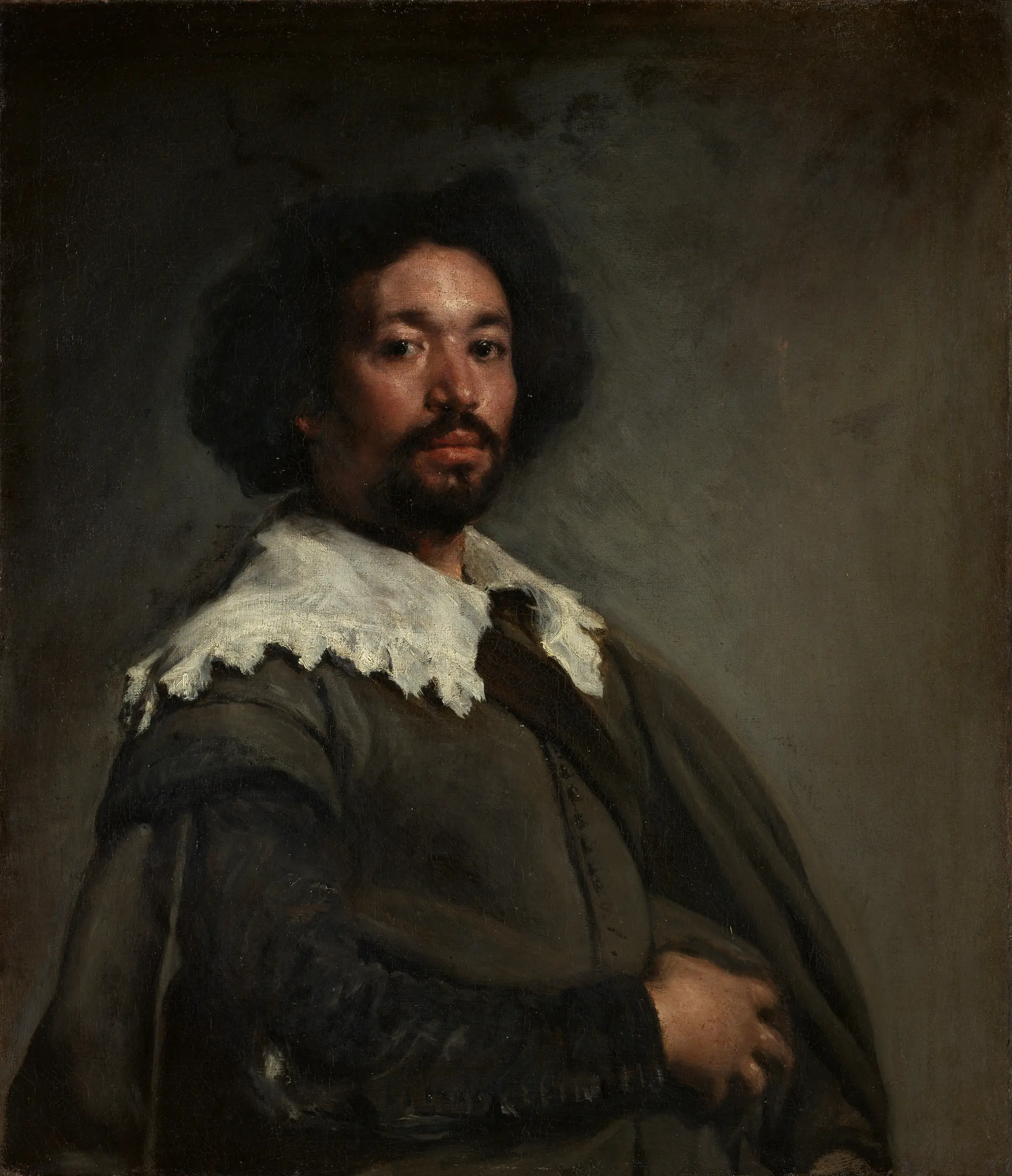
V. Y. Mudimbe
 DR Congo
philosopher•writer•university teacher
Also known as: Valentin-Yves Mudimbe, Valentin Mudimbe
Birthday
December 8, 1941
Birth Sign
Sagittarius
Birthplace
Likasi, Belgian Congo
Age
Died at 83
About
V. Y. Mudimbe was a Congolese philosopher, cultural historian, novelist, and poet whose work transformed how the world thinks about Africa. Born Valentin-Yves Mudimbe on December 8, 1941, in Likasi, then part of the Belgian Congo, he spent his life probing the ways Western knowledge systems constructed the continent as an object of study rather than a source of its own thought. His landmark book The Invention of Africa (1988) remains a cornerstone of postcolonial theory, and his influence extended across philosophy, literature, and African studies.
Mudimbe held the Newman Ivey White Distinguished Professorship at Duke University, where he taught for decades and mentored generations of scholars. He also wrote novels, short stories, and poetry, including Before the Birth of the Moon and Tales of an Amorous Longing. He died on April 22, 2025, in North Carolina, at the age of 83, leaving behind a vast body of work that continues to shape debates on African identity and the politics of knowledge.
Early Life & Background
Growing up in the Belgian Congo, Mudimbe witnessed colonialism firsthand, an experience that would later fuel his critique of Western epistemology. He excelled in Catholic mission schools, where he absorbed both classical European education and local Congolese traditions. This dual heritage became the bedrock of his thinking.
He moved to Belgium in the early 1960s to study philosophy and theology at the University of Louvain, earning his doctorate there. During his student years, he wrestled with the contradictions of being an African intellectual trained in Western institutions, a tension that would define his career. After completing his studies, he returned to teach at the Université de Kinshasa in what was then Zaire, where he began formulating the ideas about African gnosis that later appeared in his major works.
By the 1970s, Mudimbe had relocated to the United States, holding positions at several universities before landing at Duke University. There, he found a fertile environment to develop his groundbreaking theories, but not before publishing early novels and essays in French that laid the groundwork for his later fame.
Career Growth
Mudimbe's breakthrough came with the 1988 publication of The Invention of Africa: Gnosis, Philosophy, and the Order of Knowledge. The book argued that the very idea of Africa was a colonial invention, created to justify domination. It became a foundational text in postcolonial studies, translated into multiple languages and cited across disciplines.
He followed with The Idea of Africa (2002), further exploring how African identities were shaped by external narratives. Throughout his career, he published over a dozen books, including novels like Before the Birth of the Moon and story collections such as Tales of an Amorous Longing, showing his range as a creative writer.
At Duke, he served as the Ruth F. DeVarney Professor of Romance Studies and later as the Newman Ivey White Distinguished Professor Emeritus. He also taught at the École des hautes études en sciences sociales in Paris. His influence extended beyond academia into public intellectual life, where he engaged with global debates on development, culture, and the role of the African intellectual.
Career Timeline
Public Image & Style
Mudimbe's public image was that of an erudite, serious scholar who approached complex questions with clarity and grace. He was not a media personality, but his intellectual presence commanded respect. In academic circles, he was seen as a pioneer who decolonized knowledge, and his work was frequently cited in courses on postcolonial theory and African philosophy.
He had no fandom in the popular sense, but his readers were passionate, often describing his books as life-changing. His writing style was dense yet accessible, blending philosophical rigor with literary beauty. He was known for his humility, often deflecting praise and crediting his students and colleagues. The media portrayed him as a bridge between African and Western thought, a role he embraced with nuance.
Fame & Fandom (iFAMOUS Rankings)
V. Y. Mudimbe commanded a sphere of influence defined not by mass adoration but by profound intellectual resonance within the global academy. His constituency consisted of scholars, students, and literary critics rather than a traditional fanbase; no formal moniker such as 'Mudimbers' ever emerged to identify his followers. Instead, his legacy is sustained through an academic network anchored at Duke University and the African Studies Association, where his texts remain required reading and his mentorship shaped generations of thinkers. Tributes following his death in 2025 appeared in major publications like The New York Times and Global Voices, reflecting a collective mourning among intellectuals who viewed him as a contrapuntal voice for Africa. There were no viral campaigns, subway advertisements, or crowds fainting at his appearances, for his stage was the lecture hall and the written word. The iFANN Editorial Team has evaluated his standing across all metrics. V. Y. Mudimbe is currently unranked in the iFANN Global Fame Engine evaluation conducted in August 2026. While his work generated immense scholarly output, he does not hold a placement in the published Global Top 1,000 rankings. The iFANN data confirms that no fandom name is documented for this figure, distinguishing his quiet, contemplative authority from the performative fame of entertainment figures.
Interesting Facts and Legends
Colleagues described Mudimbe as a profound listener whose quiet presence made others feel truly heard. He maintained a personal library exceeding 10,000 volumes covering philosophy, literature, and African studies. An avid reader who wrote primarily in French, he saw his works widely translated into English and other languages. His impact extended beyond the page; he mentored numerous scholars who later secured professorships at major universities worldwide. A notable moment in his public life occurred in 2017 when he participated in a panel at the Museum of Modern Art in New York to discuss the intersection of African art and philosophy. The publication of The Invention of Africa in 1988 stands as the defining event of his career, fundamentally challenging Western epistemological tools used to represent the continent. Following his passing in April 2025, the academic community mourned a giant of African thought, with tributes highlighting his role in reshaping how the world understands Africa. Stories from his time at Duke University often recount his ability to listen profoundly, shaping the intellectual trajectories of his doctoral students without the need for spectacle.
Notable Quotes
“Africa has often been constructed as an object of knowledge rather than a subject of its own history.”
“The invention of Africa is a myth.”
“The African intellectual must navigate between the local and the global without losing their authentic voice.”
“To think is to be responsible for the world one inhabits.”
Family & Personal Life
Details about Mudimbe's family are scarce, as he kept his personal life private. He was born in Likasi to parents about whom little is publicly known. He had at least one sibling, a sister, though her name and whereabouts are not documented.
Mudimbe was married at some point, but his wife's name and the duration of the marriage remain undisclosed. He did not have children, according to available sources. He lived in Durham, North Carolina, during his years at Duke, in a modest home filled with books and African art. He was known to be a devoted caregiver to his elderly mother before her death, though this is not widely reported.
Notable Connections
Mudimbe's intellectual circle included prominent African philosophers and postcolonial theorists. He was a contemporary of Kwame Anthony Appiah and Achille Mbembe, with whom he exchanged ideas at conferences and in publications. At Duke, he collaborated with scholars in the African and African American Studies department, including historians and literary critics. His mentorship shaped the careers of many students who went on to become professors themselves, extending his influence across generations.
Relationships & Dating History
V. Y. Mudimbe kept his personal life intensely private, and there is no public record of his romantic relationships. He was married at some point, but no details about his wife, the duration of the marriage, or the circumstances of its end are available. He did not have children.
Given the absence of any documented dating history, it is not possible to provide a chronological account of his relationships. He was never linked to any public figures, and his obituaries focused exclusively on his intellectual contributions. At the time of his death, he was not known to have a partner, suggesting he may have been widowed or single.
Death & Aftermath
Died
April 22, 2025 (aged 83)
Death Place
Durham, North Carolina, USA
Cause of Death
Unknown
Valentin-Yves Mudimbe, the renowned Congolese philosopher, writer, and academic, died on April 21, 2025, at the age of 83 while residing in the United States. Although his Wikipedia entry lists the date as April 22, 2025, multiple authoritative news sources including The New York Times, Duke University's official news outlet, and The Conversation consistently report the date of death as April 21, 2025. This discrepancy likely stems from time zone differences or the timing of formal announcements versus the actual moment of passing. He passed away in North Carolina where he served as a Distinguished Professor Emeritus at Duke University. No specific city or hospital name has been publicly released in the available search results. All reports simply state that he passed away without citing a specific disease or accident.
The intellectual world responded swiftly to the news with tributes highlighting his transformative impact on African studies. The New York Times described him as a scholar who questioned the West's intellectual tools for understanding Africa, while The Conversation noted he was a thinker who reshaped how the world thinks about Africa. At Duke University, colleagues remembered him as a groundbreaking scholar and a profound listener, with the Duke Chronicle publishing a tribute titled 'Friend, Colleague, Thinker' on May 16, 2025. The Institute of African Studies also published an In Memory piece celebrating him as one of Africa's best academics. Details regarding the specific date, location, or nature of any funeral or memorial service were not included in the provided search results. Similarly, information on burial or cremation locations, notable attendees beyond general colleague tributes, and specific performances at the service remains unreported in the available data.
Y. Mudimbe's death. A reading group at MoMA featuring KJ Abudu discussing Ideas of Africa referenced Mudimbe's arguments in April 2026, indicating continued academic engagement with his legacy.
Net Worth (Estate Value)
$1 Million
iFANN Editorial Team estimate
Per iFANN's editorial analysis, V. Y. Mudimbe's estate is valued at $1 Million as of 2026. His financial standing during his lifetime derived principally from his distinguished professorships at Duke University and royalties from his extensive bibliography. The Invention of Africa alone moved over 100,000 copies since its release, providing a steady stream of income that continues today as the text remains a staple in university curricula. His literary estate, administered by publishers and agents, generates revenue from ongoing translations, reprints, and digital editions. Although he received honoraria for lectures and conferences, these sums remained modest relative to his academic earnings. Since his death in 2025, a renewed interest in his scholarship has sparked new editions and reading groups, resulting in a modest increase in estate revenue. No major financial events, such as catalog sales, have been reported regarding his holdings.
Awards Won (3)
Mudimbe's honors were academic rather than commercial. He was elected to the American Academy of Arts and Sciences, one of the highest distinctions in American scholarship. He also received honorary doctorates from several universities, including the University of Geneva and the University of Paris-Sorbonne, though the exact years are not documented. In 2025, the African Studies Association posthumously recognized his lifetime contributions.
1998 · Academic Honor
Lifetime achievement
2005 · Honorary Degree
Lifetime achievement
Known For
The Invention of Africa
1988 · Author
The Idea of Africa
2002 · Author
Before the Birth of the Moon
1976 · Author
Tales of an Amorous Longing
1989 · Author
Duke University
1980 · Professor
Keywords
Sources
Quick Facts
- Profession
- philosopher, writer, university teacher
- Born
- December 8, 1941
- Birthplace
- Likasi, Belgian Congo
- Died
- April 22, 2025
- Death Place
- North Carolina, USA
- Gender
- Male
- Birth Sign
- Sagittarius
- Education
- Doctorate, University of Louvain
Personal Details
- Full Name
- Valentin-Yves Mudimbe
- Education
- University of Louvain, Belgium (doctorate)
Frequently Asked Questions
Who was V. Y. Mudimbe?
When did V. Y. Mudimbe die?
What is V. Y. Mudimbe's most famous book?
Where did V. Y. Mudimbe teach?
Was V. Y. Mudimbe married?
Social Media
Similar People

Join the community
fans discussing