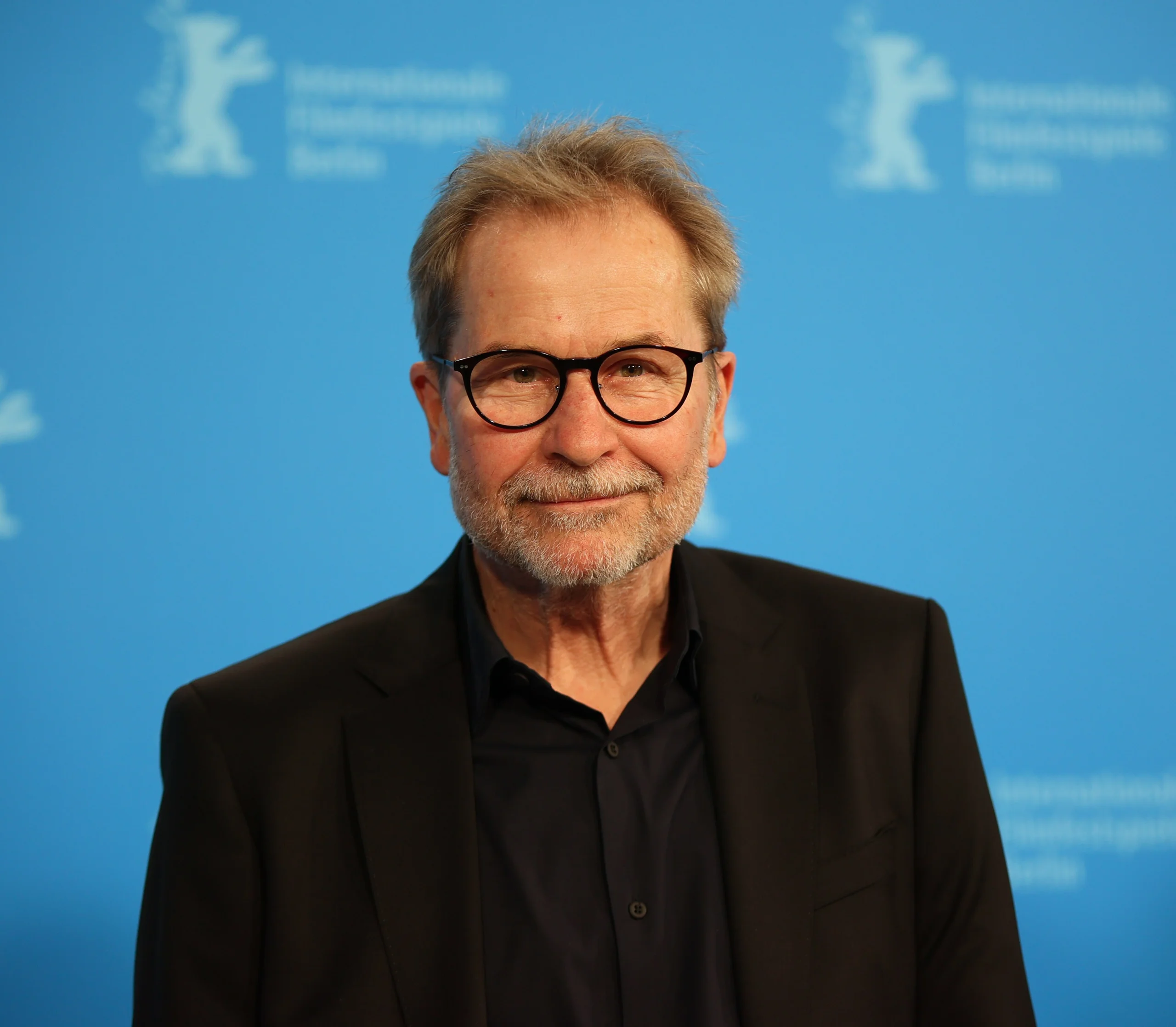
Ulrich Seidl
 Austria
film director•screenwriter•film producer
Also known as: Ulrich Maria Seidl
Birthday
November 24, 1952
Birth Sign
Sagittarius
Birthplace
Vienna, Austria
Age
73 years old
About
Ulrich Maria Seidl is an Austrian filmmaker whose work sits at the uncomfortable intersection of documentary and fiction. Since the early 1990s he has directed a dozen features, building a reputation for static cameras, long takes, and an almost clinical eye for the rituals of everyday life. His 2001 film Dog Days took the Grand Jury Prize at Venice and the Golden Leopard at Locarno, and his Paradise trilogy, released between 2012 and 2013, made him a fixture of the European festival circuit. As of 2026 he is developing a new feature, Distances, with backing from the German minority co-production fund.
Seidl's films rarely offer comfort. Paradise: Love follows a middle-aged Austrian woman on a sex tourism trip to Kenya; Paradise: Faith centers on a Catholic missionary whose faith becomes a weapon; Paradise: Hope tracks a teenage girl at a weight-loss camp. Each premiered at a major festival, and each split audiences and critics. His 2022 film Rimini, about a faded crooner turned gambling addict, earned some of the best reviews of his career.
That willingness to provoke has made Seidl a polarizing figure, but he remains a vital voice in world cinema. He continues to work from Vienna, where he runs Ulrich Seidl Filmproduktion with his wife and frequent collaborator, Veronika Franz.
Early Life & Background
Seidl was born into a middle-class Viennese household in 1952. His father, Hans Seidl, was a theater director and playwright, so the boy grew up around rehearsals and scripts. That early exposure gave him a deep sense of dramatic structure, though he did not initially pursue it. He enrolled at the University of Vienna to study law, but the pull of the arts proved stronger, and he abandoned his legal training to apply to the University of Television and Film Munich.
At HFF München he studied directing, graduating in the early 1980s. His student films were already marked by the qualities that would define his mature style: long takes, a static camera, and a fascination with the mundane. Before he could make films professionally, he worked as a journalist and an assistant director, earning money while waiting for his own projects to take shape.
His first feature documentary, Good News, came in 1990 after several short films. It examined the lives of street people in Vienna, and it won a string of awards at smaller European festivals. That success led to Animal Love in 1995, a documentary about the sexual lives of animals, and then Models in 1998, a look at the fashion industry. Neither film made him a household name, but together they established his reputation as a filmmaker willing to stare at uncomfortable subjects without flinching.
The breakthrough came with Dog Days in 2001. Shot over three summers in a working-class housing estate outside Vienna, the film interweaves the lives of several residents during a heat wave. It won the Grand Jury Prize at the Venice Film Festival and the Golden Leopard at Locarno, and it put Seidl on the international map.
Career Growth
After Dog Days won in Venice and Locarno in 2001, Seidl spent the next several years developing Import/Export, a two-part story about a Ukrainian nurse and a Slovak security guard crossing borders in search of work. The film competed for the Palme d'Or at Cannes in 2007 and won the Un Certain Regard Award, cementing his place in the European art-house mainstream.
His most ambitious project came in 2012 with the start of the Paradise trilogy. Paradise: Love, about an Austrian woman seeking romance in Kenya, premiered in competition at Cannes and sparked heated debate about its depiction of sex tourism. Later that year Paradise: Faith won the Special Jury Prize at Venice, and in 2013 Paradise: Hope closed the trilogy at the Berlinale. The three films share a title and a thematic concern, but each stands alone as a portrait of a woman struggling with desire, faith, or adolescence.
Seidl has never been a fast worker. Safari, his 2018 documentary about African hunting tourism, took him to Namibia and back, and was selected for the main competition at Venice. Then came Rimini in 2022, a return to fiction that follows a washed-up beach volleyball player turned gambling addict. It was nominated for the Golden Lion and earned some of the strongest reviews of his career. In 2023 he presented Wicked Games Rimini Sparta, a companion piece to Rimini, and faced public accusations that he said were "absolutely life-threatening" to his career.
As of 2026 he is at work on Distances, a feature about dark tourism that has received funding from the German minority co-production fund. He also shows his still photography in galleries; a 2025 exhibition at Galerie Philippe Bober collected images from his films between 1998 and 2016.
Career Timeline
Public Image & Style
Seidl's public persona is that of a quiet provocateur. He rarely gives interviews, and when he does he speaks in measured, deliberate sentences, often deflecting questions about the moral weight of his films. Journalists have called him "Austria's bad conscience" for his willingness to put the country's comfortable middle class under a microscope.
His films are known for their deadpan humor and their refusal to judge their characters. Fans of European art cinema admire his formal rigor, while critics sometimes accuse him of exploiting his subjects. The accusations that followed Rimini in 2023 brought that tension to the surface, and Seidl responded by insisting that his work was meant to provoke thought, not harm.
On screen, his aesthetic is unmistakable: long static takes, symmetrical compositions, and a palette that favors beige and gray. Off screen, he favors simple dark clothing and rarely courts attention. He has no personal social media presence; the production company's Instagram account posts only film news and festival updates.
Fame & Fandom (iFAMOUS Rankings)
Ulrich Seidl commands a following defined not by adoration, but by a shared, intense fascination with the uncomfortable rituals of human behavior. His audience is a niche cohort of cinephiles and critics who appreciate his clinical gaze rather than seeking celebrity worship; there is no organized fanbase with a formal name, nor are there public rituals or campaigns dedicated to him. Instead, the community forms around the debate his films ignite, treating his work as a mirror for societal flaws rather than a source of escapist joy. While mainstream stars attract crowds that shut down streets, Seidl's premieres provoke academic discourse and ethical scrutiny, cementing his status as an auteur whose legacy is built on provocation rather than popularity. This distinct dynamic separates him from the typical celebrity ecosystem, where fans chase personal connection. The global attention he receives remains concentrated within the art-house sphere, tracking media coverage and critical consumption worldwide without spilling into mass cultural phenomena. Despite this limited reach, his standing among European filmmakers remains formidable. According to the iFANN Global Fame Rankings, Ulrich Seidl is currently the 45th most famous person from Austria, a position holding steady from the previous cycle.
Interesting Facts and Legends
Seidl is also a photographer, with film stills exhibited separately in shows like Stills 1998–2016 at Galerie Philippe Bober in Berlin. He rarely works with actors outside Austria, preferring local performers who can deliver the deadpan naturalism his films require. His filming process is notoriously slow, often involving dozens of takes to capture the precise blank expression he seeks from non-professional actors. The director's father, Hans Seidl, was a significant figure in post-war Austrian theater, and Ulrich's early exposure to rehearsals shaped his understanding of dramatic rhythm. Despite international acclaim, Seidl has never made a film in English, keeping all features in German with subtitles carrying them across the world. A defining moment in his legend is the release of the Paradise trilogy between 2012 and 2013, which premiered at Cannes, Venice, and Berlin within a single year, cementing his reputation as an uncompromising filmmaker. More recently, the 2023 controversy surrounding Wicked Games sparked debates about his portrayal of subjects, leading Seidl to publicly frame his cinema as a reflection of loneliness rather than contempt. In 2026, he continued this trajectory by developing Distances, a project exploring dark tourism places.
Notable Quotes
“Those who say I despise people do not understand me. He who says that people do not understand him doesn't understand himself.”
“The accusations leveled in the article were absolutely life-threatening to me, professionally. It was extremely dangerous.”
“I try to show things as they are, without judgment, but also without hiding the absurdity.”
Family & Personal Life
Seidl's father, Hans Seidl, was a theater director and playwright, which meant the family home was full of scripts and actors. Ulrich has said his father's work gave him an early education in dramatic structure, even though he did not follow directly into the theater.
His mother's name is not publicly documented, and he has not spoken in interviews about any siblings. What is clear is that the household was artistic, not industrial, and that the young Seidl absorbed a love of performance from his father's world.
Today Seidl lives in Vienna with his wife, Veronika Franz, herself a filmmaker and screenwriter. The couple runs Ulrich Seidl Filmproduktion together, and Franz co-wrote the scripts for the entire Paradise trilogy as well as Rimini. They have no publicly documented children, and both appear to devote most of their energy to their work.
Notable Connections
Seidl is closely associated with his wife Veronika Franz, who co-writes his scripts and co-founded their production company. He frequently works with Austrian actresses such as Margarethe Tiesel, who appeared in Dog Days and Paradise: Love, and Katharina Schüttler, who starred in Paradise: Love. Cinematographer Thomas Prenn has shot many of his films.
Relationships & Dating History
Ulrich Seidl's personal life has been remarkably stable. He has been married to Austrian filmmaker Veronika Franz for decades, and the two are also professional partners. They met through the Austrian film industry in the mid-1990s and founded Ulrich Seidl Filmproduktion together. Franz co-wrote the scripts for the Paradise trilogy and Rimini, and she directed her own acclaimed films, including Goodnight Mommy.
There are no documented reports of prior marriages, engagements, or high-profile relationships. Seidl's public appearances are almost always with Franz, and interviews with the couple suggest a shared artistic vision rather than a conventional romance. They live together in Vienna and continue to collaborate on new projects.
- MarriedVeronika Franz1996 - presentCurrentMet through the Austrian film industry in the mid-1990s; they co-founded Ulrich Seidl Filmproduktion and have collaborated on all his major films since.
Salary, Net Worth In 2026
$5 Million
iFANN Editorial Team estimate
Seidl's net worth is difficult to pin down because he operates within the European art-house system rather than the Hollywood blockbuster economy. Unlike pop stars or commercial directors, he does not earn massive upfront fees or endorsement deals. His income streams include production fees, distribution royalties, and substantial public funding. His films are financed largely by Austrian and German broadcasters such as ORF and ZDF, along with national film funds and the German minority co-production fund. Distances, his current project, received backing from that fund in 2026 alongside films by Juho Kuosmanen and Levan Akin. Distribution rights for the Paradise trilogy have sold to dozens of territories, ensuring those royalties continue to flow steadily. Seidl also earns from gallery exhibitions of his photography, where the 2025 show at Galerie Philippe Bober was part of a broader market for his stills, which sell as fine-art prints. His production company, Ulrich Seidl Filmproduktion, collects producer fees on each project, and he occasionally teaches masterclasses at film schools. Per iFANN's editorial analysis, his total net worth stands at $5 Million as of 2026, a figure consistent with other European auteurs of his generation.
Awards Won (8)
2001 · Venice Film Festival
Dog Days
2001 · Locarno Film Festival
Dog Days
Known For
Dog Days
2001 · Director
Paradise: Love
2012 · Director
Paradise: Faith
2012 · Director
Paradise: Hope
2013 · Director
Import/Export
2007 · Director
Rimini
2022 · Director
Keywords
Sources
Quick Facts
- Profession
- film director, screenwriter, film producer
- Born
- November 24, 1952
- Birthplace
- Vienna, Austria
- Gender
- Male
- Birth Sign
- Sagittarius
- Spouse
- Veronika Franz
- Education
- University of Vienna; HFF München
- Net Worth
- $5 Million
Personal Details
- Full Name
- Ulrich Maria Seidl
- Spouse
- Veronika Franz
- Education
- University of Vienna (law); University of Television and Film Munich (HFF München)
Filmography
30
Total
28
Film
2
TV
Frequently Asked Questions
How old is Ulrich Seidl?
Is Ulrich Seidl married?
What is Ulrich Seidl's most famous movie?
Does Ulrich Seidl have children?
What is Ulrich Seidl's latest film?
Social Media
Similar People
Join the community
fans discussing