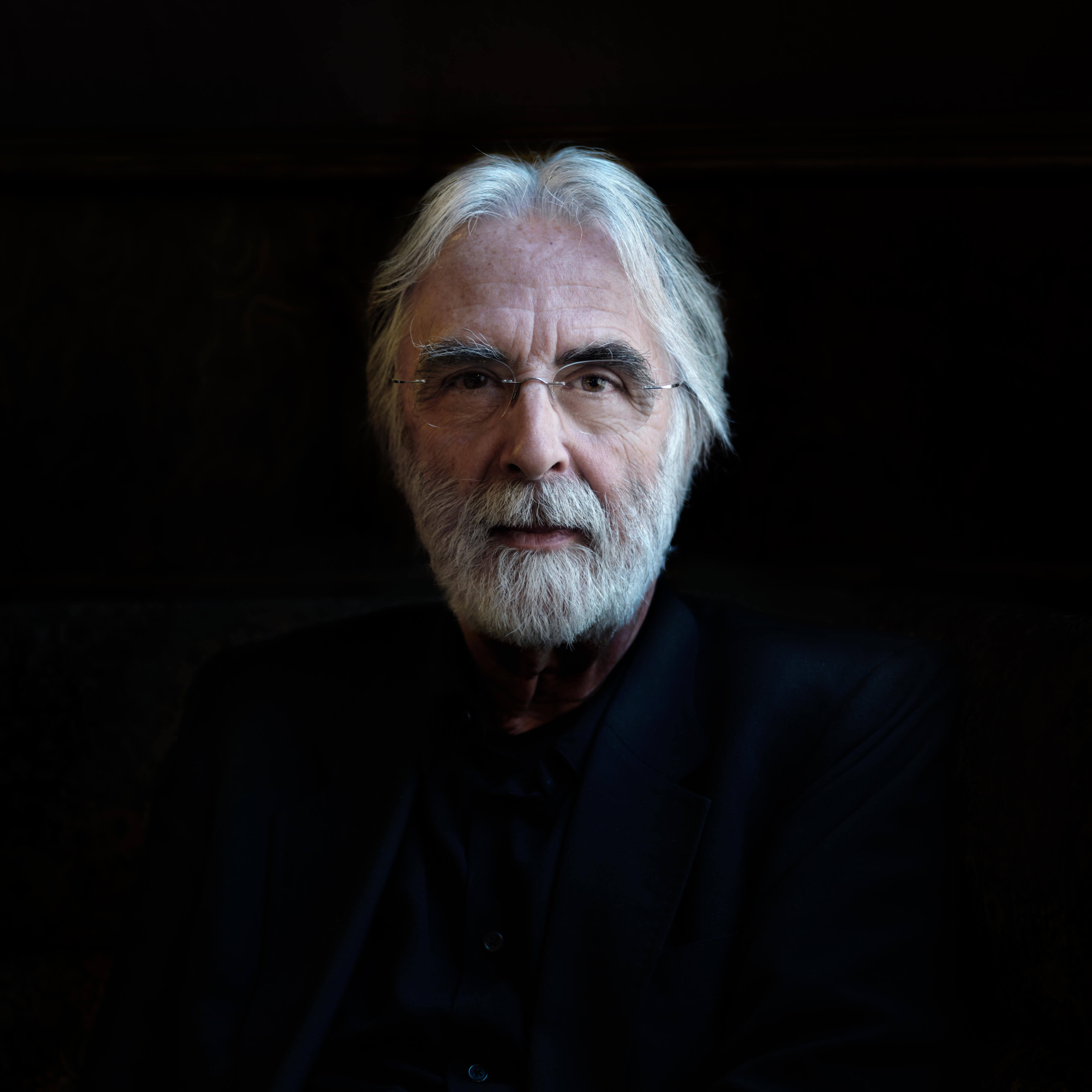
Michael Haneke
 Austria
Birthday
March 23, 1942
Birth Sign
Aries
Birthplace
Munich, Germany
Age
84 years old
Height
5 ft 10 in (178 cm)
About
Michael Haneke is a German-born Austrian film director and screenwriter, widely regarded as one of the most intellectually rigorous and provocative filmmakers of his generation. Born in Munich in 1942 and raised in Austria, he has built a career defined by unflinching examinations of violence, alienation, and the moral fractures of modern society. His films, often shot in a cold, detached style, refuse easy comfort or catharsis, demanding active engagement from viewers.
Haneke's international reputation rests on a series of acclaimed works, including The Piano Teacher (2001), Caché (2005), The White Ribbon (2009), and Amour (2012). The latter two won the Palme d'Or at Cannes, and Amour also secured the Academy Award for Best Foreign Language Film. His final feature, Happy End (2017), continued his thematic obsessions. In August 2026, at age 84, he announced his retirement, having completed ten feature films, matching the output of his idol Robert Bresson.
Beyond filmmaking, Haneke has been a mentor as a professor at the Film Academy Vienna, shaping a new generation of directors. Known for his privacy, he has never engaged with social media, letting his work speak for itself. As of 2026, he lives in Vienna, stepping back from active teaching following his retirement.
Early Life & Background
Michael Haneke was born on March 23, 1942, in Munich, Germany, but his family moved to Austria shortly after his birth, settling in the town of Wiener Neustadt. Growing up in the post-war era, he witnessed the lingering shadows of Nazi guilt and societal denial, themes that would later permeate his work. His father was a Nazi officer, a fact Haneke has rarely discussed but which scholars believe informs his preoccupation with complicity and moral responsibility.
Initially, Haneke considered a career in law, but he soon shifted to philosophy, psychology, and theater at the University of Vienna, earning a doctorate in philosophy. His academic background deeply influenced his analytical approach to cinema. In the 1970s, he began directing for theater and television, honing a meticulous, detached style. He directed numerous TV films and plays, including adaptations of literary works, which allowed him to experiment with narrative structure and audience manipulation. This period was crucial in developing his signature cold, observational technique that would later define his feature films.
His first steps into cinema came with short films and TV movies, but it was not until 1989 that he made his feature debut with The Seventh Continent. That film, based on a true story of a family's inexplicable destruction, immediately established his reputation for unflinching examinations of human behavior. It also marked the beginning of his Glaciation Trilogy, which continued with Benny's Video (1992) and 71 Fragments of a Chronology of Chance (1994), all exploring themes of emotional coldness and societal breakdown.
Career Growth
Michael Haneke's breakthrough came with The Piano Teacher (2001), which won the Grand Prix at Cannes and brought him international acclaim. The film, starring Isabelle Huppert as a repressed piano professor, was a daring exploration of sadomasochism and bourgeois hypocrisy. This success was followed by Caché (2005), a psychological thriller about guilt and surveillance, which earned him the Best Director award at Cannes. The film's ambiguous ending sparked widespread debate and solidified his reputation as a master of unease.
His career reached its apex with The White Ribbon (2009), a black-and-white period piece about a German village on the eve of World War I, which won the Palme d'Or. Three years later, Amour (2012), a devastating portrait of an elderly couple facing illness and death, won him a second Palme d'Or and the Academy Award for Best Foreign Language Film. The film also received five Oscar nominations, including Best Picture, a rare feat for a foreign-language film.
In 2007, Haneke remade his own Funny Games (1997) in English, starring Naomi Watts and Tim Roth, deliberately recreating the original shot-for-shot. His final feature, Happy End (2017), reunited him with Isabelle Huppert and Jean-Louis Trintignant, once again dissecting family dysfunction. In 2026, MK2 Films acquired the rights to his classic films, ensuring their continued global distribution. After completing ten features, he announced his retirement in August 2026, stating, "I made my ten movies, just like my idol Robert Bresson. That is enough."
Career Timeline
Public Image & Style
Michael Haneke's public persona is that of a stern, uncompromising intellectual, a reputation he has cultivated through his films and rare interviews. He is often described as cold and demanding, yet his work is revered for its moral seriousness and formal precision. He rejects the label of entertainer, famously stating, "I am not interested in entertainment. I am interested in truth."
His films are known for their austere aesthetics, long takes, and refusal to provide easy answers or catharsis. He frequently breaks the fourth wall, as in Funny Games, to directly challenge the audience's complicity in on-screen violence. This approach has earned him a devoted following among cinephiles who appreciate his intellectual rigor, while some mainstream audiences find his work alienating.
Haneke's fandom, though niche, is passionate, with film forums and retrospectives dedicated to analyzing his themes and techniques. He has never engaged with social media, adhering to his principle of letting his work speak for itself. His influence extends through his former students, including Peter Brunner, whose film Down the Arm of God premiered at Locarno in 2026, and Sandra Hüller, whom he publicly praised as a "masterpiece" performer.
Fame & Fandom (iFAMOUS Rankings)
Michael Haneke stands as a towering figure in European cinema, his influence extending far beyond the art-house circuit to shape global discussions on violence and media. His cultural footprint is quantifiable and immense; he is currently ranked the 11th most famous person from Austria, a position holding steady within the latest cycle of the iFANN Global Fame Rankings. This placement reflects a career defined not by fleeting viral moments but by enduring, challenging masterpieces that demand active engagement from viewers worldwide. While his work provokes intense intellectual debate rather than casual adoration, the sheer scale of his impact across media coverage and consumption signals cements his status among the world's most significant directors. The audience surrounding Haneke lacks a formal name or organized cult structure. There are no fan clubs, birthday billboards, or ritualistic gatherings dedicated to his persona. Instead, his following consists of film scholars, critics, and cinephiles who dissect his austere aesthetics and moral seriousness. These individuals analyze his films rather than campaign for him personally, engaging with his legacy through academic study and critical appreciation. His retirement in August 2026 after exactly ten feature films marked a definitive end to his public output, yet it did not diminish his standing. The acquisition of his classic works by MK2 Films further ensures his presence in contemporary discourse. Unlike pop stars whose fame fluctuates with social media trends, Haneke's reputation remains anchored in the uncompromising brutality and precision of his art, securing his place in history without the need for a named fandom.
Interesting Facts and Legends
Michael Haneke is known for shooting scenes only once, rejecting retakes unless absolutely necessary, a practice that adds to the raw intensity of his films. He initially pursued law before switching to philosophy, and he speaks fluent German, French, and English, allowing him to direct in all three languages. Despite winning the Oscar for Amour, he never attended the ceremony, sending a representative instead. Haneke has a deep admiration for Robert Bresson, whose disciplined output of ten films inspired his own retirement decision. He has never owned a smartphone, preferring a simple flip phone for calls. In his spare time, he enjoys classical music, particularly the works of Bach and Schubert, which often feature in his soundtracks. He has been honored with numerous awards, including the Honorary Golden Bear at the Berlin International Film Festival in 2014 and the Austrian Decoration for Science and Art. He was also ranked #1 on Sight & Sound 's list of greatest living directors in 2022. A legendary moment in his career occurred during the 2001 premiere of The Piano Teacher at Cannes, where graphic depictions of sexual violence reportedly caused audience members to faint and walk out, cementing his reputation for shaking viewers with uncompromising brutality. Another iconic narrative surrounds his film Funny Games, where characters breaking the fourth wall to address the camera became a mythic moment in art-house history, challenging audiences to complicity in the violence on screen. His confirmed retirement in August 2026 after completing exactly ten films solidified a finality mirroring his idol Bresson, marking a perfect, finite cycle of work before vanishing from the industry.
Notable Quotes
“I am not interested in entertainment. I am interested in truth.”
“Violence is not something you can show without consequences. It must be shown as it is: ugly, meaningless, and devastating.”
“My films are not meant to comfort the viewer. They are meant to disturb.”
“I made my ten movies, just like my idol Robert Bresson. That is enough.”
Family & Personal Life
Michael Haneke has kept his family life intensely private, with almost no public information about his parents or siblings. It is known that his father was a Nazi officer, a fact he has rarely discussed publicly, though scholars have noted its influence on his thematic preoccupations with guilt and societal complicity. His mother was an actress, which may have sparked his early interest in the performing arts.
Haneke has never been married and has no publicly acknowledged children. He has maintained that his work is his life, and he has deliberately shielded any romantic relationships from the public eye. In interviews, he has stated that he prefers solitude and finds inspiration in quiet observation. He currently resides in Vienna, where he lives alone, surrounded by his extensive collection of books and classical music recordings.
Notable Connections
Michael Haneke has collaborated with several notable actors and filmmakers throughout his career. Isabelle Huppert, a frequent collaborator, starred in The Piano Teacher, Code Unknown, and Happy End. Ulrich Mühe appeared in Funny Games, The Piano Teacher, and Caché before his death in 2007. Emmanuelle Riva gave a career-defining performance in Amour. Sandra Hüller, who starred in Happy End, has been publicly praised by Haneke. His former student Peter Brunner directed Down the Arm of God (2026).
Relationships & Dating History
Michael Haneke has maintained an exceptionally private personal life, and there are no confirmed public relationships, marriages, or children. Throughout his career, he has never spoken about dating or romantic partners in interviews, and no credible sources have linked him to anyone. As of 2026, he is reported to be single, having never been married.
His focus on his work has been total, and he has often stated that his films are his only legacy. This absence of public information suggests a deliberate choice to keep his private life out of the spotlight, a rarity in the film industry. Haneke's relationships, if any, remain unknown to the public, and he has successfully shielded this aspect of his life from media scrutiny.
Salary, Net Worth In 2026
$17 Million
iFANN Editorial Team estimate
Per iFANN's editorial analysis, Michael Haneke's net worth is estimated at $17 Million as of 2026. His wealth stems primarily from royalties from his film catalog, particularly the international success of Amour and The White Ribbon, which continue to generate revenue through streaming, DVD sales, and festival screenings. In 2026, MK2 Films acquired the rights to his classic films, a deal that likely provided a significant financial boost. Haneke has also earned income from his long tenure as a professor at the Film Academy Vienna, where he taught directing for many years. Unlike many of his peers, he has avoided commercial endorsements and business ventures, focusing solely on his art. He has no publicly disclosed real estate holdings, and his lifestyle is modest, reflecting his disdain for materialism. His net worth has grown steadily over the years, driven by the enduring critical and commercial success of his major works. While he has never been a blockbuster director, his films have performed well in the art-house circuit, and his awards have increased their marketability. As of 2026, his estate is managed by his longtime representatives, ensuring continued income from his legacy.
Awards Won (32)
Michael Haneke has won two Palme d'Or awards at Cannes for The White Ribbon (2009) and Amour (2012), as well as the Grand Prix for The Piano Teacher (2001) and Best Director for Caché (2005). He won the Academy Award for Best Foreign Language Film for Amour (2013), along with a BAFTA, Golden Globe, and César for the same film. His other honors include multiple European Film Awards and the Honorary Golden Bear at the Berlin International Film Festival in 2014.
2013 · Best Foreign Language Film
Amour
2013 · Best Foreign Language Film
Amour
Known For
Amour
2012 · Director, Screenwriter
The White Ribbon
2009 · Director, Screenwriter
Caché
2005 · Director, Screenwriter
The Piano Teacher
2001 · Director, Screenwriter
Funny Games
1997 · Director, Screenwriter
Keywords
Sources
Quick Facts
- Profession
- Film director, screenwriter
- Born
- March 23, 1942
- Birthplace
- Munich, Germany
- Gender
- Male
- Birth Sign
- Aries
- Height
- 5 ft 10 in (178 cm)
- Education
- University of Vienna (PhD in Philosophy)
- Net Worth
- $17 Million
Personal Details
- Full Name
- Michael Haneke
- Height
- 5 ft 10 in (178 cm)
- Education
- University of Vienna (PhD in Philosophy)
Filmography
30
Total
15
Film
15
TV
Frequently Asked Questions
How old is Michael Haneke?
Is Michael Haneke still making movies?
What is Michael Haneke's most famous movie?
Does Michael Haneke have any children?
Why did Michael Haneke retire?
Similar People
Join the community
fans discussing