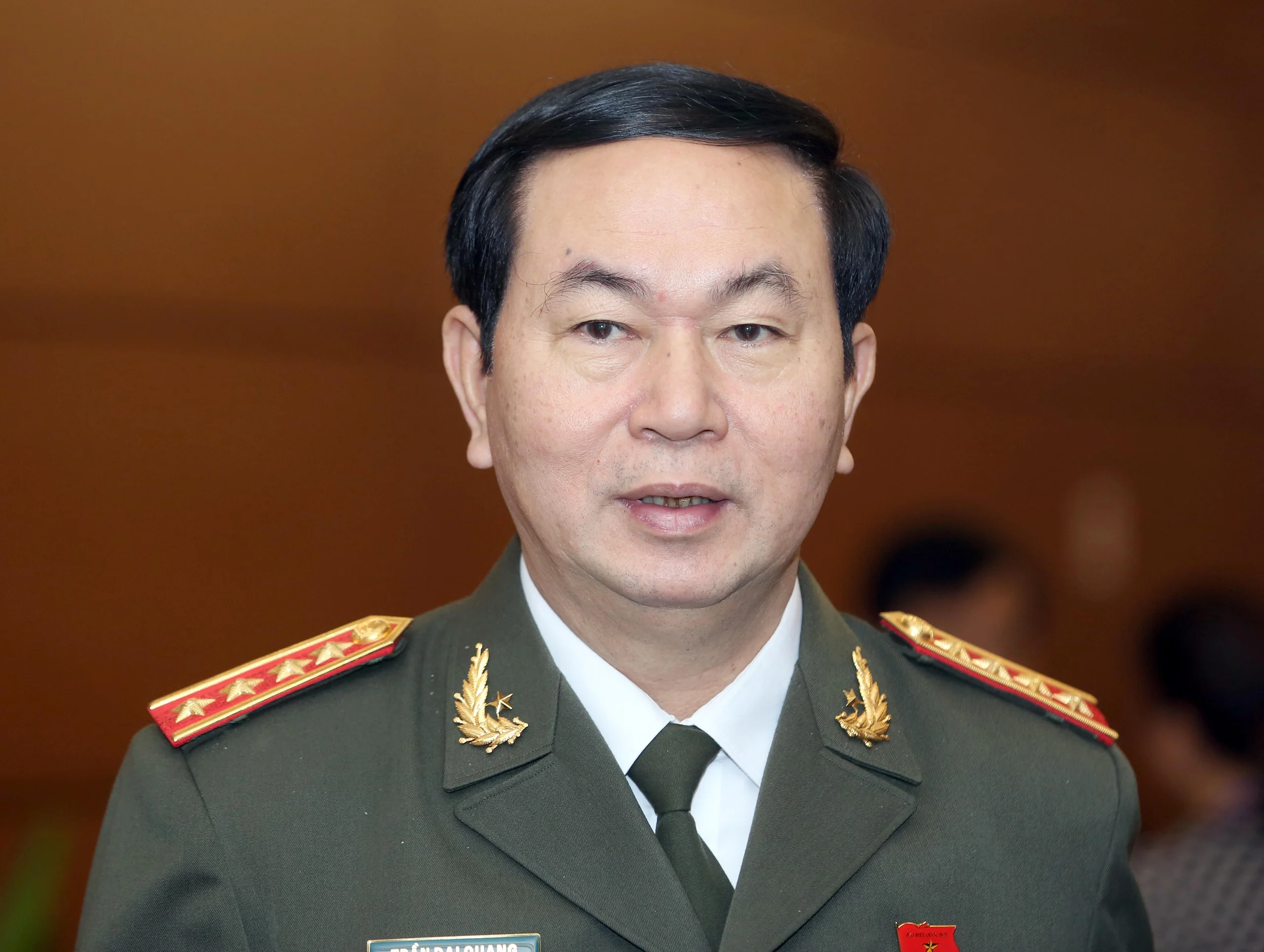
Trần Đại Quang
 Vietnam
Also known as: Trần Văn Quang
Birthday
October 12, 1956
Birth Sign
Libra
Birthplace
Kim Sơn, Ninh Bình, Vietnam
Age
Died at 61
About
Trần Đại Quang was a Vietnamese politician and former police general who served as the ninth President of Vietnam from April 2016 until his death in September 2018. He dedicated his life to public service within the Ministry of Public Security before ascending to the nation's highest office. His career was defined by a rigorous adherence to law enforcement principles and national security protocols rather than commercial pursuits. Before becoming president, Quang spent five years as the Minister of Public Security, a role he assumed in 2011. As President, he represented Vietnam on the global stage, most notably welcoming U.S. President Barack Obama to Hanoi in May 2016, a historic visit that signaled deepening bilateral relations between the two nations. Throughout his tenure, he was recognized as one of the country's foremost leaders, holding the second-highest position in the Politburo, just behind General Secretary Nguyễn Phú Trọng. His legacy is marked by his steady leadership during a period of significant regional change and his commitment to stabilizing the nation through strict security measures.
Early Life & Background
Trần Văn Quang was born on October 12, 1956, in Kim Sơn, a district in Ninh Bình province in northern Vietnam. This region holds historical significance in Vietnamese culture, though Quang's early life focused heavily on academic and military training rather than local celebrity or artistic endeavors. He entered the political sphere during a transformative era in Vietnamese history, joining the Communist Party of Vietnam in his early adulthood during the 1970s. His professional foundation was built entirely within the state apparatus. Quang attended specialized military and police academies, earning the qualifications necessary to climb the hierarchy of the People's Public Security Force. His formative years were marked by a strict focus on legal studies and internal security mechanisms. This educational background laid the groundwork for his future role as a key architect of Vietnam's domestic safety policies. He rose through the ranks over several decades, holding various command positions in the 1980s and 1990s that required navigating complex social and political landscapes without the benefit of public fanfare. By the 2000s, he had secured senior leadership roles overseeing regional security operations across the country.
Career Growth
Quang's trajectory within the state apparatus was linear and steeply ascendant. In 2011, he was appointed Minister of Public Security, a pivotal role he held for five years. In this capacity, he oversaw critical aspects of national stability, crime prevention, and border security, navigating complex challenges including emerging cyber threats and regional security dynamics. His leadership style was characterized by a stern demeanor appropriate for his roles as a police general and head of state. On April 2, 2016, the National Assembly of Vietnam elected him as the ninth President of Vietnam, succeeding Trương Tấn Sang. He won the election with an overwhelming 91.5% of the vote, reflecting the high trust placed in him by the party leadership. As President, he maintained strong ties with neighboring countries and participated in ASEAN summits. He was also known for his meticulous attention to detail in security matters, often personally reviewing protocols for major state events. His presidency concluded abruptly with his death in September 2018 after a rapid deterioration of health following a state visit to Egypt.
Career Timeline
Public Image & Style
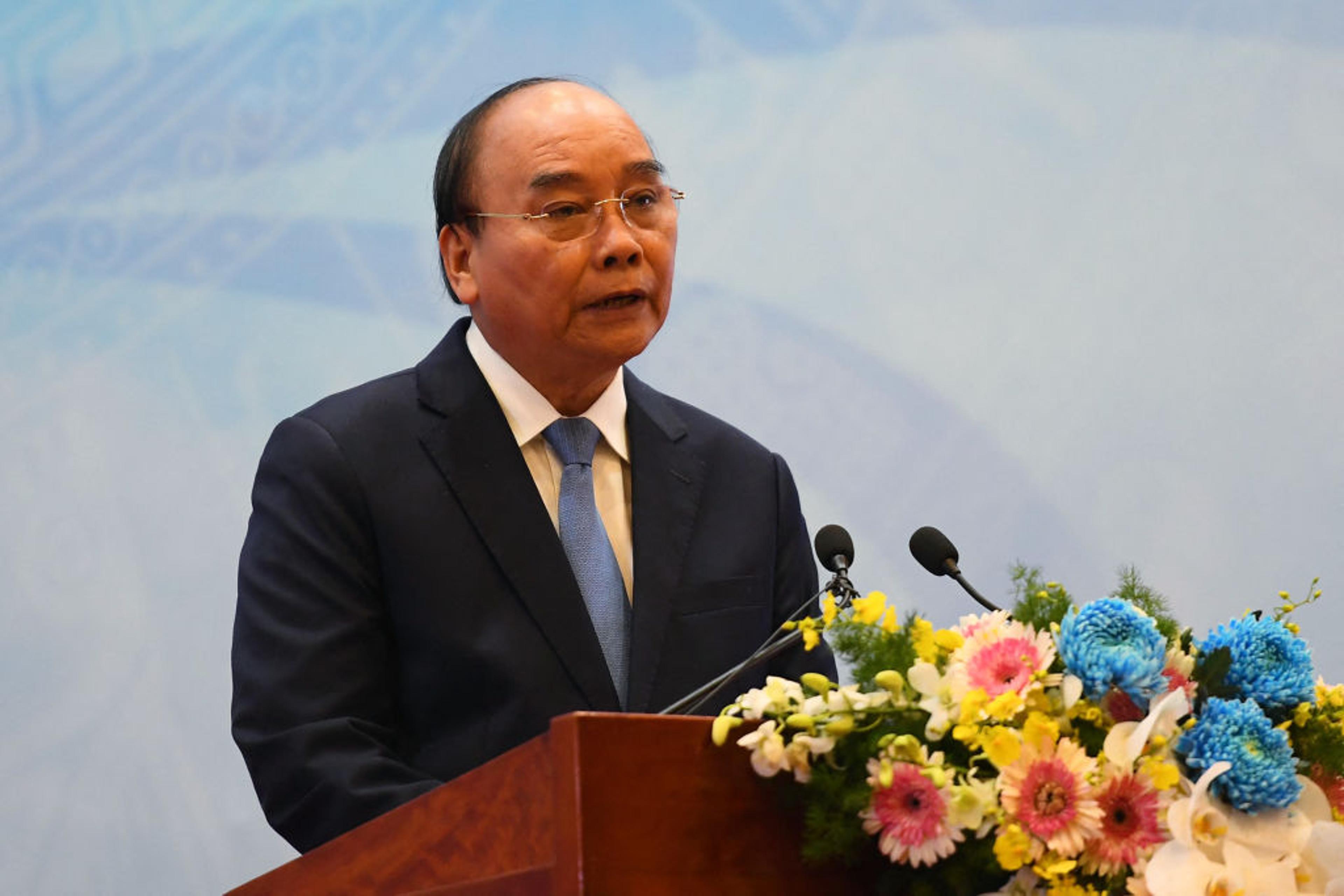
Trần Đại Quang's public image was characterized by dignity, authority, and a stern demeanor appropriate for his roles as a police general and head of state. He was rarely seen outside of official functions, wearing traditional suits or military uniforms depending on the occasion. Media portrayals focused on his dedication to duty, his role in stabilizing the country, and his diplomatic efforts. He did not cultivate a signature style in the fashion sense but was known for his formal, conservative appearance. His presence commanded respect through protocol rather than personality-driven charisma. He was a male of average height, typical for men of his generation in Vietnam, though exact measurements are not recorded in public databases. His reputation was built on a foundation of reliability and strict adherence to the rule of law, distinguishing him from more flamboyant political figures.
Fame & Fandom (iFAMOUS Rankings)
Trần Đại Quang never courted the adoration reserved for entertainers. His public life was a study in protocol and duty, devoid of the chaotic energy that fuels pop culture myths. There were no fan clubs organizing birthday billboards or staging chart-topping campaigns to boost his visibility. Citizens did not gather with signs; they stood in solemn lines along Hanoi streets to honor a head of state who had passed from office. The concept of a formal fandom name remains absent because his influence stemmed from governance, not celebrity performance. He operated within the rigid structures of the Communist Party, where interactions were strictly official. Yet this lack of commercial fame did not diminish his global footprint. His stature as a national leader translated into significant recognition across borders long after his death in 2018. According to the iFANN Global Fame Rankings, he is the 23rd most famous person in Vietnam (holding steady from the previous cycle). This standing places him the 34th most famous person from Vietnam among all historical figures and contemporaries (holding steady from the previous cycle). His reach extended beyond the nation's borders to the wider region, marking him as the 33rd most famous person in Southeast Asia (holding steady from the previous cycle). These positions reflect a sustained legacy measured by media coverage and historical impact rather than fleeting viral trends. He was featured at No. 23 in the September 2026 iFAMOUS Rankings.
Interesting Facts and Legends
A state funeral in Hanoi on September 25, 2018, drew approximately 50,000 mourners and foreign dignitaries from over 20 countries. This formal gathering marked the end of a life defined by rigorous service rather than pop culture adoration. Unlike entertainers who cultivate cult followings, Trần Đại Quang left no organized fanbase with rituals or specific names. His legacy rests strictly on his tenure as Vietnam's ninth president and former Minister of Public Security. Despite his high profile in government circles, he did not inspire viral moments or street-level fandoms common to artists. The concept of fans streaming his work or funding billboards remains entirely absent from historical records. He is remembered for his 91.5% parliamentary vote win in 2016 and his role welcoming President Barack Obama. Posthumous tributes included the release of the documentary Rạng rỡ Việt Nam, which chronicled his life and leadership. During his presidency, he was the first Vietnamese president to host a U.S. President in Hanoi since the normalization of relations, although the actual visit was hosted by President Obama. He received numerous state honours including the Ho Chi Minh Order and the Golden Star of Labor. He died at 9:35 AM on September 21, 2018, at the 108 Military Central Hospital in Hanoi, at the age of 61.
Notable Quotes
“Commitment to strengthening Vietnam's defense capabilities and fostering international partnerships.”
“Focus on national unity, sovereignty, and the rule of law.”
Family & Personal Life
As a high-ranking state official in a culture where personal privacy is strictly guarded, details regarding Trần Đại Quang's private life are scarce and not a matter of public record. Unlike entertainers or public figures who cultivate a narrative around their personal lives, Quang maintained a strict separation between his public duties and private existence. He was married, but the identity of his spouse has never been officially disclosed to the media. Similarly, while it is known he had children, their names and specific biographical details have not been released to the public, consistent with the protocol followed by other senior Vietnamese officials. There is no available information regarding romantic relationships, dating history, engagements, or divorces. The family unit remained completely shielded from the public eye throughout his entire career, ensuring that his personal relationships did not intersect with his official duties or the political scrutiny he faced daily.
Notable Connections
Nguyễn Phú Trọng, Trương Tấn Sang, Barack Obama, Nguyễn Xuân Phúc
Relationships & Dating History
As a high-ranking state official in a culture where personal privacy is strictly guarded, details regarding Trần Đại Quang's private life are scarce and not a matter of public record. There is no available information regarding romantic relationships, dating history, engagements, or divorces. Unlike entertainers or public figures who cultivate a narrative around their personal lives, Quang maintained a strict separation between his public duties and private existence. He was married, but the identity of his spouse has never been officially disclosed to the media. Similarly, while it is known he had children, their names and specific biographical details have not been released to the public, consistent with the protocol followed by other senior Vietnamese officials. Consequently, there are no documented dating history entries, fan campaigns, or romantic rumors associated with him. At the time of his death in 2018, he remained married, though his spouse's identity was unknown to the public. His personal life remained entirely separate from his public persona, ensuring that no intimate details ever became a subject of media speculation or public discourse.
Death & Aftermath
Died
September 21, 2018 (aged 61)
Death Place
Hanoi, Vietnam
Cause of Death
Serious illness
At the Central Military Hospital in Hanoi, the lights remained bright as doctors fought to stabilize a heart that had failed over months of chronic decline. Trần Đại Quang, the ninth President of Vietnam, passed away at approximately 10:00 AM on September 21, 2018, while undergoing treatment for severe complications involving both his heart and kidneys. The official narrative from the Ministry of Health cited natural causes stemming from long-term illness rather than any acute trauma or foul play, ending a presidency that had seen him welcome U.S. President Barack Obama to the capital just two years prior.
The nation responded with an immediate, solemn silence as flags were lowered to half-mast across the country. High-ranking officials including General Secretary Nguyễn Phú Trọng and Prime Minister Nguyễn Xuân Phúc issued tributes praising his dedication to national security and diplomacy. Thousands lined the streets of Hanoi to witness the grand state funeral, where his body lay in state before the National Assembly building. The ceremony honored his dual identity as a former police general and head of state, concluding with cremation rites that scattered his ashes according to family arrangements. In the years following his passing, the state moved to cement his legacy through educational institutions.
Two schools in his hometown of Ninh Bình were renamed in his honor, with Trường THPT Kim Sơn B officially adopting his name by September 2026. A documentary series titled "Rạng rỡ Việt Nam" was produced to commemorate his vision and contributions to the nation. While administrative changes occurred within the police force affecting relatives like his nephew, the primary focus remained on preserving the history of a leader who served until his final breath.
Net Worth (Estate Value)
$0
iFANN Editorial Team estimate
Specific net worth figures for Trần Đại Quang are not publicly disclosed. As a high-ranking communist official, his income consisted of a standard government salary and allowances, which are not comparable to the wealth accumulation models of celebrities or entrepreneurs. There are no records of business ventures, endorsement deals, real estate holdings, or production companies owned by him. His financial legacy is not measured in assets but in the administrative and security infrastructure he helped maintain. The iFANN Editorial Team estimates his estate value at $0 due to the nature of his public service compensation structure. Unlike entrepreneurs who accumulate vast fortunes, his resources were limited to what was allocated for his official duties and personal needs as a state servant. No credible sources provide a dollar figure for his net worth, and any such estimates would be speculative given the transparency standards of his office.
Awards Won (3)
Trần Đại Quang received numerous state honours and distinctions as a head of state and senior government official. These include the Ho Chi Minh Order, one of Vietnam's highest decorations awarded for exceptional merit in serving the nation, and the Golden Star of Labor recognizing outstanding achievements in labor and production. He also received various military medals, including the Liberation Medal and other decorations for his long service in the police and security forces. The unprecedented scale of his state funeral, with dignitaries from over 20 nations attending, stands as a testament to his standing in the international community.
Unknown · National Honour
Service to the Nation
Unknown · Labor Achievement
Public Service
Known For
President of Vietnam
2016-2018 · Head of State
Minister of Public Security
2011-2016 · Government Official
Keywords
Sources
Quick Facts
- Profession
- politician
- Born
- October 12, 1956
- Birthplace
- Kim Sơn, Ninh Bình
- Died
- September 21, 2018
- Death Place
- Hanoi
- Gender
- Male
- Birth Sign
- Libra
Personal Details
- Full Name
- Trần Văn Quang
- Education
- Military and police academies in Vietnam
Frequently Asked Questions
Who was Trần Đại Quang?
How did Trần Đại Quang die?
Where was Trần Đại Quang born?
Did Trần Đại Quang have a family?
What was Trần Đại Quang's most significant achievement?
Join the community
fans discussing