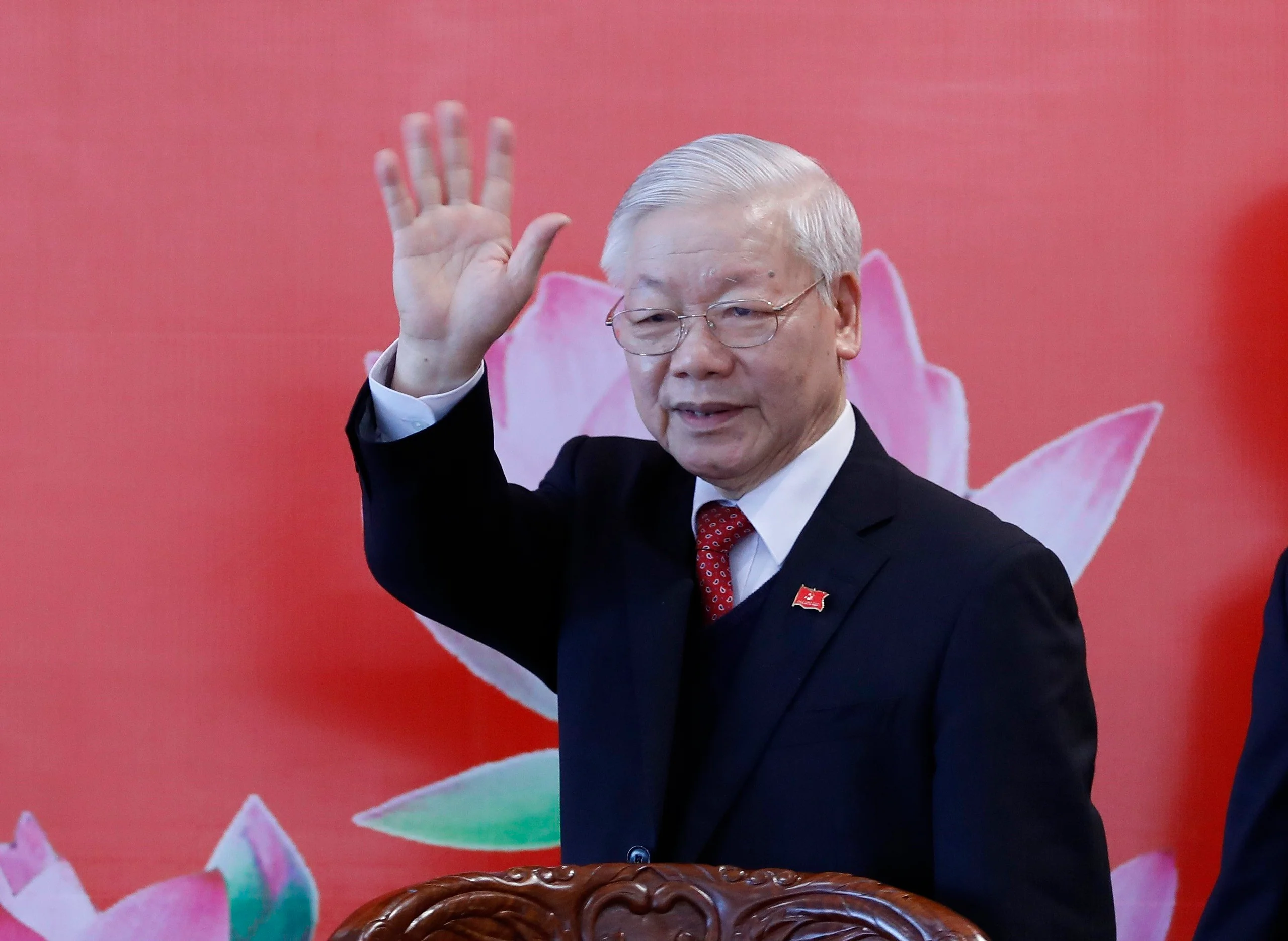
Nguyễn Phú Trọng
 Vietnam
Also known as: Nguyễn Phú Trọng, Tổng Bí thư Nguyễn Phú Trọng
Birthday
April 14, 1944
Birth Sign
Aries
Birthplace
Đông Anh district, Hanoi, Vietnam
Age
Died at 80
About
Nguyễn Phú Trọng was a Vietnamese politician and political theorist who served as the General Secretary of the Communist Party of Vietnam from 2011 until his death in July 2024. Widely recognized as the country's paramount leader, he held significant power as the head of the party's Secretariat, Politburo, and Central Military Commission. His influence extended further when he also assumed the role of Vietnam's tenth president from 2018 to 2021, a position he held concurrently with his party leadership. He passed away at the age of 80 after a period of serious illness.
Trọng left behind a legacy defined by his aggressive anti-corruption campaigns and his strategic approach to foreign policy known as "bamboo diplomacy." His tenure marked a transformative era in Vietnamese politics, characterized by strict party discipline and the prosecution of numerous high-ranking officials. He remains a central figure in modern Vietnamese history, remembered for his long service and the profound impact he had on the nation's development.
Early Life & Background
Born on April 14, 1944, in Đông Hội village within the Đông Anh district of Hanoi, Nguyễn Phú Trọng grew up in the capital city where he would spend his entire life. A member of the Kinh ethnic group, his early years were rooted in the academic and political environment of North Vietnam. He pursued higher education at the University of Social Sciences and Humanities, eventually earning a degree in Language and Literature (Cử nhân Ngữ văn). This academic background provided the foundation for his later career as a political theorist and ideologue within the party structure.
Trọng entered the political sphere in earnest when he joined the Communist Party of Vietnam on December 19, 1967, becoming a full member the following year. His early career was dedicated to intellectual work and party administration rather than commercial ventures. He spent decades rising steadily through the ranks, holding various positions within the party apparatus before ascending to national leadership. His dedication to political work during these formative years established his reputation as a disciplined and theoretically grounded leader who prioritized ideological purity and organizational strength.
Career Growth
Trọng's ascent to the highest office began in earnest when he entered the Central Committee in 1994 and was appointed to the powerful Politburo in 1997. From 2000 to 2006, he served as the Party Secretary for Hanoi, effectively acting as the top political figure in the nation's capital. This role provided him with significant administrative experience and visibility. He then chaired the National Assembly from 2006 to 2011, gaining extensive legislative experience that prepared him for the presidency.
His breakthrough moment arrived in 2011 when he was elected General Secretary at the party's 11th National Congress, marking the beginning of a transformative era in Vietnamese politics. He secured re-election at the 12th Congress in 2016 and again at the 13th Congress in 2021, becoming only the third leader in the party's history to serve three consecutive terms. In 2018, following the death of President Trần Đại Quang, Trọng assumed the presidency, holding both the top party and state positions concurrently. His most notable achievement was the "Burning Fire" (*Đốt lò*) anti-corruption drive initiated around 2016, which led to the investigation and prosecution of numerous high-ranking officials, including former Prime Ministers and senior military commanders. This campaign transformed the political landscape but also caused internal fracturing within the party structure. His foreign policy approach, termed "bamboo diplomacy," allowed Vietnam to navigate complex rivalries between major powers like China and the United States without taking definitive sides.
Career Timeline
Public Image & Style
As a political figure, Nguyễn Phú Trọng projected a conservative, Marxist-Leninist aesthetic that emphasized unwavering ideological commitment and stern leadership. Media portrayals highlighted his role as a reformer and a hard-line leader who prioritized party discipline and anti-corruption efforts. His public image was that of a man deeply committed to the principles of the Communist Party, often speaking with a tone of moral authority. His content and tone in speeches were formal, focusing on political theory, national sovereignty, and party unity. He was seen as a stabilizing force during a period of rapid economic change and geopolitical tension.
Fame & Fandom (iFAMOUS Rankings)
Within the iFANN Global Fame Rankings, Nguyễn Phú Trọng holds a significant position reflecting his decades of high-level governance. He is currently the 3rd most famous person in Vietnam, holding steady from the previous cycle. His prominence extends beyond national borders to establish him as the 9th most famous person from Vietnam and the 36th most famous person in Southeast Asia. These placements reflect a legacy defined by his transformative anti-corruption campaign and strategic foreign policy. There is no official name for his following, and his adherents did not engage in streaming parties or birthday campaigns; instead, their engagement manifested through formal tributes and participation in state-mandated rituals, such as the extensive mourning period that followed his passing in 2024. His influence was measured by the scale of these institutional displays rather than viral metrics.
Interesting Facts and Legends
The political figure known as Nguyễn Phú Trọng maintained a tenure as General Secretary of the Communist Party of Vietnam that spanned over a decade until his death in July 2024. A widely retold story regarding his leadership involves the aggressive anti-corruption drive initiated around 2016, often referred to as the "Burning Fire" (*Đốt lò*), which resulted in the prosecution of numerous high-ranking officials including former Prime Ministers. This narrative stands as a verified historical event rather than folklore, credited with transforming Vietnamese politics while simultaneously causing internal fracturing within the party structure. Another enduring element of his political mythology is his approach to foreign policy, termed "bamboo diplomacy," which allowed Vietnam to navigate complex rivalries between major powers like China and the United States without taking definitive sides. Upon his death on July 19, 2024, the reaction was characterized by profound national grief, with over 1,560 delegations from domestic and international bodies attending his state funeral. The scale of these gatherings underscored his status as a central figure in modern Vietnamese history, marked by formal interactions through official channels rather than the informal connections typical of celebrity culture.
Notable Quotes
“Corruption is a cancer that must be eradicated.”
“We must fight corruption with determination and persistence.”
Family & Personal Life
Nguyễn Phú Trọng was married to Ngô Thị Mận. Public records and official biographies confirm this marriage, though details regarding their meeting, wedding date, or children are not extensively documented in public sources. Unlike celebrities, politicians of his stature in Vietnam do not have public dating histories or romantic relationships reported in the media; such matters are kept private. As of his passing, he was widowed by his wife's status relative to his death, and there were no public reports of other partners. The couple had no publicly known children, and family matters regarding estate distribution remain private.
Notable Connections
Tô Lâm, Xi Jinping, Trần Đại Quang, Võ Văn Thưởng, Phạm Minh Chính.
Relationships & Dating History
Nguyễn Phú Trọng was married to Ngô Thị Mận. Public records and official biographies confirm this marriage, though details regarding their meeting, wedding date, or children are not extensively documented in public sources. Unlike celebrities, politicians of his stature in Vietnam do not have public dating histories or romantic relationships reported in the media; such matters are kept private. As of his passing, he was widowed by his wife's status relative to his death, and there were no public reports of other partners. The couple had no publicly known children, and family matters regarding estate distribution remain private.
- MarriedNgô Thị Mận? - 2024Married until his death; no children.
Death & Aftermath
Died
July 19, 2024 (aged 80)
Death Place
Hanoi, Vietnam
Cause of Death
Serious illness
The Secretariat of the Communist Party of Vietnam announced on July 18, 2024, that General Secretary Nguyễn Phú Trọng was in critical condition and receiving intensive medical treatment at a facility in Hanoi. For several weeks prior to this announcement, the nation's paramount leader had been absent from public view since mid-June due to declining health, with no final public addresses or recorded last words made available to the general populace. The news triggered an immediate outpouring of grief across state channels and diplomatic circles, with domestic media dedicating front-page coverage and organizing moments of silence nationwide.
High-ranking officials, including his successor Tô Lâm, expressed deep condolences, while foreign leaders such as Chinese President Xi Jinping and Pope Francis sent formal messages of mourning. A solemn funeral ceremony took place on July 25, 2024, at the National Defence Ministry Funeral Home, attended by thousands of party members, government officials, and foreign dignitaries from nations including China, Laos, and Russia. Following the service, the body was cremated according to personal and family wishes, with ashes interred at Mai Dịch Cemetery in Hanoi. The event proceeded under strict military protocol with speeches praising his historical contributions to anti-corruption efforts and national sovereignty. Family matters regarding estate distribution and wills remain private, leaving his primary legacy anchored in political theory and administrative reforms.
Net Worth (Estate Value)
$0
iFANN Editorial Team estimate
As a state servant whose income consisted of a government salary, Nguyễn Phú Trọng did not accumulate wealth through business ventures, endorsements, or real estate holdings. Wealth accumulation through private enterprise is not applicable to his profile, and any estimates of personal wealth would be speculative and inconsistent with the transparency norms of the Vietnamese Communist Party. His financial status was that of a public official, and his assets were managed according to state regulations. The concept of net worth does not apply to him in the traditional sense, as his life was dedicated to public service rather than personal financial gain.
Awards Won (3)
Nguyễn Phú Trọng received significant national honours and distinctions, including the Ho Chi Minh Prize, one of Vietnam's highest honors for contributions to culture and science. While he did not win entertainment awards such as Oscars or Grammys, his legacy is anchored in his political theory and administrative reforms. He was awarded the Ho Chi Minh Order and the Independence Order for his services to the nation.
National Honor
Contributions to Culture and Science
National Honor
Services to the Nation
Known For
General Secretary of the Communist Party of Vietnam
2011 · Leader
President of Vietnam
2018 · Head of State
Keywords
Sources
Quick Facts
- Profession
- politician
- Born
- April 14, 1944
- Birthplace
- Đông Anh, Hanoi
- Died
- July 19, 2024
- Death Place
- Hanoi
- Gender
- Male
- Spouse
- Ngô Thị Mận
- Birth Sign
- Aries
Personal Details
- Full Name
- Nguyễn Phú Trọng
- Spouse
- Ngô Thị Mận
- Children
- Education
- Cử nhân Ngữ văn (Degree in Language and Literature)
Frequently Asked Questions
Who was Nguyễn Phú Trọng?
When did Nguyễn Phú Trọng die?
What was Nguyễn Phú Trọng's main political achievement?
Did Nguyễn Phú Trọng have children?
How did Nguyễn Phú Trọng die?
Similar People
Join the community
fans discussing