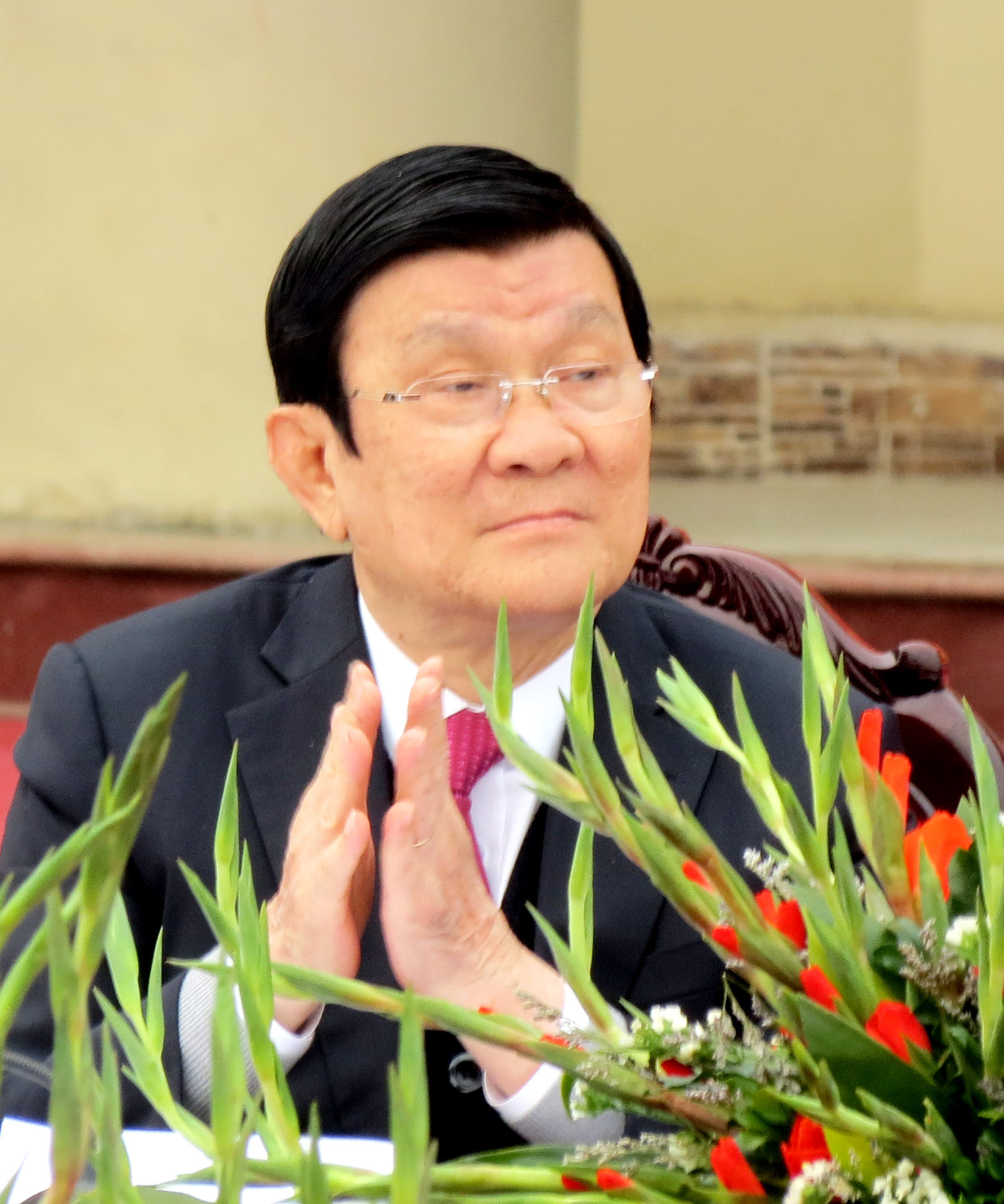
Trương Tấn Sang
 Vietnam
Also known as: Truong Tan Sang
Birthday
January 21, 1949
Birth Sign
Aquarius
Birthplace
Đức Hòa, Long An province, Vietnam
Age
77 years old
About
Trương Tấn Sang is a Vietnamese politician who served as the eighth President of the Socialist Republic of Vietnam from July 2011 to April 2016. A career Communist Party figure, he spent more than four decades moving through the party's ranks, from provincial posts in southern Vietnam to the Politburo and eventually the presidency.
He is best known internationally for two moments during his time in office: a 2013 state visit to Washington that put human rights tensions on display, and a September 2015 summit in Beijing where he pressed Chinese President Xi Jinping over territorial disputes in the South China Sea. At home, he pushed judicial reform and backed anti-corruption efforts.
Since leaving office in 2016, Sang has kept a low profile, appearing occasionally at memorial ceremonies tied to national sovereignty, including tributes to the fallen soldiers of the 1988 Battle of Gạc Ma.
Early Life & Background
Trương Tấn Sang was born on January 21, 1949, in Mỹ Hạnh commune, Đức Hòa district, in what is now Long An province, though the area was then part of Tây Ninh province. He grew up in the southern region of Vietnam during a period of war and political upheaval.
He joined the Communist Party of Vietnam on December 20, 1969, at the height of the Vietnam War, when he was twenty years old. Before entering high-level politics, Sang worked as a journalist, a background that set him apart from many contemporaries who came up through military or pure administrative channels. He contributed to the party's propaganda and information apparatus, using the role to build the communication skills that would later serve him as a party secretary and head of state.
Sang pursued higher education, earning degrees in journalism and political science. Through the 1970s and 1980s he held a series of local party positions while continuing his journalistic work, steadily building a reputation within the party apparatus in southern Vietnam. That groundwork set the stage for his first major national step: election to the Central Committee of the Communist Party at the 7th National Congress in 1991.
Career Growth
Election to the Central Committee in 1991 was the launch point. Five years later, at the 8th National Congress in 1996, Sang was elected to the Politburo, the party's executive committee, and appointed Party Secretary of Ho Chi Minh City, a post he held until 2000. Running the country's economic and political hub gave him a platform few provincial officials ever get.
He was re-elected to the Politburo at the 9th National Congress in 2001, and in 2006 he was appointed to the Secretariat of the Central Committee, ranking second only to General Secretary Nông Đức Mạnh. By October 2009 he had moved into the number two spot in the Central Secretariat, effectively serving as deputy to General Secretary Nguyễn Phú Trọng. That placed him in the ruling troika alongside Prime Minister Nguyễn Tấn Dũng and Trọng.
In July 2011, outgoing President Nguyễn Minh Triết nominated Sang, and the National Assembly elected him as the 8th President of Vietnam. He took office on July 25, 2011. His presidency focused on judicial reform, anti-corruption efforts, and a foreign policy that balanced major powers. In July 2013 he made a state visit to Washington and met President Barack Obama. In September 2015 he confronted Xi Jinping over the Spratly Islands. He also visited Denmark in 2013, Russia in 2015, and Iran in March 2016.
His term ended in April 2016, and he retired from the presidency, succeeded by Trần Đại Quang. He stepped down from all party and state positions, adhering to the age limit for public office.
Career Timeline
Public Image & Style
Sang's public image is one of solemnity and duty rather than celebrity. He is seen as a pragmatic, reform-minded figure who tried to balance the rigid structures of the party with the demands of a modernizing economy. Observers note his articulate speech and his willingness to engage in difficult diplomatic conversations, qualities that stood out in a leadership culture not known for direct public confrontation.
His style is understated: formal attire, measured statements, and a focus on protocol. There is no personality cult around him, no viral clips or social media persona. The image he projects is that of a long-serving party veteran who did the job and stepped aside when the rules said it was time.
Fame & Fandom (iFAMOUS Rankings)
Trương Tấn Sang's fame lives in the realm of statecraft, not pop culture. There is no fan club, no fandom name, and no organized fanbase. His supporters are the general Vietnamese public and party members who regard him as a legitimate, steady leader. The stories attached to him are historical milestones rather than viral legends: the 2015 Beijing summit where he pressed Xi Jinping on the Spratly Islands, and the 2013 White House visit where protesters rather than admirers gathered outside.
Within the iFANN Global Fame Rankings, his footprint is measurable. As of the October 2026 rankings, he is the 40th most famous person in Vietnam, down from 39th the previous cycle, and the 44th most famous person in Southeast Asia, holding steady. He is also featured at No. 39 in the September 2026 iFAMOUS Rankings Vietnam list.
Because his public life has been defined by protocol and official duty, the fan culture that surrounds entertainers simply does not apply here. What remains is a record of diplomatic decisions that continue to shape how Vietnam is discussed in the region.
Interesting Facts and Legends
Before he was a full-time politician, Sang worked as a journalist, contributing to the party's information apparatus, a detail that distinguishes him from the military men who dominated his generation of leadership.
The story fans of Vietnamese political history retell first is the September 2015 Beijing summit, where Sang raised the Spratly Islands dispute directly with Xi Jinping. It is the moment most often cited when people discuss his presidency.
After leaving office, he took part in ceremonies honoring the martyrs of the 1988 Battle of Gạc Ma, offering incense for the 64 soldiers who died defending the islands against Chinese forces.
His 2013 White House visit is remembered for an unusual detail: human rights activists protested outside while he met with President Obama, a contrast to the official pomp of a state visit.
Family & Personal Life
Very little is publicly known about Trương Tấn Sang's family. Official biographies released by the Vietnamese government and international databases do not list a spouse, children, or other family members. Vietnamese communist leaders have traditionally kept a strict separation between public duties and private life, and Sang has followed that pattern throughout his career and into retirement. There are no credible public records confirming his marital status or whether he has children. He has lived quietly in Vietnam since leaving office in 2016, avoiding media attention and public appearances outside occasional official ceremonies.
Notable Connections
Relationships & Dating History
No public romantic relationships, marriages, or divorces involving Trương Tấn Sang have ever been documented in reliable sources. Vietnamese communist leaders typically keep their family lives entirely private, and Sang is no exception. Official biographies from the Vietnamese government and international databases such as World Presidents DB do not list a spouse or partner.
As of 2026, there is no information suggesting he is married or in any publicly known relationship. He has lived a low-profile retirement in Vietnam since leaving office in 2016.
Salary, Net Worth In 2026
$1 Million
iFANN Editorial Team estimate
There is no credible public estimate of Trương Tấn Sang's personal wealth. As a high-ranking official in a socialist republic, his income came from a fixed government salary and, since retirement in 2016, a state pension. Vietnamese communist officials are not known for the kind of business ventures, real estate portfolios, or endorsement deals that generate celebrity fortunes elsewhere, and no such holdings have ever been attributed to Sang in reliable reporting.
Because no financial outlets have published figures for him, any number would be speculation. The iFANN Editorial Team's analysis, based on the absence of documented assets and the standard pension and salary structure for retired Vietnamese heads of state, points to a modest figure in the low seven figures at most, which would cover a lifetime of public service income and pension rather than investment returns. There is no evidence of post-retirement commercial activity, book deals, or speaking fees.
For context, retired Vietnamese presidents receive a state pension and official support, but the amounts are not disclosed publicly. Sang has not pursued any private-sector roles since leaving office, and he has not been the subject of financial investigations or asset disclosures. Any figure attached to his name should be treated as an estimate of pension-based income rather than accumulated wealth.
Awards & Accolades
View 4 records, honours and achievementsKnown For
President of Vietnam
2011-2016 · 8th President of the Socialist Republic of Vietnam
Party Secretary of Ho Chi Minh City
1996-2000 · Communist Party Secretary
2015 Beijing Summit
2015 · Confronted Xi Jinping over Spratly Islands
2013 US State Visit
2013 · Met President Barack Obama in Washington
Keywords
Sources
Quick Facts
- Profession
- Politician, former journalist
- Born
- January 21, 1949
- Birthplace
- Đức Hòa, Long An, Vietnam
- Gender
- Male
- Birth Sign
- Aquarius
- Presidency
- 8th President of Vietnam (2011-2016)
- Party Joined
- December 20, 1969
Personal Details
- Full Name
- Trương Tấn Sang
- Education
- Journalism and political science degrees
Frequently Asked Questions
Who is Trương Tấn Sang?
How old is Trương Tấn Sang?
What is Trương Tấn Sang's net worth in 2026?
Is Trương Tấn Sang still active in politics?
What is Trương Tấn Sang best known for?
Similar People
Join the community
fans discussing