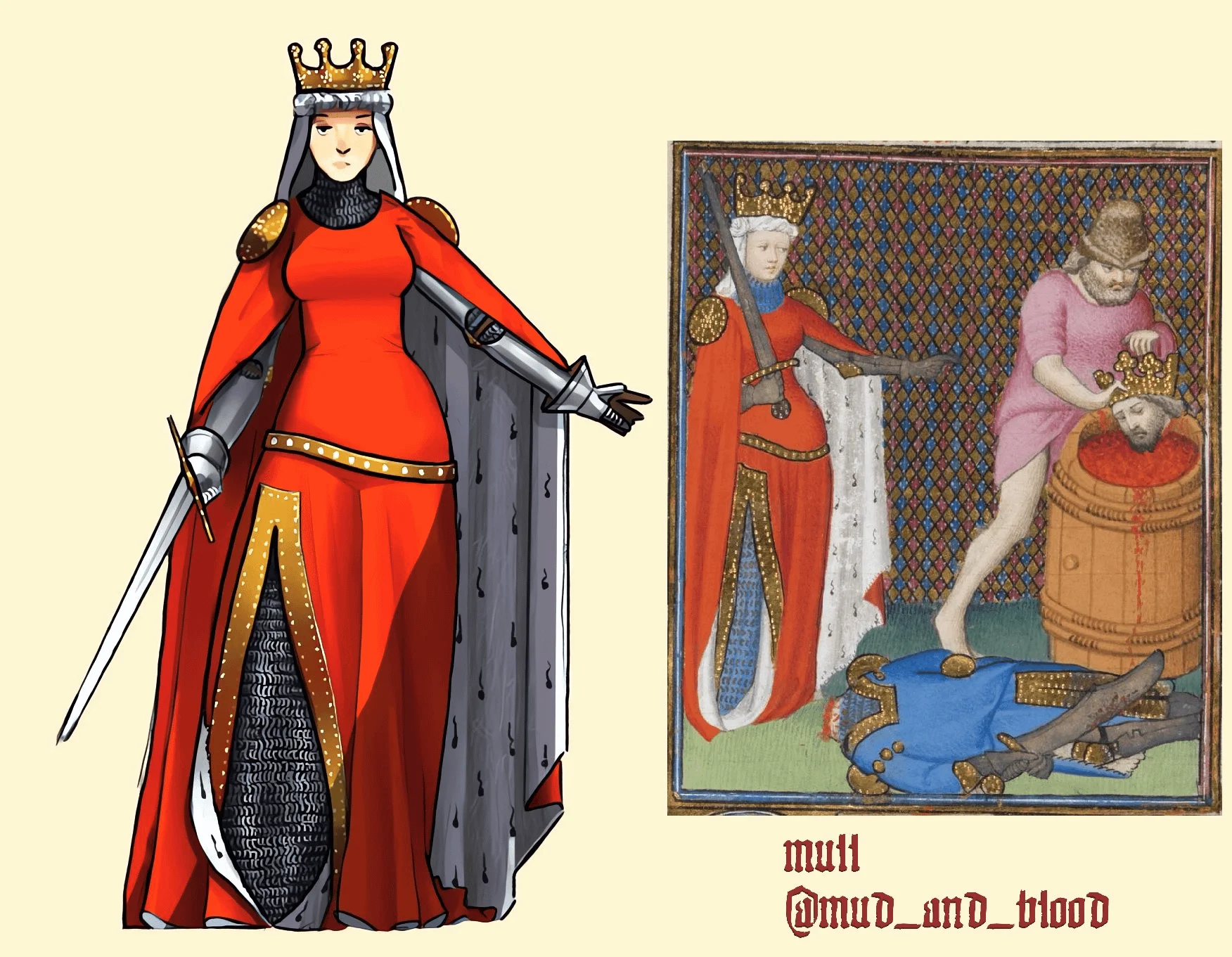
Tomyris
Also known as: Thomyris, Tomris, Tomiride, Taumuriyah
Birthday
-0600-01-01
Birth Sign
Capricorn
Birthplace
Central Asia
Age
Died at 1130
About
Tomyris ruled the Massagetae, a nomadic people roaming the vast Eurasian steppe during the sixth century BC. Her story survives primarily through the accounts of the Greek historian Herodotus, who paints her as a formidable military leader rather than just a figurehead. When Cyrus the Great of the Achaemenid Empire marched against her lands around 530 BC, she did not flee or surrender. Instead, she organized her forces to meet the invader in battle and secured a decisive victory that ended his life. This confrontation remains one of the few recorded instances where a Persian king fell to a female commander in open combat.
Early Life & Background
Historical records offer almost no glimpse into Tomyris's childhood, upbringing, or early education because the Massagetae left no written archives of their own. She was born into a world defined by the harsh rhythms of the Eurasian steppe, where survival depended on hard riding, archery, and a deep connection to the land. Sources consistently describe her as already a widow when she came to prominence, suggesting she inherited leadership or assumed power following the death of a husband whose name history has forgotten. Nothing concrete is recorded of her formative years, but the context implies a life shaped by the demands of a nomadic confederation that valued martial prowess above all else.
Her first documented step into history occurred when she became the ruler of the Massagetae, a powerful tribal alliance inhabiting the region of present-day Kazakhstan, Uzbekistan, and Turkmenistan. By the time she reached the height of her power, she had established herself as a capable leader capable of managing the complex political landscape of the steppe. The conventional date places her birth around 600 BC, but the exact circumstances of her rise to the throne remain lost to time. What we know is that she entered the historical record not as a princess waiting for a husband, but as a sovereign ready to defend her people against the encroaching might of the Achaemenid Empire.
Career Growth
The defining moment of Tomyris's reign arrived around 530 BC when Cyrus the Great of the Achaemenid Empire turned his armies toward the Massagetae territory. According to Herodotus, Cyrus initially proposed marriage to Tomyris as a pretext to annex her lands without a fight. She recognized the deception immediately and refused the proposal, understanding it as a diplomatic maneuver for conquest. Undeterred by her rejection, Cyrus invaded, employing a ruse involving a lavish feast and wine to capture her son, Spargapises. The prince, unable to bear the shame of his capture, took his own life upon being freed.
Enraged by the loss of her child, Tomyris gathered the full strength of the Massagetae and met Cyrus in a pitched battle. The conflict resulted in a decisive victory for the Scythians, and Cyrus was killed in the fighting. This event stands as one of the very few recorded instances of a Persian king falling to a female commander in open combat. Following the battle, Tomyris reportedly had Cyrus's severed head placed in a vessel filled with human blood, fulfilling a vow to give him his fill of blood. Though modern historians debate the literal truth of this grim detail, the victory cemented her place in history as a warrior queen who successfully defended her homeland against the greatest empire of the era.
Career Timeline
Public Image & Style
In both ancient and modern portrayals, Tomyris is depicted as a fierce warrior queen who embodies female empowerment and military leadership. Artworks like Peter Paul Rubens' The Vengeance of Tomyris emphasize her role as an avenger exacting justice on a conqueror. Contemporary interpretations often highlight her defiance against patriarchal imperialism, viewing her refusal of Cyrus's marriage proposal as a symbolic rejection of conquest disguised as courtship. Her image serves as a potent symbol of resistance for women and nations in Central Asia today.
Fame & Fandom (iFAMOUS Rankings)
iFANN has not yet collected fame data for this person. As a historical figure from the sixth century BC, she does not appear in modern celebrity rankings or social media metrics. However, her cultural influence extends far beyond academic circles. She has a dedicated following among history enthusiasts who study the Achaemenid Empire and the Scythian peoples. Players of the strategy game Civilization VI also know her well as the leader of the Scythian civilization, giving her a presence in the digital gaming community. In Central Asia, particularly in Kazakhstan and Uzbekistan, she is celebrated as a national icon and a symbol of regional pride, with museums and exhibitions dedicated to her legacy.
Interesting Facts and Legends
Her name appears in various forms across different languages and eras, including Thomyris, Tomris, Tomiride, and the Saka form *Taumuriyah*. In Kazakh media, she is frequently celebrated as "the world's first female warlord," a title that highlights her unique status in military history. The story of her dipping Cyrus's head into blood remains the single most retold element of her legend, even though scholars caution that it may be a literary invention typical of Greek historians.
Modern culture continues to keep her memory alive in unexpected ways. In 2016, she was added as a playable leader of the Scythian civilization in the video game Civilization VI, introducing her to a massive global gaming audience. A Kazakh film titled Tomyris premiered in 2019, depicting her as the world's first female warlord. Her name also lives on in contemporary namesakes, ranging from a racehorse named Tomyris to an Uzbek women's association and even a Turkish AI-powered humanoid robot unveiled in 2024.
Notable Quotes
“You who have destroyed me by treachery... I shall satisfy my thirst for blood.”
Family & Personal Life
The only family details recorded in history focus on her role as a mother and widow. Tomyris was married at some point before becoming queen, but her husband's name is not preserved in any surviving text. She had at least one son named Spargapises, who played a pivotal role in the war against Cyrus. His capture and subsequent suicide by shame are the only known events involving her children. There is no documentation of other siblings, parents, or extended family members, leaving the rest of her lineage a mystery lost to the ages.
Notable Connections
Cyrus the Great, Spargapises, Herodotus, Massagetae, Scythians
Relationships & Dating History
Historical records indicate that Tomyris was a widow when she rose to power. Her husband's identity is not preserved in any surviving text, leaving the details of her earlier romantic life unknown. The only significant relationship documented involves Cyrus the Great of the Achaemenid Empire. Around 530 BC, Cyrus proposed marriage to Tomyris, a move historians interpret as a strategic attempt to annex her territory without war. Tomyris rejected the proposal outright, recognizing it as a pretext for conquest. This interaction was political rather than romantic, marking the beginning of a deadly conflict between the two leaders.
She had at least one son, Spargapises, who played a central role in the war against Cyrus. He was captured through a ruse involving a feast and wine, leading to his suicide. No other marriages, partners, or children are documented in the historical record. At the time of her death, which occurred sometime after 530 BC, she remained a widow with no surviving spouse or documented children to succeed her.
- MarriedUnnamed Husband? - -0550Husband died before she became queen; name not recorded.
- RumouredCyrus the Great-0530 - -0530Political marriage proposal rejected by Tomyris; led to war.
Death & Aftermath
Died
-0530-01-01 (aged 1130)
Death Place
Central Asia (exact location unknown)
Cause of Death
Unknown
Tomyris died sometime after her decisive victory over Cyrus the Great in 530 BC, though no ancient historian recorded the specific date or location of her passing. The Massagetae typically practiced cremation or sky burials, meaning no permanent gravesite or public funeral ceremony survives for future generations to identify. Her final days remain shrouded in the ambiguity of ancient oral tradition rather than documented fact, with the only concrete details coming from Greek accounts that describe a grim ritual where she dipped the decapitated head of her enemy into a skin of blood to fulfill a vow. Modern scholars often view this narrative as a moralizing anecdote typical of classical historiography rather than a verified event.
Centuries after her final victory, Tomyris emerged as an enduring symbol of female resistance and vengeance in Western art and literature, immortalized in paintings by Peter Paul Rubens and Eugène Delacroix. Her legacy passed directly into the written histories of subsequent civilizations, transforming a defeated queen into a staple of historical education regarding the Achaemenid Empire. While there were no posthumous releases or estate settlements in the modern sense, her cultural footprint expanded through centuries of artistic interpretation and later nationalistic movements in Central Asia that reclaimed her story as a foundational myth of their heritage.
Net Worth (Estate Value)
$0
iFANN Editorial Team estimate
As a historical figure who lived over two millennia ago, Tomyris had no personal net worth in the modern financial sense. There were no bank accounts, real estate holdings, or business ventures to value. Her economic existence was tied entirely to the pastoral economy of the Massagetae, a nomadic confederation that relied on livestock and trade along the Silk Road. The concept of wealth accumulation as understood today did not apply to her lifestyle or society.
Today, her "estate" exists purely as a cultural asset. Museums, educational institutions, and cultural organizations in Central Asia derive value from her legacy through tourism, exhibitions, and merchandise. The film Tomyris generated revenue through its theatrical run, and the character in Civilization VI contributes to the game's sales. These modern economic impacts stem entirely from her historical significance rather than any personal fortune she accumulated during her lifetime.
Awards & Accolades
View 4 records, honours and achievementsKnown For
Civilization VI
2016 · Playable Leader of the Scythians
The Vengeance of Tomyris
1620 · Subject of Painting by Peter Paul Rubens
Tomyris
2019 · Subject of Kazakh Film
Keywords
Sources
Quick Facts
- Profession
- ruler, military leader
- Born
- -0600-01-01
- Birthplace
- Central Asia
- Died
- -0530-01-01
- Gender
- Female
- Birth Sign
- Capricorn
Personal Details
- Children
- Spargapises
Frequently Asked Questions
Who was Tomyris?
Did Tomyris really kill Cyrus the Great?
Was Tomyris married or did she have children?
Where did Tomyris rule?
Is Tomyris in Civilization VI?
Similar People
Join the community
fans discussing