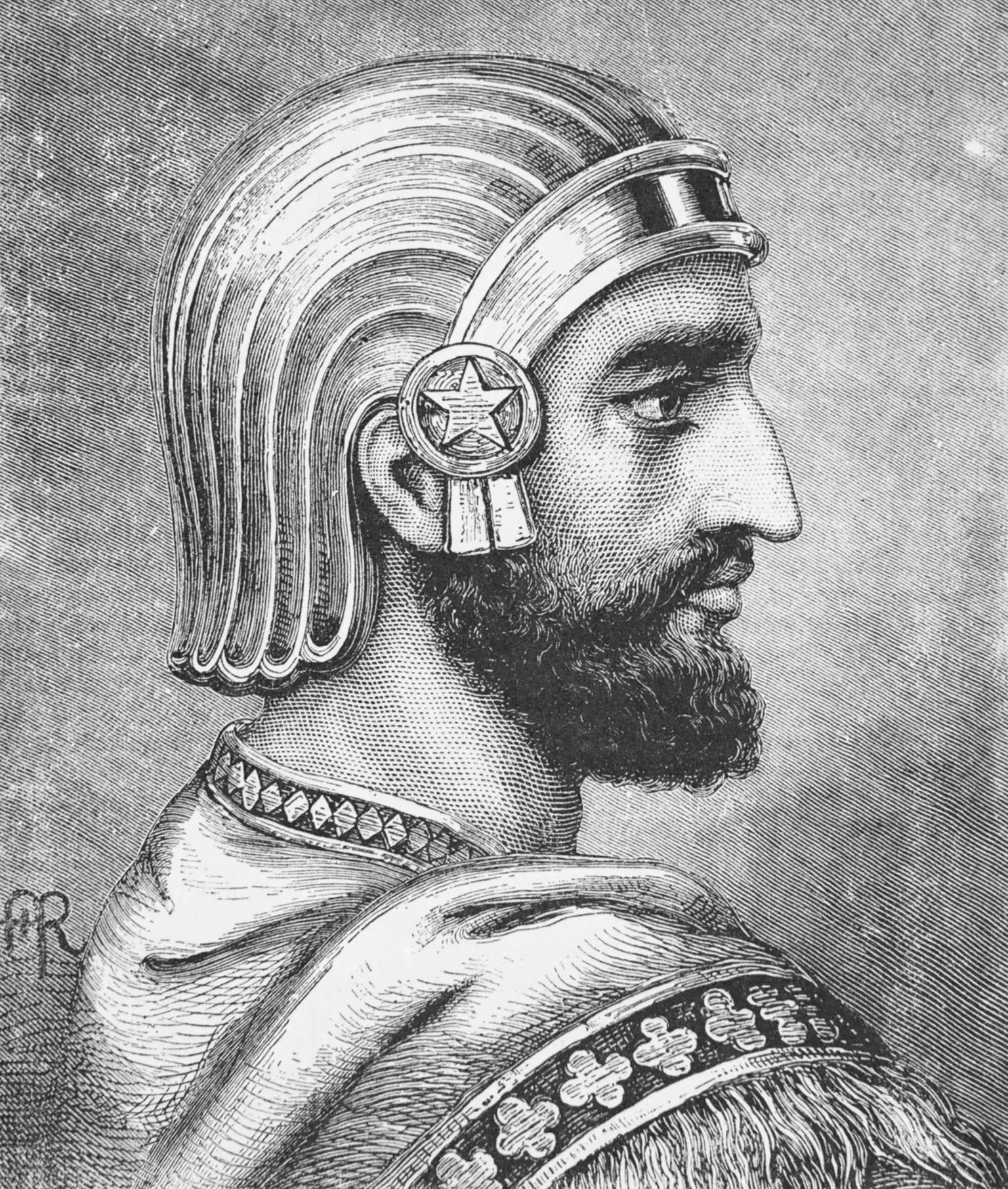
Cyrus the Great
King•military leader•founder of the Achaemenid Empire
Also known as: Cyrus II of Persia, Cyrus the Elder
Birthday
600 BC
Birth Sign
Birthplace
Anshan, Persia (modern-day Iran)
Age
Died at 70
About
Cyrus the Great was the founder of the Achaemenid Empire, the largest empire the world had seen up to his time. He united the peoples of the ancient Near East under Persian rule, stretching from the Mediterranean to the Indus. What set him apart from other ancient conquerors was his approach to governance: he respected local customs, allowed religious freedom, and ruled through a system of satraps. Today, he is remembered as a model of enlightened leadership, praised in the Hebrew Bible and admired by historians.
Early Life & Background
Cyrus was born around 600 BC in Anshan, a region in Persis (modern Fars, Iran). His father was Cambyses I, a vassal king of the Medes, and his mother was Mandane, daughter of the Median king Astyages. According to the Greek historian Herodotus, Astyages dreamed that his grandson would overthrow him. He ordered the infant Cyrus killed, but a shepherd named Mitradates secretly raised him instead. When Cyrus was ten, his noble bearing gave him away, and Astyages spared him after a dream interpreter assured him the threat had passed. Cyrus returned to Anshan and inherited the throne around 559 BC. At that time, Anshan was a small kingdom under Median domination. Cyrus began building a coalition of Persian tribes, preparing for the revolt that would change history.
Career Growth
Cyrus launched his uprising against the Medes around 550 BC. After three years of fighting, he defeated Astyages and captured the Median capital, Ecbatana. The Persians absorbed the Median territories, and Cyrus styled himself king of both Persians and Medes. In 547 BC, he marched against the wealthy Lydian kingdom of King Croesus, famed for its gold. After a fierce battle at Pteria, Cyrus captured Sardis and took Croesus prisoner. Lydia fell, and the Ionian Greek cities of Asia Minor submitted. The next great target was Babylon. In 539 BC, Cyrus marched on the Neo-Babylonian Empire. He defeated the Babylonian army at Opis and entered Babylon without a fight, welcomed by many as a liberator. He then issued the Edict of Restoration, allowing exiled peoples, including the Jews, to return to their homelands. This act earned him a unique place in biblical history. Cyrus spent his final years campaigning in Central Asia, where he died in 530 BC.
Career Timeline
Public Image & Style
Cyrus is remembered as a wise and benevolent conqueror, a stark contrast to later rulers like Alexander the Great. Ancient Greek writers praised his justice and statesmanship. In Iran, he is a national hero, and his tomb is a symbol of Persian heritage. Modern historians view him as a pioneer of human rights, citing his cylinder (now in the British Museum) as an early declaration of tolerance. There is no fandom in the modern sense, but his reputation endures in scholarship and popular culture.
Fame & Fandom (iFAMOUS Rankings)
Cyrus the Great stands as a towering figure of ancient history whose reputation has outlasted empires, though he currently holds no placement in the iFANN Global Top 1,000 or any scope list. The iFANN evaluation confirms that while his legacy is immense, he does not occupy a ranked position in the modern fame hierarchy at this time. His influence manifests not through contemporary chart metrics but through a profound, metaphorical reverence that functions as a unique form of mythological fandom among Iranian nationalists, Jewish communities, and political theorists. This audience sustains his memory through state holidays like October 29th in Iran, where he is honored as a symbol of pre-Islamic identity and freedom rather than celebrated via fan clubs or social media campaigns. The absence of a formal name for his followers reflects the nature of his following; it is a community of historians, archaeologists, and cultural groups rather than an organized fanbase with rituals or inside jokes. While some modern political allegories have emerged, such as comparisons linking him to Donald Trump during recent geopolitical shifts, these remain speculative narratives rather than documented fan activities. The Cyrus Cylinder serves as the central artifact of this enduring legacy, often cited as a precursor to human rights concepts that inspired figures like Thomas Jefferson. Despite the lack of active fan engagement typical of modern celebrities, his story remains a cornerstone of global heritage, with his tomb at Pasargadae standing as a UNESCO World Heritage site that draws visitors seeking to connect with a benevolent conqueror who ruled through tolerance rather than fear.
Interesting Facts and Legends
Cyrus the Great holds the unique distinction of being the only non-Jewish figure in the Hebrew Bible to be called a messiah. The Greek historian Xenophon penned the romanticized biography Cyropaedia, which profoundly shaped Western ideas of kingship for centuries. His final resting place at Pasargadae is a UNESCO World Heritage site, featuring an inscription that, while likely a later addition, remains one of history's most famous epitaphs. Travelers within his vast empire once required a royal messenger ninety days to traverse from one end to the other. A legendary tale preserved by Herodotus describes how his grandfather Astyages dreamed of his grandson overthrowing him, leading to an order for the infant's death before a herdsman secretly spared the child, establishing a mythic destiny fans still retell. Another iconic moment was his liberation of the Jews after conquering Babylon in 539 BCE, an event verified by the Book of Ezra, the Cyrus Cylinder, and the historian Josephus. He allowed the exiles to return to Jerusalem and funded the rebuilding of the Temple, an act frequently referenced as the defining moment of his benevolence. Modern legends also include the controversial equating of former U.S. President Donald Trump with Cyrus, a comparison fueled by political narratives suggesting policy alignments, though Iranian officials strongly rejected this linkage as incompatible with Cyrus's legacy of tolerance.
Notable Quotes
“O man, whoever you are and wherever you come from, for I know you will come, I am Cyrus who founded the Persian empire and was king of Asia. I did not therefore allow him to be oppressed.”
“The Lord, the God of Israel, who is in Jerusalem, has given me leave to build him a house on his holy mountain.”
Family & Personal Life
Cyrus was married to Cassandane, an Assyrian princess, with whom he had two sons: Cambyses II, who succeeded him, and Bardiya (called Smerdis by the Greeks), and several daughters. After Cassandane's death, he married Amytis, daughter of the Median king Astyages, and possibly Neithiyti, an Egyptian princess. His family was central to his dynasty, though stories of rivalry between his sons surfaced after his death.
Notable Connections
Cyrus is associated with his grandfather Astyages, whom he overthrew; his father Cambyses I; his mother Mandane; his wives Cassandane, Amytis, and Neithiyti; his sons Cambyses II and Bardiya; the Lydian king Croesus; the Babylonian king Nabonidus; and the Massagetae queen Tomyris, who likely killed him in battle.
Relationships & Dating History
Cyrus married Cassandane, an Assyrian princess, likely around 570 BC. She bore him two sons and several daughters, and her death deeply affected him. He later married Amytis, daughter of the Median king Astyages, to strengthen ties with the Medes. He may also have married Neithiyti, an Egyptian princess, as a diplomatic alliance. All three wives were queens of the empire. As of his death in 530 BC, Cyrus was married to Amytis (and possibly Neithiyti), though Cassandane had predeceased him.
- MarriedCassandane-570 - -550Assyrian princess, mother of Cambyses II and Bardiya. Died before Cyrus.
- MarriedAmytis-550 - -530CurrentDaughter of Astyages, married after Cassandane's death to strengthen Median ties.
- MarriedNeithiyti-540 - -530Egyptian princess, possibly a diplomatic marriage. Little is known.
Death & Aftermath
Died
530 BC (aged 70)
Death Place
near the Syr Darya river, territory of the Massagetae
Cause of Death
Killed in battle against the Massagetae
Cyrus the Great spent his final years leading the Persian army on a military campaign against the Massagetae, a nomadic people located north of the Aral Sea near the Syr Darya river. Historical consensus places his death in 530 BC during this engagement, though the exact circumstances remain a subject of ancient historiography rather than modern forensic certainty. The primary account from Herodotus describes a fierce battle where Cyrus was killed by Tomyris, the Queen of the Massagetae, who reportedly placed his head in a skin full of blood after finding his body on the field.
Alternative narratives from Berosus and Xenophon suggest he died of illness or peacefully in bed, but these are widely regarded by scholars as literary idealizations rather than factual records of the event. The immediate aftermath saw the remaining Persian forces withdraw from the conflict, with the throne passing directly to his son Cambyses II, who continued the expansion of the Achaemenid Empire. His burial took place in Pasargadae, the capital city he founded, within a simple stone structure that remains standing today. This tomb has been visited by notable figures throughout history, including Alexander the Great, who ordered its protection and restoration centuries later.
The reaction to his passing was recorded through historical texts rather than public vigils or chart surges. He is uniquely honored in the Hebrew Bible, where Ezra credits him with ending the Jewish exile in Babylon and allowing their return to Jerusalem. Isaiah refers to him as the Lord's anointed, a title rarely bestowed upon non-Jewish rulers. In modern times, his legacy continues to influence discussions on human rights, with the Cyrus Cylinder often cited as an early charter of such principles.
Awards & Accolades
View 4 records, honours and achievementsKnown For
Founding the Achaemenid Empire
c. 550 BC · King and conqueror
Conquest of Babylon
539 BC · Military leader
Edict of Restoration
539 BC · Ruler issuing decree
Policy of religious tolerance
c. 539 BC · King
Keywords
Quick Facts
- Profession
- King, military leader, founder
- Born
- 600 BC
- Birthplace
- Anshan, Persia
- Died
- 530 BC
- Death Place
- Syr Darya region (Central Asia)
- Gender
- Male
- Spouse
- Cassandane, Amytis, Neithiyti
- Children
- Cambyses II, Bardiya (Smerdis)
Personal Details
- Full Name
- Cyrus II of Persia
- Spouse
- Cassandane, Amytis, Neithiyti
- Children
- Cambyses II, Bardiya (Smerdis)
Frequently Asked Questions
Who was Cyrus the Great?
When did Cyrus the Great live?
What was Cyrus the Great famous for?
Where was Cyrus the Great born?
How did Cyrus the Great die?
Similar People
Join the community
fans discussing