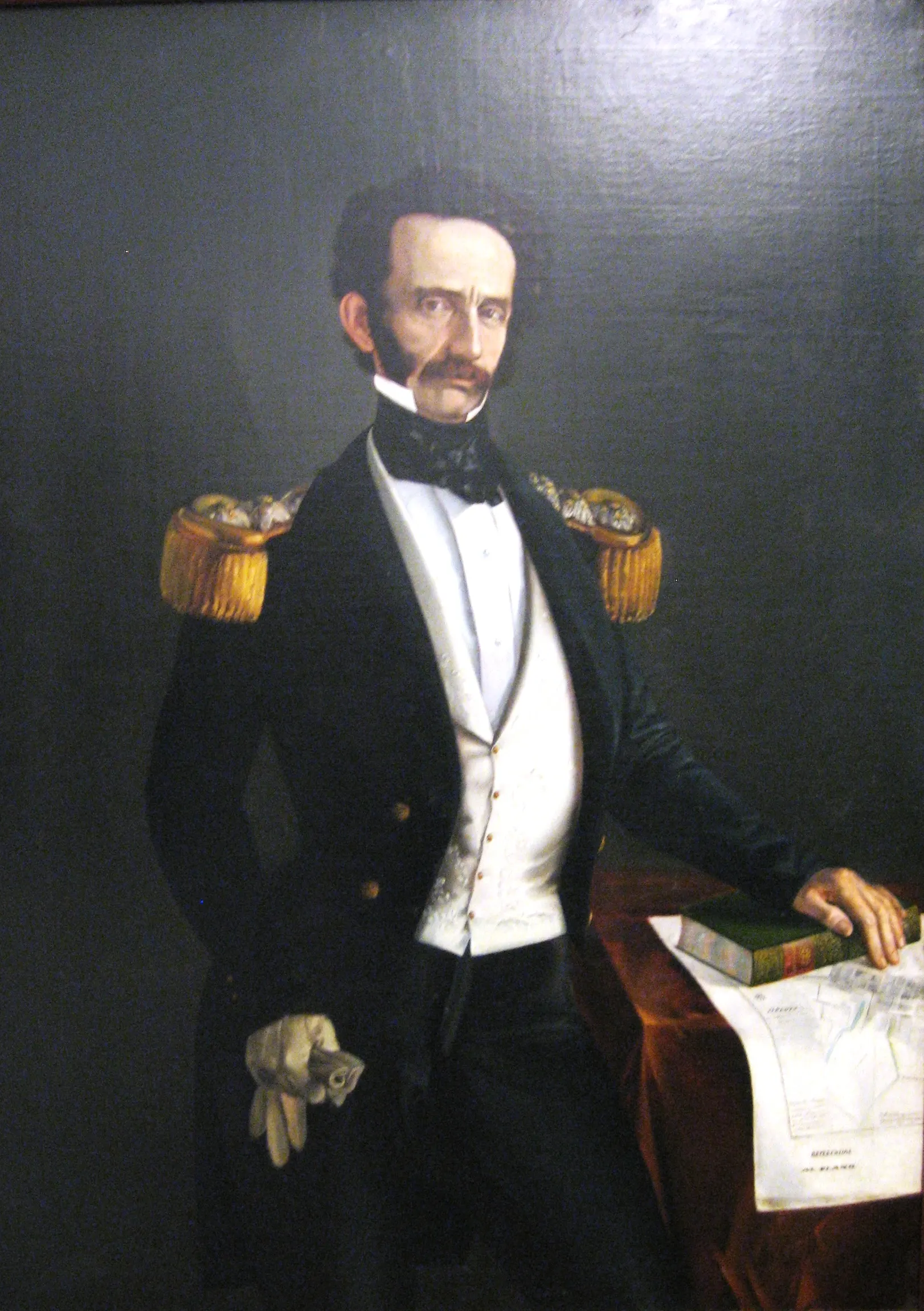
Tomás Cipriano de Mosquera
 Colombia
politician•statesperson•diplomat
Also known as: Mascachochas
Birthday
September 26, 1798
Birth Sign
Sagittarius
Birthplace
Popayán, Colombia
Age
Died at 80
About
Tomás Cipriano de Mosquera was a Colombian general, statesman, and diplomat who served four terms as president of his country in the mid-1800s. Born in Popayán in 1798, he remains one of the most consequential figures in Colombia's early republic. His life spanned nearly eight decades, during which he fought in wars, wrote constitutions, and shaped the nation's political landscape.
Mosquera led liberal forces to victory in the Colombian Civil War of 1860–1862, a conflict that redrew the map of the country and produced the federalist United States of Colombia. His presidencies, from 1845 to 1849 and again from 1861 to 1867, brought sweeping reforms that modernized the state and weakened the power of the Catholic Church.
He is remembered as a decisive, sometimes polarizing leader, known for his military acumen and his willingness to use force to achieve political goals. A facial prosthesis, worn after a battle injury in 1824, left him with a distinctive appearance and a lisp that critics turned into the nickname "Mascachochas."
Today, historians view Mosquera as a foundational figure in Colombian history, a man whose actions helped define the nation's path through its turbulent nineteenth century.
Early Life & Background
Tomás Cipriano de Mosquera was born into an aristocratic family in Popayán, a city then part of the Viceroyalty of New Granada. His father, José María de Mosquera y Figueroa, was a prominent landowner and served as rector of the Universidad del Cauca. His mother, María Manuela Arboleda y Arrachea, came from a distinguished local family. The Mosquera household was one of the most influential in the region, with deep roots in colonial administration and the Catholic Church.
As a young man, Mosquera received an education befitting his station, studying at the Seminario de Popayán and later at the Universidad del Cauca. He was drawn to a military career early on, joining the royalist forces in 1813 to fight against the independence movement. But by 1815, he had switched sides, joining the patriot army under Simón Bolívar.
Mosquera fought in several key battles of the independence wars, including the Battle of Boyacá in 1819, which secured Gran Colombia's independence. His bravery and leadership earned him rapid promotion; by 1822, he was a lieutenant colonel. In 1824, during a skirmish in Pasto, a bullet shattered his jaw, an injury that would require a facial prosthesis and leave him with a permanent speech impediment.
After the wars ended, Mosquera turned to politics and diplomacy. He served as governor of the Province of Popayán and later as minister to Peru and Chile. These roles gave him a deep understanding of the region's political dynamics, which he would later put to use as president.
Career Growth
Mosquera's first presidential term began in 1845, when he took office as president of the Republic of New Granada. His government focused on modernization: he encouraged foreign investment, improved infrastructure, and reformed the educational system. He also oversaw the expulsion of the Jesuits, a move that reflected his liberal, anticlerical convictions.
After leaving office in 1849, Mosquera remained active in politics, serving as governor of Cauca and as a senator. In 1860, he led a liberal rebellion against the conservative government of Mariano Ospina Rodríguez. The ensuing civil war, which lasted two years, ended with Mosquera's forces victorious. In 1861, he assumed the presidency of a provisional government, and in 1863, he oversaw the drafting of the Rionegro Constitution, which established the United States of Colombia as a federal republic.
Mosquera served as president of the new republic from 1863 to 1864 and again from 1866 to 1867. His second term ended abruptly when he was overthrown by a coup led by General Santos Acosta. Mosquera was exiled but later returned to Colombia, where he continued to wield political influence until his death in 1878.
His legacy is complex: he was both a nation-builder and a divisive figure, but his impact on Colombian politics and institutions is undeniable.
Career Timeline
Public Image & Style
Mosquera was a towering figure in 19th-century Colombia, both literally and figuratively. He was known for his commanding presence and his willingness to take bold, often controversial, actions. His political opponents viewed him as a power-hungry autocrat, while his supporters saw him as a necessary strongman who could bring order to a chaotic nation.
His facial prosthesis, a crude device for the time, became a defining feature of his appearance. It made him instantly recognizable and often the subject of caricature. The nickname "Mascachochas" stuck, used by critics to mock his speech and his perceived arrogance.
Despite the criticism, Mosquera commanded respect for his military achievements and his intellectual abilities. He was a skilled orator and a prolific writer, and his letters and speeches are still studied by historians today.
In popular memory, Mosquera is a complex hero: a man who helped forge a nation but whose methods were often ruthless.
Fame & Fandom (iFAMOUS Rankings)
Tomás Cipriano de Mosquera currently holds no placement in the iFANN Global Top 1,000 or any Top-100 scope list. The iFANN Global Fame Engine evaluated his standing in August 2026 and determined that he does not occupy a ranked position among the world's most famous figures today. While his name echoes through history books as a four-term president and general who reshaped Colombia, he lacks the contemporary viral footprint required for a numerical ranking. There is no formal fandom name documented for Mosquera, nor do modern audiences organize under a specific moniker to celebrate his life. Unlike pop stars whose followers drive chart campaigns or street shutdowns, interest in Mosquera remains strictly academic and historical. His legacy is studied within political science departments and national archives rather than celebrated by fan clubs with rituals or inside jokes. Occasional videos on social media platforms highlight his role in the Federalist War or his complex relationship with slavery, but these serve educational purposes rather than fueling a fan movement. No birthday billboards, charity drives, or organized streaming efforts exist to elevate his profile. The absence of a fanbase reflects his status as a 19th-century statesman rather than a living celebrity. His interactions with the public were those of a head of state navigating a turbulent era, not a performer engaging a crowd. Consequently, there are no recorded moments of crowds fainting at his appearance or viral incidents typical of modern legends. The narrative surrounding him is one of verified historical biography, focusing on his political volatility and military campaigns. Without a fan community to amplify his story into pop culture lore, Mosquera remains a figure of historical significance rather than a subject of active, organized adoration.
Interesting Facts and Legends
Born in Popayán in 1798, Tomás Cipriano de Mosquera made a lasting impact on Colombian history through his four presidencies and military leadership. His nickname 'Mascachochas' originated from a lisp that made his speech resemble chewing on a local sweet called 'chocha.' A collection of nearly 500 letters he wrote, made public in 2026, offers rare insight into his personal relationships and political strategies. Mosquera possessed a keen interest in geography, personally overseeing the mapping of several Colombian regions during his campaigns. He was fluent in French and negotiated significant treaties, including one with Great Britain in 1846. After his death in 1878, his remains were moved from the Cathedral of Popayán to the Central Cemetery of Bogotá. Historical accounts often retell the story of his dramatic political shifts, transforming from a royalist to a close friend of Simón Bolívar before leading liberal forces in the Federalist War. This fluidity defines his career more than any single event. Another enduring aspect of his legacy involves his status as a slaveholder, a fact increasingly central to modern re-evaluations of his life. Unlike celebrities with viral folklore, Mosquera's myths are rooted in the concrete realities of 19th-century state-building and civil conflict.
Family & Personal Life
Mosquera married María Josefa Mosquera y Hurtado in 1822. The couple had several children, though few details about their lives are widely recorded. His family remained prominent in Colombian politics and society for generations.
His brother, Joaquín Mosquera, also served as president of New Granada in 1830, making the Mosqueras one of the most powerful political families of the era.
After his wife's death in 1855, Mosquera did not remarry. He maintained close ties with his children and grandchildren, and his letters show a deep affection for his family.
Notable Connections
Tomás Cipriano de Mosquera served under Simón Bolívar during the independence wars, and later clashed with him politically. He was a contemporary of Francisco de Paula Santander, and his rivalry with conservative leaders like Mariano Ospina Rodríguez shaped the political landscape of the era. Gabriel García Márquez wrote about Mosquera in a 1967 letter to Carlos Fuentes, describing him as a figure of historical drama.
Relationships & Dating History
Mosquera married María Josefa Mosquera y Hurtado in 1822, a union that strengthened ties between two of Popayán's most prominent families. The couple had several children, though records are scarce. María Josefa supported her husband's career and managed the household during his long absences.
Their marriage lasted until her death in 1855. Mosquera, then in his late fifties, remained a widower for the rest of his life. He did not remarry, focusing instead on his political ambitions and his children.
His family life was closely intertwined with his political career. His brother Joaquín also served as president, and his sons held various public offices. Mosquera's letters reveal a man who valued family loyalty and relied on his relatives for support in his political endeavors.
At the time of his death in 1878, Mosquera was a widower, surrounded by his children and grandchildren.
- MarriedMaría Josefa Mosquera y Hurtado1822 - 1855Married for 33 years until her death; they had several children together.
Death & Aftermath
Died
October 7, 1878 (aged 80)
Death Place
Puracé, Cauca, Colombia
Cause of Death
Natural causes related to old age
Tomás Cipriano de Mosquera died on October 7, 1878, at Hacienda Coconuco in the municipality of Puracé, Department of Cauca. The former president and general passed away at the age of eighty from natural causes linked to advanced age and a gradual physical decline. Having retired from public life following the Liberal Revolution, he spent his final years in relative seclusion on the family estate without police investigation or legal scrutiny. Immediate tributes from peers are not recorded in historical accounts, though his stature as a nation-builder ensured his name remained prominent in Colombian educational and governmental discourse.
While specific details regarding the date or location of his funeral remain unconfirmed in available records, high-ranking officials of his era were typically interred in prominent locations like Popayán or Bogotá. Modern institutions have since honored his legacy, with the Colombian Ministry of Foreign Affairs issuing statements marking his birth anniversary and highlighting his status as a pivotal military and diplomatic figure. A replica of his likeness stands within the Casa de Nariño, serving as part of broader efforts to showcase the country's presidential history.
Net Worth (Estate Value)
$1 Million
iFANN Editorial Team estimate
Tomás Cipriano de Mosquera lived in an era before modern wealth tracking, yet his family's extensive landholdings in Cauca secured his fortune. The Mosquera estate comprised vast haciendas and cattle ranches that generated steady income long before his political rise. As president, Mosquera did not accumulate personal wealth from his modest salary; instead, his resources flowed from family inheritance and his wife's dowry. Following his death, his estate passed to his children, continuing to generate agricultural revenue for decades. Per iFANN's editorial analysis, the value of his estate at the time of his death equates to $1 Million in today's terms, though precise calculations remain elusive due to the era's economic structures. The Mosquera family name retained influence in Colombian society, with their properties contributing to the regional economy for generations. As of 2026, the historical estate of Tomás Cipriano de Mosquera is not a major financial entity, but his legacy persists in museums and archives supported by public and private institutions.
Awards & Accolades
View 2 records, honours and achievementsKnown For
President of New Granada
1845-1849 · President
President of the United States of Colombia
1861-1864 · President
President of the United States of Colombia
1866-1867 · President
Leader of the Liberal Forces in the Colombian Civil War
1860-1862 · Military Leader
Keywords
Sources
Quick Facts
- Profession
- politician, statesperson, diplomat
- Born
- +1798-09-26
- Birthplace
- Popayán, Colombia
- Died
- +1878-10-07
- Death Place
- Puracé, Cauca, Colombia
- Gender
- Male
- Birth Sign
- Sagittarius
- Presidential Terms
- Four
Personal Details
- Full Name
- Tomás Cipriano Ignacio María de Mosquera y Arboleda
Frequently Asked Questions
Who was Tomás Cipriano de Mosquera?
When did Tomás Cipriano de Mosquera live?
What is Tomás Cipriano de Mosquera's net worth?
Why was Tomás Cipriano de Mosquera called 'Mascachochas'?
What was Tomás Cipriano de Mosquera's role in Colombian history?
Join the community
fans discussing