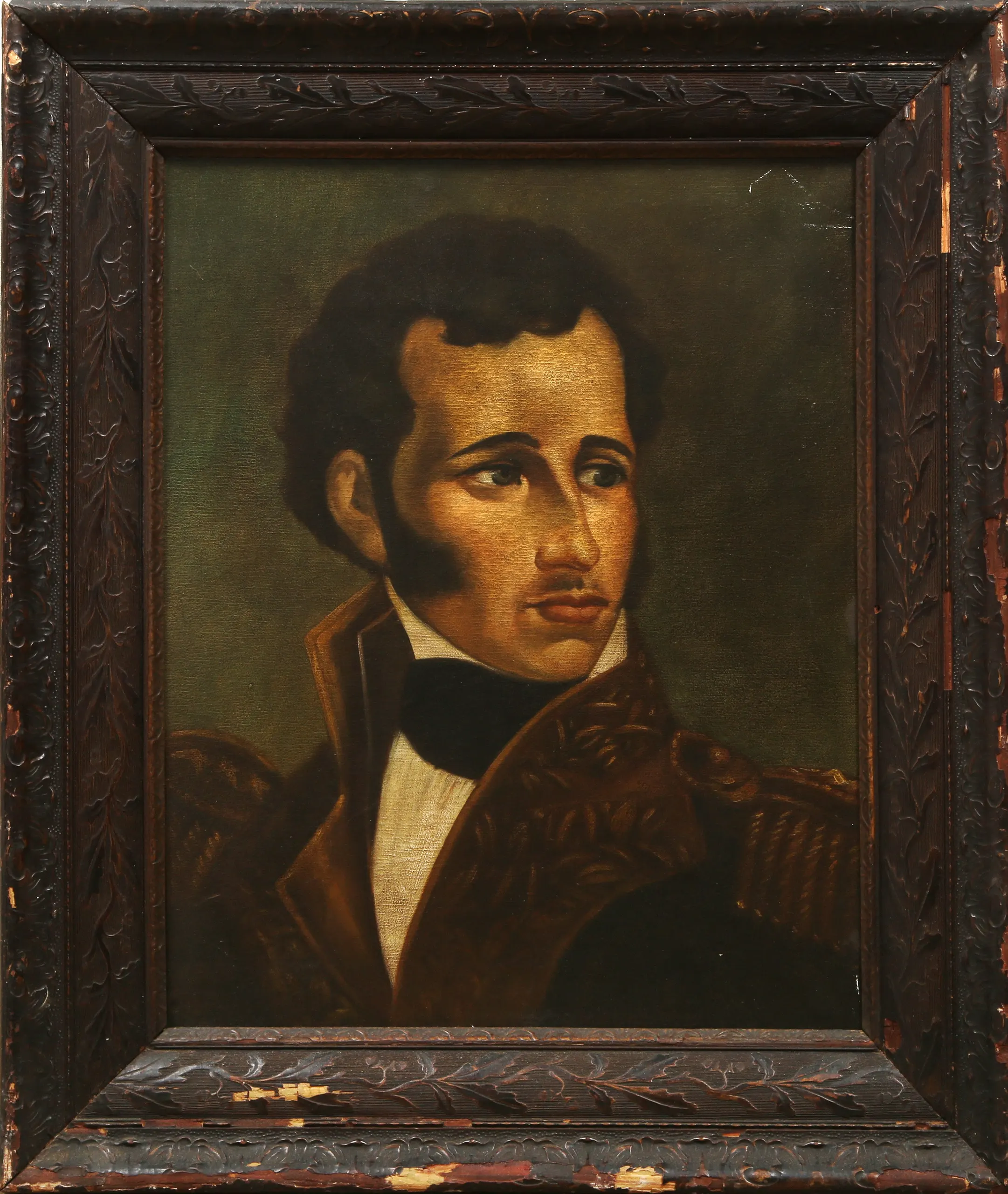
Simón Bolívar
 Spain
SpainAlso known as: El Libertador, The Liberator, The Liberator of America, Simon Bolivar
Birthday
July 24, 1783
Birth Sign
Sagittarius
Birthplace
Caracas, Venezuela
Age
Died at 47
Height
5 ft 8 in (173 cm)
About
Simón José Antonio de la Santísima Trinidad Bolívar Palacios Ponte y Blanco, universally known as Simón Bolívar and revered as El Libertador, was a Venezuelan military officer and statesman who spearheaded the independence of six South American nations from Spanish rule. Born into a wealthy aristocratic family in Caracas, he lost both parents by the age of nine and was raised under strict guardianship. Educated in Spain where he absorbed Enlightenment ideals, he returned to Venezuela to lead the revolutionary movement against the Spanish Empire. His military campaigns liberated present-day Venezuela, Colombia, Ecuador, Peru, Bolivia, and Panama, fundamentally reshaping the geopolitical map of the continent.
Bolívar's vision extended beyond mere independence; he sought to create a unified Latin American federation known as Gran Colombia. Although he served as president of several republics and achieved remarkable military victories, internal regionalist tensions and caudillismo eventually fractured his dream of a united continent. After resigning the presidency in 1830, he retreated to the coast where he died of tuberculosis. His legacy endures as a foundational myth for Latin America, with monuments, cities, and institutions bearing his name across the region and the world.
Early Life & Background
Simón Bolívar entered the world on July 24, 1783, in Caracas within the wealthy Bolívar-Palacios family. His early life was defined by profound loss; his father Juan Vicente died when Simón was just three years old, and his mother María de la Concepción passed away when he was nine. Orphaned at such a young age, he fell under the care of his uncle Francisco de Miranda and later his grandfather. His upbringing involved rigorous religious instruction and private tutoring by notable figures like Simón Rodríguez, a disciple of Jean-Jacques Rousseau who instilled in him a deep commitment to republican liberty and social equality. At fifteen, Bolívar was sent to Spain to continue his education. He attended the University of Salamanca and immersed himself in the intellectual currents of the Enlightenment. Following his studies, he embarked on a Grand Tour through France, Italy, and Switzerland. It was during this journey, specifically while standing on the slopes of Mount Vesuvius in Rome in 1805, that he made a famous vow to liberate his homeland from Spanish tyranny. This moment marked the transition from a privileged student to a committed revolutionary. Upon returning to Venezuela briefly, he married María Teresa Rodríguez del Toro y Alaysa in 1802. The union was arranged to unite two prominent families, but it ended in tragedy when she died of yellow fever just one year later. Her death left Bolívar childless and emotionally scarred, a pivotal event that hardened his resolve to dedicate his life entirely to the public cause of liberation, effectively renouncing personal happiness for political duty. By 1807, he returned to Venezuela ready to join the growing independence movement.
Career Growth
Bolívar's military career began in earnest in 1810 when he joined the revolutionary movement against Spanish rule in Venezuela. He fought in the First Republic of Venezuela, which collapsed after a massive earthquake in 1812 was interpreted by royalists as divine punishment. He fled to New Granada, only to launch the "Admirable Campaign" in 1813 to retake Venezuela, establishing the Second Republic which also fell quickly. Exiled to Jamaica and Haiti, he secured crucial support from Haitian President Alexandre Pétion in exchange for promising to abolish slavery in the territories he liberated. With this backing, Bolívar established the Third Republic of Venezuela in Angostura in 1817 and convened the Congress of Angostura to outline his vision for a unified state. In a daring feat of military logistics, he led his forces across the treacherous Andes Mountains in 1819 to surprise and defeat the Spanish at the Battle of Boyacá, liberating New Granada and forming Gran Colombia. His success continued with victories at the Battle of Pichincha in 1822, securing Ecuador's independence. In 1824, he won the Battle of Junín and delegated command to his lieutenant Antonio José de Sucre, who secured the decisive victory at Ayacucho, ending Spanish rule in Peru. By 1825, the province of Upper Peru was renamed "Bolivia" in his honor. Despite these triumphs, the dream of a single unified federation fractured due to regionalist tensions, leading to his resignation and eventual death in 1830.
Career Timeline
Public Image & Style
Bolívar is portrayed as a tragic hero, a visionary who saw the potential for a united Latin America but was thwarted by human nature and political reality. Media portrays him as a symbol of anti-imperialism, sovereignty, and revolutionary spirit. His image is ubiquitous in public spaces, murals, and educational materials across Latin America. He is often depicted in military attire, commanding presence, and intense gaze, embodying the ideal of the liberator. While some view him as a dictator due to his authoritarian tendencies later in life, the dominant narrative celebrates him as the father of modern South America.
Fame & Fandom (iFAMOUS Rankings)
In the September 2026 cycle of the iFANN Global Fame Rankings, Simón Bolívar holds steady as the 29th most famous person from Spain. This placement reflects a sustained resonance that transcends mere historical record, anchoring him firmly within the modern consciousness of the Spanish-speaking world through media coverage and cultural consumption signals worldwide. Unlike contemporary celebrities whose fame fluctuates with trending topics, Bolívar's stature is anchored in the enduring weight of his legacy. There is no formal fandom name for this historical icon; those who revere him are identified by their political ideology or national identity rather than a collective noun like "Bolívarians." While modern fan culture often revolves around social media campaigns and merchandise, Bolívar's supporters engage in political activism and cultural preservation. State-sponsored projects dominate his remembrance, such as the Simón Bolívar Symphony Orchestra, which has achieved global acclaim under Gustavo Dudamel. His image serves as a visual anchor for movements seeking to challenge power structures, appearing on murals and public art throughout Latin America. The interaction is one-sided reverence; statues are erected, birthdays are commemorated nationally, and his writings are studied with devotion. He cannot interact with fans, yet his death in 1830 marked the collapse of a vision for a united continent, a tragedy that fuels ongoing discourse. Recent events see institutions named after him honoring Venezuela on international stages, proving that while he lacks a pop-culture following, his influence remains vibrant and politically active.
Interesting Facts and Legends
Simón Bolívar is often called the "Napoleon of the South," yet unlike Napoleon Bonaparte, he refused to crown himself emperor, preferring a republican form of government. When a massive earthquake devastated Caracas in 1812, Catholic priests claimed it was God's punishment for the rebellion. Bolívar famously responded, "Nature is our enemy," refusing to let the disaster stop the revolution. He was a staunch abolitionist who promised to free slaves in exchange for Haitian support, a radical move for the time. Historical estimates suggest he stood approximately 5 feet 8 inches tall with a lean, athletic build and intense eyes. He typically wore a military uniform adorned with medals and sashes, often topped with a distinctive bicorne hat. Folklore surrounds his dying words, "He Who Serves a Revolution is Plowing the Sea," reflecting his despair over the fragmentation of the republics he liberated. An international airport in Caracas bears his name, and the Simón Bolívar Symphony Orchestra continues to perform globally under Gustavo Dudamel.
Notable Quotes
“He who serves a revolution is plowing the sea.”
“America is inglorious because she is not free.”
“Our soul, our life, our home is to be found in the Americas.”
“Spirit cannot be compared with matter.”
“All who serve a revolution plow the sea.”
Family & Personal Life
Simón Bolívar was born into the aristocratic Bolívar-Palacios family in Caracas. His father, Juan Vicente Bolívar y Ponte, died when Simón was three, and his mother, María de la Concepción Palacios y Blanco, died when he was nine. Orphaned at a young age, he was raised under the guardianship of his uncle, Francisco de Miranda, and later his grandfather. He had a sister named Juana, who cared for him during his final illness. His marriage to María Teresa Rodríguez del Toro y Alaysa in 1802 produced no children, as she died of yellow fever shortly after their wedding. He had a brief relationship with Tomasa Ampíez in 1823 which resulted in a daughter, Juana Paulette, who died in infancy. He is survived by no direct descendants.
Notable Connections
Manuela Sáenz, Simón Rodríguez, Francisco de Miranda, Antonio José de Sucre, María Teresa Rodríguez del Toro y Alaysa.
Relationships & Dating History
Simón Bolívar's romantic life was defined by a single, tragic marriage and several documented relationships that were never formalized into marriage or resulted in offspring. In 1802, at the age of nineteen, he married María Teresa Rodríguez del Toro y Alaysa, a woman from a prominent local family. They met through family connections in Caracas, and the marriage was arranged to unite two powerful families. They lived together briefly in Caracas before traveling to Europe. She died of yellow fever shortly after returning to Venezuela in 1803, leaving Bolívar childless and emotionally scarred. This personal loss is often cited as a pivotal moment that hardened his resolve to dedicate his life entirely to the public cause of liberation.
Historical records indicate Bolívar had deep emotional attachments to several women, most notably Manuela Sáenz. A Peruvian freedom fighter and revolutionary, their relationship began around 1822 in Quito. While they never married, they became life partners. She is credited with saving his life during the Conspiracy of September 25, 1828, by alerting him to an assassination attempt. They remained together until his death in 1830. They had no children together. Other relationships included a brief affair with Tomasa Ampíez in 1823, resulting in a daughter, Juana Paulette, who died in infancy, and a short-lived romance with Javiera Sotomayor in 1821. As of 2026, Simón Bolívar is deceased, having died on December 17, 1830.
- MarriedMaría Teresa Rodríguez del Toro y Alaysa1802 - 1803Died of yellow fever shortly after returning to Venezuela.
- In a RelationshipManuela Sáenz1822 - 1830Revolutionary partner who saved his life; remained together until his death.
- In a RelationshipTomasa Ampíez1823 - 1823Had a daughter, Juana Paulette, who died in infancy.
- In a RelationshipJaviera Sotomayor1821 - 1821Short-lived affair in Chile.
Death & Aftermath
Died
December 17, 1830 (aged 47)
Death Place
Santa Marta, Colombia
Cause of Death
Reported pulmonary tuberculosis
On December 17, 1830, Simón Bolívar died at the age of 47 in the Quinta de San Pedro Alejandrino, a country estate near Santa Marta on the Caribbean coast of New Granada. He had traveled there seeking relief from the humid climate that was exacerbating his respiratory illness. His final days were spent bedridden and in severe pain, surrounded by his sister Juana and his personal physician, Dr. Manuel Carreño. The official cause of death was recorded as advanced pulmonary tuberculosis, though historical speculation about arsenic poisoning has never been proven and remains folklore. His last words reportedly reflected his deep disillusionment with the political fragmentation of the nations he had united: "He who serves a revolution plows the sea."
The news of his passing triggered immediate and widespread mourning across Latin America. Tributes poured in from military leaders and government officials who viewed him not just as a leader but as the physical embodiment of their independence. A funeral mass was held three days later in the Cathedral of Santa Marta, attended by high-ranking officers and a large crowd of mourners who saw the event as the end of an era for continental unity. His body remained in the cathedral for twelve years before being exhumed in 1842 under the orders of President José Tadeo Monagas. The transfer to Caracas was conducted as a grand national procession, symbolizing the reclamation of his legacy. Today, his remains rest in the Panteón Nacional alongside other heroes of independence, while the country of Bolivia bears his name and his birthday is celebrated as a national holiday.
Net Worth (Estate Value)
$0
iFANN Editorial Team estimate
As a historical figure who died in 1830, Simón Bolívar does not have a modern net worth in the sense of a celebrity estate managed by heirs. His wealth at the time of his death consisted of extensive haciendas and landholdings in Venezuela, including sugar cane and coffee estates inherited from his family. However, much of this wealth was lost due to the chaos of war, inflation, and the dissolution of the Gran Colombia economy. There is no private trust or family estate managing royalties in the modern sense. The economic value of his legacy is incalculable. The Simón Bolívar Institute and various state-run enterprises bearing his name generate revenue, but these are state assets, not personal estate income. Posthumous earnings related to his name include tourism to his birthplace and mausoleum, licensing of his name for cultural products, and the operation of the Simón Bolívar Symphony Orchestra. These revenues belong to the state of Venezuela and other Latin American governments rather than a private individual.
Awards Won (3)
Simón Bolívar received no awards in the modern sense as he predated these institutions. However, he was bestowed with numerous posthumous honours and distinctions that define his global stature. The country of Bolivia is named directly after him, and Venezuela officially changed its name to the Bolivarian Republic of Venezuela. He was granted the title of "The Liberator" by the governments of the nations he freed. In 1954, the United Nations recognized him as one of the greatest figures in world history. The Order of the Liberator Simón Bolívar was established in various countries to honor citizens for outstanding service. He is inducted into the Latin American Hall of Fame and honored in various military halls of fame globally.
1830 · National Honour
Posthumous recognition
1954 · International Honour
Greatest Figures in World History
Known For
Liberation of South America
1819 · Military Leader and Statesman
Founding of Gran Colombia
1819 · President
Battle of Boyacá
1819 · Commander
Battle of Ayacucho
1824 · Strategist
Independence of Bolivia
1825 · Liberator
Keywords
Sources
Quick Facts
- Profession
- politician, military officer
- Born
- July 24, 1783
- Birthplace
- Caracas, Venezuela
- Died
- December 17, 1830
- Death Place
- Santa Marta, Colombia
- Gender
- Male
- Spouse
- María Teresa Rodríguez del Toro y Alaysa
- Birth Sign
- Sagittarius
Personal Details
- Full Name
- Simón José Antonio de la Santísima Trinidad Bolívar Palacios Ponte y Blanco
- Height
- 5 ft 8 in (173 cm)
- Spouse
- María Teresa Rodríguez del Toro y Alaysa
- Children
- Education
- Private tutoring in Caracas; University of Salamanca, Spain; Grand Tour of Europe
Frequently Asked Questions
How did Simón Bolívar die?
What is Simón Bolívar best known for?
Is Simón Bolívar still alive?
Who was Simón Bolívar's wife?
Why is Bolivia named after Simón Bolívar?
Similar People
Join the community
fans discussing