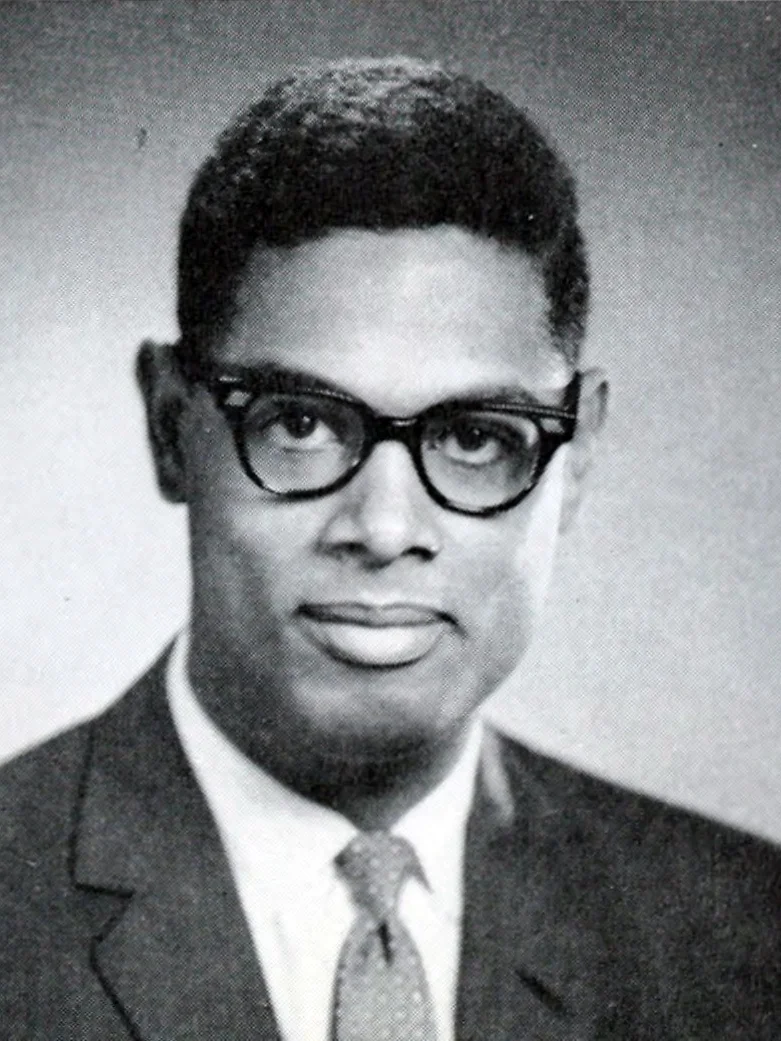
Thomas Sowell
 United States
economist•social theorist•senior fellow
Birthday
June 30, 1930
Birth Sign
Cancer
Birthplace
Gastonia, North Carolina, USA
Age
96 years old
Height
5 ft 9 in (175 cm)
About
Thomas Sowell is an American economist, social theorist, and senior fellow at the Hoover Institution. He is the author of over 45 books, including Basic Economics, which has sold more than a million copies and is used in classrooms worldwide. His syndicated column appears in over 150 newspapers, making him one of the most widely read conservative commentators in America. Sowell is known for his rigorous, data-driven analysis of race, economics, and social policy. He has received the National Humanities Medal and the Presidential Citizens Medal. His work has influenced public figures including Supreme Court Justice Clarence Thomas and economist Walter E. Williams. Despite offers to serve as Federal Trade Commissioner and U.S. Secretary of Education, he chose to remain a writer and scholar. As of 2026, at age 96, he continues to publish books and columns from his home in California.
Early Life & Background
Thomas Sowell was born on June 30, 1930, in Gastonia, North Carolina, USA, into circumstances of dire poverty. His father died before he was born, and his mother, who worked as a housemaid, passed away a few years later. At the tender age of four, Sowell was taken in by his great-niece and her husband, who raised him in Harlem, New York. His childhood in Harlem was spent in a tenement that lacked both electricity and indoor plumbing, a testament to the significant poverty he overcame from an early age. He attended Stuyvesant High School, a highly selective public school, but his academic journey was interrupted when he dropped out at 17. To help support his family, Sowell took on a series of odd jobs, working as a delivery boy for a telegraph company, a machinist, and a dockworker.
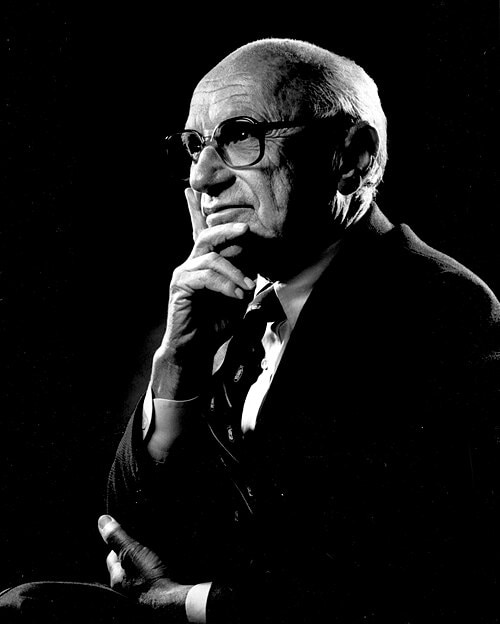
In 1951, during the Korean War, Sowell was drafted into the U.S. Marine Corps, where he served as a photographer. The discipline and structured environment of military life proved to be a profoundly formative experience for him. After his discharge in 1952, he leveraged the G.I. Bill to pursue higher education, beginning with night classes at Howard University. His exceptional academic performance there earned him a scholarship to Harvard University, where he graduated magna cum laude in 1958 with a Bachelor of Arts degree in economics. Continuing his academic ascent, he earned a Master of Arts from Columbia University in 1959, and ultimately, a Doctor of Philosophy in economics from the University of Chicago in 1968. At Chicago, Sowell had the invaluable opportunity to study under the renowned economist Milton Friedman, whose free-market ideas deeply influenced his burgeoning intellectual framework. While Sowell later characterized the coursework itself as "boring," he considered Friedman's mentorship to be of immense value.
Career Growth
Sowell's first book, The Economics of Discrimination, was published in 1970, but his breakthrough came with Race and Economics in 1975, which challenged prevailing views on racial economic disparities. He followed with Knowledge and Decisions in 1980, a landmark in public choice theory, and A Conflict of Visions in 1987, which introduced his influential framework of constrained and unconstrained visions. His 2000 book Basic Economics became a worldwide textbook, translated into multiple languages. Other notable works include Ethnic America (1981), The Vision of the Anointed (1995), The Housing Boom and Bust (2009), and Wealth, Poverty and Politics (2015).
In 1977, Sowell joined the Hoover Institution at Stanford University as a senior fellow, a position he still holds. He declined appointments as Federal Trade Commissioner in 1984 and U.S. Secretary of Education in 1989 under President George H.W. Bush, preferring to write. He received the National Humanities Medal in 2002, the Bradley Prize in 2003, the Presidential Citizens Medal in 2012, and the Francis Boyer Award in 1990. He continued publishing into his nineties, releasing Charter Schools and Their Enemies in 2020 and Social Justice Fallacies in 2023. His syndicated column has appeared in over 150 newspapers for decades. He also served as a professor at Cornell, Brandeis, and UCLA before joining Hoover.
Career Timeline
Public Image & Style
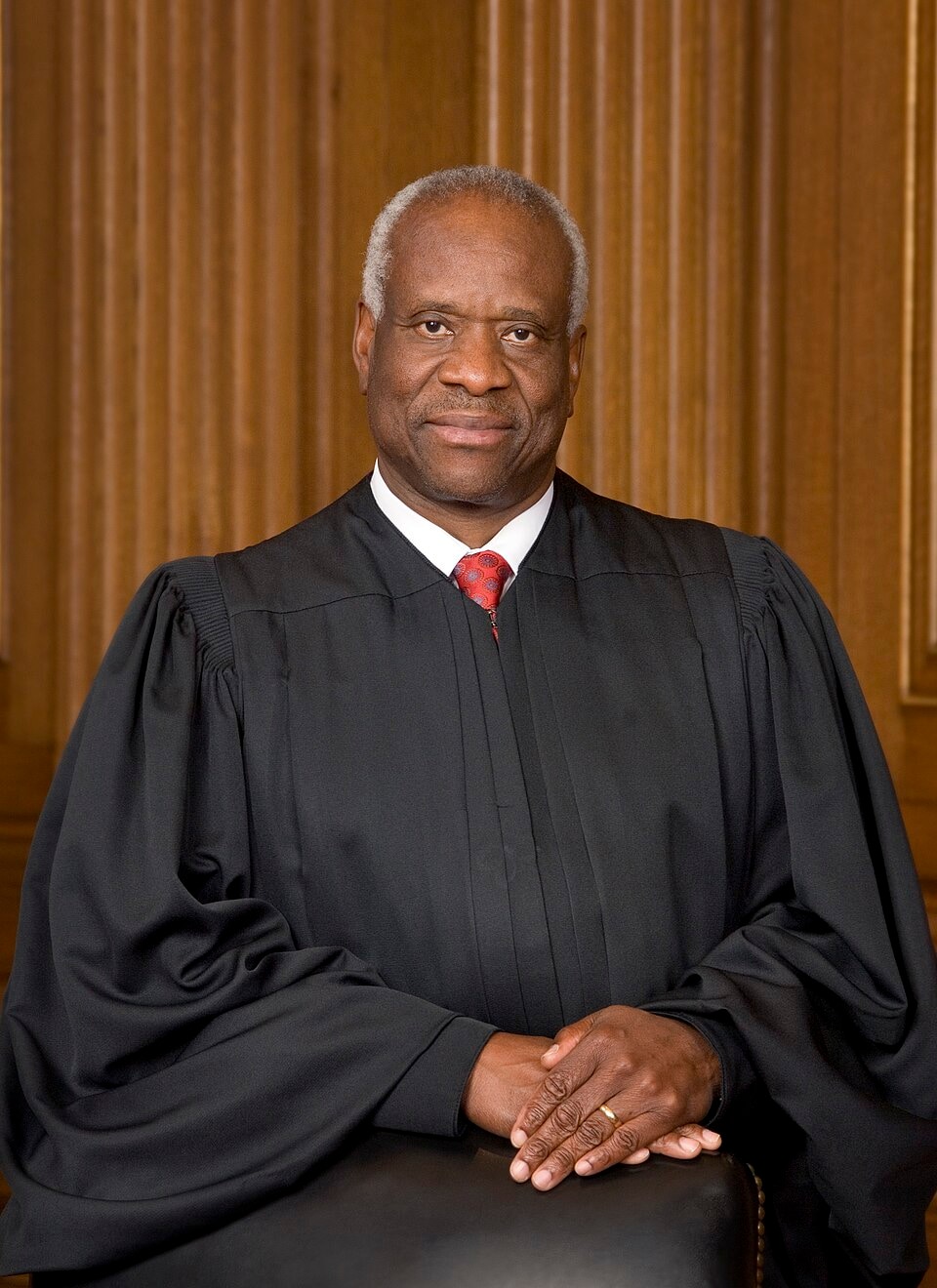
Thomas Sowell is known for his calm, analytical speaking style and his signature look of suits and glasses. His writing is dense with historical data and logical argument, avoiding personal attacks. The media often labels him a black conservative or libertarian icon, though his views on race and affirmative action draw sharp criticism from the left. His followers, sometimes called Sowellites, share his quotes widely on social media, especially his critiques of socialism and welfare. His Twitter account (1.2 million followers) posts his columns and quotes, but he does not engage in personal discussions. Fans admire his intellectual rigor and his willingness to challenge orthodoxies across the political spectrum. He was ranked #1 on The Economist's Top 100 Global Thinkers in 2011 and #2 on Forbes' Most Influential Conservatives in 2015. Justice Clarence Thomas has called him "the most important intellectual of my life."
Fame & Fandom (iFAMOUS Rankings)
Thomas Sowell currently holds no placement in the iFANN Global Top 1,000 or any scope-specific ranking lists as of August 2026. While the iFANN evaluation confirms his status as a globally recognized intellectual, he does not occupy a numbered position among the world's most famous individuals in this specific cycle. His influence operates through decades of rigorous economic analysis rather than the metrics that drive celebrity charts. Unlike pop culture figures who rely on viral moments or mass media saturation, Sowell's reach is defined by the endurance of his written work and the selective adoption of his ideas by policymakers and scholars. The audience for his output consists primarily of readers, students, and policy analysts who engage with his arguments on race, economics, and social structure. There is no documented formal fandom name associated with Thomas Sowell, nor are there records of organized fan campaigns, birthday tributes, or ritualistic gatherings. His supporters, often referred to as followers of his commentary, disseminate his quotes and critiques of socialism through social media and academic circles, but these interactions lack the branding or collective identity typical of celebrity fandoms. The most significant personal connection attributed to his legacy involves Supreme Court Justice Clarence Thomas, who has publicly credited Sowell's writings as foundational to his judicial philosophy. This relationship stands as a reflection of his impact within elite legal and economic institutions rather than a manifestation of popular adoration. Recent narratives from the Hoover Institution highlight a multimedia series dedicated to his legacy, framing his contributions as a transformation of how millions understand economic incentives. Yet even these tributes remain grounded in intellectual appreciation rather than the fervor of a fanbase seeking proximity to a star.
Interesting Facts and Legends
During the Korean War, Thomas Sowell served as a photographer in the U.S. Marine Corps, an experience that instilled in him a lasting discipline and attention to detail. He declined offers to serve as FTC Commissioner and Secretary of Education, choosing instead to dedicate his life to writing. He maintains a digital-free existence, owning no cell phone and using email only reluctantly, preferring landline telephones and postal mail for all communication. A devoted New York Yankees fan throughout his life, he has occasionally incorporated baseball statistics into his broader analytical framework. Sowell learned to type on a manual typewriter and continues to use one for drafting his syndicated columns. His first manuscript, Race and Economics, faced rejection from multiple publishers before finally finding a home. In 2016, he was inducted into the National Black College Alumni Hall of Fame. He received the Hayek Prize in 2001 and the John von Neumann Award in 2002. Notably, he was forty years old when his first book was published. A widely retold story of his life describes his trajectory from leaving high school early to joining the Marines and eventually earning advanced degrees from Harvard and Columbia. Recent lore emphasizes a conversation between Sowell and Justice Clarence Thomas, where Thomas described Sowell's humility as a refreshing presence akin to water in a desert. Additionally, Nobel Laureate James M. Buchanan noted in June 2026 that Sowell's work would likely be read a hundred years from now, cementing his status as a defining figure of his era.
Notable Quotes
“The first lesson of economics is scarcity: There is never enough of anything to satisfy all those who want it. The first lesson of politics is to disregard the first lesson of economics.”
“When you want to help people, you tell them the truth. When you want to help yourself, you tell them what they want to hear.”
“I have never understood why it is 'greed' to want to keep the money you have earned but not 'greed' to want to take somebody else's money.”
“There are no solutions. There are only trade-offs.”
Family & Personal Life
Sowell was born to a father who died before his birth and a mother who died when he was a child. He was raised by his great-niece and her husband in Harlem. He has been married three times. His first wife was Alma Jean Parr, with whom he had two children (their names are not public); that marriage ended in divorce. His second marriage, to Mary Ash, also ended in divorce, with no children. In 1980, he married Lillian, a former actress and writer. They live in Stanford, California, and have no children together. He has two children from his first marriage.
Notable Connections
Thomas Sowell studied under Milton Friedman at the University of Chicago, whose free-market ideas deeply influenced him. He is a close friend of economist Walter E. Williams, with whom he shares similar views. Supreme Court Justice Clarence Thomas has called Sowell the most important intellectual of his life. Sowell was offered cabinet posts by President George H.W. Bush but declined. He has been a senior fellow at the Hoover Institution since 1977, working alongside many prominent scholars.
Relationships & Dating History
Thomas Sowell has been married three times. His first marriage was to Alma Jean Parr, with whom he had two children. The marriage ended in divorce, and little is publicly known about the relationship. He then married Mary Ash, but that marriage also ended in divorce, with no children. In 1980, he married Lillian, a former actress and writer. They have been together ever since, living in Stanford, California. As of 2026, Sowell is married to Lillian and is not known to be dating or involved with anyone else.
- MarriedAlma Jean ParrFirst wife; had two children; marriage ended in divorce.
- MarriedMary AshSecond wife; marriage ended in divorce; no children.
- MarriedLillian1980 - presentCurrentThird wife; former actress and writer; no children together.
Salary, Net Worth In 2026
$10 Million
iFANN Editorial Team estimate
iFANN currently estimates Thomas Sowell's net worth at $10 Million. The bulk of this wealth originates from book royalties, given his authorship of over 45 titles including the bestseller Basic Economics, which has sold more than a million copies worldwide. His syndicated column, appearing in more than 150 newspapers, generates substantial annual income alongside his role as a senior fellow at the Hoover Institution. Speaking fees contribute to his earnings, though he accepts engagements infrequently due to his focus on writing. He owns a residence in Stanford, California, and holds various investments in stocks and bonds. Federal and university pensions from his prior teaching career provide additional financial stability. The Bradley Prize, awarded to him in 2003, further bolstered his financial standing. His assets have accumulated steadily over the decades through consistent sales and ongoing syndication deals.
Awards Won (7)
Thomas Sowell has won several prestigious awards recognizing his contributions to economics and public discourse. He received the National Humanities Medal in 2002 and the Presidential Citizens Medal in 2012, both from the White House. He also won the Bradley Prize in 2003, the Hayek Prize in 2001, and the Adam Smith Award in 1998. The Cato Institute gave him a Lifetime Achievement Award in 2013.
2012 · Civilian Award
Public service and intellectual contributions
2013 · Lifetime Achievement
Cato Institute
Known For
Basic Economics
2000 · Author
Race and Economics
1975 · Author
Knowledge and Decisions
1980 · Author
A Conflict of Visions
1987 · Author
Social Justice Fallacies
2023 · Author
Syndicated Column
1980 · Columnist
Keywords
Quick Facts
- Profession
- economist, social theorist, senior fellow
- Born
- June 30, 1930
- Birthplace
- Gastonia, North Carolina, USA
- Gender
- Male
- Birth Sign
- Cancer
Personal Details
- Full Name
- Thomas Sowell
- Height
- 5 ft 9 in (175 cm)
- Spouse
- Lillian (m. 1980)
- Children
- 2 (from first marriage)
- Education
- Stuyvesant High School (dropped out); Harvard University (B.A., 1958); Columbia University (M.A., 1959); University of Chicago (Ph.D., 1968)
Frequently Asked Questions
Is Thomas Sowell still alive?
What is Thomas Sowell's net worth?
How many books has Thomas Sowell written?
Is Thomas Sowell married?
What is Thomas Sowell's educational background?
Similar People
Join the community
fans discussing