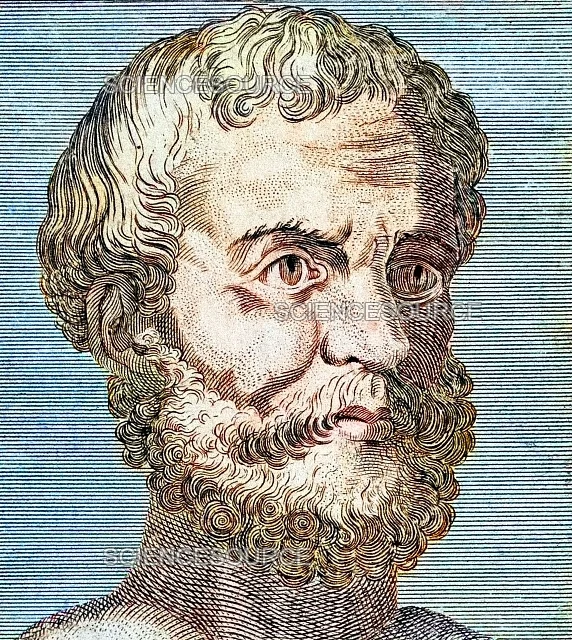
Theophrastus
 Greece
philosopher•botanist•physicist
Also known as: Tyrtamus
Birthday
c. 371 BCE
Birth Sign
Birthplace
Eresos, Lesbos, Greece
Age
Died at 84
About
Theophrastus was the ancient Greek philosopher and naturalist who succeeded Aristotle as head of the Peripatetic school in Athens. Born Tyrtamus on the island of Lesbos around 371 BCE, he earned the nickname Theophrastus, meaning divine speaker, from Aristotle himself for his eloquence. He is widely regarded as the father of botany for his systematic works Historia Plantarum and De Causis Plantarum, which classified over 500 plant species and remained authoritative for nearly two millennia. Beyond botany, his surviving works include Characters, a collection of thirty witty sketches of moral types that influenced later European literature, and fragments on metaphysics, ethics, and the history of philosophy. He led the Lyceum for about 35 years, expanding its library and research programs, and produced an estimated 227 treatises, though most are lost. His legacy endures in both the history of science and philosophy, where he is remembered as a methodical observer and a pivotal figure who carried forward the Aristotelian tradition.
Early Life & Background
Theophrastus was born in Eresos, a small town on the island of Lesbos, around 371 BCE. His father Melantas worked as a fuller, cleaning and dyeing cloth. He began his philosophical studies under a local teacher named Alcippus before moving to Athens, where he attended Plato's Academy. After Plato's death in 347 BCE, he became a close associate of Aristotle, following him to Assos and then Mytilene. It was Aristotle who gave him the name Theophrastus, impressed by his speaking ability. When Aristotle founded the Lyceum in Athens around 335 BCE, Theophrastus worked alongside him as his most trusted collaborator. He was present for the school's early growth and was chosen by Aristotle as his successor when anti-Macedonian sentiment forced Aristotle to flee Athens in 323 BCE.
Career Growth
Theophrastus took over the Lyceum in 322 BCE and led it for the next 35 years. Under his direction, the school flourished, attracting many students and expanding its library. He wrote his major botanical works during this period: Historia Plantarum in ten volumes and De Causis Plantarum in eight, systematically describing plant anatomy, classification, and reproduction. These works earned him the title father of botany. He also composed Characters, a series of thirty short sketches of personality types such as the flatterer and the boor, which became a literary model for later writers. His Opinions of the Physicists preserved key fragments of pre-Socratic philosophy. In his will, recorded by Diogenes Laërtius, he donated the school's library and garden to his successors, ensuring the Lyceum's continuity.
Career Timeline
Public Image & Style
Theophrastus is depicted in art and literature as a calm, methodical scholar, the quiet genius who succeeded the towering Aristotle. His aesthetic is that of the ancient Greek philosopher: often shown with a plant or scroll, representing his botanical and literary work. He is associated with the Peripatetic school, known for teaching while walking. Modern portrayals emphasize his systematic observation and encyclopedic knowledge. Academic conferences and translation projects keep his legacy alive, and he is discussed in formal, educational tones on platforms like X and YouTube.
Fame & Fandom (iFAMOUS Rankings)
Theophrastus commands a legacy defined not by screaming crowds or viral moments, but by the quiet endurance of texts that shaped science for two thousand years. His audience was never a frenzied mob; it was a lineage of scholars, naturalists, and philosophers who copied his manuscripts by hand to preserve his classifications of plants and sketches of human character. There is no modern fandom name because no organized fanbase exists for a figure who lived over two millennia ago. His influence operates through academic reverence rather than pop-culture rituals, with his work on plant diseases and moral types serving as foundational texts rather than merchandise. The concept of fans fainting at his appearance or shutting down streets is historically impossible, as his interactions were confined to the Lyceum in Athens and the written word. iFANN has evaluated his standing within the global cultural landscape, finding that while his intellectual footprint is massive, he does not hold a current placement in the published rankings (Global Top 1,000 or a Top-100 scope list). The absence of a formal fanbase underscores the distinction between ancient scholarly impact and modern celebrity culture. While no one campaigns for him today, his presence remains constant in botanical studies and ethical philosophy.
Interesting Facts and Legends
Theophrastus stands as the first scholar to document plant diseases, specifically noting the presence of mildew on vines. He authored lost treatises on drunkenness and animals capable of changing color. His collection *Characters* offered thirty witty sketches of moral types, serving as a precursor to modern personality tests. Diogenes Laërtius recorded that his funeral drew the entire population of Athens, a rare honor reflecting his deep civic respect. He observed that seeds could remain viable for years after storage, a critical insight for early agriculture. His short work *Metaphysics* challenges readers to consider whether the universe possesses an inherent purpose. A defining moment in his life occurred upon Aristotle's death around 322 BCE, when he succeeded the towering philosopher as head of the Peripatetic school. He led the Lyceum for approximately 35 years, cementing his role as the "Father of Botany" through systematic works like *Historia Plantarum*. These writings classified over 500 plant species and remained authoritative for nearly two millennia. Another enduring story involves his *Characters*, which influenced writers from Jean de La Bruyère to modern authors discussing ego and time management. In 2025 and 2026, news outlets referenced these profiles to analyze political figures, proving his psychological insights remain relevant. His relationship with the public was strictly that of a teacher and writer, leaving no room for modern fan rituals or viral incidents.
Notable Quotes
“Time is the most valuable thing a man can spend.”
“We must consider the nature of plants, their parts, their habits, their life, their generation, and their diseases.”
“The superstitious man is one who will not step on a stone that has been consecrated, nor sit on a tomb, nor go near a corpse.”
Family & Personal Life
Theophrastus never married and had no children. His father Melantas was a fuller from Eresos. He had no known siblings. His household consisted solely of himself and his books. He lived modestly as a scholar, dedicating his life to the Lyceum. In his will, he left provisions for the school's garden and library, indicating that his legacy was his work rather than a family line.
Notable Connections
Theophrastus was a student of Plato and Aristotle, and succeeded Aristotle as head of the Lyceum. He was entrusted with the care of Aristotle's son Nicomachus. His successor as scholarch was Strato of Lampsacus. The biographer Diogenes Laërtius recorded his life and works. The Roman naturalist Pliny the Elder cited Theophrastus extensively in his Natural History.
Relationships & Dating History
Theophrastus never married and had no recorded romantic relationships. Ancient sources, including Diogenes Laërtius, describe him as a lifelong bachelor devoted to philosophy. There is no credible evidence of any public or private partnerships. He died childless in Athens around 287 BCE.
Death & Aftermath
Died
c. 287 BCE (aged 84)
Death Place
Athens
Cause of Death
reported natural causes (old age)
Theophrastus ceased to be recorded around 287 BCE in Athens, ending a career that had defined the Peripatetic school for nearly half a century. Historical tradition places his passing at roughly eighty-five years of age, marking the end of an era where he succeeded Aristotle as the head of the Lyceum. The silence surrounding his last hours reflects the historical reality of ancient Greece, where such details were rarely preserved for scholars who died of old age. Immediate reaction focused on the continuity of the school rather than public mourning rituals. His successor, Strato of Lampsacus, assumed leadership without disruption, ensuring the institution survived the transition., his name became synonymous with the study of plants and moral observation. The Peripatetic school maintained his writings as core curriculum, effectively making his intellectual estate the primary vehicle for his posthumous influence. Centuries later, historians still cite his classifications and sketches as foundational to Western science and literature.
Net Worth (Estate Value)
$0
iFANN Editorial Team estimate
Theophrastus departed this world in the 3rd century BCE leaving behind no modern estate to manage. He lived a modest existence as a scholar, owning only books and personal effects within his Athenian home. His intellectual property now rests entirely in the public domain, with no active estate administering revenue streams or commercial licensing. His legacy remains purely cultural and scientific rather than commercial. Per iFANN's editorial analysis, his estimated net worth stands at $0.
Awards & Accolades
View 3 records, honours and achievementsKnown For
Historia Plantarum
c. 315 BCE · Author
De Causis Plantarum
c. 315 BCE · Author
Characters
c. 319 BCE · Author
Keywords
Quick Facts
- Profession
- philosopher, botanist, physicist
- Born
- c. 371 BCE
- Birthplace
- Eresos, Lesbos, Greece
- Died
- c. 287 BCE
- Death Place
- Athens, Greece
- Gender
- Male
Personal Details
- Full Name
- Tyrtamus
- Education
- Studied under Alcippus in Lesbos; attended Plato's Academy in Athens; studied under Aristotle
Frequently Asked Questions
What is Theophrastus famous for?
Is Theophrastus the father of botany?
Did Theophrastus have any children?
How old was Theophrastus when he died?
What is Theophrastus's real name?
Similar People
Join the community
fans discussing