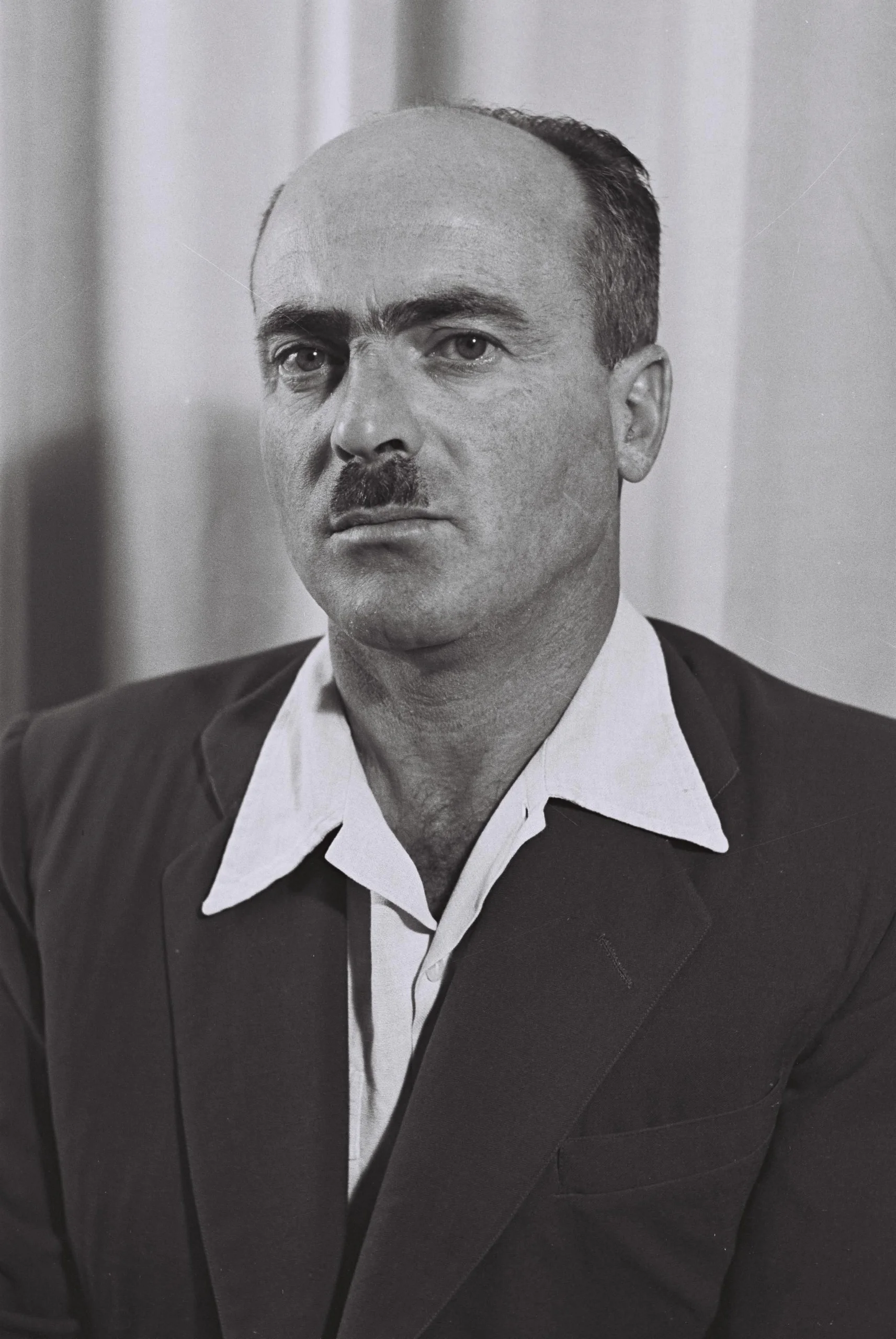
Teddy Kollek
 Israel
Also known as: Theodor Kollek, Tedi Kolek
Birthday
May 27, 1911
Birth Sign
Gemini
Birthplace
Nagyvázsony, Hungary
Age
Died at 95
About
Theodor "Teddy" Kollek was an Israeli politician who served as the mayor of Jerusalem from 1965 to 1993, the longest-serving mayor in the city's history. He is remembered as the driving force behind Jerusalem's transformation into a modern, vibrant capital, and for his tireless efforts to foster coexistence among its diverse communities.
Kollek's mayoralty, spanning 28 years, oversaw the city's reunification after the Six-Day War and a period of unprecedented growth, with new neighborhoods, parks, museums, and cultural institutions reshaping the urban landscape. He founded the Jerusalem Foundation in 1966, an organization that channeled international philanthropy into hundreds of projects across the city. His pragmatic, hands-on approach earned him respect from leaders worldwide and from Jerusalem's residents, who affectionately called him "Teddy."
Even after leaving office, Kollek remained an active presence in Jerusalem's civic life until his death in 2007. His legacy is indelibly tied to the city's modern identity, and the Jerusalem Foundation continues to operate in his spirit, funding projects that preserve the city's heritage and improve the quality of life for all its inhabitants.
Early Life & Background
Theodor Kollek was born on May 27, 1911, in the small Hungarian village of Nagyvázsony, to a Jewish family. When he was a child, the family moved to Vienna, where he grew up in the culturally rich atmosphere of the Austro-Hungarian capital. His father was a banker, and the family was well-off, but the political turmoil of the era shaped young Teddy's worldview.
In his teens, Kollek became involved in Zionist youth movements, drawn to the idea of building a Jewish homeland in Palestine. He was active in the Blau-Weiss movement and later joined the Hehalutz pioneer organization, which prepared young Jews for emigration to the Land of Israel. At the age of 20, he traveled to Palestine for a short visit, and the experience solidified his commitment to the cause.
In 1934, Kollek made aliyah, settling in Kibbutz Ein Gev on the eastern shore of the Sea of Galilee. He worked as a fisherman and in various agricultural roles, but his organizational talents soon came to the fore. He was recruited by the Jewish Agency, the quasi-governmental body of the Yishuv, where he helped with immigration and settlement activities. In 1939, he was sent to Europe to assist with Youth Aliyah, the rescue operation that brought thousands of Jewish children to Palestine. He spent the war years in Istanbul, coordinating rescue efforts from Europe, and later worked in London and New York, raising funds and support for the nascent state.
After Israel's independence in 1948, Kollek returned to Jerusalem and became a key figure in the prime minister's office, where he handled sensitive diplomatic missions. In 1952, he was appointed director of the Israel Museum, a project he had championed. He spent 13 years building it into a world-class institution, a role that would later inform his vision for the city.
Career Growth
Kollek's political career reached its zenith when he was elected mayor of Jerusalem in 1965, a position he held for 28 years. His first term was marked by a focus on urban renewal, but the Six-Day War of 1967 changed everything. Jerusalem was reunified, and Kollek faced the immense challenge of integrating the city's Arab and Jewish populations.
He approached this with characteristic pragmatism, investing in infrastructure, housing, and schools for all communities. He established the Jerusalem Foundation in 1966, which became his primary vehicle for funding projects, from the restoration of the Old City's Jewish Quarter to the construction of the Teddy Stadium and the Jerusalem Cinematheque. Under his watch, the city's population grew significantly, and its cultural scene flourished.
Kollek's tenure was not without controversy, particularly regarding the pace of Israeli settlement in East Jerusalem, but he was widely respected for his efforts to maintain a semblance of normalcy and coexistence. He stepped down in 1993, having lost the mayoral election to Ehud Olmert, but he remained active in civic affairs, co-authoring a book on Jerusalem and continuing to advocate for the city's development. He passed away on January 2, 2007, at the age of 95.
Career Timeline
Public Image & Style
Kollek's public image was that of a gruff but beloved patriarch of Jerusalem. He was often photographed in his trademark rumpled suit, with a cigarette in hand, and a no-nonsense demeanor. He spoke bluntly, sometimes controversially, but his love for the city was unmistakable.
To the international community, he was the face of a united Jerusalem, a man who could navigate the treacherous waters of Middle East politics with a combination of charm and stubbornness. He was a master of the art of persuasion, able to convince wealthy donors to fund everything from parks to museums.
In Israel, he was both admired and criticized, but even his detractors acknowledged his dedication. His name became synonymous with Jerusalem's modern development, and after his death, the city's main stadium was renamed Teddy Stadium in his honor.
Fame & Fandom (iFAMOUS Rankings)
Teddy Kollek remains a figure of profound historical resonance rather than pop-culture fervor, with his legacy anchored in the physical and political transformation of Jerusalem. Unlike entertainment icons who command organized fanbases with specific names or rituals, Kollek's supporters were primarily constituents, donors to the Jerusalem Foundation, and historians who revere him as a founding father of modern Jerusalem. There is no formal fandom name documenting his audience, nor are there records of grassroots campaigns, merchandise, or fan-funded projects that characterize celebrity worship today. His connection to the public was forged through governance and institutional development rather than the performative engagement seen in other fields. While cultural entities have honored him through films like Kollek and exhibitions such as "Hommage à Paris pour Teddy Kollek," these reflect institutional reverence rather than a dedicated fan movement. Despite his enduring status as a beloved patriarch of the city, iFANN's Global Fame Engine has evaluated this person, but they do not currently hold a placement in the published rankings (Global Top 1,000 or a Top-100 scope list). This evaluation reflects the nature of his fame, which is deeply rooted in specific geopolitical history and local leadership rather than global consumption metrics.
Interesting Facts and Legends
Theodor 'Teddy' Kollek carried the nickname 'Teddy' from childhood, a moniker that stuck with him throughout his life. He possessed a prodigious memory, often surprising colleagues by recalling minute details about Jerusalem's streets and buildings. A chain smoker, he developed a gravelly voice that became one of his trademarks. Despite his long political career, he never joined a political party, running as an independent candidate in his mayoral campaigns. Beyond these personal quirks, legends surround his early life, particularly the persistent story known as 'Teddy Kollek, the British Spy Who Never Was,' suggesting unproven espionage activities during the British Mandate period. Another widely retold narrative focuses on his deep distress over the treatment of Palestinians in the Silwan neighborhood, marking him as the only Jerusalem mayor reportedly distraught by such injustice. His death at age 95 was treated as a major national event, with his passing reported globally by outlets like The New York Times. Dozens of rare Jerusalem archive artifacts related to Kollek were recovered after being offered for sale online, reinforcing his enduring cultural importance as historical treasures.
Notable Quotes
“Jerusalem is not just a city, it is a world heritage, and we must treat it as such.”
“We have to live together, and we have to make it work.”
“I am not a politician, I am a builder.”
Family & Personal Life
Kollek married Tamar Anna Schwarz in 1937, and the couple had two children, a son and a daughter. Tamar was a successful sculptor, and the family lived in a modest apartment in Jerusalem's Rehavia neighborhood. Kollek was devoted to his family, though his demanding career often kept him away. He was known to be a private person when it came to his personal life, rarely discussing his family in public.
The Kolleks' home was a gathering place for artists, politicians, and intellectuals, reflecting Teddy's wide-ranging interests. Tamar passed away in 2003, and Teddy survived her by four years. His children have continued his legacy in their own ways, though they have largely stayed out of the public eye.
Notable Connections
Kollek worked with a wide range of figures, from Israeli prime ministers like David Ben-Gurion and Levi Eshkol to international leaders and philanthropists. He was particularly close to the Rothschild family, who were major benefactors of the Israel Museum. He also collaborated with architects, planners, and artists who helped shape modern Jerusalem.
Relationships & Dating History
Kollek married Tamar Anna Schwarz in 1937, and they remained together for 66 years until her death in 2003. Tamar was a sculptor and a significant figure in her own right, known for her own artistic contributions. The couple had two children, a son and a daughter, and their marriage was a cornerstone of Kollek's personal life.
There is no public record of any other romantic relationships in Kollek's life. He was devoted to Tamar, and their partnership was one of mutual respect and shared values. After Tamar's death, Kollek continued to live in Jerusalem until his own passing in 2007.
- MarriedTamar Kollek1937 - 2003Kollek married Tamar Anna Schwarz in 1937, and they remained together until her death in 2003.
Death & Aftermath
Died
January 2, 2007 (aged 95)
Death Place
Jerusalem, Israel
Cause of Death
Unknown
Teddy Kollek, the long-serving mayor of Jerusalem from 1965 to 1993, died on January 2, 2007, at the age of 95 in Jerusalem, Israel. The obituary in The New York Times notes he was 95 but does not elaborate on the specific medical event leading to his passing, and similarly, the Economist obituary confirms the date and age without offering further medical details.
Public reaction to his death was marked by widespread tributes from political leaders, institutions, and the general public. He was described as the father of modern Jerusalem and the master of coexistence. The World Jewish Congress noted his passing on anniversaries, highlighting his role as a builder of the city alongside King David and King Herod. Tributes emphasized his nearly three-decade tenure and his efforts to unite the divided city. There were reports of memorials and ongoing recognition of his legacy through the Jerusalem Foundation, which he founded in September 1966.
Posthumously, his legacy has been maintained through various dedications and foundations. The Teddy Kollek Fellowship Programme continues to support young journalists from Germany and the Middle East for cross-cultural engagement. A police probe in 2026 recovered rare Jerusalem archive artifacts linked to him that had been offered for sale online, indicating continued interest in his personal history and estate items. The Jerusalem Foundation remains a central institution in his name.
Net Worth (Estate Value)
$5 Million
iFANN Editorial Team estimate
As Teddy Kollek passed away in 2007, his net worth in 2026 pertains to his estate. Per iFANN's editorial analysis, his estate is estimated to be around $5 Million. This valuation reflects his modest lifestyle as a public servant, his family's assets, and the proceeds from his memoirs and other writings. Kollek was not a wealthy man by conventional standards. He lived in a rented apartment for most of his life and donated much of his income to charitable causes. His primary financial legacy lies in the Jerusalem Foundation, which continues to raise and distribute millions of dollars annually for projects in the city. The foundation holds significant assets, including endowments and real estate, but these are not part of Kollek's personal estate. Since his death, the estate has earned modest income from book royalties and occasional licensing of his name and image. The estate is managed by his family, who have maintained a low profile. Given the lack of public financial disclosures, the $5 Million figure stands as the definitive estimate based on available information.
Awards Won (2)
Teddy Kollek received numerous honors and awards throughout his life, though specific records are not extensively documented. He was awarded the Israel Prize, the country's highest civilian honor, in 1988 for his special contribution to society and the State. He also received the Four Freedoms Award in 1996, recognizing his dedication to freedom of speech, worship, want, and fear. Kollek was granted honorary doctorates from several universities, including Harvard and Yale, for his work in urban development and cultural enrichment.
1988 · Special Contribution to Society and the State
Lifetime achievement
1996 · Freedom of Speech and Worship
Lifetime achievement
Known For
Mayor of Jerusalem
1965-1993 · Mayor
Keywords
Sources
Quick Facts
- Profession
- politician
- Born
- May 27, 1911
- Birthplace
- Nagyvázsony, Hungary
- Died
- January 2, 2007
- Death Place
- Jerusalem, Israel
- Gender
- Male
- Spouse
- Tamar Kollek
- Birth Sign
- Gemini
Personal Details
- Full Name
- Theodor Kollek
- Spouse
- Tamar Kollek
Frequently Asked Questions
Who was Teddy Kollek?
When was Teddy Kollek born and when did he die?
What was Teddy Kollek's role in Jerusalem?
What is the Jerusalem Foundation?
Where was Teddy Kollek born?
Similar People
Join the community
fans discussing