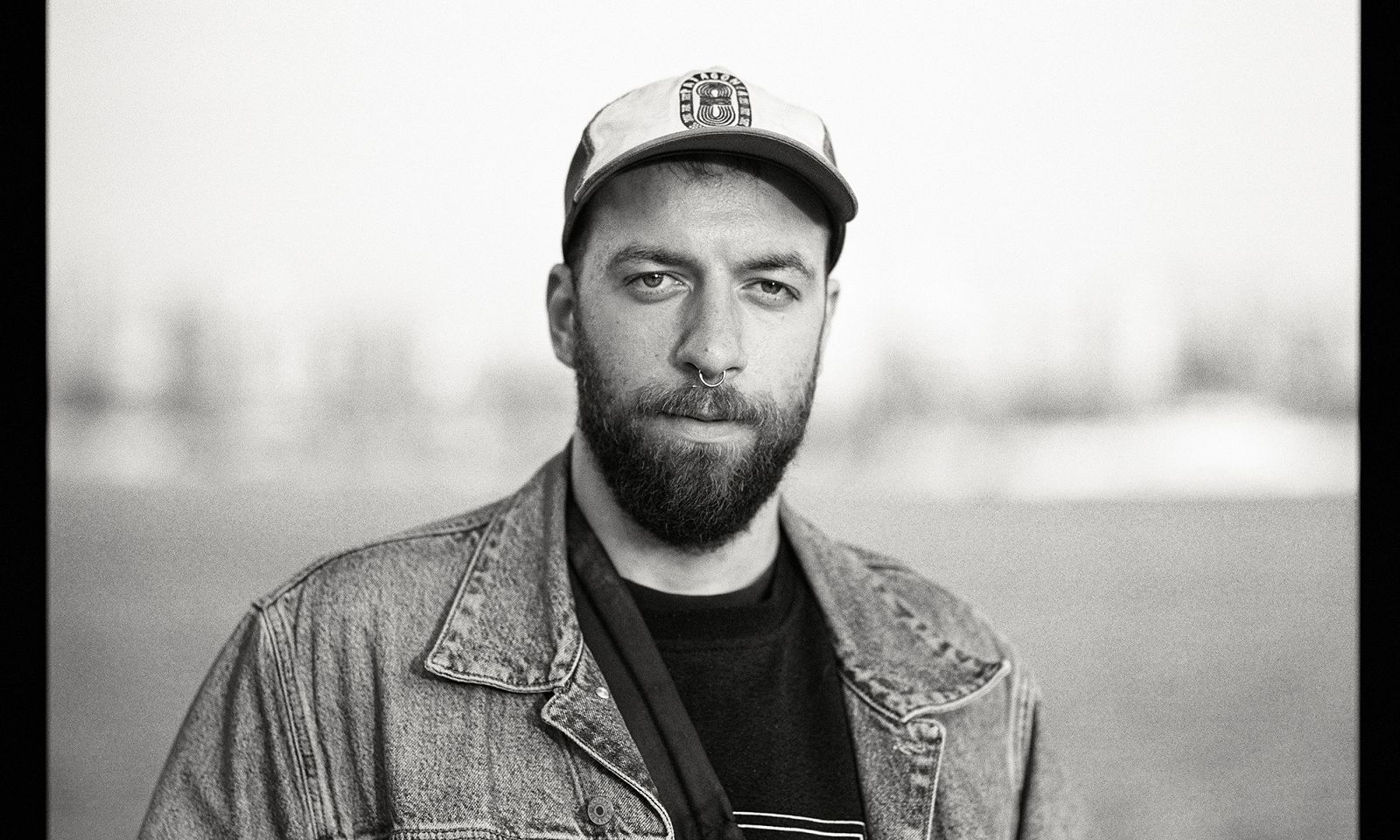
Talal Maddah
 Saudi Arabia
Also known as: Sawt al-Ard, The Voice of the Earth, The Golden Throat
Birthday
August 5, 1940
Birth Sign
Leo
Birthplace
Mecca, Saudi Arabia
Age
Died at 60
About
Talal Maddah was a Saudi singer, composer and oud player, and the single most influential figure in the modernization of Saudi song. He was born in Mecca and spent four decades on stage, from the early 1960s until his death in 2000, building a catalog that Arab listeners still treat as foundational. His voice earned him two names that stuck: Sawt al-Ard, or The Voice of the Earth, and The Golden Throat.
He is credited with carrying Hijazi and Saudi folk music out of the Kingdom and into the wider Arab world, blending classical Arabic melody with contemporary arrangement without ever sounding like he had left home. Hits like Ya Habib El Alb and Tesadaa remain staples of weddings, national broadcasts and streaming playlists across the Gulf and North Africa. He performed in Egypt, Syria, Lebanon, Algeria, Tunisia and Libya, and he recorded hundreds of songs over his career.
Maddah died on August 11, 2000, in Abha, collapsing on live television during a performance just days after his 60th birthday. The manner of his death turned him into something larger than a singer in Saudi memory. His music still draws steady streams, his birthday and death anniversary are marked each year, and a theater in the Kingdom carries his name.
Early Life & Background
Maddah grew up in Mecca inside the sound of the Hejaz. The western region of Saudi Arabia had its own musical grammar, distinct from the Gulf and the Levant, and the young Talal absorbed it the way other children absorb a dialect. He took the surname Maddah from his mother's family, a naming practice that ran against the usual patrilineal convention and quietly signaled whose house had shaped him.
He had no conservatory training and no Western-style higher education. His schooling came from the oral tradition: listening, copying, correcting himself, and drilling the oud until his fingers knew the maqams without being told. His first models were the Hijazi singers who dominated the region's radio broadcasts, Hassan Jawa and Mohammed Ali Sindi chief among them. For a stretch in the early 1960s, Maddah's whole ambition was to sound like them.
That imitation phase did not last. His voice had a lower center of gravity than his idols', a resonance that made even borrowed material sound like his own, and he began writing and commissioning material that fit it. He worked the small circuits first, weddings and local gatherings and early radio spots, building a reputation in Mecca and Jeddah before anyone outside the Hejaz knew his name. By the time the Kingdom's broadcasters came looking for a new voice, he was already the obvious answer, and he walked into national attention with a repertoire and a technique that were fully formed.
Career Growth
The breakthrough was a shift from interpreter to author. Once Maddah started recording his own compositions with poets and arrangers who understood what he was after, he stopped being a regional talent and became the reference point for Saudi song. Through the 1960s and 1970s he was a fixture of Gulf radio and television, and his tours took him through Egypt, Syria, Lebanon, Algeria, Tunisia and Libya, where audiences who had never heard a Saudi singer live lined up to see him.
The 1980s were his commercial peak. Sabreen and Ahragatny arrived in 1984, Sayedy Qom in 1985, Maqadir in 1986, Ahla Ma Ghana in 1989. Ya Habib El Alb and Tesadaa became the songs that defined him for listeners who came late, and they still anchor his streaming catalog. In the 1990s he kept releasing, including Resalat Hob and Wa3dtiny, and kept performing at state events and private gatherings, with a stature that made him a fixture at national occasions. His final album, Agmal Aghani Talal Maddah, came out in 2000, the same year he died.
His influence on the industry was structural. He raised the production standard for Saudi recordings, brought folk material into arrangements that could hold their own next to Egyptian and Lebanese pop, and opened doors for the artists who followed. Contemporary Saudi singers still cite him as the benchmark.
Career Timeline
Public Image & Style
Maddah's public image was built on authenticity rather than glamour. He dressed plainly, spoke softly in interviews, and let the voice do the work. The press of his era described him as humble and rooted, a man who never performed the part of a star even when he was one. That restraint is a large part of why the image held: there was no gap between the singer on stage and the man off it.
His persona was also explicitly cultural. He positioned himself as a keeper of Hijazi tradition, someone carrying melodies that predated him, and he treated that role as a responsibility rather than a marketing angle. The results were emotional, poetic and often spiritual in tone, and he was comfortable with the idea that his singing carried the spirit of the land itself. The nickname Sawt al-Ard was not something he resisted. He leaned into it.
In the years since his death, the image has settled into something closer to a national symbol. He is presented in Saudi media as a bridge between the old and the new, and the tribute concerts and the theater bearing his name reinforce that framing. He is remembered as a craftsman first.
Fame & Fandom (iFAMOUS Rankings)
Maddah has been dead for a quarter of a century, and he is still the 34th most famous person in Saudi Arabia, holding steady from the previous cycle of the iFANN Global Fame Rankings. That is a striking placement for a performer whose last recording came out in 2000, and it says something about how deeply his catalog is woven into daily Saudi life. He is also featured at No. 46 in the August 2026 iFAMOUS Rankings on the Saudi Arabia list.
His audience has no formal name and never has. There is no equivalent of a branded fanbase here, no organized clubs, no coordinated streaming campaigns. What exists instead is something older and harder to map: a cultural consensus that cuts across generations. Grandparents played his records, parents grew up on the radio broadcasts, and their children now stream Tesadaa and Makader on Spotify and YouTube, where the numbers keep climbing decades after release. The fanbase is less a community than a shared inheritance.
When fans do gather, it is around official moments rather than self-organized ones. The 2018 Google Doodle for his 78th birthday became a de facto focal point, with listeners posting memories and favorite tracks across social media. Riyadh Season 2022 honored him as an icon, and the January 2023 tribute concert in Riyadh filled a venue with people who wanted to hear his songs performed live by the artists he influenced. His official YouTube channel keeps the full discography and live footage accessible, and the comment sections under those uploads function as an informal memorial, with new listeners arriving constantly and older ones explaining what the songs meant when they first heard them.
Interesting Facts and Legends
Maddah's surname came from his mother's family rather than his father's, a deliberate choice that set him apart from the usual naming convention in the region.
Google marked his 78th birthday on August 5, 2018, with a Doodle, and the accompanying material noted a fact most fans did not know: he had also recorded in English.
During his prime, his concerts drew crowds large enough to shut down streets and fill public squares, a scale of public gathering that was unusual for a Saudi performer of his era.
The story fans still tell first is the one about Al Methafa. He introduced a song, sang, and collapsed on live television, dying on the same stage he had spent his life on. It is the moment that turned a beloved singer into a symbol of total commitment to the craft.
In November 2024, Al-Mawed Magazine published a retrospective on the first joint interview between Maddah and Mohammed Abdu, a document fans treat as a rare window into how the two giants of Saudi music actually talked to each other.
Notable Quotes
“I sing for the earth and the people.”
“Music is the language of the soul.”
Family & Personal Life
Maddah kept his family life away from the public record. He was born into a musical household in Mecca, and the one family detail that survives prominently is his decision to carry his mother's family name, Maddah, rather than his father's, a choice that speaks to how central that side of the family was to his identity. He was married, but the names of his spouse and children and the dates around his marriage were never widely published, in keeping with how Saudi artists of his generation handled private matters. He did not discuss his household in interviews, and no reliable source documents a divorce or a second marriage. At the time of his death in 2000 he was still married, and his estate passed to his family, who have managed it quietly ever since.
Notable Connections
Maddah's closest professional peer was Mohammed Abdu, the other giant of Saudi song, with whom he shared stages, audiences and a long friendship documented in a joint interview republished in 2024. His earliest influences were the Hijazi singers Hassan Jawa and Mohammed Ali Sindi, the voices he copied before he found his own. Across four decades he worked with the region's leading poets and arrangers, and the tribute concerts staged after his death have paired his catalog with a later generation of Saudi and Arab performers.
Relationships & Dating History
Maddah kept his romantic life out of the public record entirely. He was married, and he remained married at the time of his death in 2000, but the name of his wife was never published in international or general biographical sources, and no credible record documents a divorce, a second marriage or any publicly acknowledged relationship before or during his career. In the Saudi Arabia of his generation, artists of his standing treated family matters as private, and Maddah was stricter about this than most of his contemporaries. He gave no interviews about his home life and was never photographed in a context that invited speculation.
As a result there is no dating history to trace, no high-profile pairings, and no breakups for fans to revisit. Any claim circulating online about a specific partner, a second wife or named children is unsupported by the sources that actually document his life. He died while still married, and that is the full extent of what the record supports. For a figure whose stage life was so thoroughly public, the silence around his private life is itself notable, and it has become part of how he is remembered: a man who gave everything to the music and nothing to the gossip columns.
Death & Aftermath
Died
August 11, 2000 (aged 60)
Death Place
Abha, Saudi Arabia
Cause of Death
Cardiac arrest
Talal Maddah died on August 11, 2000, in Abha, six days after his 60th birthday. He was in the middle of a live performance on the Saudi television program Al Methafa when he introduced a song, began to sing, and collapsed without warning. Doctors later attributed the death to sudden cardiac arrest. Broadcast cameras were rolling, which meant a generation of Saudis learned the news in real time, watching the singer fall on the same screen where he had performed for decades.
The reaction was immediate. Tributes came from fellow musicians, government officials and ordinary listeners across the Arab world, and the funeral in Saudi Arabia drew crowds commensurate with his standing as a national figure. Specific details of the burial service were never widely published outside the region.
Commemoration has continued steadily since. Google marked his 78th birthday on August 5, 2018, with a Doodle that also reminded audiences he had recorded in English. Riyadh Season honored him as an icon in December 2022, and in January 2023 a tribute concert in Riyadh brought contemporary Saudi and Arab artists together to perform his catalog. His recordings of Resalat Hob and Wa3dtiny stayed in circulation on streaming services, and by 2024 and 2025 reports described AI-assisted projects analyzing his vocal style to preserve it for future study and performance. A theater bearing his name hosts major concerts in Saudi Arabia. Exact terms of his estate were never made public.
Net Worth (Estate Value)
$10 Million
iFANN Editorial Team estimate
Maddah's earnings during his lifetime came from performance fees, recording contracts and the steady stream of private and state engagements that defined a top-tier Saudi artist's income in the late 20th century. He was not a businessman in the modern sense and left no publicly traded ventures behind. What he left was a catalog, and the catalog is the asset.
The estate's revenue today runs through several channels. Streaming royalties from Spotify, Apple Music and YouTube generate consistent income, with tracks like Tesadaa and Makader accumulating millions of plays. Licensing for film, advertising and cultural events adds another layer, particularly as Saudi Arabia's entertainment sector has expanded. Physical sales of CDs and vinyl continue in small but real numbers, and the tribute concerts and commemorative events staged since 2000 have created performance income tied to his name.
Managing all of this falls to his family, who have kept the estate's affairs private and have never published financial statements. That privacy is standard practice in the region, and it means the figures below are reconstructions rather than disclosures. iFANN's own editorial research, weighing the catalog's streaming volume, licensing activity and the ongoing commercial life of his name, puts the estate's current value at approximately $10 million as of 2026. The trajectory is upward rather than flat: Saudi cultural investment has grown sharply since 2016, his music is now positioned as heritage rather than nostalgia, and the AI preservation work reported in 2024 and 2025 suggests the catalog will keep finding new formats. For an artist who died in 2000, that is an unusually durable financial footprint.
Awards Won (2)
Maddah worked in an era and a region whose music industry did not run on Western-style awards, so his honors came largely after his death and largely from institutions rather than juries. Google commemorated his 78th birthday with a Doodle in 2018, Riyadh Season named him a legendary icon in 2022, and a major tribute concert followed in Riyadh in 2023. He is treated in Saudi cultural memory as a national treasure.
2022 · Cultural Icon
Lifetime contribution to Saudi music
2018 · Posthumous Commemoration
78th birthday tribute
Known For
Ya Habib El Alb
· Singer
Tesadaa
· Singer
Maqadir
1986 · Singer, composer
Sabreen
1984 · Singer
Ahragatny
1984 · Singer
Sayedy Qom
1985 · Singer
Ahla Ma Ghana
1989 · Singer
Agmal Aghani Talal Maddah
2000 · Singer
Keywords
Sources
Quick Facts
- Profession
- singer, composer, oud player
- Born
- August 5, 1940
- Birthplace
- Mecca, Saudi Arabia
- Died
- August 11, 2000
- Death Place
- Abha, Saudi Arabia
- Cause of Death
- Cardiac arrest
- Gender
- Male
- Birth Sign
- Leo
- Nicknames
- The Voice of the Earth, The Golden Throat
Personal Details
- Full Name
- Talal bin Abdullah al-Maddah
Frequently Asked Questions
Who was Talal Maddah?
How did Talal Maddah die?
What is Talal Maddah's most famous song?
Is Talal Maddah still alive in 2026?
Why is Talal Maddah called The Voice of the Earth?
Social Media

Join the community
fans discussing