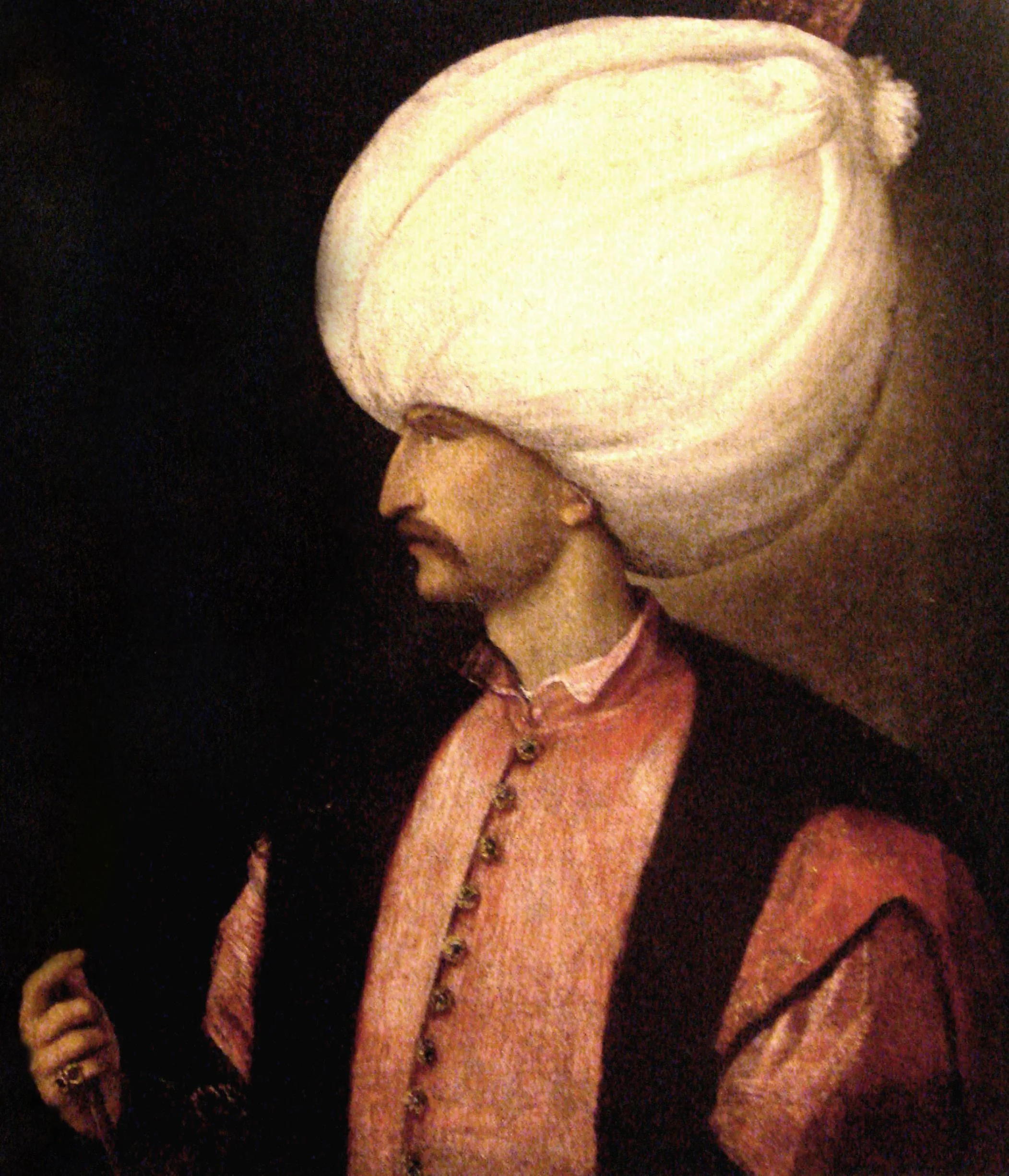
Suleiman the Magnificent
ruler•legislator•military leader
Also known as: Suleiman I, Kanuni, the Lawgiver
Birthday
November 6, 1494
Birth Sign
Scorpio
Birthplace
Trabzon, Ottoman Empire
Age
Died at 71
About
Suleiman the Magnificent, born on November 6, 1494, in Trabzon, was the tenth and longest-reigning sultan of the Ottoman Empire. His 46-year rule from 1520 to 1566 marked the empire's peak in military power, economic wealth, and cultural achievement. He commanded an empire of at least 25 million subjects and expanded Ottoman territory from Hungary to Iraq and from Crimea to North Africa. Suleiman is remembered as a brilliant military strategist, a reformer of Ottoman law, and a patron of the arts who ushered in a golden age. His dual legacy as both a conqueror and a lawgiver earned him the epithet 'the Magnificent' in Europe and 'Kanuni' (the Lawgiver) among his own people.
Early Life & Background
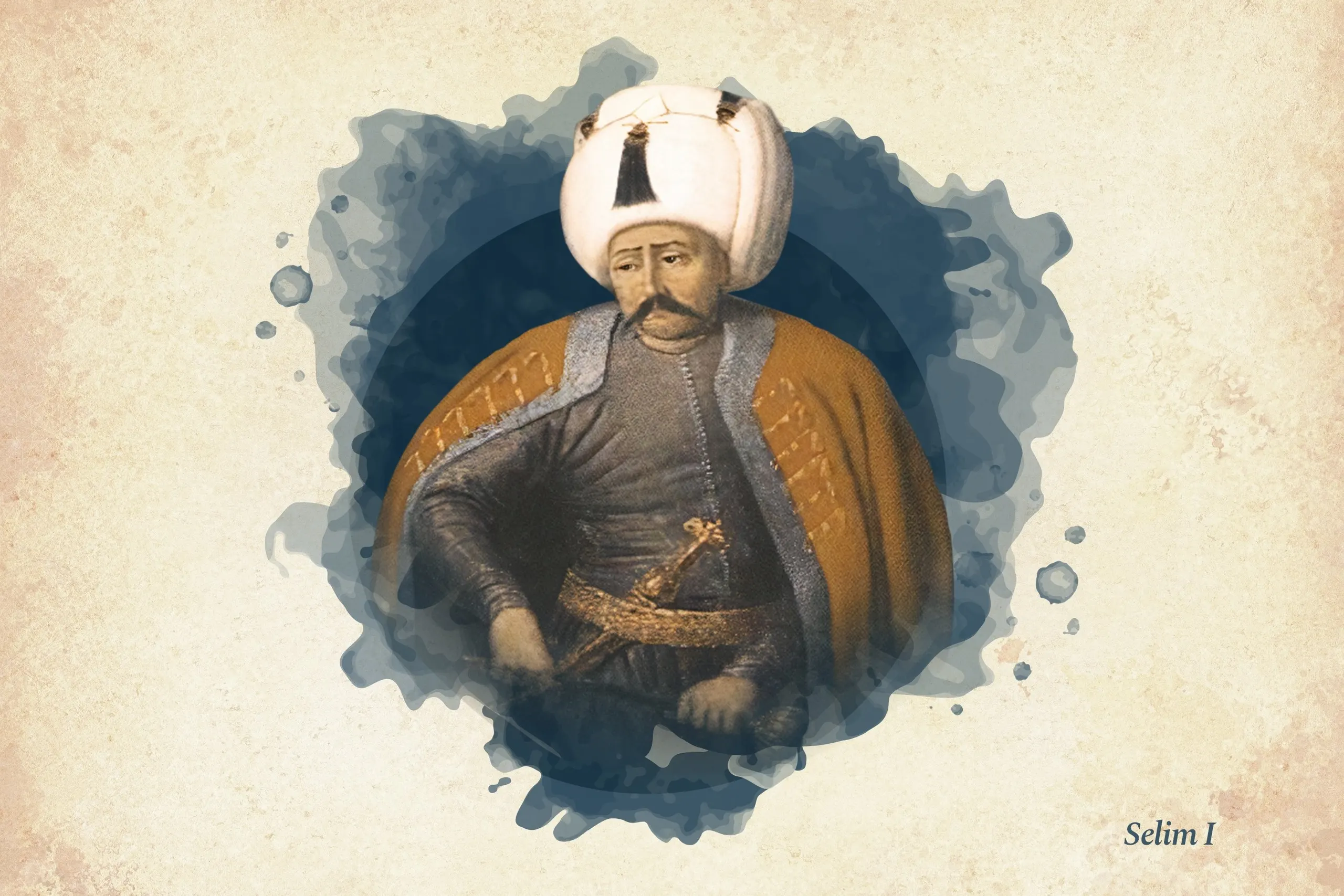
Suleiman was born into the Ottoman dynasty in Trabzon, a coastal city on the Black Sea. His father, Selim I, was a stern and ambitious ruler who expanded the empire eastward. As a child, Suleiman studied at the palace schools in Trabzon and later in Constantinople, where he learned statecraft, history, science, literature, and theology. He also trained in military arts and horsemanship. From a young age, Suleiman showed a keen interest in poetry and became a skilled goldsmith. In his early teens, he served as a governor in the provinces of Bolu and later Kaffa, gaining administrative experience. When Selim I died suddenly in 1520, Suleiman was 26 and ready to take the throne.
Career Growth
Suleiman ascended the throne in 1520 and immediately set out on military campaigns. In 1521, he captured Belgrade, a key strategic city in the Balkans. The following year, he conquered the island of Rhodes from the Knights Hospitaller after a long siege. His most decisive victory came in 1526 at the Battle of Mohács, where he crushed the Kingdom of Hungary and annexed much of its territory. In 1529, he led the first Siege of Vienna, which ultimately failed but demonstrated Ottoman reach. Throughout the 1530s and 1540s, Suleiman fought the Safavid Empire, capturing Baghdad in 1534 and expanding Ottoman control over Iraq. His navy, led by Hayreddin Barbarossa, won the Battle of Preveza in 1538, establishing Ottoman dominance in the Mediterranean. Suleiman also reformed the Ottoman legal system, issuing a unified code of laws that balanced sultanic decrees with Islamic sharia. He commissioned magnificent buildings, including the Süleymaniye Mosque, designed by his chief architect Mimar Sinan. Suleiman died in 1566 during the Siege of Szigetvár in Hungary, his final campaign.
Career Timeline
Public Image & Style
Suleiman cultivated an image of justice and piety. He was known for personally hearing petitions from commoners every Tuesday, a practice that bolstered his reputation as a fair ruler. European chroniclers portrayed him as both a terrifying conqueror and a wise, cultured prince. In the Ottoman world, he was celebrated as Kanuni, the lawgiver who codified the empire's laws. His patronage of architecture, especially the works of Mimar Sinan, created a visual legacy of power and faith. Suleiman's court was a center of poetry, art, and scholarship, attracting intellectuals from across the Islamic world.
Fame & Fandom (iFAMOUS Rankings)
Suleiman the Magnificent commands a reverence that defies the modern machinery of fandom. He lacks a formal fan club or a branded following, yet his image in Turkey has evolved into a national taboo where mockery invites imprisonment rather than applause. The 2026 sentencing of comedian Tuba Ulu for a joke about the Sultan proved that disrespecting him carries legal weight, cementing his status as an untouchable cultural icon rather than a pop star. Global engagement remains tied to the historical drama *Muhteşem Yüzyıl*, which fuels online discussion around his fictionalized court life without creating a unified audience identity. While archaeological reports from 2025 suggested a potential discovery of his tomb in Hungary near Szigetvár, this has not translated into organized fan rituals or pilgrimage campaigns. Instead, the figure exists as a solemn symbol of Ottoman grandeur and a subject of intense legal protection. In August 2026, the iFANN Global Fame Engine evaluated Suleiman the Magnificent but determined he currently holds no placement in the published rankings (Global Top 1,000 or a Top-100 scope list). Say this plainly and neutrally; do NOT state or guess any numeric rank or score. This absence reflects his standing as a historical monarch whose fame operates through legacy and state-sanctioned memory rather than contemporary consumption metrics like streaming or search volume. Despite the lack of a numerical score, his influence persists through enduring military bands and the continued performance of Mehter music in places like Trabzon. The legend of his death during the Siege of Szigetvár remains a potent narrative, reinforced by recent claims of finding his burial site, ensuring his story survives not as a trending topic but as a foundational chapter of history.
Interesting Facts and Legends
Born in Trabzon on November 6, 1494, Suleiman ruled the Ottoman Empire for 46 years, expanding its borders from Hungary to Iraq while governing at least 25 million subjects. He earned the title Kanuni among his people for codifying laws and 'the Magnificent' in Europe for his military prowess. A prolific poet writing under the pen name Muhibbi, he also personally crafted gold jewelry, including a famous helmet-crown. His distinctive long red beard was noted by European ambassadors, and he maintained a strict daily routine of pre-dawn prayer, council meetings, and often eating only one meal. Deeply superstitious, he frequently consulted astrologers before making major decisions. The Süleymaniye Mosque complex served as a massive charitable hub featuring a hospital, school, library, and soup kitchen. Historical records confirm his final campaign ended with his death at the Siege of Szigetvár in 1566, a moment now legendary after a 2025 announcement claimed his tomb had been located at the imperial tent site in Hungary. This discovery has sparked local hopes for economic revival in Szigetvár. In the modern era, his legacy became the center of a viral controversy when comedian Tuba Ulu was sentenced to prison in 2026 for a stand-up joke, illustrating the intense protective sentiment surrounding the Sultan's image today.
Notable Quotes
“I am the sultan of the sultans, the emperor of the emperors, the distributor of crowns to the monarchs of the world.”
“My sword is my tongue, and my tongue is my sword.”
“The greatest victory is the one that requires no battle.”
“Justice is the foundation of the realm.”
Family & Personal Life
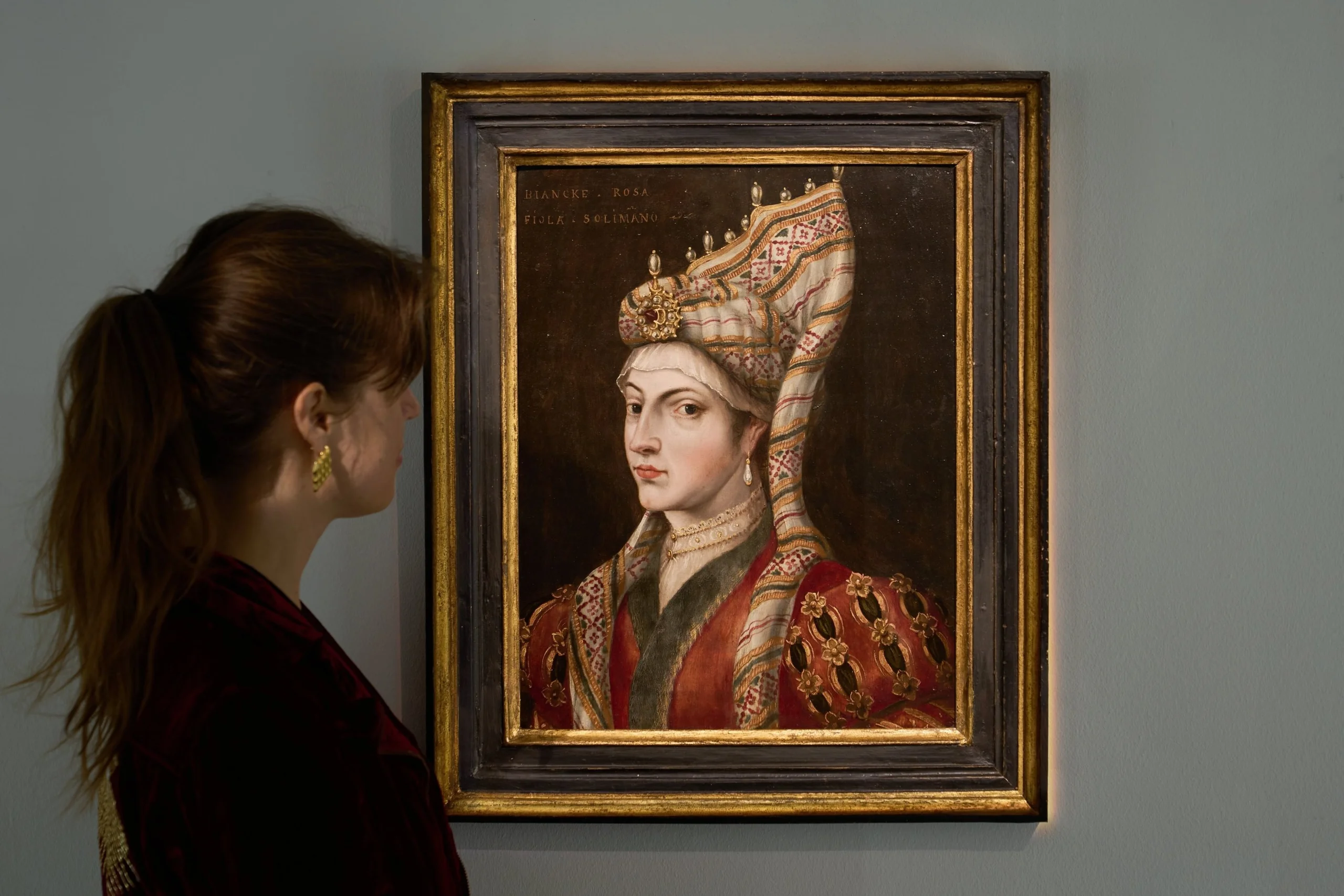
Suleiman's father was Selim I, known as 'the Grim,' who expanded the empire eastward. His mother was Hafsa Sultan, a powerful figure who advised him early in his reign. Suleiman had several consorts, but his most famous wife was Hürrem Sultan (Roxelana), a former concubine who he married in 1534, breaking Ottoman tradition. Hürrem became a major political influence, corresponding with foreign leaders and building charitable foundations. Suleiman's other consorts included Mahidevran Hatun, mother of his eldest son Mustafa, and Gülfem Hatun. His children included princes Mustafa, Mehmed, Selim, Bayezid, and Cihangir, as well as daughters Mihrimah and Fatma. The rivalry between Hürrem and Mahidevran over succession led to deep palace intrigue, culminating in the execution of Mustafa in 1553.
Notable Connections
Suleiman worked closely with Hürrem Sultan, his wife and political confidante. His chief architect Mimar Sinan designed over 300 structures, including the Süleymaniye Mosque. Ebussuud Efendi, the grand mufti, helped codify Ottoman law. His admiral Hayreddin Barbarossa commanded the navy to dominance.
Relationships & Dating History
Suleiman's first known consort was Fülane Hatun, who bore him a son in 1512. He later took Mahidevran Hatun as a concubine; she gave birth to Mustafa in 1515. Around 1520, Hürrem Sultan (Roxelana) entered the harem and quickly became Suleiman's favorite. In 1533, Suleiman married Hürrem, a radical break from Ottoman tradition. Hürrem bore him five sons and a daughter, including future Sultan Selim II. The rivalry between Hürrem and Mahidevran intensified after Mustafa's execution in 1553. Suleiman also had a relationship with Gülfem Hatun, though details are sparse. As of his death in 1566, Suleiman was married to Hürrem Sultan.
- DatedFülane Hatun1510 - 1512First known consort, mother of a son who died young.
- DatedMahidevran Hatun1513 - 1553Mother of Şehzade Mustafa; exiled after Mustafa's execution.
- MarriedHürrem Sultan1533 - 1566CurrentSuleiman's legal wife and most influential consort; mother of Selim II.
- DatedGülfem Hatun1520 - 1562A consort who built a mosque in Üsküdar.
Death & Aftermath
Died
September 6, 1566 (aged 71)
Death Place
Szigetvár, Hungary
Cause of Death
Heart attack or stroke
The Ottoman court announced the sultan's passing to his son Selim II and chief vizier Sokollu Mehmed Pasha, who immediately concealed the news to preserve army morale during the ongoing siege. Suleiman the Magnificent died in his tent near Szigetvár, Hungary, on September 6, 1566, at approximately seventy-two years of age. Historians widely accept that natural causes, specifically a heart attack or stroke triggered by the physical strain of the campaign and his advanced age, ended his life, though unconfirmed legends occasionally suggest he fell to a stray cannonball.
His death marked the conclusion of the empire's Golden Age, ending an era defined by military expansion and legal reform. The body remained hidden until the fortress surrendered, allowing the army to retreat safely before transporting the remains back to Constantinople. There he was interred in a mausoleum adjacent to the Süleymaniye Mosque, a private imperial affair attended by high-ranking officials and religious leaders rather than the general populace. Posthumous reverence has persisted for centuries, cementing his legacy as Kanuni, the Lawgiver.
Awards & Accolades
View 3 records, honours and achievementsKnown For
Ottoman Empire
1520 · Sultan
Battle of Mohács
1526 · Commander
Süleymaniye Mosque
1557 · Patron
Keywords
Quick Facts
- Profession
- ruler, legislator, military leader
- Born
- +1494-11-06
- Birthplace
- Trabzon
- Died
- +1566-09-06
- Death Place
- Szigetvár
- Gender
- Male
- Spouse
- Hürrem Sultan, Mahidevran Hatun, Fülane Hatun, Gülfem Hatun
- Birth Sign
- Scorpio
Personal Details
- Spouse
- Hürrem Sultan, Mahidevran Hatun, Fülane Hatun, Gülfem Hatun
- Children
- Şehzade Mustafa, Şehzade Mehmed, Selim II, Şehzade Bayezid, Şehzade Cihangir, Mihrimah Sultan, Fatma Sultan
- Education
- Palace schools in Trabzon and Constantinople
Frequently Asked Questions
Who was Suleiman the Magnificent?
What was Suleiman the Magnificent's net worth in 2026?
Is Suleiman the Magnificent still alive in 2026?
Why is Suleiman the Magnificent famous?
How does Suleiman the Magnificent compare to other Ottoman sultans?
Similar People
Join the community
fans discussing