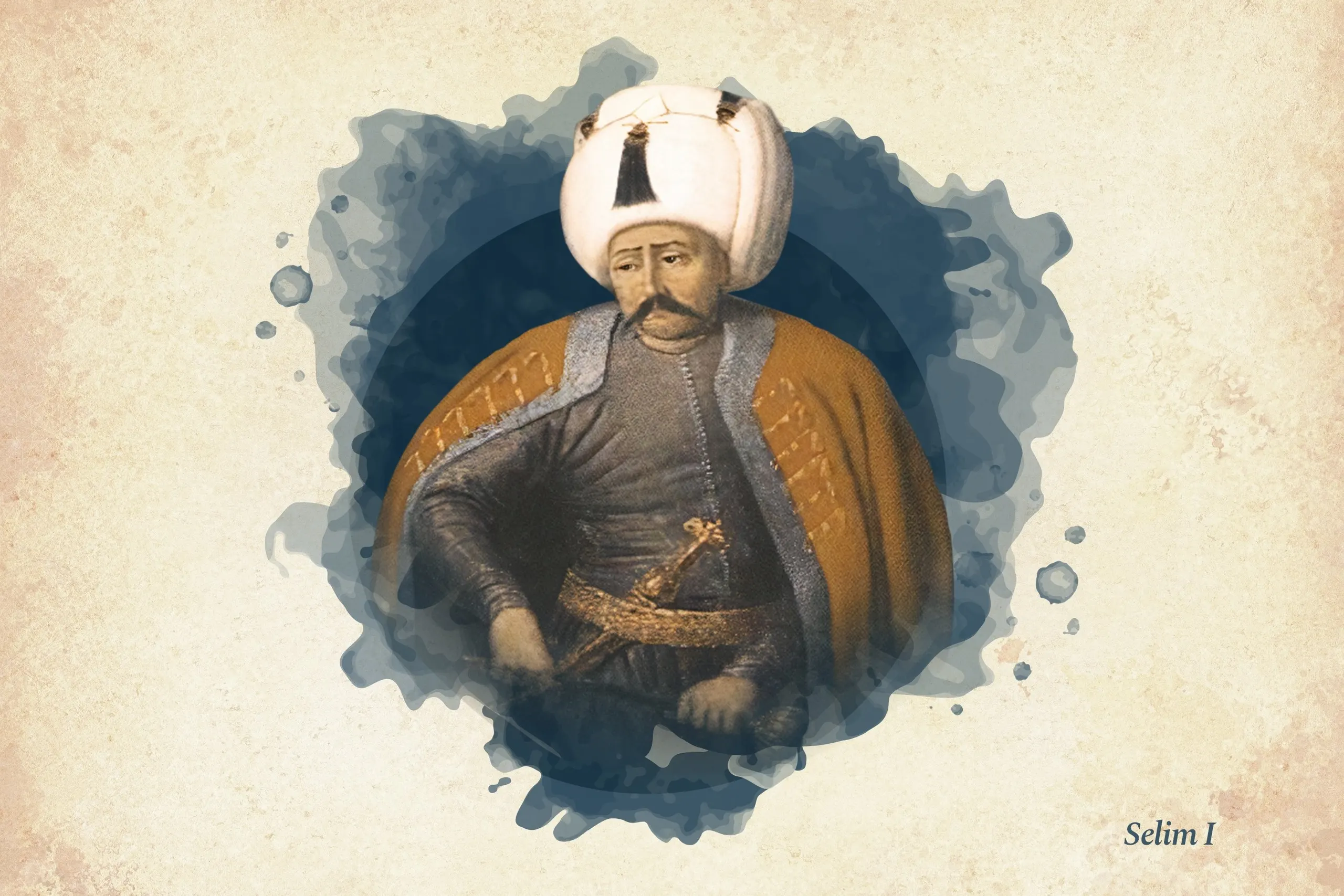
Selim I
Also known as: Selim the Grim, Yavuz Sultan Selim, Selim the Resolute
Birthday
October 10, 1470
Birth Sign
Libra
Birthplace
Amasya, Ottoman Empire
Age
Died at 49
About
Selim I, known as Yavuz Sultan Selim or Selim the Grim, was the ninth Sultan of the Ottoman Empire, ruling from 1512 until his death in September 1520. Historians frequently rank him among the greatest Ottoman sultans, second only to Mehmed II in terms of territorial expansion. His singular eight-year reign transformed the empire into a global superpower spanning approximately 3.4 million square kilometers. He is celebrated for tripling the size of the Ottoman state, securing the Caliphate for the Ottomans, and shifting the center of the Islamic world to Istanbul. A man of few words and decisive action, he left a legacy defined by aggressive expansionist policies and the establishment of Sunni orthodoxy across his vast new domains.
Early Life & Background
Born on October 10, 1470, in Amasya, Selim entered the world not as the designated heir but as one of several sons of Sultan Bayezid II. His mother, Gulbahar Hatun, was a Circassian noblewoman who raised him with strict discipline. Unlike his brothers who remained closer to the capital, Selim was sent away early to govern provinces, a common practice to test their administrative mettle. He first served as the governor of Karaman and later took charge of Trabzon (Trebizond) on the Black Sea coast. These postings were far from the luxury of Constantinople; they required constant vigilance against Safavid incursions and local unrest.
During his time in Trabzon, Selim developed a reputation for military vigor and administrative efficiency that set him apart from his more relaxed siblings. He cultivated an interest in poetry, writing under the pen name "Avni," though this literary side remained largely private compared to his martial persona. His upbringing was steeped in the martial traditions of the Ottoman state, preparing him for the aggressive expansionist policies that would define his legacy. The rivalry with his brothers, particularly Ahmed and Korkut, shaped his political philosophy into something ruthless and decisive. He learned early that survival in the Ottoman dynasty depended on strength and the ability to eliminate rivals, a lesson he would apply with devastating effect once he reached the throne. This period of provincial governance laid the groundwork for his future military campaigns and solidified his resolve against perceived threats from within the dynasty.
Career Growth
Selim's rise to power began with a coup d'état in 1512. Upon hearing rumors that his father intended to abdicate in favor of his brother Ahmet, Selim marched on Constantinople with the support of the Janissary corps, who were dissatisfied with Bayezid's perceived leniency toward the Safavid Shi'a sect. Bayezid II was forced to abdicate in September 1512 and died shortly thereafter in Edirne. Selim then eliminated his remaining rivals, including his brother Korkut and nephews, consolidating absolute power.
His reign, though brief, was one of the most productive in Ottoman history. In 1514, he fought the Battle of Chaldiran against the Safavid Empire of Shah Ismail I. Despite being outnumbered, Selim utilized superior gunpowder weaponry, including cannons and muskets, to secure a decisive victory, halting the Safavid expansion and securing the eastern borders of the empire. From 1516 to 1517, he launched a massive campaign against the Mamluk Sultanate. In 1516, he defeated the Mamluks at the Battle of Marj Dabiq in Syria. The following year, he conquered Egypt, capturing Cairo and taking control of the Hejaz region, including Mecca and Medina.
In 1517, following the conquest of Egypt, Selim assumed the title of Caliph, making the Ottoman Sultan the protector of Islam's holiest sites. This event shifted the center of the Islamic world from Cairo to Istanbul. By the time of his death in 1520, he left behind an empire that stretched from the Persian Gulf to the gates of Vienna, effectively tripling its size during his lifetime. His strategic use of artillery revolutionized warfare in the region, setting a precedent for future Ottoman military dominance.
Career Timeline
Public Image & Style
Selim was known for his stern demeanor and physical presence, earning him the epithet "Yavuz." He was described by contemporaries as a man of few words, decisive in action, and deeply pious. His signature style was that of a warrior-sultan, often depicted in portraits wearing heavy armor and the distinctive turban of the Ottoman rulers. His public image was one of fear and awe; he was seen as a divinely appointed instrument of God's will on earth, a sentiment reinforced by his assumption of the Caliphate. This image of severity was carefully cultivated to maintain order and project strength to both internal rivals and external enemies. Historical narratives often portray him as the "Shadow of God on Earth," emphasizing his role in expanding the Dar al-Islam.
Fame & Fandom (iFAMOUS Rankings)
iFANN has not yet collected fame data for this person. While Selim I remains a central figure in Ottoman history and is frequently cited in academic texts and historical documentaries, there is no modern fanbase structure comparable to those of contemporary celebrities. Historical figures of this magnitude do not typically generate organized fandoms with rituals or social media campaigns. Instead, his legacy persists through educational institutions, historical reenactments, and cultural memory in Turkey and the broader Islamic world. The narrative surrounding him is primarily one of historical significance rather than celebrity worship. No formal fandom name exists in current records.
Interesting Facts and Legends
Selim I wrote poetry under the pseudonym "Avni," showcasing a literary side often overshadowed by his military exploits. He was known for his strict adherence to Sunni orthodoxy and his intolerance toward Shi'a practices, which led to his brutal suppression of dissent within the empire. He was the first Ottoman Sultan to explicitly designate his successor, Suleiman, before his death, breaking the tradition of fratricide that had previously been used to ensure stability. The epithet "Yavuz" meaning "grim" or "resolute" became so associated with him that it is now part of his official historical name in Turkish culture. Additionally, he is credited with introducing the use of firearms on a massive scale in Ottoman battles, fundamentally changing the nature of warfare in the Middle East.
Notable Quotes
“I am the shadow of God on earth.”
“The sword is the key to the heart of the world.”
Family & Personal Life
Selim's family life was defined by dynastic necessity rather than romantic choice. His primary consorts included Ayşe Hatun, a significant figure in his harem whose origins are less documented, and Hafsa Sultan, the daughter of the Crimean Khan Mengli Giray. Selim maintained a large harem of concubines, many of whom bore him sons, though specific names for these women are often lost to history. He had several sons, including Şehzade Mahmud, Şehzade Mehmed, and Şehzade Korkut. While Şehzade Mahmud and Şehzade Mehmed died young, Şehzade Korkut was executed after Selim's death to prevent succession disputes. His son Suleiman I succeeded him, becoming one of history's most renowned rulers. The structure of his household reflected the rigid hierarchy of the Ottoman court, where lineage and loyalty were paramount.
Notable Connections
Relationships & Dating History
As a historical monarch from the 15th and 16th centuries, Selim I did not have a dating history in the modern sense. His marriages were dynastic alliances arranged for political stability and lineage. He married Ayşe Hatun, a significant figure in his harem, likely through diplomatic channels common to the Ottoman court. She bore him children, including Şehzade Mehmed. His most famous spouse was Hafsa Sultan, the daughter of the Crimean Khan Mengli Giray. Their marriage solidified an alliance with the Crimean Khanate. She gave birth to his successor, Suleiman the Magnificent, and other children. After Selim's death, she became the Valide Sultan and wielded significant influence during her son's reign. Like all Ottoman Sultans, Selim maintained a large harem of concubines, many of whom bore him sons, though specific names and relationship details for these women are often lost to history.
- MarriedAyşe Hatun1500 - 1520Primary consort who bore him children including Şehzade Mehmed.
- MarriedHafsa Sultan1511 - 1520Daughter of the Crimean Khan; mother of Suleiman the Magnificent.
Death & Aftermath
Died
September 22, 1520 (aged 49)
Death Place
Çorlu, Anatolia
Cause of Death
Plague or anthrax contracted from a horse
Selim I fell ill in September 1520 while his army was returning from campaigns near Konya in Anatolia. The Ottoman Sultan spent his final days managing imperial logistics before succumbing to illness at the age of forty-nine on September 22, 1520, in Çorlu. Historical consensus attributes his death to natural causes, specifically plague or anthrax contracted from his horse during these final movements, a determination based on the observations of court physicians and contemporary chroniclers rather than any formal medical investigation. There was no formal autopsy in the modern sense, but the circumstances pointed to exposure during military movements.
Public reaction to the monarch's passing involved mourning within the Ottoman court and across the Islamic world, where he was revered as the Caliph who had expanded the empire's borders significantly. Tributes focused on his military genius and the acquisition of Syria, Egypt, and the Hejaz. His memory was cemented through architectural legacy, most notably the Yavuz Sultan Selim Mosque in Istanbul, which served as a permanent landmark dedicated to his reign and marked the transition to classical Ottoman architecture. Selim I was buried according to Islamic tradition in a mausoleum attached to the newly commissioned mosque in the Fatih district of Istanbul. The funeral was a public state event attended by the new Sultan Suleiman I, high-ranking viziers, the Janissary corps, and religious scholars. His estate passed directly to the succeeding Sultan under standard Ottoman succession laws without probate or family division disputes, ensuring a smooth transition of power.
Net Worth (Estate Value)
$0
iFANN Editorial Team estimate
The concept of net worth does not apply to Selim I in the modern financial sense. As an absolute monarch, the wealth of the Ottoman Empire was effectively the wealth of the state, controlled personally by the Sultan. During his reign, the treasury swelled significantly due to the conquest of the wealthy Mamluk territories, which included the trade routes of the Red Sea and the Levant, as well as the gold and silver reserves of Egypt. The economic impact of his reign laid the foundation for the Ottoman Golden Age under his son, Suleiman. Contemporary accounts describe the influx of wealth from Egypt as unprecedented, allowing for massive military spending and architectural projects. The acquisition of the holy cities also brought immense religious prestige, which functioned as a form of non-monetary capital for the empire.
Awards & Accolades
View 5 records, honours and achievementsKnown For
Ottoman Empire Expansion
1517 · Sultan
Battle of Chaldiran
1514 · Commander
Conquest of Egypt
1517 · Conqueror
Keywords
Sources
Quick Facts
- Profession
- poet, monarch, sultan
- Born
- October 10, 1470
- Birthplace
- Amasya
- Died
- September 22, 1520
- Death Place
- Çorlu
- Gender
- Male
- Spouse
- Ayşe Hatun, Hafsa Sultan
- Birth Sign
- Libra
Personal Details
- Full Name
- Selim ibn Bayezid
- Spouse
- Ayşe Hatun, Hafsa Sultan
- Children
- Suleiman I, Şehzade Mahmud, Şehzade Mehmed
- Education
- Imperial training in Amasya and Trabzon
Frequently Asked Questions
Who was Selim I?
How did Selim I die?
What is Selim I's nickname?
Did Selim I conquer Egypt?
Was Selim I a poet?
Similar People
Join the community
fans discussing