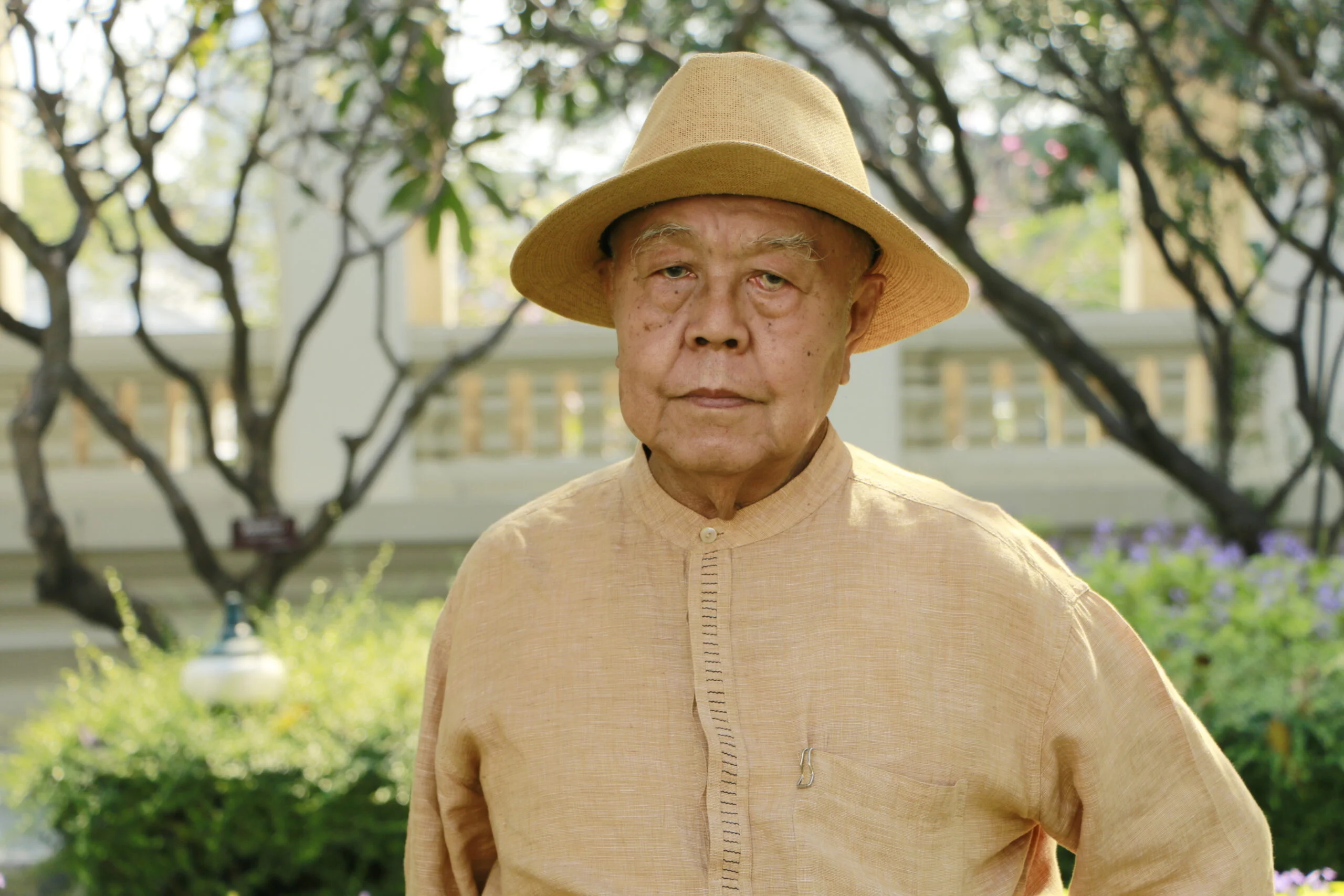
Sulak Sivaraksa
 Thailand
social activist•writer•lay Buddhist teacher
Also known as: Achaan Sulak, Sulak Sivaraksa
Birthday
March 27, 1933
Birth Sign
Aries
Birthplace
Bangkok, Thailand
Age
93 years old
Height
5 ft 7 in (170 cm)
About
Sulak Sivaraksa is a Thai social activist, intellectual, writer, and lay Buddhist teacher, widely regarded as one of the founding figures of the engaged Buddhism movement. Born in Bangkok on March 27, 1933, he has spent more than six decades advocating for social justice, cultural renewal, and nonviolent change. He is the author of over 100 books and monographs, a co-founder of the International Network of Engaged Buddhists (INEB), and a recipient of the Right Livelihood Award, often called the Alternative Nobel Prize.
Today, at 93, Sulak remains a revered elder statesman of Asian civil society. He continues to serve as honorary chair of INEB and the Sathirakoses-Nagapradeepa Foundation, though his public appearances have diminished with age. His work has influenced generations of activists and Buddhist practitioners worldwide, and his sharp critiques of both Western consumerism and Thai elite culture have made him a distinctive and sometimes controversial voice. Followers affectionately call him Achaan Sulak, meaning Teacher Sulak.
Early Life & Background
Sulak Sivaraksa was born into a devout Buddhist household in Bangkok, the son of a Thai father and a mother of Chinese descent. This bicultural upbringing gave him an early awareness of the tensions between tradition and modernity. He attended St. Gabriel's College and then Assumption College in Bangkok, where he was exposed to both Thai and Western intellectual traditions.
In the 1950s, he moved to London to study law at Middle Temple, where he was called to the English Bar. His time in England proved formative. He encountered anti-colonial movements and the writings of Gandhi, Tolstoy, and Christian social thinkers, which he later integrated with Buddhist ethics. He also studied at the University of London and in Wales, deepening his interest in comparative religion and political theory.
Returning to Thailand in the early 1960s, Sulak began his career as a lecturer at Thammasat University. He soon founded the Sathirakoses-Nagapradeepa Foundation, named after two Thai intellectuals he admired, to promote Thai culture and social critique. He also became the founding editor of the Social Science Review (Sangkhomsat Parithat), a journal that became a platform for progressive thought in the 1960s and 1970s. During this period, he began publicly critiquing the Thai military dictatorship and the erosion of traditional Buddhist values.
A pivotal moment came in 1976. After the bloody October 6 crackdown on student protesters at Thammasat University, Sulak was accused of instigating dissent and forced into exile. He spent the next several years in England and the United States, lecturing and building international networks. This exile radicalized his commitment to nonviolent social change and cemented his reputation as an outspoken critic of authoritarianism.
Career Growth
Sulak's breakthrough came in the late 1980s when he co-founded the International Network of Engaged Buddhists (INEB) in 1989, bringing together Buddhist leaders and thinkers from across Asia and the world. The network's patrons have included the Dalai Lama and Thich Nhat Hanh, and it has become a global hub for socially engaged Buddhism.
In 1995, he received the Right Livelihood Award, which brought his work to international attention. The 1990s also saw him chair the Asian Cultural Forum on Development and serve as a visiting professor at UC Berkeley and Cornell University. He founded the Spirit in Education Movement (SEM) and the College SEM, an educational initiative integrating spiritual and ethical values into modern education.
Throughout the 2000s and 2010s, Sulak continued writing and lecturing globally, authoring at least 100 books and monographs. In 2014, he made comments questioning the historical accuracy of a 16th-century battle involving King Naresuan, leading to lèse-majesté charges in 2017 at age 85. The charges were dropped in January 2018 after an international outcry. In 2019, a biography titled Roar was published, and he led an INEB delegation to meet the Dalai Lama in Dharamsala.
As of 2026, Sulak remains active in a limited capacity, serving as honorary chair of INEB and continuing to mentor younger activists. His legacy as a founder of engaged Buddhism is firmly established.
Career Timeline
Public Image & Style
Sulak Sivaraksa is widely respected in Buddhist and activist circles as a living treasure of engaged Buddhism. His public image is that of a fearless, outspoken, and somewhat contrarian elder statesman of Southeast Asian civil society. He is known for his direct, often provocative speaking style, his willingness to challenge authority, and his commitment to nonviolent social change.
He does not have a formal fandom, but he is affectionately referred to as Achaan Sulak (Teacher Sulak) by his followers. His content, whether lectures, essays, or books, is scholarly yet accessible, blending Buddhist philosophy with sharp social commentary. His fans are primarily students, activists, and Buddhist practitioners who view him as a moral compass for socially engaged spirituality.
Fame & Fandom
Sulak Sivaraksa stands as a towering figure in the realm of social activism and Buddhist thought, though his influence operates within a sphere distinct from conventional celebrity culture. As of August 2026, iFANN's Global Fame Engine has evaluated this person, but they do not currently hold a placement in the published rankings (Global Top 1,000 or a Top-100 scope list). This absence of a numerical rank reflects his status as an intellectual leader rather than a mass-market icon whose fame is measured by commercial consumption or viral metrics. His global reach extends through a network of scholars, activists, and lay Buddhists who are organized via formal institutions like the International Network of Engaged Buddhists and the Sathirakoses-Nagapradeepa Foundation rather than informal fan clubs. There is no documented fandom name for his supporters; the concept of a dedicated fanbase with chart-pushing rituals or birthday campaigns does not apply to his work. Instead, his legacy is defined by a global following united by shared philosophical commitments to nonviolence and social justice. While he lacks the performative adoration typical of entertainers, his interactions with high-profile figures, such as the Dalai Lama, and his fearless critiques of state power have cemented his reputation as a revered elder statesman. The scale of his impact is visible in the enduring nature of his organizations and the continued relevance of his writings across decades, proving that true influence often transcends the need for a ranked position in a popularity index.
Interesting Facts and Legends
Sulak Sivaraksa has authored at least 100 books and monographs in Thai and English, a staggering output for any writer. He was charged with lèse-majesté for questioning the historical accuracy of a 16th-century battle involving King Naresuan; the charges were eventually dropped in 2018. He spent time in exile in the 1970s after the 1976 military coup in Thailand. He is credited with starting Thailand's indigenous NGO movement. He is a lay Buddhist, never having taken monastic vows, and is known for his sharp, often humorous critiques of both Western consumerism and Thai elite culture. A defining moment in his modern legend occurred when he publicly cast doubt on the elephant duel myth of King Naresuan, arguing it fueled excessive nationalism. This inquiry triggered a massive backlash, leading to severe legal repercussions including potential imprisonment under strict lèse-majesté laws before the case was dropped. Another notable event involves his audience with King Maha Vajiralongkorn, which reportedly halted new prosecutions against him. These confrontations with state power form the core of his cultural mythology among activists, marking him as a fearless defender of free speech and historical truth.
Notable Quotes
“I was born eighty-six years ago 1933 after the revolution of 1932 that year in this country the end of our monarchy starting with constitutional monarchy.”
“We must not be afraid to speak truth to power, even if it costs us our freedom.”
“I have spent my life trying to reconcile the Buddha's teachings with the need for social justice.”
Family & Personal Life
Sulak Sivaraksa has been married to Pensri Sivaraksa (née Kiartivichai) since the early 1960s. The couple met in Bangkok through mutual family connections and married in a traditional Thai ceremony. They have several children, including a son, Sulak Sivaraksa Jr., who passed away in 2015, and daughters. His family has been supportive of his activism despite the personal risks, including periods of exile and imprisonment. Sulak has spoken openly about the toll his work took on his family, but they have remained a close-knit unit. He is a practicing lay Buddhist and has been a lifelong student of meditation and Buddhist philosophy.
Notable Connections
Sulak Sivaraksa is closely associated with Thich Nhat Hanh, with whom he co-founded the engaged Buddhism movement, and the Dalai Lama, who has been a patron of INEB. He has also worked alongside Sri Lankan engaged Buddhist leader A.T. Ariyaratne. His wife, Pensri Sivaraksa, has been his partner for over six decades. He was influenced early on by Thai economist Puey Ungphakorn, and his interactions with King Maha Vajiralongkorn reportedly led to a halt in new lèse-majesté cases.
Relationships & Dating History
Sulak Sivaraksa's personal life has been remarkably private, with no public record of romantic relationships outside his marriage. He married Pensri Sivaraksa in the early 1960s, and they have remained together for over six decades. The couple met in Bangkok through family connections and married in a traditional Thai ceremony.
Their marriage has endured through exile, imprisonment, and the loss of a son. As of 2026, Sulak is married to Pensri, and there is no public information suggesting any separation or divorce.
- MarriedPensri Sivaraksa1962 - presentCurrentMet in Bangkok through family connections; married in a traditional Thai ceremony.
Salary, Net Worth In 2026
$500 Thousand
iFANN Editorial Team estimate
As of 2026, iFANN currently estimates Sulak Sivaraksa's net worth to be $500 Thousand. Unlike commercial celebrities, his income has come from academic salaries, royalties from his books, and speaking fees. He has lived modestly, donating much of his income to the Sathirakoses-Nagapradeepa Foundation and INEB. He has no known commercial endorsements, business ventures, or real estate investments. His wealth has never been a focus of public interest. His lifelong dedication to activism and nonprofit work means he is not a wealthy individual by Western standards, but his influence far exceeds any monetary measure.
Awards Won (4)
Sulak Sivaraksa has received numerous international honours for his lifelong work in social justice and engaged Buddhism. In 1995, he won the Right Livelihood Award, often called the Alternative Nobel Prize. He also received the UNESCO-Madanjeet Singh Prize in 2001 for promoting tolerance and non-violence, the Fukuoka Asian Culture Prize in 2004, and was named National Artist of Thailand in 2010 for literature.
1995 · Social Justice
Lifetime work in social justice, peace, and engaged Buddhism
2001 · Tolerance and Non-Violence
Promotion of tolerance and non-violence
Known For
Engaged Buddhism movement
1989 · Co-founder
International Network of Engaged Buddhists (INEB)
1989 · Co-founder
Right Livelihood Award
1995 · Recipient
National Artist of Thailand
2010 · Literature
Keywords
Sources
Quick Facts
- Profession
- social activist, writer, lay Buddhist teacher
- Born
- March 27, 1933
- Birthplace
- Bangkok, Thailand
- Gender
- Male
- Birth Sign
- Aries
- Height
- 5 ft 7 in (170 cm)
- Spouse
- Pensri Sivaraksa
- Children
- Several, including a son, Sulak Sivaraksa Jr. (deceased 2015), and daughters
Personal Details
- Height
- 5 ft 7 in (170 cm)
- Spouse
- Pensri Sivaraksa
- Children
- Several, including a son, Sulak Sivaraksa Jr. (deceased 2015), and daughters
- Education
- Law degree from Middle Temple, London; studied at University of London and Wales
Frequently Asked Questions
Is Sulak Sivaraksa still alive?
What is Sulak Sivaraksa's net worth?
Why was Sulak Sivaraksa charged with lèse-majesté?
What is engaged Buddhism?
How old is Sulak Sivaraksa?
Similar People
Join the community
fans discussing