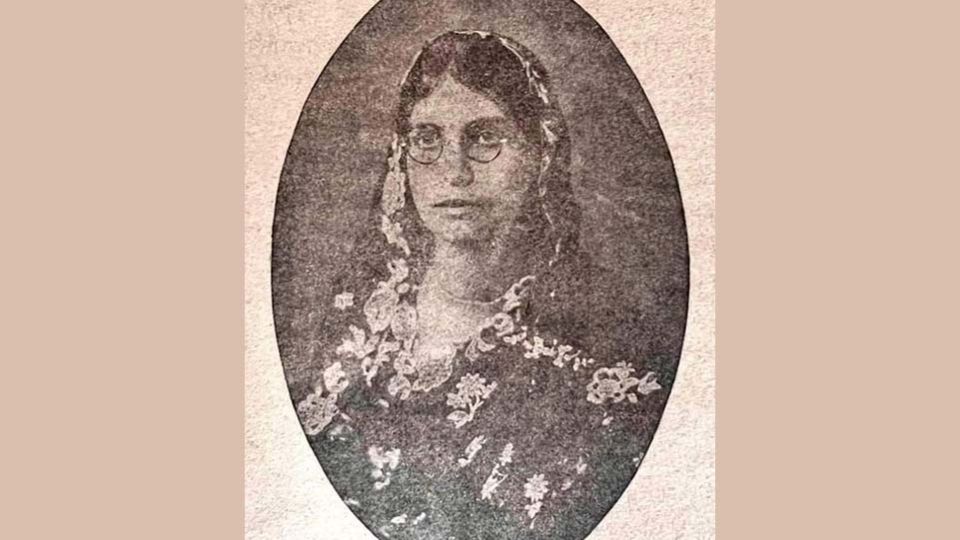
Sufia Kamal
 Bangladesh
poet•writer•journalist•activist
Also known as: Begum Sufia Kamal, Khalamma
Birthday
June 20, 1911
Birth Sign
Gemini
Birthplace
Shayestabad, Barisal, British India
Age
Died at 88
About
Sufia Kamal was a celebrated Bengali poet, writer, journalist, and a leading advocate for women's rights and social justice in Bangladesh. Born in 1911, she became one of the most respected literary figures of the subcontinent, known for her lyrical poetry and her unwavering commitment to progressive causes. Her work spanned decades, from the colonial era through the Language Movement and the independence of Bangladesh, and she remained a moral compass for the nation until her death in 1999.
Kamal's literary output includes the poetry collections Sajghor and Kemon Ekta Gaan Likhechhi, the novel Ke Kotha Koy, and the short story collection Nirbachito Golpo. Her writing often gave voice to the marginalized and challenged societal norms. As a feminist leader, she served as president of the Bangladesh Mahila Parishad and was a driving force in the movement for gender equality. She was a source of inspiration for political activists and poets, affectionately known as 'Khalamma' (Aunt).
Early Life & Background
Sufia Kamal was born Begum Sufia Kamal on June 20, 1911, in Shayestabad, Barisal, then part of British India. Her father, Syed Abdul Bari, was a lawyer, and her mother, Sabera Banu, came from a family of scholars. Due to the aristocratic social customs of her time, Kamal received her early education at home, studying Urdu, Arabic, and Persian with a tutor, and Bengali from her mother and maternal uncle. Her home was filled with books and literary magazines, which sparked her early interest in writing.
At age twelve, Kamal wrote her first short story, "Sainik Bodhu" (A Soldier's Wife), which was published in the magazine Toroon. Three years later, at fifteen, her first poem, "Bashanti" (Of Spring), appeared in Saogat, a prominent literary journal edited by Mohammad Nasiruddin. These early publications marked the beginning of a long and productive literary career. She was also deeply influenced by the writings of Roquiah Sakhawat Hossain, a pioneering feminist, whose ideals would shape her own activism in later years.
Career Growth
Sufia Kamal's literary career flourished after her early publications. In 1952, she published her poetry collection Sajghor and her novel Ke Kotha Koy. Her second poetry collection, Kemon Ekta Gaan Likhechhi, came out in 1959, followed by the short story collection Nirbachito Golpo in 1964. Her work was recognized with the Bangla Academy Award for Literature in 1962.
Beyond writing, Kamal was a journalist and a dedicated activist. In 1929, she joined the Anjuman-i-Khawatin-i-Islam, an association of Muslim women founded by Roquiah Sakhawat Hossain, which promoted education and social reform. Kamal played a key role in establishing Rokeya Hall at Dhaka University, the first women's hall. In 1969, she returned the Tamgha-i-Imtiaz, a Pakistani civil award, in protest against the government's treatment of Bengalis. After independence, she continued to champion democratic values and women's rights. She received numerous honors throughout her career, including the Ekushey Padak in 1976 and the Independence Day Award in 1997.
Career Timeline
Public Image & Style
Sufia Kamal was seen as a gentle yet formidable presence in Bangladeshi public life. Her poetry and prose were known for their lyrical beauty and social conscience, and she was regarded as a moral authority. She wore traditional Bengali attire, often a white sari, which became part of her dignified public image. Media and fans revered her as "Khalamma," a beloved aunt figure who offered wisdom and encouragement. She was a bridge between generations, connecting the pre-independence era with the modern nation. Her commitment to women's rights and social justice made her a role model for many, and her legacy continues to be celebrated in Bangladesh and beyond.
Fame & Fandom
Sufia Kamal commands a unique form of reverence that transcends the typical celebrity worship found in modern pop culture. Her admirers are not a chaotic mass of casual fans but a disciplined coalition of scholars, activists, and students who view her as a matriarchal figure rather than an entertainer. There is no formal club name for this group; instead, they identify simply as guardians of Bengali literature and champions of women's rights. Their devotion manifests through institutional tributes like annual seminars at prestigious universities and digital commemorations that ripple across global Bengali communities whenever her work is highlighted. While she never engaged in the performative rituals of contemporary stardom, her legacy remains vibrantly alive through the continued study of her poetry on grief and loss, which resonates deeply with new generations. This enduring influence places her firmly within the global consciousness of historical figures. She holds a significant standing in the iFANN Global Fame Rankings, recognized as the 37th most famous person from Bangladesh, a position she has held steady since the previous cycle. This ranking reflects her status as a pivotal voice in South Asian history and a symbol of resistance against authoritarianism.
Interesting Facts and Legends
Sufia Kamal was affectionately known as "Khalamma" (Aunt), a term of endearment used by activists and poets who sought her guidance. She was the first woman in Bangladesh to receive a state funeral, a mark of her national importance. Kamal was also a close associate of the poet Kazi Nazrul Islam, and she participated in the Language Movement of 1952. She once said that her greatest inspiration was Roquiah Sakhawat Hossain, and she worked to preserve Roquiah's legacy. In her later years, she became a symbol of resistance against authoritarianism, and her home was a gathering place for intellectuals and artists. She received international recognition, including the Lenin Centenary Jubilee Medal from the Soviet Union in 1970 and a medal from Czechoslovakia in 1986. A legendary story often retold involves her radical decision to pose for a portrait at the C. Guha studio in Calcutta, defying conservative norms that discouraged Muslim women from being photographed. Another poignant chapter in her legacy unfolded in July 2026 with the passing of her son, Shahed Kamal, whose death linked the family's history of service to the nation. The spirit of her institution also saw a recent victory when the Sufia Kamal Women's Hall won the female section of the inter-hall chess competition in August 2026.
Notable Quotes
“I write for those who have no voice.”
“The pen is mightier than the sword, but only when it is guided by truth.”
“Women's liberation is not a gift, it is a right to be won.”
Family & Personal Life
Sufia Kamal was married twice. At age eleven, she married her cousin Syed Nehal Hossain, a law student, and they had a daughter, Amena Kahnar. Hossain died in 1932. Five years later, she married Kamaluddin Ahmed, with whom she had two daughters, Sultana Kamal and Saida Kamal, and two sons, Shahed Kamal and Sazid Kamal. Sultana Kamal later became a prominent human rights activist and lawyer, continuing her mother's legacy. Kamal's family was supportive of her literary and political work, and her household was often a hub for discussions on literature and social issues.
Notable Connections
Sufia Kamal was closely associated with the women's rights movement in Bangladesh, following in the footsteps of Roquiah Sakhawat Hossain. She was a contemporary of the poet Kazi Nazrul Islam and worked with him during the Language Movement. Her daughter, Sultana Kamal, is a well-known human rights activist. Kamal was also a member of the Bangladesh Mahila Parishad and the Rokiah Sakhawat Smriti Committee.
Relationships & Dating History
Sufia Kamal's personal life was marked by two marriages. At the age of eleven, she married her cousin, Syed Nehal Hossain, a law student. They had one daughter, Amena Kahnar. Hossain passed away in 1932, leaving Kamal a young widow. Five years later, in 1937, she remarried Kamaluddin Ahmed, a government official. Together they had two more daughters, Sultana and Saida, and two sons, Shahed and Sazid. Kamaluddin Ahmed was supportive of her literary and social work. Kamal was widowed again when Ahmed passed away in 1977. As of her death in 1999, she was not married, having been a widow for over two decades.
- MarriedSyed Nehal Hossain1922 - 1932Married at age eleven; had one daughter, Amena. He died in 1932.
- MarriedKamaluddin Ahmed1937 - 1977Second marriage; had two daughters and two sons. He died in 1977.
Death & Aftermath
Died
November 20, 1999 (aged 88)
Death Place
Dhaka, Bangladesh
Cause of Death
Natural causes associated with old age
By her final years, Sufia Kamal had stepped back from active political leadership after decades as the founding president of the Bangladesh Mahila Parishad. On November 20, 1999, at the age of 88, she passed away in Dhaka due to natural causes associated with old age. Her death was confirmed by family and official state records, marking the end of a life dedicated to literature and social justice. The public reaction was one of profound national mourning, with tributes pouring in from government officials, literary peers, and feminist organizations across the country. She was honored as a pivotal figure in the Bengali nationalist movement and a pioneer of women's liberation.
Four days after her passing, on November 24, 1999, she was accorded a full state funeral attended by government dignitaries, fellow activists, poets, and the general public. The service included full military honors before she was laid to rest in a cemetery in Dhaka. Her legacy has been preserved through the establishment of the Sufia Kamal National Public Library in Dhaka, which remains a central institution for her work. While her estate was managed privately by her family, including her son Shahed Kamal, her literary output continues to generate academic interest. Recent scholarly focus has turned to her diaries and poetry regarding the 1971 Liberation War.
Net Worth (Estate Value)
$1 Million
iFANN Editorial Team estimate
Per iFANN's editorial analysis, Sufia Kamal's estate is valued at $1 Million as of 2026. This figure reflects the enduring value of her literary works, including royalties from collections like Sajghor and Kemon Ekta Gaan Likhechhi, which remain staples in educational curricula. Her status as a national icon ensures that commemorative events and publications continue to generate income for her family-managed estate. Throughout her life, she received numerous accolades for her contributions, including the Tamgha-i-Imtiaz in 1961, the Bangla Academy Award in 1962, the Ekushey Padak in 1976, and the Independence Day Award in 1997.
Awards Won (12)
Sufia Kamal received numerous prestigious awards for her literary and social contributions. In Bangladesh, she was honored with the Bangla Academy Award (1962), the Ekushey Padak (1976), and the Independence Day Award (1997), the nation's highest civilian honor. Internationally, she received the Lenin Centenary Jubilee Medal from the Soviet Union in 1970 and a medal from Czechoslovakia in 1986. She also returned the Tamgha-i-Imtiaz in 1969 as a political protest.
1962 · Literature
Lifetime achievement
1997 · Literature
Lifetime achievement
Known For
Sajghor
1952 · Poetry collection
Kemon Ekta Gaan Likhechhi
1959 · Poetry collection
Ke Kotha Koy
1952 · Novel
Nirbachito Golpo
1964 · Short story collection
Keywords
Sources
Quick Facts
- Profession
- poet, writer, journalist, activist
- Born
- June 20, 1911
- Birthplace
- Shayestabad, Barisal, British India
- Died
- November 20, 1999
- Death Place
- Dhaka, Bangladesh
- Gender
- Female
- Birth Sign
- Gemini
- Spouse
- Syed Nehal Hossain (m. 1922–1932), Kamaluddin Ahmed (m. 1937–1977)
- Children
- Amena Kahnar, Sultana Kamal, Saida Kamal, Shahed Kamal, Sazid Kamal
Personal Details
- Full Name
- Begum Sufia Kamal
- Spouse
- Kamaluddin Ahmed
- Children
- Amena Kahnar, Sultana Kamal, Saida Kamal, Shahed Kamal, Sazid Kamal
- Education
- Home education: Urdu, Arabic, Persian, Bengali
Frequently Asked Questions
Who was Sufia Kamal?
When was Sufia Kamal born and where?
What were Sufia Kamal's major literary works?
What was Sufia Kamal's role in the women's rights movement?
What honors did Sufia Kamal receive?
Similar People
Join the community
fans discussing