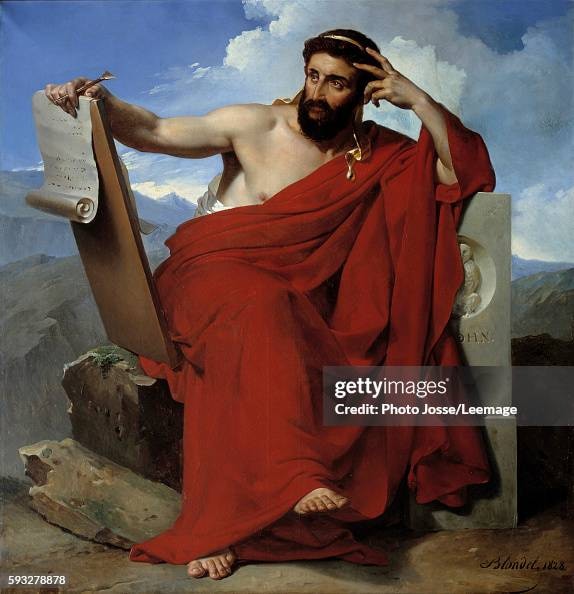
Solon
Birthday
638 BC
Birth Sign
Birthplace
Classical Athens
Age
Died at 80
About
Solon was an Athenian statesman, lawmaker, and poet. He is remembered as one of the Seven Sages of Greece and is often called the father of Athenian democracy. His constitutional reforms overturned most of Draco's harsh laws and tackled political, economic, and moral decline. Solon's most famous measure was the seisachtheia, or 'shaking off of burdens,' which canceled debts and freed Athenians from debt slavery. He also reorganized the citizen body into four classes based on wealth, breaking the monopoly of the aristocracy. As a poet, he wrote elegiac verses that defended his policies and offered political commentary. Despite gaps in the historical record, Solon's legacy as a moderate reformer who balanced the interests of the rich and poor endures. His reforms laid the essential groundwork for the later Athenian democracy under Cleisthenes, and he is consistently ranked among the most important political thinkers in history. Academic publications and documentaries continue to re-examine his life, such as the 2024 documentary series 'The Greeks: Crucible of Civilization' and ongoing scholarly articles in journals like Classical Philology.
Early Life & Background
Solon was born in Classical Athens in 638 BC into a well-born but modest family of the Eupatridae nobility. His father is sometimes named as Execestides. His upbringing included the traditional aristocratic paideia, encompassing poetry, music, and physical training. From an early age, Solon displayed a talent for poetry, composing elegiac verses that would later reflect his developing political and ethical views.
Unlike many of his aristocratic peers, Solon chose not to confine himself to the conventional life of the Athenian elite. In his youth, he embarked on a career as a merchant and traveler. This period of self-directed exploration proved formative, broadening his perspective and exposing him to diverse cultures and political systems across the ancient world. These travels supplemented his formal education, deepening his understanding of governance and society beyond the confines of Athens.
His first steps toward public prominence emerged through his dual roles as a poet and a military leader. His early elegiac poems were not merely artistic expressions but also vehicles for his political and ethical commentary. A pivotal moment in his early career arrived around 600 BC, when he successfully campaigned to recapture the strategic island of Salamis from Megara. He famously roused the Athenians to action with a powerful patriotic poem, then personally led the military expedition. This decisive victory not only reclaimed Salamis but also firmly established Solon as a respected leader in Athens, setting the stage for his later, profound contributions to Athenian society.
Career Growth
Solon's breakthrough came in 594/593 BC when he was elected Archon with extraordinary powers to resolve the social crisis. His first major act was the Seisachtheia, which canceled all outstanding debts, freed Athenians enslaved for debt, and banned debt bondage for the future. He reorganized the Athenian citizen body into four classes based on annual agricultural yield (Pentacosiomedimni, Hippeis, Zeugitae, Thetes), breaking the aristocracy's monopoly on power. He created the Council of Four Hundred to prepare business for the Assembly, which was opened to all male citizens. He also established the Heliaia, a popular court of appeals. Solon repealed most of Draco's harsh laws, retaining only the law on homicide, and introduced a new, more humane legal code. After his reforms, he left Athens for ten years to prevent himself from being forced to change his own laws, traveling to Egypt, Cyprus, and Lydia. His meeting with King Croesus of Lydia became a famous parable about the nature of happiness, in which he told Croesus that no man can be called happy until he is dead. Upon his return, he opposed the tyranny of Peisistratus but was unsuccessful. He died shortly after, reportedly in Cyprus at about the age of 80.
Career Timeline
Public Image & Style
Solon's public image is that of the archetypal wise, moderate, and principled lawgiver. He is portrayed in media as calm, thoughtful, and incorruptible. His brand is one of balanced reform and the rule of law. There is no formal fandom; he is a subject of study within academic circles and among general readers interested in ancient philosophy and democracy. He has no personal social media accounts, but numerous historical accounts and pages exist on platforms like Twitter/X, Facebook, and Instagram, managed by museums, universities, and history enthusiasts.
Fame & Fandom (iFAMOUS Rankings)
Solon commands a steady, global presence as a foundational figure in Western political thought and history. While his name is universally recognized among students of democracy and classical antiquity, iFANN's Global Fame Engine has evaluated this person, but they do not currently hold a placement in the published rankings (Global Top 1,000 or a Top-100 scope list). The ancient statesman exists outside the modern metrics that track contemporary celebrities, musicians, and influencers. Consequently, Solon is currently the subject of academic study rather than pop-culture fandom. There is no documented fanbase with an official name, nor are there organized campaigns, merchandise drives, or social media movements dedicated to his legacy. His influence persists through historical texts, philosophical discourse, and educational curricula rather than viral trends or fan rituals. Unlike modern figures who generate measurable engagement through streaming numbers or social interactions, Solon's reach is measured by the endurance of his ideas across two and a half millennia. He remains a silent giant in the hall of fame, revered for his wisdom and reforms but absent from the active, living fandoms that define today's celebrity landscape.
Interesting Facts and Legends
Solon was one of the first politicians to use poetry as a tool for political advocacy, writing elegiac verses to defend his radical reforms. A famous moral tale from antiquity recounts his conversation with King Croesus, where he declared that no man can be called happy until he is dead. He famously refused the chance to become a tyrant, choosing instead to uphold the rule of law even when offered absolute power. Only about 300 lines of his poetry survive today, preserved as quotations in later works by Plutarch and Aristotle. Historical records associate him closely with Peisistratus, his relative and later tyrant whom he opposed, Draco, the previous lawgiver whose harsh code he replaced, and Cleisthenes, the reformer who built upon Solon's foundations. His most famous measure, the seisachtheia or 'shaking off of burdens,' canceled debts and freed Athenians from debt slavery. One notable quote captures his philosophy: 'I gave to the common people such power as is sufficient, neither taking away their dignity nor adding too much.' Another warning against hubris reads, 'For excess gives birth to insolence, whenever great prosperity comes to men whose minds are not sound.'
Notable Quotes
“Call no man happy until he is dead.”
“I gave to the common people such power as is sufficient, neither taking away their dignity nor adding too much.”
“For excess gives birth to insolence, whenever great prosperity comes to men whose minds are not sound.”
Family & Personal Life
There is no historical record of Solon having married or having children. No siblings are recorded. His family was of the Eupatridae nobility but of modest means. His father is sometimes named as Execestides.
Notable Connections
Solon is associated with Peisistratus, his relative and later tyrant of Athens, whom he opposed. He replaced the harsh laws of Draco with a more moderate code. He famously advised King Croesus of Lydia. His reforms laid the groundwork for Cleisthenes' democracy. Plutarch and Aristotle wrote detailed accounts of his life and constitution.
Relationships & Dating History
There is no historical record of Solon having any romantic relationships, marriages, or children. Ancient sources do not mention a wife or any offspring. He is not known to have been married, engaged, or involved in any public romantic liaisons. As of 2026, given his death in the 6th century BC, his relationship status is concluded as single with no known partners.
Death & Aftermath
Died
558 BC (aged 80)
Death Place
Unknown
Cause of Death
Unknown
The historical record regarding the final days of Solon remains a tapestry of tradition rather than documented fact, leaving the exact circumstances of his passing to the inferences of later biographers. While authoritative timelines place his death around 558 BC, no contemporary account confirms the specific location or manner of his end. The narrative often paints him as an old man, having spent his final decade traveling through Egypt and Lydia before returning to Athens to witness the rise of Peisistratus, only to pass away shortly thereafter without witnessing the full consolidation of tyranny. There is no medical statement from a family member or physician to verify whether he succumbed to natural causes, illness, or some other condition. The silence of the historical record regarding his final moments means we cannot speak of a specific disease or accident with any certainty.
Instead, the focus of his posthumous history shifts immediately to how he was remembered by the city he served. He was honored as one of the Seven Sages of Greece, a title that cemented his legacy far more effectively than any physical memorial could. No specific funeral details or burial locations were recorded in the surviving texts. These poems continued to defend his policies and offer political commentary long after his body had returned to the earth. The true aftermath of his life was not a ceremony but the enduring influence of his reforms, which laid the groundwork for Athenian democracy and kept his name alive as a symbol of moderation and wisdom for generations to come.
Net Worth (Estate Value)
$0
iFANN Editorial Team estimate
Per iFANN's editorial analysis, Solon had no monetary wealth in a modern sense, as he was an ancient legislator and poet who died in the 6th century BC. The concept of net worth does not apply to a figure who lived over two millennia ago and owned no business enterprises. Therefore, iFANN currently estimates his net worth at $0.
Awards & Accolades
View 5 records, honours and achievementsKnown For
Seisachtheia (debt cancellation)
594/593 BC · Archon and lawgiver
Constitutional reforms (four classes, Council of 400)
594/593 BC · Archon and lawgiver
Repeal of Draco's laws
594/593 BC · Archon and lawgiver
Keywords
Quick Facts
- Profession
- statesman, lawmaker, poet
- Born
- 638 BC
- Birthplace
- Classical Athens
- Died
- 558 BC
- Death Place
- Cyprus
- Gender
- Male
Personal Details
- Full Name
- Solon
Frequently Asked Questions
Is Solon the father of democracy?
What did Solon do to Draco's laws?
What is Solon's most famous reform?
Did Solon have a wife or children?
How did Solon die?
Similar People
Join the community
fans discussing