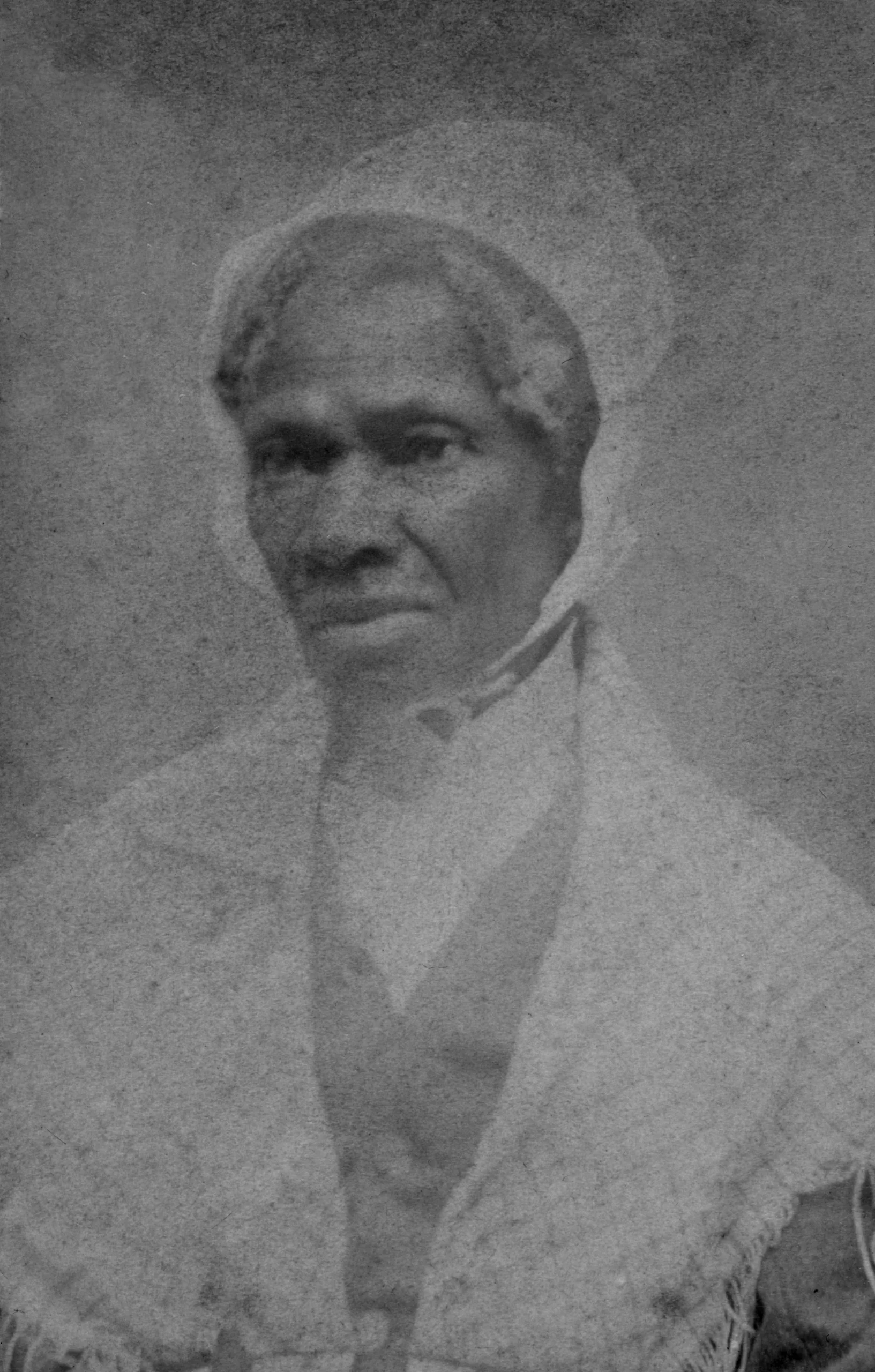
Sojourner Truth
abolitionist•women's rights activist•evangelist
Also known as: Isabella Baumfree, Isabella Bomefree, Isabella Van Wagenen
Birthday
c. 1797
Birth Sign
Aquarius
Birthplace
Swartekill, New York
Age
Died at 86
Height
6 ft 0 in (183 cm)
About
Sojourner Truth was an American abolitionist and women's rights activist born into slavery around 1797. Born Isabella Baumfree in Swartekill, New York, she escaped bondage in 1826 with her infant daughter and later secured a historic legal victory by suing for the return of her son Peter. She adopted the name Sojourner Truth in 1843 following a spiritual calling and dedicated the rest of her life to traveling as an itinerant preacher and lecturer.
Her career peaked during the mid-nineteenth century when she became a central figure in both the abolitionist and suffrage movements. She is best known for her extemporaneous speech delivered at the Ohio Women's Convention in Akron in 1851. While popular history often cites this moment as Ain't I a Woman?, contemporary accounts suggest her delivery differed from the dialect printed in later newspapers. Truth used her platform to advocate for land grants for freedmen and recruited Black men for the Union Army during the Civil War.
She remained active in social reform until her death on November 26, 1883, in Battle Creek, Michigan. Her legacy endures as a symbol of resilience and intersectionality, bridging the eras of slavery and Reconstruction. A memorial bust stands in Emancipation Hall within the U.S. Capitol Visitor Center, marking her as the first African American woman to receive such an honor there.
Early Life & Background
Isabella Baumfree was born around 1797 on the estate of Colonel Johannes Hardenbergh in the town of Swartekill, Ulster County, New York. As an enslaved child, she endured a harsh upbringing marked by multiple sales between the ages of nine and thirteen. She grew up speaking Dutch as her first language and did not learn English until after her escape to freedom. Before reaching adulthood, she married a fellow enslaved man named Robert, but their union held no legal weight under the law. They were separated when Robert was sold away, leaving Isabella to raise their children alone.
She bore five children: James, who died young; Elizabeth; Peter; Margaret; and Sophia. Isabella worked as a field hand and domestic servant throughout her early years. The pivotal moment of her pre-fame life occurred in 1826 when she walked away from her enslaver, John Dumont, taking only her baby daughter Sophia. This act of defiance set the stage for her future legal battles. In 1828, she successfully sued a white man to recover her son Peter, becoming the first Black woman in the United States to win such a case against a white man.
Career Growth
Truth's career evolved from a fugitive seeking legal justice to a national icon of moral authority. After escaping slavery in 1826, she achieved a landmark victory in 1828 when she won the court case Baumfree v. Dumont to recover her son Peter. In 1843, she changed her name to Sojourner Truth following a religious conversion and began her career as an itinerant speaker. She joined the Northampton Association of Education and Industry in Massachusetts in 1844, a utopian community focused on abolition and gender equality.
In 1850, she published her autobiography, The Narrative of Sojourner Truth, written with Olive Gilbert, becoming one of the first African American women to publish a book. The following year, she delivered her most famous extemporaneous speech at the Women's Convention in Akron, Ohio. During the Civil War, she actively recruited African American men for the Union Army and advocated for land grants for formerly enslaved people. In 1864, she met with President Abraham Lincoln to discuss the plight of Black refugees. She continued to travel extensively across the United States advocating for civil rights, temperance, and prison reform until her death in 1883.
Career Timeline
Public Image & Style
Sojourner Truth is portrayed as a figure of immense strength, moral clarity, and unyielding conviction. Media and historical narratives emphasize her transition from a victim of slavery to a victor of the human spirit. Her aesthetic is typically represented by the 1864 daguerreotype: a dignified, older woman in modest clothing, often with a shawl. She is remembered for her imposing physical presence, standing approximately six feet tall, which was rare for women of her era. Her public image centers on her role as a bridge between the abolitionist and women's suffrage movements.
Fame & Fandom (iFAMOUS Rankings)
iFANN has not yet collected fame data for this person. While she holds a place of profound historical significance, the engine has not yet gathered modern ranking metrics for her. Her influence extends far beyond traditional celebrity metrics, anchoring her status in the annals of American history rather than current pop culture charts.
There is no formal fandom name documented for Sojourner Truth in modern databases. Instead, her audience consists of historians, activists, educators, and civil rights advocates who engage with her legacy through annual commemorations and educational programs. Schools and universities use her story as a primary teaching tool for intersectionality. Modern movements often invoke her name and image in protests and marches for racial and gender justice. Organizations like the Sojourner Truth African Heritage Museum and various historical societies maintain her memory through exhibitions and events.
Interesting Facts and Legends
Sojourner Truth spoke Dutch as her first language and did not speak English fluently until after her escape, yet she became one of the most powerful orators in America. She chose the name "Sojourner Truth" after a vision she believed was sent by God, instructing her to travel and spread the truth. A scar on her forehead from a whip lash served as a badge of survival that she often pointed to when asked about her past. During the Civil War, she personally helped recruit over 5,000 Black men for the Union Army, a feat rarely attributed to a woman of her background. Contemporary accounts suggest the actual delivery of her famous speech differed significantly from the stereotypical dialect later printed by writers like Frances Gage.
Notable Quotes
“I have ploughed and planted, and gathered into barns, and no man could head me! And ain't I a woman?”
“Where did your Christ come from? From God and a woman! Man had nothing to do with Him.”
“The Lord has given me a voice, and I am going to use it.”
Family & Personal Life
Isabella was born into slavery and spent her early years on the estate of Colonel Johannes Hardenbergh. She had five children: James, Elizabeth, Peter, Margaret, and Sophia. Only three of her children, Elizabeth, Margaret, and Sophia, were freed by her mother before her own escape. She fought a legal battle to recover her son Peter, who had been illegally sold out of state. Her husband Robert was a fellow enslaved man whom she married informally before being separated from him when he was sold away. By the time of her death, she was widowed and had no surviving spouse.
Notable Connections
Olive Gilbert, Frederick Douglass, Frances Gage, Abraham Lincoln.
Relationships & Dating History
As a historical figure born into slavery in the late eighteenth century, Sojourner Truth did not have a dating history in the modern sense of romantic partnerships recorded in biographical databases. Her relationships were defined by the brutal realities of chattel slavery and her commitment to spiritual and social causes. She married a fellow enslaved man named Robert informally before being sold away from him. There is no record of children from this specific marriage, though she had children with others.
She had five children: James, Elizabeth, Peter, Margaret, and Sophia. Sources do not document any marriages or romantic partners after her escape. She dedicated her life entirely to her faith and activism. By 1883, she was widowed having lost her husband Robert decades prior and was single. No current partner exists as she passed away in 1883.
- SeparatedRobertc. 1815 - unknownInformal marriage to a fellow enslaved man; separated when he was sold away.
Death & Aftermath
Died
November 26, 1883 (aged 86)
Death Place
Unknown
Cause of Death
Unknown
Net Worth (Estate Value)
$0
iFANN Editorial Team estimate
As a person who died in 1883, Sojourner Truth does not have a personal net worth in 2026. Her estate value is effectively managed through the preservation of her legacy and intellectual property. Her legacy is managed by various historical societies, museums such as the Sojourner Truth African Heritage Museum in Sacramento, and the National Park Service. Revenue generated includes museum admissions, licensing of her image and quotes, book sales of her narrative, and educational programs.
Recent news in 2026 highlights funding challenges for the Sojourner Truth African Heritage Museum in Sacramento, indicating that while the institution is culturally invaluable, its financial standing is precarious without public support. The economic impact of her brand runs into millions annually through tourism at sites like Sojourner Truth State Park. The iFANN Editorial Team notes that while no aggregate estate value exists comparable to modern celebrities, the cultural economy surrounding her name remains robust.
Awards & Accolades
View 6 records, honours and achievementsKnown For
Ain't I a Woman?
1851 · Speaker
The Narrative of Sojourner Truth
1850 · Author
Keywords
Sources
Quick Facts
- Profession
- writer, abolitionist, women's rights activist
- Born
- c. 1797
- Birthplace
- Hurley, New York
- Died
- November 26, 1883
- Death Place
- Battle Creek, Michigan
- Gender
- Female
Personal Details
- Full Name
- Isabella Baumfree
- Height
- 6 ft 0 in (183 cm)
- Children
- James, Elizabeth, Peter, Margaret, Sophia
- Education
- None recorded; self-educated through life experience and religious study
Frequently Asked Questions
What was Sojourner Truth's birth name?
Did Sojourner Truth write Ain't I a Woman?
How many children did Sojourner Truth have?
When did Sojourner Truth die?
Was Sojourner Truth the first Black woman to sue a white man?
Similar People
Join the community
fans discussing