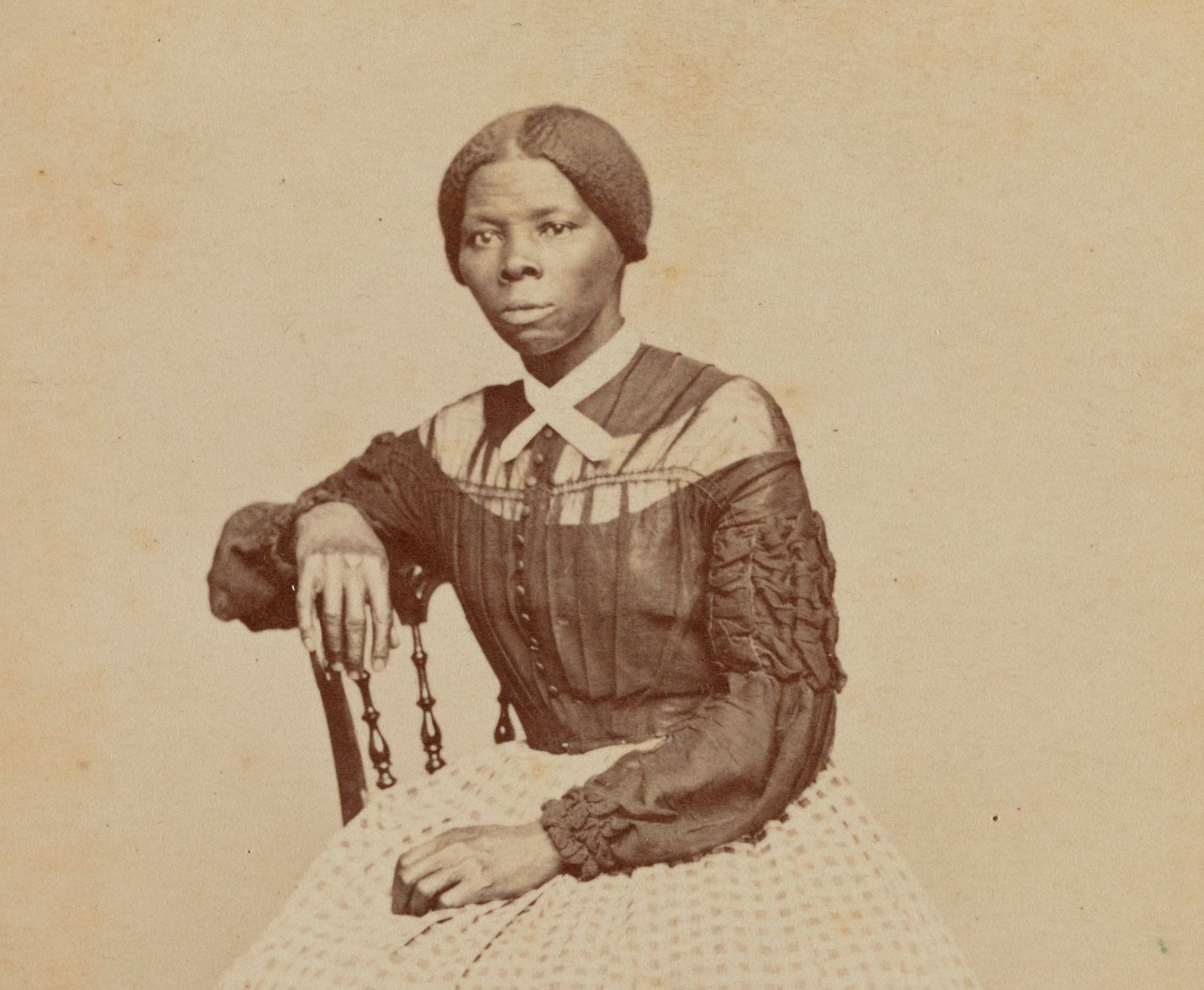
Harriet Tubman
 United States
abolitionist•social activist•nurse•scout•spy
Also known as: Araminta Ross, Minty, Moses
Birthday
March 10, 1822
Birth Sign
Pisces
Birthplace
Dorchester County, Maryland, USA
Age
Died at 91
Height
5 ft 0 in (152 cm)
About
Harriet Tubman was an American abolitionist and social activist who became one of the most courageous and revered figures in the nation's history. Born into slavery in Maryland, she escaped to freedom in the North as a young woman, but rather than remain safe she returned again and again to the South, risking recapture and death to guide enslaved family members and others to liberty through the secret network of safe houses known as the Underground Railroad. Her repeated missions, conducted with extraordinary nerve and ingenuity, earned her the nickname Moses. Tubman's bravery extended into the Civil War, when she served the Union not only as a nurse and cook but as a scout and spy, even helping to lead an armed raid that freed hundreds of enslaved people, a remarkable role for a woman of her time. In her later years she continued her activism, becoming a voice in the movement for women's suffrage and devoting herself to caring for the elderly and poor. She accomplished all of this while suffering lifelong effects from a head injury inflicted during her enslavement. A symbol of freedom, faith, and resistance, Tubman has been honored across American culture. She endures as one of the country's most inspiring and beloved historical figures.
Early Life & Background
Harriet Tubman was born Araminta Ross around March 1822 in Dorchester County, Maryland, to enslaved parents Harriet Green and Ben Ross. She was one of nine children. As a child, she suffered a severe head injury when an overseer threw a two-pound iron weight at another enslaved person, hitting her instead. This caused lifelong seizures, headaches, and vivid dreams, which she interpreted as divine premonitions. She was hired out to various masters, working as a nursemaid, trapper, and field hand, and endured brutal whippings and deprivation. She never received a formal education and remained illiterate her entire life. Her first steps toward freedom came in 1844 when she married John Tubman, a free Black man. The marriage did not change her own enslaved status. In 1849, fearing she would be sold further south after her enslaver died, she made a solo escape to Pennsylvania, traveling by night using the Underground Railroad. This pivotal moment transformed her; rather than remain safe, she resolved to return to Maryland to rescue her family, beginning her career as a conductor on the Railroad.
Career Growth
Harriet Tubman escaped slavery in 1849 and immediately began her work as a conductor on the Underground Railroad. Over the next decade, she made approximately 13 return trips to the South, rescuing around 70 enslaved people, including her parents, siblings, and niece. She famously stated, "I never lost a single passenger." In 1856, she rescued her three brothers, Ben, Robert, and Henry. In 1859, she bought a small farm in Auburn, New York, from abolitionist William H. Seward, which became a home for her family and aging parents. During the Civil War from 1862 to 1865, she served the Union Army as a nurse, cook, scout, and spy in South Carolina. In June 1863, she guided Colonel James Montgomery's raid on the Combahee River, leading three steamboats that liberated over 700 enslaved people. She was the first woman to lead an armed military operation in U.S. history. After the war, she returned to Auburn but was denied a military pension for decades. In 1896, she began speaking for women's suffrage alongside Susan B. Anthony and others. In 1903, she donated land to the African Methodist Episcopal Zion Church to establish the Harriet Tubman Home for the Aged, which opened in 1908. She was admitted to the Home in 1911, where she lived until her death.
Career Timeline
Public Image & Style
Harriet Tubman is almost always depicted wearing a headwrap, a plain dress, and a shawl, often carrying a rifle or a lantern. She is universally called Moses by her admirers and historians, a nickname earned for leading her people to freedom. Her public persona is that of a fearless, selfless, and divinely guided hero. She is a symbol of resistance, courage, and Black womanhood. Annual Harriet Tubman Day celebrations on March 10 and reenactments at historical sites keep her legacy alive. Her legacy is promoted by museums, schools, and activist groups using hashtags like #HarrietTubman and #BlackHistoryMonth. Media portrayals, including the 2019 film Harriet starring Cynthia Erivo, have cemented her image as one of America's greatest heroes. She has been honored with posthumous recognitions: a Liberty ship launched in 1944, U.S. Postal Service stamps in 1974 and 1995, a $1 coin in 1999, induction into the National Women's Hall of Fame in 2003, and a 2013 presidential proclamation of Harriet Tubman Day. In 2016, the Treasury announced she would replace Andrew Jackson on the $20 bill, though the redesign is still in progress. She was inducted into the U.S. Army Military Intelligence Corps Hall of Fame in 2022 and the Maryland Women's Hall of Fame in 2024. A statue was unveiled in Philadelphia's City Hall in 2025. She has been featured on the covers of Time, National Geographic, and Smithsonian magazines.
Fame & Fandom
Harriet Tubman holds no placement in the iFANN Global Top 1,000 rankings or any scope-specific lists as of August 2026. The iFANN Global Fame Engine evaluated her profile but determined she currently lacks a published rank within these specific metrics. While she commands immense historical reverence, she does not appear on the current leaderboards that track contemporary celebrity momentum. Her audience operates without a formal moniker; there is no documented collective name for those who champion her legacy. Unlike modern pop stars with dedicated fan clubs, Tubman's supporters engage through civic activism and educational advocacy rather than fandom rituals. No organized group refers to themselves by a specific title, nor are there recorded fan-funded projects like birthday billboards or streaming pushes. Instead, the energy surrounding her name manifests in political campaigns and legislative efforts. Recent initiatives include Senate pushes to feature her on the $20 bill and the unveiling of new monuments in Newark. These actions represent a highly organized public effort to elevate her status, driven by historians and activists rather than a traditional fanbase. Her cultural mythology remains anchored in verified milestones: the thirteen missions to rescue approximately seventy enslaved people and the Combahee River Raid where she led Union troops to free over seven hundred individuals. This engagement transcends entertainment, focusing on racial justice and historical commemoration.
Interesting Facts and Legends
Harriet Tubman suffered from narcolepsy-like episodes caused by a severe head injury sustained during slavery, sometimes falling asleep mid-conversation. She carried a pistol on her Underground Railroad missions and threatened to shoot any fugitive attempting to turn back, declaring, "You'll be free or die." A devout Christian, she prayed constantly and claimed God spoke to her directly. Though illiterate, she navigated using the North Star, moss on trees, and deep knowledge of swamps. During the Civil War, she treated soldiers with dysentery using herbal remedies. Tubman was a heavy pipe smoker, stood roughly five feet tall, and was described as small, wiry, and strong. She changed her name from Araminta Ross to Harriet around the time of her escape. She supported John Brown's raid on Harpers Ferry and corresponded with Frederick Douglass. A widely retold story claims she used the spiritual "Go Down Moses" as a coded signal for escapees. Historians note her legendary claim of never losing a passenger during her nineteen trips back into slave territory, rescuing about seventy people directly while assisting hundreds more indirectly. In 1863, she became the first woman in U.S. history to lead a military expedition, guiding Union troops in the Combahee River Raid to free more than seven hundred enslaved people. She spoke at the first meeting of the National Association of Colored Women in 1896 before dying of pneumonia on March 10, 1913, at age 91.
Notable Quotes
“I had reasoned this out in my mind: there was one of two things I had a right to, liberty or death; if I could not have one, I would have the other.”
“I never ran my train off the track, and I never lost a passenger.”
“Every great dream begins with a dreamer. Always remember, you have within you the strength, the patience, and the passion to reach for the stars to change the world.”
“I freed a thousand slaves. I could have freed a thousand more if only they knew they were slaves.”
Family & Personal Life
Harriet Tubman's parents were Ben Ross, a timber estimator, and Harriet Rit Green, who worked as a cook. She had eight siblings: Linah, Mariah Ritty, Soph, Robert, Ben, Rachel, Henry, and Moses. She never had biological children. She married John Tubman, a free Black man, in 1844; they separated in 1849 when she escaped north. In 1869, she married Nelson Davis, a former enslaved man and Civil War veteran who was 22 years younger. They adopted a daughter named Gertie in 1874. Nelson died of tuberculosis on October 14, 1888, and Tubman was widowed for the rest of her life. She lived in Auburn, New York, on a farm she purchased in 1859, which became a home for her aging parents and family.
Notable Connections
Harriet Tubman worked closely with Thomas Garrett, a Quaker abolitionist who helped fund her missions, and William Still, who recorded the stories of fugitives she brought north. She supported John Brown's raid on Harpers Ferry and corresponded with Frederick Douglass, who praised her work. She spoke at women's suffrage events alongside Susan B. Anthony. In 2019, Cynthia Erivo portrayed her in the film Harriet.
Relationships & Dating History
Harriet Tubman married John Tubman, a free Black man, in 1844. They separated in 1849 when she escaped slavery; he refused to join her and later remarried a free woman named Caroline. She never legally divorced him. On March 18, 1869, she married Nelson Davis, a former enslaved man and Civil War veteran who was 22 years younger. They adopted a daughter named Gertie in 1874. Nelson died of tuberculosis on October 14, 1888, leaving Tubman widowed for the rest of her life. As of her death in 1913, she had no further relationships.
- MarriedJohn Tubman1844 - 1849Married in 1844; separated when Tubman escaped slavery. John refused to join her and later remarried.
- MarriedNelson Davis1869 - 1888Married March 18, 1869. Adopted daughter Gertie in 1874. Nelson died of tuberculosis in 1888.
Death & Aftermath
Died
March 10, 1913 (aged 91)
Death Place
Unknown
Cause of Death
Unknown
A quiet stillness settled over Auburn, New York, as the community mourned a woman who had spent her life creating noise for others to hear. The funeral service at the AME Zion Church drew hundreds of mourners who lined the streets to honor the conductor of the Underground Railroad. Harriet Tubman passed away on March 10, 1913, within the home she had established for herself and her adopted daughter Gertie. She had lived in poverty for decades, relying on a small pension and the generosity of friends like Susan B. Anthony to survive her final years. Medical records from the era do not specify the exact illness that claimed her, though accounts suggest her health had been fragile since childhood injuries sustained during slavery.
Her body was laid to rest in a modest plot at the Fort Hill Cemetery, where she remained near the land she donated for the elderly. In the decades following her death, the United States government slowly began to recognize her contributions, eventually granting her a military pension posthumously. The legacy she built continued through the Harriet Tubman Home for the Aged, which cared for African American seniors long after she could no longer serve as its director. Modern tributes now include the planned redesign of the twenty-dollar bill, though political shifts have delayed this recognition.
Net Worth (Estate Value)
$10 Thousand
iFANN Editorial Team estimate
Harriet Tubman died in 1913 with very little personal wealth. She lived in poverty, supported by a pension of $20 per month and donations from supporters. Her estate at death was valued at less than $100. She has no posthumous estate that generates income; her image and legacy are in the public domain. The U.S. Mint's coin sales featuring her likeness generate revenue for the government, not her estate. Per iFANN's editorial analysis, her net worth is estimated at $10 Thousand as of 2026, reflecting the minimal value of her personal belongings and historical artifacts.
Awards & Accolades
View 15 records, honours and achievementsKnown For
Underground Railroad
1850-1860 · Conductor
Combahee River Raid
1863 · Leader and scout
Women's Suffrage Movement
1896-1913 · Activist and speaker
Keywords
Quick Facts
- Profession
- abolitionist, social activist, nurse, scout, spy
- Born
- +1822-03-10
- Birthplace
- Dorchester County, Maryland, USA
- Died
- +1913-03-10
- Death Place
- Auburn, New York, USA
- Gender
- Female
- Spouse
- John Tubman, Nelson Davis
- Height
- 5 ft 0 in (152 cm)
Personal Details
- Full Name
- Araminta Ross
- Height
- 5 ft 0 in (152 cm)
- Spouse
- John Tubman, Nelson Davis
- Children
- Gertie (adopted daughter)
Frequently Asked Questions
How old was Harriet Tubman when she died?
Did Harriet Tubman have kids?
Was Harriet Tubman married?
What was Harriet Tubman's real name?
Why is Harriet Tubman on the $20 bill?
Similar People
Join the community
fans discussing