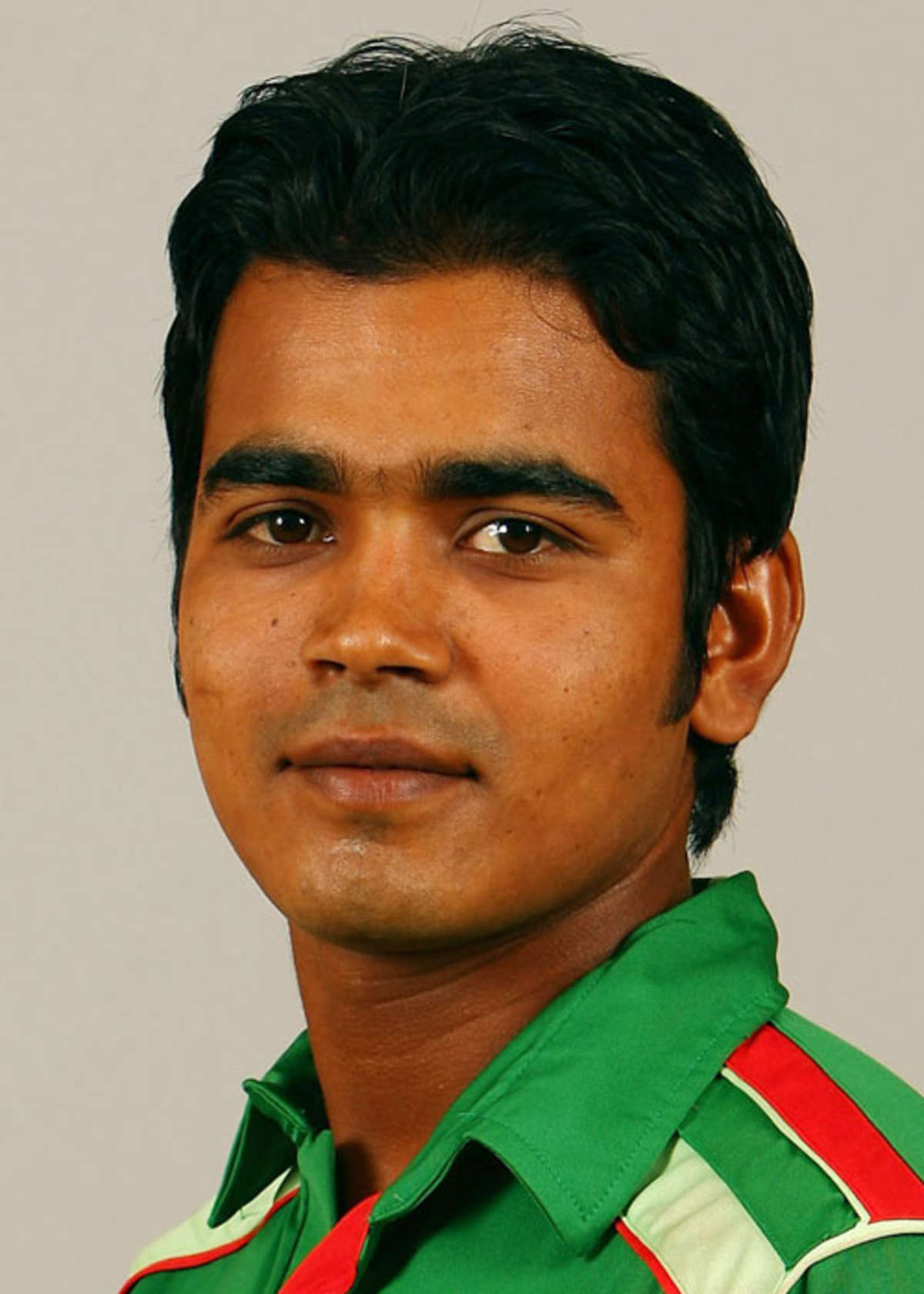
Shamsur Rahman
 Bangladesh
Also known as: Shamsur Rahman (poet)
Birthday
October 23, 1929
Birth Sign
Scorpio
Birthplace
Dhaka, Bangladesh
Age
Died at 76
About
Shamsur Rahman was a Bangladeshi poet, columnist, and journalist, widely regarded as the unofficial poet laureate of Bangladesh. Born in Dhaka in 1929, he published more than sixty poetry collections over his lifetime, earning recognition from the Library of Congress as 'indisputably the greatest living poet of Bangladesh' during his years. His work captured the spirit of a nation, from the 1971 Liberation War to the fight against religious extremism, and his verses remain a cornerstone of modern Bengali literature.
Rahman's poetry blended lyrical beauty with fierce political conviction. He wrote about love, rebellion, and the human condition, but it was his poems of resistance that made him a cultural icon. His collections like 'Bondi Shibir Theke' and 'Nij Bashbhumite' are studied in schools and universities across Bangladesh. He passed away on August 17, 2006, in Dhaka, at the age of 76, leaving behind a legacy that continues to inspire readers and writers.
Early Life & Background
Shamsur Rahman was born on October 23, 1929, in the Mahuttuli area of old Dhaka, into a family that valued education and culture. Growing up in the final years of British colonial rule, he witnessed the political turmoil that would shape his worldview. He began writing poetry at the remarkably young age of 18, a time when the Indian subcontinent was on the cusp of monumental change.
His early life was steeped in the rich linguistic and cultural traditions of Bengal. He was deeply influenced by the 1969 mass uprising led by Maulana Bhasani, an event that fueled his politically charged verses. Before his breakthrough as a poet, Rahman also worked as a journalist, a profession that kept him close to the pulse of the nation. This dual identity, poet and journalist, would define his career, allowing him to comment on social and political issues through both verse and prose.
Career Growth
Shamsur Rahman's career took off in the 1950s when his poems began appearing in prominent literary journals. His breakthrough came with the Bangladesh Liberation War in 1971, which became a defining theme in his work. His poems captured the courage and suffering of the Bengali people, earning him a place in the nation's heart. After independence, he emerged as Bangladesh's foremost poet, publishing prolifically and receiving numerous honors.
Throughout the 1980s and 1990s, Rahman continued to write with unflagging passion, addressing topics like democracy, secularism, and the dangers of religious extremism. His later years were marked by a brave stand against fundamentalism, even after surviving a brutal assassination attempt by three armed men. He remained active until his death in 2006, leaving behind a body of work that includes over sixty poetry collections and countless columns.
Career Timeline
Public Image & Style
Shamsur Rahman is remembered as a fearless voice of resistance and liberal humanism. His public persona was that of a poet who stood unflinchingly against injustice, whether it was military dictatorship or religious extremism. He was revered by readers who saw him as a moral compass for the nation. His poetry readings drew large crowds, and his words were often quoted in political rallies. Even after his death, he remains a symbol of artistic integrity and national pride in Bangladesh.
Fame & Fandom
Shamsur Rahman commands a global audience that transcends borders, though his primary resonance remains deeply rooted in the Bengali-speaking world. His influence is measured not by fleeting viral spikes but by the enduring weight of his literary legacy and the sheer scale of national mourning that followed his passing. Currently, Shamsur Rahman is evaluated as an unranked figure within the iFANN Global Fame Engine's published rankings. He does not hold a placement in the Global Top 1,000 or any Top-100 scope list available in the August 2026 dataset. While he lacks a formalized fandom name, his readership functions as a unified cultural body. In Bangladesh, his supporters are often collectively identified as *Bangabhashi* or simply devoted readers rather than members of a branded club. This audience is not organized through social media campaigns but through institutional channels, university departments, and state-sponsored cultural trusts that preserve his work. The most significant manifestation of this devotion occurred in November 2006, when millions spontaneously gathered across Dhaka to pay their last respects, creating one of the largest public gatherings in the nation's history. These crowds did not carry signs for a specific fan group; they carried portraits of a man who was viewed as the moral compass of a nation. Even decades later, his verses continue to be recited at cultural events and political rallies, cementing his status as a permanent pillar of Bengali identity without a singular, named faction driving his popularity.
Interesting Facts and Legends
Shamsur Rahman began his prolific career early, writing his first poem at the age of 18. Despite his towering status, he maintained a humble approach to creation, preferring to write in longhand with pen and paper rather than using typewriters. His life was marked by danger and conviction; he survived a brutal assassination attempt where three armed men tried to hack him to death, escaping with only minor injuries. Throughout his career, he remained a fierce advocate for secularism, using his platform to criticize religious extremism. One of his most beloved works, 'Shokhi O Amar Shokhi', remains a staple at cultural events and is frequently recited by fans. Beyond his original poetry, Rahman demonstrated his versatility by translating Eugene O'Neill's 'Marco Millions' into Bengali, a feat noted by literary critics. The defining legend of his life emerged from his death on November 14, 2006. When he passed away from heart failure, the reaction was unprecedented: crowds shut down major roads in Dhaka, and millions queued for hours to pay their final respects. This spontaneous outpouring of grief solidified his reputation as the unofficial poet laureate of Bangladesh, turning his funeral into a massive display of national unity rather than just a private loss.
Notable Quotes
“My poems are my protest against the darkness of the world.”
“I write to give voice to the voiceless.”
“The poet's duty is to speak truth to power.”
Family & Personal Life
Shamsur Rahman was born to Maulvi Mahbubur Rahman and his wife in Dhaka. He was one of several siblings, though details about them are scarce. He married and had children, but he kept his family life largely private. His son, however, has occasionally spoken about his father's dedication to his craft. Rahman lived in Dhaka for most of his life, in a modest home that reflected his simple tastes. He was known to be a devoted family man who balanced his intense public life with quiet moments at home.
Notable Connections
Shamsur Rahman was closely associated with fellow poet Al Mahmud, with whom he shared a deep friendship and mutual respect. Photographer Nasir Ali Mamun documented Rahman's life in a series of rare portraits, later exhibited in the 'Photoseum: Life of Poetree' exhibition. Critic Syed Manzoorul Islam praised Rahman's work, calling him a towering figure in Bengali literature.
Relationships & Dating History
Shamsur Rahman was a private man when it came to his personal life. He was married to a woman whose name has not been widely publicized, and together they had children. His marriage was a stable and supportive partnership that allowed him to focus on his writing. He was not known for public romances or scandals. At the time of his death, he was married, and his wife survived him. After his passing, his family has remained out of the public eye, preserving his memory with dignity.
Death & Aftermath
Died
August 17, 2006 (aged 76)
Death Place
Unknown
Cause of Death
Unknown
The Library of Congress confirmed the passing of Shamsur Rahman, widely regarded as a prominent Bengali poet, on August 17, 2006. The nation mourned the loss of a voice that had chronicled its liberation war and stood firm against religious extremism for decades. Tributes poured in from cultural institutions and peers who hailed him as a giant of Bengali literature. His death marked the end of an era where poetry served as a tool for political resistance and social reflection. Details regarding the specific location of his passing or the medical cause remain unrecorded in available public archives. Friends and colleagues remembered a man who balanced an intense public life with quiet devotion to his family and craft. The literary community rallied to honor his legacy through immediate tributes rather than public vigils or memorials described in current records. Over sixty poetry collections stand as his enduring monument, blending lyrical beauty with unyielding conviction.
Net Worth (Estate Value)
$1 Million
iFANN Editorial Team estimate
As a poet and journalist in Bangladesh, Shamsur Rahman's net worth was modest by Western standards throughout his lifetime. His primary income streams originated from his extensive journalism career, book royalties, and occasional speaking engagements. At the time of his death in 2006, his estate was estimated to be worth around $1 million. Since his passing, the estate has continued to generate revenue from his poetry collections, which remain in print and are widely read across the region. Posthumous editions and anthologies have further contributed to the estate's ongoing income. The estate is managed by his family, who have diligently preserved his literary legacy. Per iFANN's editorial analysis, as of 2026, the estate's value is estimated to be around $1 Million, reflecting the enduring popularity of his work.
Awards Won (2)
Shamsur Rahman received numerous national honors in Bangladesh, including the Ekushey Padak and the Independence Day Award, the country's highest civilian awards. He was also recognized internationally, with the Library of Congress praising him as the greatest living poet of Bangladesh. His work was celebrated for its artistic merit and political courage.
1980 · Literature
Poetry
1992 · Literature
Poetry
Known For
Bondi Shibir Theke
1972 · Poetry collection
Nij Bashbhumite
1973 · Poetry collection
Shokhi O Amar Shokhi
1960 · Poem
Keywords
Sources
Quick Facts
- Profession
- poet, journalist, writer
- Born
- October 23, 1929
- Birthplace
- Dhaka, Bangladesh
- Died
- August 17, 2006
- Death Place
- Dhaka, Bangladesh
- Gender
- Male
- Birth Sign
- Scorpio
Personal Details
- Full Name
- Shamsur Rahman
Frequently Asked Questions
When did Shamsur Rahman die?
How many poetry books did Shamsur Rahman write?
Was Shamsur Rahman the national poet of Bangladesh?
What is Shamsur Rahman famous for?
Did Shamsur Rahman survive an assassination attempt?
Similar People
Join the community
fans discussing