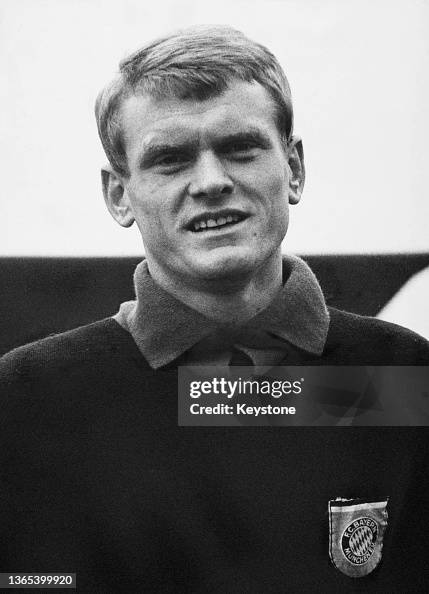
Sepp Maier
 Germany
association football player•goalkeeper coach•association football coach
Also known as: Die Katze von Anzing
Birthday
February 28, 1944
Birth Sign
Sagittarius
Birthplace
Metten, Germany
Age
82 years old
Height
6 ft 1 in (185 cm)
About
Sepp Maier is a German former professional footballer who played as a goalkeeper for Bayern Munich and the West Germany national team. Widely regarded as one of the greatest goalkeepers in history, he earned the nickname "Die Katze von Anzing" for his extraordinary reflexes and agility. Maier spent his entire 17-year club career at Bayern Munich, making 709 appearances — the club record until Thomas Müller surpassed it in 2024. He won three European Cups, four Bundesliga titles, and the 1974 World Cup with West Germany. Known for his calm demeanor and quick humor, Maier remains a beloved figure in German football. Today, he lives quietly in Anzing, occasionally appearing at Bayern legends events.
Early Life & Background
Maier was born in Metten, Lower Bavaria, during World War II and grew up in the small town of Anzing, near Munich. His father was a carpenter, and the family lived modestly. At age eight, he joined the youth team of TSV Haar, where his talent as a goalkeeper first emerged. He later moved to Bayern Munich's youth academy. To support himself, he completed an apprenticeship as a toolmaker in 1964. His first-team debut came in 1962, but he became the starting goalkeeper only in 1966 after a series of strong performances in the Regionalliga, then Germany's second tier.
Career Growth
Maier's breakthrough came in the mid-1960s as Bayern Munich rose to prominence. He won his first major trophy, the DFB-Pokal, in 1967, followed by the European Cup Winners' Cup the same year. In 1969, he claimed his first Bundesliga title. The pinnacle came in 1974: he won the European Cup, defeating Atlético Madrid in a replay final, and then the FIFA World Cup with West Germany, beating the Netherlands 2–1. He added two more European Cups in 1975 and 1976, and the 1976 European Championship, where he saved two penalties in the final shootout. After retiring in 1979 due to a car accident, he served as a goalkeeper coach for Bayern (1979–1994) and Germany (1988–2004).
Career Timeline
Public Image & Style
Maier is celebrated as a symbol of Bayern Munich's golden era in the 1970s. His playing style combined acrobatic saves with a calm demeanor, earning him the "cat" moniker. Fans affectionately call him "Sepp" or "Die Katze." The media portrays him as a jovial, humble legend. He has no official fandom name but is revered in Bavarian football culture. His autobiography and interviews reflect a self-deprecating tone, endearing him to fans.
Fame & Fandom (iFAMOUS Rankings)
Sepp Maier currently holds no placement in the iFANN Global Top 1,000 or any scope-specific ranking list. The iFANN Global Fame Engine has evaluated his standing as of August 2026 and determined that he does not occupy a ranked position among the world's most famous individuals at this time. While his competitive record remains unmatched in German football history, his current fame profile reflects the status of a retired legend rather than an active global celebrity. His fanbase lacks a formal, documented name, with supporters generally identifying through their allegiance to Bayern Munich or West Germany rather than a specific movement dedicated solely to him. There are no records of organized fan campaigns, chart pushes, or fan-funded projects unique to his personal legacy. Institutional recognition persists, such as birthday acknowledgments from the club, but these represent standard heritage protocols rather than grassroots rituals. The absence of a named fandom underscores his transition into historical iconography, where reverence is maintained through general club culture rather than active, organized engagement. His influence endures through the collective memory of the 1970s golden era, yet without a distinct community structure, his modern digital footprint remains diffuse compared to contemporary stars.
Interesting Facts and Legends
Maier earned the nickname "Die Katze von Anzing" after a local journalist coined the phrase following a match in 1966. He famously wore a flat cap during matches throughout the 1970s, establishing it as his trademark look. A severe car accident in July 1979 resulted in a collapsed lung and broken ribs, forcing his retirement at age 35. Over his entire professional career, he never received a red card. In a moment often cited by historians, he saved two penalties during the shootout of the 1976 European Championship final. Beyond statistics, his legend includes the story of his uncanny ability to read penalty takers, a skill that became central to the "Cat" moniker. Fans still retell accounts of his calm demeanor under pressure, epitomized by his own quip that a keeper should give off a sense of calm without falling asleep while doing so. His longevity is legendary, having made 709 appearances for Bayern Munich until Thomas Müller surpassed the record in 2024. These verified events form the core of his mythology, distinguishing him as a player whose career was cut short by misfortune rather than a decline in form.
Notable Quotes
“A keeper should give off a sense of calm, and not fall asleep while doing so.”
“I was never the best, but I was always there.”
“The car accident was the end of my career, but not the end of my life. I was lucky to survive.”
Family & Personal Life
Maier married his wife, Margit, in the 1970s. They met through mutual friends in the Munich area. The couple has two children: a son, Michael (born 1972), and a daughter, Susanne (born 1975). Maier is known for being private about his family life. The family lives in Anzing, Bavaria, in a home valued at around €1 million. Maier's father was a carpenter, and he grew up with modest means.
Notable Connections
Maier's closest associates include Franz Beckenbauer, Gerd Müller, and Uli Hoeneß, his teammates at Bayern and West Germany. He also played alongside Paul Breitner, Karl-Heinz Rummenigge, and Jupp Heynckes. All are iconic figures in German football.
Relationships & Dating History
Maier's romantic life has been largely private, with only one confirmed long-term relationship. He married Margit (full name not widely publicised) in the 1970s after meeting through mutual friends in the Munich area. The couple has two children: Michael (born 1972) and Susanne (born 1975). Their marriage has been stable, with no public reports of separation or divorce. As of 2026, Maier is still married to Margit. There are no confirmed reports of any other romantic relationships.
- MarriedMargit Maier1970 - presentCurrentMet through mutual friends in Munich; married in the 1970s; two children together.
Salary, Net Worth In 2026
$5.5 Million
iFANN Editorial Team estimate
Per iFANN's editorial analysis, Sepp Maier's net worth is estimated at $5.5 million as of 2026. During his playing career spanning the 1960s to 1979, he earned modest wages, estimated at €200,000–€300,000 per year at his peak. As a goalkeeper coach for Bayern and Germany, he earned an estimated €150,000–€200,000 annually. Post-retirement, he secured endorsement deals with Adidas and a local Bavarian brewery. He owns a home in Anzing, Bavaria, valued at around €1 million. His autobiography "Die Katze von Anzing" (1995) and other publications generate ongoing royalties. He also receives a pension from the German Football Association (DFB) estimated at €50,000 per year. No significant business ventures are publicly known.
Awards Won (16)
Maier won three European Cups, four Bundesliga titles, the 1974 World Cup, and the 1976 European Championship. Individually, he was named German Footballer of the Year three times (1975, 1977, 1978) and was included in the FIFA 100 list in 2004.
1974 · Champion
Bayern Munich
1973 · Champion
Bayern Munich
1972 · Champion
Bayern Munich
1969 · Champion
Bayern Munich
1971 · Winner
Bayern Munich
1969 · Winner
Bayern Munich
1967 · Winner
Bayern Munich
Known For
Bayern Munich
1962 · Goalkeeper
West Germany National Team
1966 · Goalkeeper
1974 FIFA World Cup
1974 · Goalkeeper
Keywords
Quick Facts
- Profession
- association football player, goalkeeper coach, association football coach
- Born
- February 28, 1944
- Birthplace
- Metten, Germany
- Gender
- Male
- Height
- 6 ft 1 in (185 cm)
- Nickname
- Die Katze von Anzing
- Number of children
- 2
Personal Details
- Full Name
- Josef Dieter Maier
- Height
- 6 ft 1 in (185 cm)
- Spouse
- Margit Maier
- Children
- 2 (Michael, Susanne)
Frequently Asked Questions
Is Sepp Maier still alive?
What is Sepp Maier's net worth in 2026?
Why did Sepp Maier retire early?
What records does Sepp Maier hold?
How many children does Sepp Maier have?
Similar People
Join the community
fans discussing