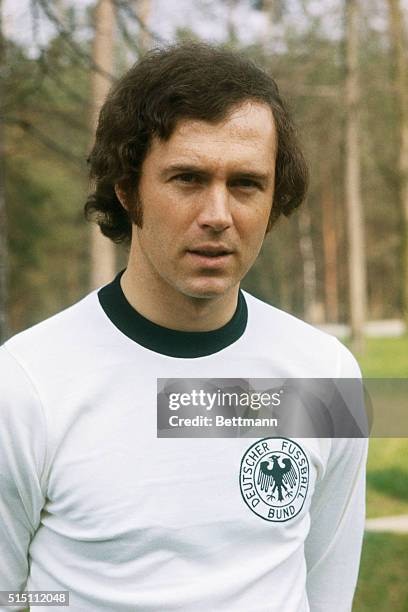
Franz Beckenbauer
 Germany
association football player•association football coach•professional athlete
Also known as: Der Kaiser, Franz Anton Beckenbauer
Birthday
September 11, 1945
Birth Sign
Virgo
Birthplace
Munich, Germany
Age
Died at 78
Height
5 ft 11 in (181 cm)
About
Franz Beckenbauer was a German footballer, manager, and administrator universally regarded as one of the greatest and most influential figures in the history of the game. Nicknamed der Kaiser, the Emperor, for his elegant authority on the pitch, he is widely credited with redefining defending by perfecting the role of the attacking sweeper, or libero, a center-back who not only stopped opponents but initiated attacks, gliding forward with the ball and dictating play from the back. His vision and composure transformed how the position was understood.
Beckenbauer's list of honors is staggering. He captained West Germany to victory at the 1974 World Cup and a European Championship, won numerous titles with Bayern Munich, including multiple European Cups, and claimed the Ballon d'Or twice. He then achieved the rare distinction of winning the World Cup again as a manager, guiding West Germany to the title in 1990, joining a tiny group of men to triumph as both player and coach. After his playing and coaching days, he remained a towering presence in football administration, notably helping bring the World Cup to Germany. His later years were touched by controversy over that bid, but it did little to diminish his standing. Beckenbauer, who died in 2024, is remembered as a true great and an icon of German football.
Early Life & Background
Beckenbauer grew up in the working-class Munich district of Giesing, in a modest household above a post office where his father worked. Post-war Germany was austere, and young Franz often played football with a rag ball in the streets and vacant lots. He joined SC Munich '06 at age nine in 1954, then moved to FC Bayern Munich's youth system in 1959 at 13. Initially a midfielder, he transitioned to defense during his youth. A pivotal moment came when he chose Bayern over 1860 Munich after a youth tournament altercation, a decision that shaped his entire career. Before football took over, he completed an apprenticeship as an insurance salesman, a fallback his parents insisted upon. He made his senior debut for Bayern in 1964 in the Regionalliga Süd, and by 1965 he had broken into the first team and earned his first cap for West Germany.
Career Growth
Beckenbauer's breakthrough came in 1966 when he scored his first international goal at the World Cup in England, helping West Germany reach the final and earning the Young Player of the Tournament award. He won his first European trophy with Bayern Munich in 1967, the European Cup Winners' Cup. The 1970s were his imperial decade: he captained West Germany to the 1972 European Championship and the 1974 World Cup on home soil, defeating the Netherlands 2-1 in the final. At club level, Bayern Munich won three consecutive European Cups from 1974 to 1976, and he collected Ballon d'Or awards in 1972 and 1976. He moved to the New York Cosmos in 1977, winning three NASL titles alongside Pelé, then returned to Germany to win a Bundesliga title with Hamburger SV in 1982 before retiring as a player in 1983. As a manager, he led West Germany to the 1990 World Cup title, becoming one of only three men to win the World Cup as both player and coach. He later managed Bayern Munich to a Bundesliga title and a UEFA Cup, and served as president of the club from 1994 to 2009.
Career Timeline
Public Image & Style
Beckenbauer's public persona was defined by his cool, commanding elegance on the pitch, which earned him the regal nickname Der Kaiser. Off the field, he was known for his charisma, sharp suits, and media savvy. German fans revered him as a national hero, especially after captaining the 1974 World Cup win and managing the 1990 triumph. His later years saw some criticism over his role in the 2006 World Cup bid controversy, but his overall legacy remained untarnished. He maintained a dignified, statesmanlike image, rarely engaging in public feuds. His social media presence was minimal but dignified, with his Instagram account now memorialized. Fans often refer to him simply as 'the Emperor,' and his name is synonymous with German football excellence.
Fame & Fandom (iFAMOUS Rankings)
The fanbase surrounding Franz Beckenbauer is defined not by a specific organizational name or modern digital campaigns, but by a deep, institutionalized reverence that transcends typical sports fandom. While casual supporters and die-hard adherents of Bayern Munich and the German national team simply call him "Der Kaiser," this moniker functions as both a nickname and a title of absolute authority within the sport's cultural lexicon. Following his passing in 2024, the global reaction shifted from adoration to state-level mourning, with fans gathering at the Allianz Arena and his former homes to leave flowers and jerseys, effectively turning public spaces into impromptu shrines. This veneration is further cemented through the annual Franz Beckenbauer Supercup, a living ritual now held on international stages like the Amalfi Coast to honor his legacy. The narrative arc of Beckenbauer, from a boy from Munich to the Emperor of Football, has become a foundational text in sports culture, ensuring new generations learn his stories long after his playing days ended. His status as a unifying figure for post-war Germany remains unmatched, with media productions and historical features keeping his mythological status alive for all who follow the game. According to the iFANN Global Fame Rankings, he holds steady positions among the most recognized figures globally: the 19th most famous person in Germany and the 24th most famous person from Germany.
Interesting Facts and Legends
Franz Beckenbauer's nickname Der Kaiser originated after a 1969 photo in which he posed next to a bust of Austrian Emperor Franz Joseph. He was a pioneer of the attacking sweeper role, often carrying the ball into midfield, and never received a red card in his entire playing career. A talented tennis player, he occasionally competed in celebrity tournaments, while his love for golf led him to own a stake in a course. He appeared as himself in the 1979 film The Other Side of Midnight and was the first German to win the Ballon d'Or twice. His son Stephan played professional football but died of a brain tumor in 2015 at age 46. Beyond these facts, legends surround his 1970 World Cup quarter-final against Italy, where folklore claims he played the second half with a dislocated shoulder that he repositioned himself mid-game to prove his mental superiority. Another iconic story involves his calm demeanor under pressure, with anecdotes circulating of him walking onto the pitch late or looking bored before turning a match with a single pass. Fans also retell tales of a legendary slap he allegedly delivered to assert discipline at Bayern Munich, though details vary. These stories blend verified history with popular folklore, elevating him to a semi-divine status in football mythology.
Notable Quotes
“I am the emperor, and I do what emperors do.”
“The most important thing in football is the team. Without the team, you are nothing.”
“I never made a mistake in my life. Well, maybe one or two, but I never repeated them.”
“Winning the World Cup as captain and as manager, that is something very special.”
“I was lucky to be born with a talent for football. I used it as well as I could.”
“The libero is the most beautiful position in football. You see everything in front of you.”
Family & Personal Life
Beckenbauer's father, Franz Sr., was a postal worker, and his mother, Antonie, was a homemaker. He had one brother, Walter, who worked as a baker. Beckenbauer married three times: first to fashion model Ingrid Gronemann in 1966, with whom he had three sons, Franz (b. 1968), Stephan (b. 1969), and Michael (b. 1972). After divorcing Ingrid in 1990, he married Diana Sandmann, a businesswoman, and had a son, Joel Maximilian (b. 1996). They divorced in 2003. In 2005, he married Heidi Burmester, a former DFB secretary, who survived him. He also had two children from an extramarital affair: daughter Francesca Antonie (b. 2000) and son Noah Gabriel (b. 2002), whom he supported financially. Beckenbauer lived in Munich, Salzburg, and Kitzbühel, and owned a home in each city.
Notable Connections
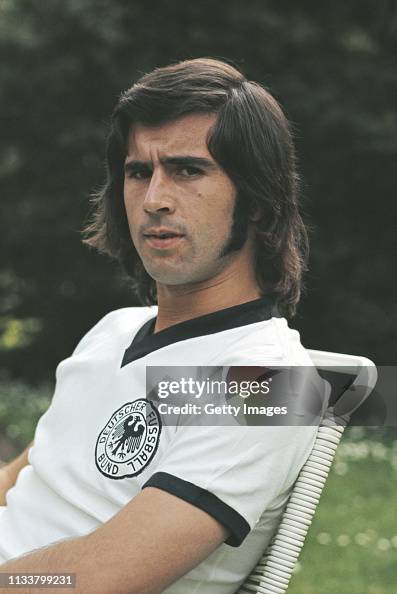
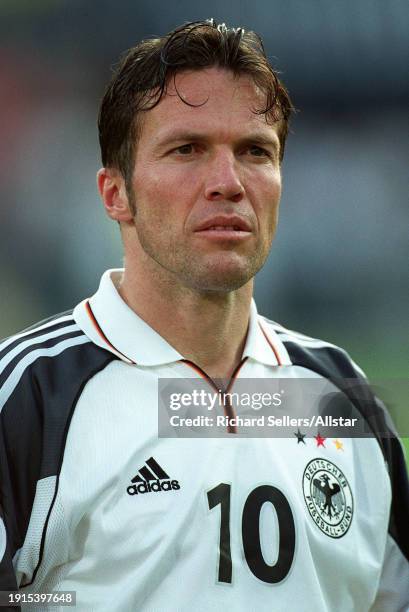
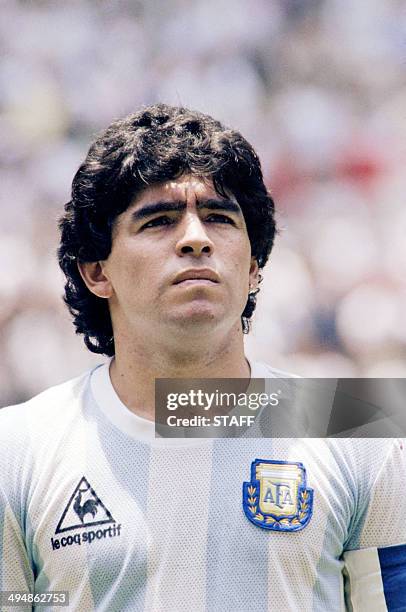
Beckenbauer is often compared to Pelé and Diego Maradona as one of football's all-time greats. He played alongside Pelé at the New York Cosmos and faced him on the international stage. As a manager, he succeeded Jupp Derwall with West Germany. His Bayern Munich teammates included Gerd Müller, Sepp Maier, and Paul Breitner. He managed Lothar Matthäus, who became a close friend. Beckenbauer's rivalry with Dutch legend Johan Cruyff defined the 1974 World Cup final. Off the pitch, he worked closely with FIFA president Sepp Blatter during the 2006 World Cup bid.
Relationships & Dating History
Beckenbauer married three times. His first wife was Ingrid Gronemann, a fashion model, whom he wed in 1966. They had three sons: Franz, Stephan, and Michael. The marriage ended in divorce in 1990 after Beckenbauer's extramarital affair became public. He married his second wife, businesswoman Diana Sandmann, in 1990, shortly after the divorce. They had one son, Joel Maximilian, before divorcing in 2003. His third marriage was to Heidi Burmester, a former DFB secretary, in 2005. They remained married until his death in 2024. Additionally, Beckenbauer had an extramarital affair in the late 1990s with Nicole, a woman significantly younger, resulting in two children: Francesca Antonie (b. 2000) and Noah Gabriel (b. 2002). He publicly acknowledged paternity and supported them financially. At the time of his death, he was married to Heidi.
- MarriedIngrid Gronemann1966 - 1990First wife, fashion model; had three sons.
- MarriedDiana Sandmann1990 - 2003Second wife, businesswoman; had one son.
- MarriedHeidi Burmester2005 - 2024CurrentThird wife, former DFB secretary; remained married until his death.
- DatedNicole1998 - 2002Extramarital affair; had two children together.
Death & Aftermath
Died
January 7, 2024 (aged 78)
Death Place
Unknown
Cause of Death
Unknown
Net Worth (Estate Value)
$120 Million
iFANN Editorial Team estimate
As of 2026, Franz Beckenbauer's estate is valued at approximately $120 Million per iFANN's editorial analysis. The bulk of his wealth came from his playing career, with peak salaries at Bayern Munich, New York Cosmos, and Hamburger SV. He earned substantial endorsement income from Adidas, Deutsche Telekom, Volkswagen, and Coca-Cola, among others. Post-retirement, he generated significant revenue as a television pundit for ZDF and Sky Germany, and through his role as president of the 2006 World Cup organizing committee. His business ventures included a marketing agency, real estate holdings in Munich, Salzburg, and Kitzbühel valued at $15–25 million, and stakes in a hotel and golf course. Since his death in 2024, the estate has continued to earn from documentary rights, video game licensing, and Bayern Munich merchandise featuring his likeness. The estate is managed by his son Joel Maximilian Beckenbauer and legal representatives.
Awards Won (12)
Beckenbauer won two Ballon d'Or awards (1972, 1976) and was named German Footballer of the Year four times. He received the FIFA Presidential Award in 2007 and the UEFA President's Award in 2013. He was inducted into the German Football Hall of Fame in 2000 and the German Sports Hall of Fame. He also earned the FIFA Order of Merit and the Order of Merit of the Federal Republic of Germany.
1976 · European Footballer of the Year
Bayern Munich / West Germany
1972 · European Footballer of the Year
Bayern Munich / West Germany
1976 · Player of the Year
Bayern Munich
1974 · Player of the Year
Bayern Munich
1968 · Player of the Year
Bayern Munich
1966 · Player of the Year
Bayern Munich
Known For
World Cup Winner (Player)
1974 · Captain, West Germany
World Cup Winner (Manager)
1990 · Manager, West Germany
European Cup Winner
1974 · Player, Bayern Munich
European Cup Winner
1975 · Player, Bayern Munich
European Cup Winner
1976 · Player, Bayern Munich
Ballon d'Or Winner
1972 · Player
Ballon d'Or Winner
1976 · Player
Keywords
Quick Facts
- Profession
- association football player, association football coach, professional athlete
- Born
- +1945-09-11
- Birthplace
- Richard-Wagner-Straße 19 (München)
- Died
- +2024-01-07
- Death Place
- Salzburg
- Gender
- Male
- Birth Sign
- Virgo
Personal Details
- Full Name
- Franz Anton Beckenbauer
- Height
- 5 ft 11 in (181 cm)
- Spouse
- Heidi Beckenbauer (née Burmester)
- Children
- Franz (b. 1968), Stephan (b. 1969, d. 2015), Michael (b. 1972), Joel Maximilian (b. 1996), Francesca Antonie (b. 2000), Noah Gabriel (b. 2002)
Frequently Asked Questions
How old was Franz Beckenbauer when he died?
What is Franz Beckenbauer's net worth in 2026?
Did Franz Beckenbauer win the World Cup as a manager?
Why was Franz Beckenbauer called Der Kaiser?
How many Ballon d'Or awards did Franz Beckenbauer win?
Social Media
Similar People
Join the community
fans discussing