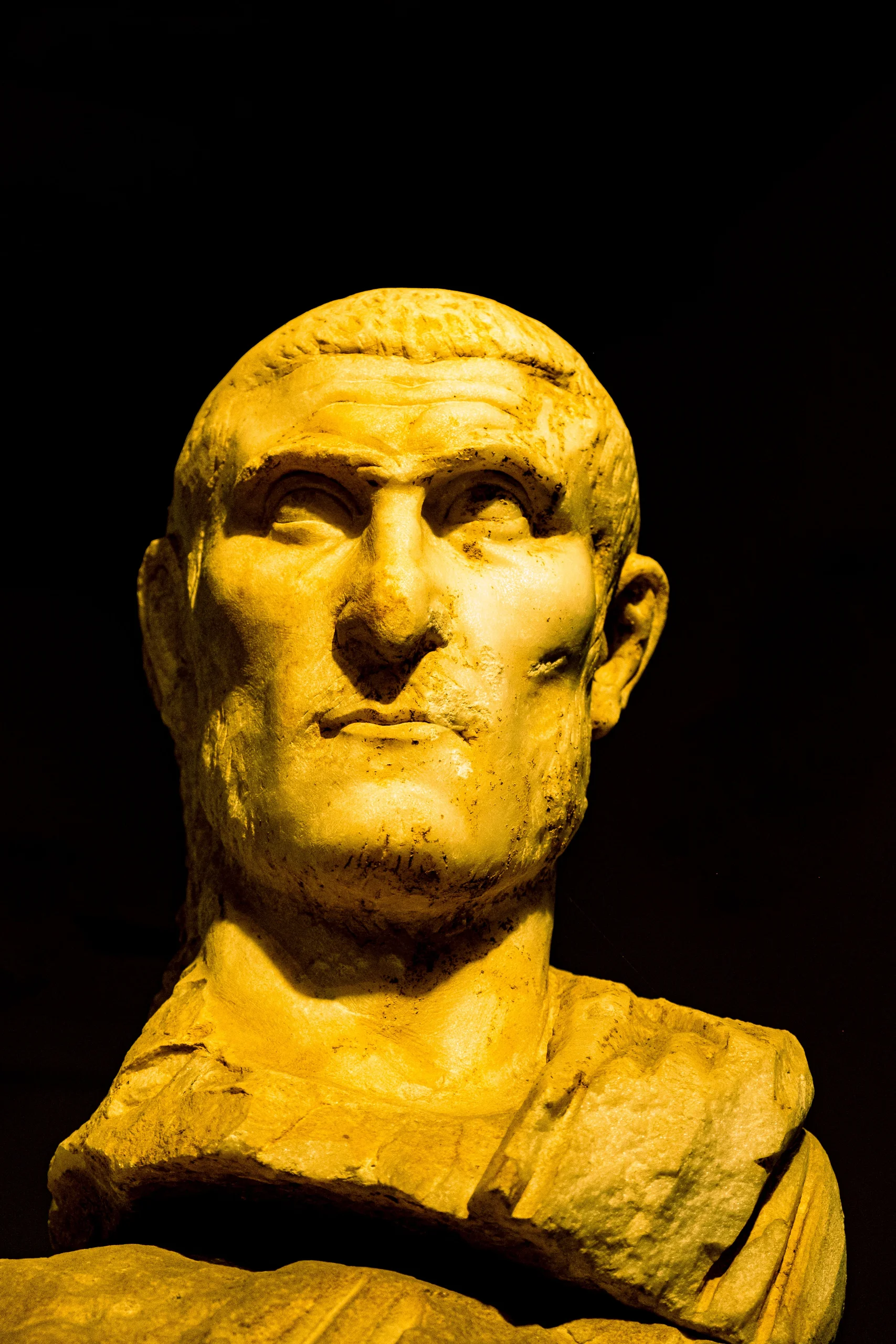
Seneca
philosopher•statesman•dramatist
Also known as: Lucius Annaeus Seneca, Seneca the Younger, Seneca of Cordoba
Birthday
4 BC
Birth Sign
Capricorn
Birthplace
Corduba, Hispania
Age
Died at 2690
About
Lucius Annaeus Seneca the Younger was a preeminent Stoic philosopher, statesman, orator, and dramatist of Ancient Rome. Born in the Roman colony of Corduba in Hispania Baetica, he served as one of the most powerful men in the Empire during the early reign of Emperor Nero. His philosophical writings constitute the most extensive surviving body of material on ancient Stoicism, while his tragedies heavily influenced later European drama.
Seneca's career spanned from his early exile to Corsica to his rise as Nero's chief advisor and consul. After falling out of favor with the emperor, he was forced to commit suicide in 65 AD following accusations of involvement in the Pisonian conspiracy. His calm acceptance of death has become a defining cultural mythos, illustrating the ideal of facing mortality with rationality. Today, he is remembered not just for his political power but for his enduring contributions to literature and ethical thought.
Early Life & Background
Lucius Annaeus Seneca was born around 4 BC in the city of Corduba, located in the Roman province of Hispania Baetica, which is modern-day Spain. He came from a prominent family; his father was Marcus Annaeus Seneca, a renowned rhetorician known as Seneca the Elder. His mother was Helvia, and he had an elder brother named Lucius Junius Gallio Annaeanus, often called Gallio, and a younger sister, Annaea Paulina. The family tradition of rhetoric and philosophy deeply shaped his early years.
Seneca was sent to study in Alexandria, Egypt, under the tutelage of the Stoic philosopher Attalus and the Epicurean philosopher Sotion. Later, he traveled to Athens to further his philosophical training, immersing himself in the intellectual currents of the time. These formative experiences laid the groundwork for his future career as a writer and thinker. Before achieving fame, he faced significant adversity when Emperor Claudius exiled him to the island of Corsica in 41 AD on charges of adultery with Julia Livilla, the sister of Caligula. This exile lasted eight years, during which he composed important consolatory works that would eventually help secure his recall to Rome.
Career Growth
Seneca's return to Rome in 49 AD marked the beginning of his ascent to the highest echelons of power. Agrippina the Younger summoned him to serve as the tutor and advisor to her young son, Nero. Upon Nero's accession to the throne in 54 AD, Seneca became one of the most influential figures in the Empire, serving as consul and effectively co-ruling alongside the Praetorian Prefect Sextus Afranius Burrus. Their administration is historically noted as the "Quinquennium Neronis," a period characterized by competent governance and relative stability.
As a playwright, Seneca flourished during this time and after his retirement, producing major tragedies like Medea, Thyestes, and Hercules Furens. These plays, written in the distinctive Senecan tragedy style, heavily influenced Elizabethan and Jacobean drama. As a philosopher, his prose works, including the Moral Letters to Lucilius and treatises like On the Shortness of Life, explore moral issues and the nature of time. By 62 AD, his relationship with Nero deteriorated, leading to his request for retirement due to poor health. Though he initially stepped back from public life, he remained a symbolic figure until his forced suicide in 65 AD.
Career Timeline
Public Image & Style
Seneca is portrayed as the archetype of the wise, virtuous man who navigates the complexities of power without losing his moral compass. Media and historical accounts depict him as a model of resilience and wisdom, often quoted in contexts of stress management and ethical leadership. His physical appearance is described in ancient sources as frail and weak, yet his mental robustness stood in stark contrast to his body. This duality has cemented his image as a man whose strength lay entirely in his intellect and spirit rather than his physical form.
Fame & Fandom (iFAMOUS Rankings)
iFANN has not yet collected fame data for this person. While there is no modern fandom name or organized fanbase in the traditional sense, Seneca commands a dedicated readership of students of philosophy, historians, and enthusiasts of classical literature. His audience engages with his work through academic conferences, online forums discussing Stoicism, and the continued popularity of his books. The community around his legacy manifests in the ongoing study of his letters and tragedies, with his ideas remaining relevant to modern discussions on ethics and self-improvement.
Interesting Facts and Legends
Seneca was a wealthy man who practiced poverty philosophically, often giving away his fortune to help others despite owning vast estates. His plays were not performed during his lifetime but were read aloud in private circles. He was a contemporary of the Apostle Paul, and some scholars believe there may have been contact between them, though this remains unconfirmed. Ancient accounts describe him as having a frail constitution, likely suffering from chronic respiratory issues such as asthma. He was also the first person to write a biography of himself, although that work is now lost. His satirical work Apocolocyntosis mocks the deification of the late Emperor Claudius, showing his sharp wit even in political satire.
Notable Quotes
“Luck is what happens when preparation meets opportunity.”
“We suffer more often in imagination than in reality.”
“It is not because things are difficult that we do not dare; it is because we do not dare that they are difficult.”
“No man was ever wise by chance.”
Family & Personal Life
Seneca's family background was steeped in rhetoric and philosophy. His father, Seneca the Elder, was a famous rhetorician, and his brother Gallio became a proconsul in Achaia. He had a nephew named Lucan, the poet Marcus Annaeus Lucanus, who was the son of his sister Annaea. Seneca was married twice; his first wife is largely undocumented, but his second marriage to Pompeia Paulina lasted approximately 30 years. She was a noblewoman of high standing and deeply devoted to him. They had no recorded children together, but their bond was so strong that she attempted to die alongside him when he was ordered to commit suicide.
Notable Connections
Relationships & Dating History
Seneca was married twice throughout his life. His first wife is largely undocumented in surviving sources, though some accounts suggest she died young. His most famous and enduring marriage was to Pompeia Paulina, a noblewoman of high standing. They were married for approximately 30 years until Seneca's death in 65 AD. Pompeia Paulina was deeply devoted to him; when ordered to commit suicide alongside her husband, she attempted to die with him but was restrained by guards. After Seneca's death, she survived him and reportedly lived for many years, eventually dying of grief or natural causes. There are no recorded children from either of his marriages.
- MarriedUnnamed First WifeDied young; details largely undocumented.
- MarriedPompeia Paulinac. 35 AD - 65 ADMarried for 30 years; attempted to die with him upon his execution order.
Death & Aftermath
Died
April 65 AD (aged 2690)
Death Place
Rome
Cause of Death
Forced suicide by bleeding and poison
Seneca spent his final days at his estate near the Campus Martius in Rome, calmly delivering discourses on Stoicism to his friends and scribes rather than pleading for his life. In April of 65 AD, he was implicated in the Pisonian conspiracy, a plot led by Gaius Calpurnius Piso to assassinate Emperor Nero. Whether Seneca actually conspired or merely knew of it remains debated among historians, but Nero ordered him to commit suicide regardless. Seneca first attempted to drink hemlock poison, but the cold weather rendered it ineffective. He then opened his veins in a hot bath to bleed out. During this process, his wife Pompeia Paulina attempted to join him in death but was restrained by soldiers. His body was cremated according to his wishes in a private ceremony attended only by close family.
Following his death, Nero confiscated Seneca's vast wealth for the imperial treasury. Despite the political purge, his works survived in secret circles and eventually became foundational texts of Western philosophy. The story of his stoic acceptance of death has been depicted in numerous paintings and literary works, symbolizing the triumph of reason over fear. His legacy endured through the Renaissance, where he was venerated as a sage and oracle of moral edification, influencing generations of thinkers who sought wisdom in his letters and tragedies.
Net Worth (Estate Value)
$0
iFANN Editorial Team estimate
As a historical figure from the 1st century AD, Seneca did not possess net worth in modern currency terms. However, historical records indicate he possessed immense wealth, including multiple villas in Italy and Spain, vast land holdings, and significant liquid assets. His fortune was estimated to be in the millions of sesterces, enough to support a large household and fund extensive charitable activities. Following his death in 65 AD, Emperor Nero confiscated Seneca's wealth for the imperial treasury, ending any legal process without a formal trial. Posthumous earnings from the sale and licensing of his works continue to generate revenue for publishers and scholars, though these are not tracked as personal estate value in the modern sense.
Awards & Accolades
View 6 records, honours and achievementsKnown For
Moral Letters to Lucilius
c. 65 AD · Author
Medea
c. 40s AD · Playwright
Thyestes
c. 40s AD · Playwright
On the Shortness of Life
c. 49 AD · Philosopher
Keywords
Sources
Quick Facts
- Profession
- playwright, poet, philosopher, statesman
- Born
- 4 BC
- Birthplace
- Corduba, Hispania
- Died
- April 65 AD
- Death Place
- Rome
- Gender
- Male
- Spouse
- Pompeia Paulina
Personal Details
- Full Name
- Lucius Annaeus Seneca
- Spouse
- Pompeia Paulina
- Children
- Education
- Studied under Attalus (Stoic) and Sotion (Epicurean)
Frequently Asked Questions
Who was Seneca?
How did Seneca die?
What is Seneca's most famous work?
Was Seneca rich?
Did Seneca have children?
Similar People
Join the community
fans discussing