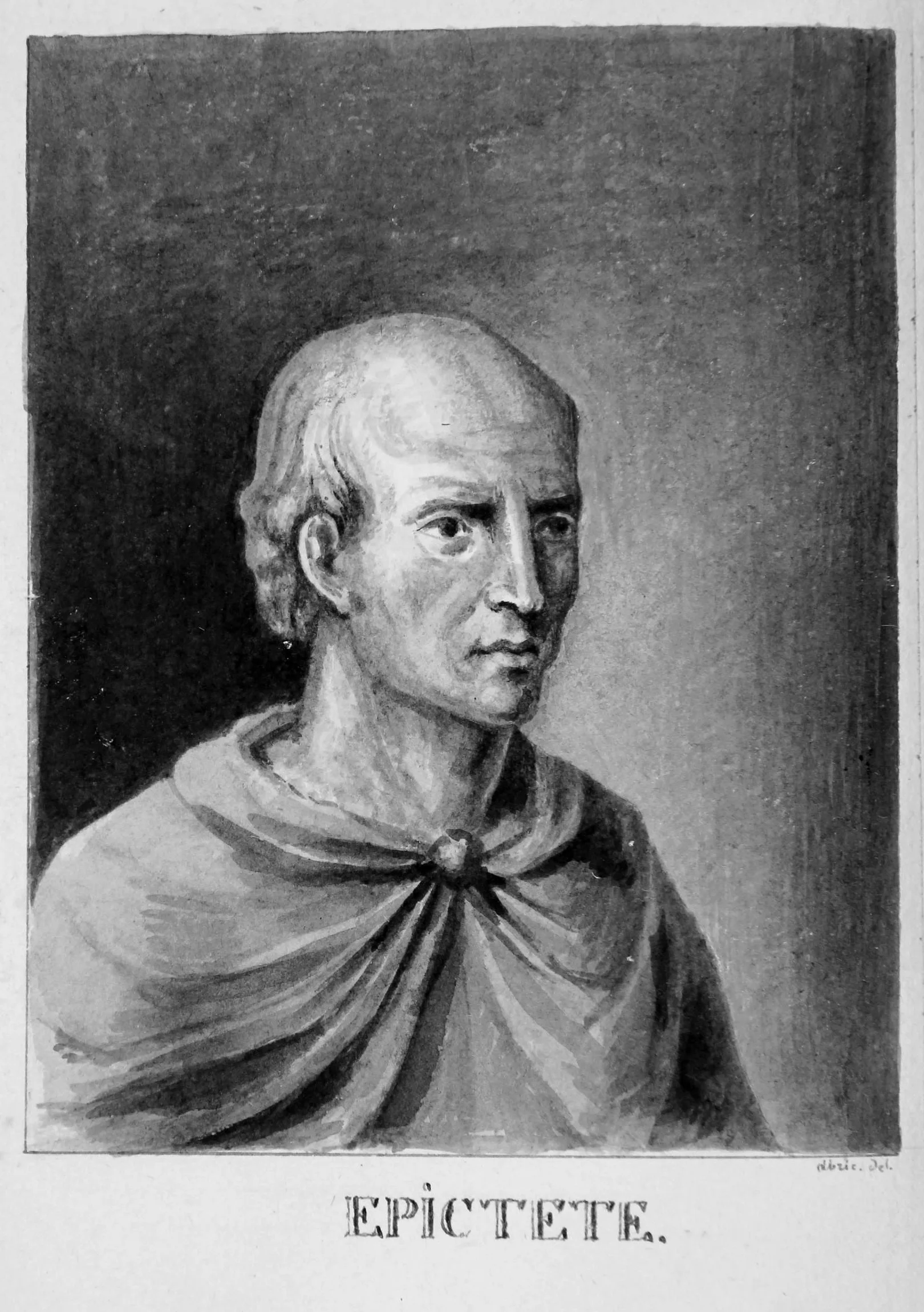
Epictetus
Also known as: Epíktētos, The Slave Philosopher
Birthday
50 AD
Birth Sign
Capricorn
Birthplace
Hierapolis, Phrygia
Age
Died at 185
About
Epictetus was a Greek Stoic philosopher born into slavery around 50 AD in Hierapolis, a city in the Roman province of Phrygia. He rose from bondage to become one of the most influential thinkers in Western history, teaching that true freedom is an internal state of mind rather than a legal or social status. Unlike modern celebrities defined by commercial projects, his entire existence was dedicated to the pursuit of wisdom and ethical living. He developed a reputation for rigorous training of the mind, urging followers to distinguish sharply between what they can control and what they cannot.
His influence endures through two primary texts recorded by his student Arrian: the Discourses and the Enchiridion. These works form the foundation of practical Stoicism and have guided readers for nearly two millennia. From Roman emperors to contemporary psychologists, his advice on resilience, emotional regulation, and moral duty remains a central pillar of philosophical study. He lived the remainder of his life in Nicopolis, Greece, where he taught until his death around 135 AD.
Early Life & Background
Born around 50 AD in Hierapolis, Epictetus entered the world without a name of his own, a common fate for slaves who were often renamed based on their origin or birth date. He was brought to Rome and placed in the household of Epaphroditus, a wealthy freedman who served as the secretary to Emperor Nero. Life in this household was harsh, and Epictetus suffered from a physical disability throughout his life. Historical accounts describe him as having a lame leg, which some sources suggest was a congenital defect while others imply it resulted from mistreatment or an accident during his enslavement. This lameness became a central metaphor in his future teachings regarding the acceptance of physical limitations.
Despite his enslaved status, Epaphroditus allowed Epictetus to study under Musonius Rufus, one of the most respected Stoic teachers of the era. This education was pivotal, granting the young slave access to profound lessons in ethics, logic, and physics. While working as a scribe or performing other menial duties, Epictetus dedicated his free time to intense philosophical inquiry. He lived in a constant tension between his physical servitude and his mental liberation, learning to cultivate an inner fortress that external chains could not breach. Eventually, he gained his manumission, likely after the death of Nero or during the reign of Vespasian, though the exact year remains lost to history. Upon becoming a free man, he began teaching philosophy in Rome, quickly attracting a diverse group of students ranging from common citizens to members of the imperial court.
Career Growth
Epictetus's career as a public intellectual faced a sudden political interruption around 90 AD when Emperor Domitian issued an edict expelling all philosophers from Rome due to suspicions of dissent. Along with other Stoics like Helvidius Priscus, Epictetus was forced to leave the capital. He relocated to Nicopolis in Epirus, northwestern Greece, where he established a school that would become a major center of learning for the Roman Empire. For the next forty-five years, he taught there, mentoring students who traveled from across the known world to learn his methods.
His professional legacy is defined not by a list of books he wrote, but by the preservation of his oral discourses. Epictetus himself never put pen to paper; instead, his teachings were recorded verbatim by his former slave and devoted student, Arrian. The two primary works attributed to his legacy are the Discourses, originally eight books of which four survive today, and the Enchiridion, a concise handbook of his core principles. These texts became the bedrock of practical Stoicism, influencing figures such as the Emperor Marcus Aurelius and later thinkers who sought to apply his ethical framework to daily life. His school in Nicopolis remained active long after his departure, ensuring his doctrines continued to spread.
Career Timeline
Public Image & Style
Epictetus is remembered as a figure of immense moral strength and intellectual clarity. His public persona was defined by his physical disability, which he turned into a powerful symbol of the Stoic ideal that physical infirmity cannot compromise the strength of the mind. He projected an image of unshakeable calmness, refusing to be rattled by the threats of his former master or the exile imposed by the emperor. His teaching style was direct and often confrontational, designed to strip away students' illusions about control and comfort. Media and scholars consistently portray him as the ultimate example of resilience, a man who achieved total freedom despite being born in chains. His voice in history is that of a stern but compassionate guide, urging people to find peace within themselves regardless of external chaos.
Fame & Fandom (iFAMOUS Rankings)
iFANN has not yet collected fame data for this person. While there are no formal rankings or pop-culture metrics available for an ancient philosopher, his influence spans the globe through a vast community of adherents known simply as "Stoics." This community is not organized into fan clubs or merchandise lines but thrives through online forums, university courses, and organizations like The Daily Stoic. Followers engage in daily practices derived from his exercises, such as negative visualization and morning reviews. Notable campaigns include the "Stoic Challenge" initiated by Ryan Holiday, which encourages participants to practice Stoic virtues for a set period. The culture surrounding his work revolves around sharing quotes, discussing the application of his teachings to modern problems, and maintaining a digital archive of his wisdom that continues to grow with every new generation of readers.
Interesting Facts and Legends
Epictetus never wrote a single word himself; his entire corpus exists only because his student Arrian memorized and transcribed his lectures. The meaning of his name, Epictetus, translates to "acquired" or "bought," a permanent reminder of his origins as a purchased slave. One of his most famous students, Arrian, went on to become a general and historian, authoring the Anabasis of Alexander. Despite his fame as a sage, he reportedly kept his personal life extremely private, avoiding the political intrigues that plagued many of his contemporaries. A legendary story tells of his master threatening to break his leg if he spoke too freely; Epictetus calmly replied that the master could break it, demonstrating his total indifference to physical pain. His teachings on the dichotomy of control are so foundational that they are considered a precursor to modern cognitive behavioral therapy techniques used to treat anxiety and depression today.
Notable Quotes
“It's not what happens to you, but how you react to it that matters.”
“Wealth consists not in having great possessions, but in having few wants.”
“No man is free who is not master of himself.”
“Do not seek for things to happen as you wish, but wish for things to happen as they do happen, and your life will go smoothly.”
“If anyone tells you that a certain person speaks ill of you, do not make excuses about what is said of you but answer, 'He was ignorant of my other faults, else he would not have mentioned these alone.'”
Family & Personal Life
Historical records indicate that Epictetus remained single and childless throughout his life, dedicating his entire existence to the cultivation of the self and the guidance of others toward virtue. There are no credible accounts of marriages, engagements, or romantic partnerships, as his focus was exclusively on his philosophical mission. Scholars often cite this absence of domestic life as evidence of his total commitment to his role as a teacher. While he had no biological family, he is described in anecdotes as being deeply affectionate toward his students, treating them as spiritual children. He lived in Nicopolis with his students, creating a communal household centered on the practice of Stoic philosophy rather than traditional family structures.
Notable Connections
Relationships & Dating History
As a philosopher of the ancient world, Epictetus did not maintain a public dating history or family life in the manner of modern figures. Historical records indicate he remained single and childless throughout his life. There are no credible accounts of marriages, engagements, or romantic partnerships. His focus was exclusively on the cultivation of the self and the guidance of others toward virtue. The absence of a domestic life is often cited by scholars as a testament to his total dedication to his philosophical mission. He is described in anecdotes as being deeply affectionate toward his students, treating them as spiritual children, but no biological offspring or spouses are recorded. Consequently, there are no divorce proceedings, widowed statuses, or current relationship updates to report, as he has been deceased for nearly two millennia.
Death & Aftermath
Died
135 AD (aged 185)
Death Place
Nicopolis, Epirus
Cause of Death
Natural causes
Epictetus passed away around 135 AD in Nicopolis, the city where he had established his school after being exiled from Rome by Emperor Domitian. Historical records do not preserve a dramatic account of his final days, nor do they mention a specific illness or accident that ended his life. Ancient biographical traditions simply describe him as an elderly man who died peacefully in the place he called home for decades. Unlike modern figures whose deaths often trigger global vigils or immediate media frenzies, the passing of this philosopher was marked by the quiet, solemn work of his students.
The true tribute to Epictetus came immediately through the preservation of his oral teachings rather than any public ceremony. His devoted student Arrian, a former slave who had attended his lectures, took it upon himself to transcribe the master's discourses. This act ensured that the practical wisdom of Stoicism survived the transition from spoken word to written text. The resulting works, known as the Discourses and the Enchiridion, became the bedrock of Stoic philosophy. Over the centuries, these texts influenced countless leaders, including the Roman Emperor Marcus Aurelius, and continue to shape modern psychology and self-help movements. While there were no posthumous awards or commercial releases in the ancient world, his intellectual estate grew into one of the most valuable legacies in human history, with his ideas remaining relevant nearly two thousand years later.
Net Worth (Estate Value)
$0
iFANN Editorial Team estimate
Epictetus possessed no personal wealth, real estate, or business ventures in the modern sense. As a slave, he owned nothing, and as a teacher, he likely relied on the voluntary support of his students or modest patronage. His "estate" consisted entirely of his oral teachings and the loyalty of his students. Posthumously, his value is measured in cultural capital rather than currency. The intellectual property represented by the Discourses and Enchiridion is incalculable, having influenced millions over two thousand years. There are no financial estimates, royalties, or estate management figures because his legacy exists in the public domain and the collective consciousness of humanity. The iFANN Editorial Team notes that his economic worth is effectively zero in terms of liquid assets but infinite in terms of historical impact.
Awards & Accolades
View 7 records, honours and achievementsKnown For
Discourses
c. 108 AD · Author (via Arrian)
Enchiridion
c. 108 AD · Author (via Arrian)
Stoic Philosophy
c. 90 AD · Founder of School in Nicopolis
Keywords
Sources
Quick Facts
- Profession
- philosopher
- Born
- 50 AD
- Birthplace
- Hierapolis
- Died
- 135 AD
- Death Place
- Nicopolis
- Gender
- Male
- Birth Sign
- Capricorn
Personal Details
- Children
- Education
- Studied under Musonius Rufus
Frequently Asked Questions
Who was Epictetus?
Where was Epictetus born?
Did Epictetus write any books?
What happened to Epictetus's leg?
Is Epictetus still alive?
Similar People
Join the community
fans discussing