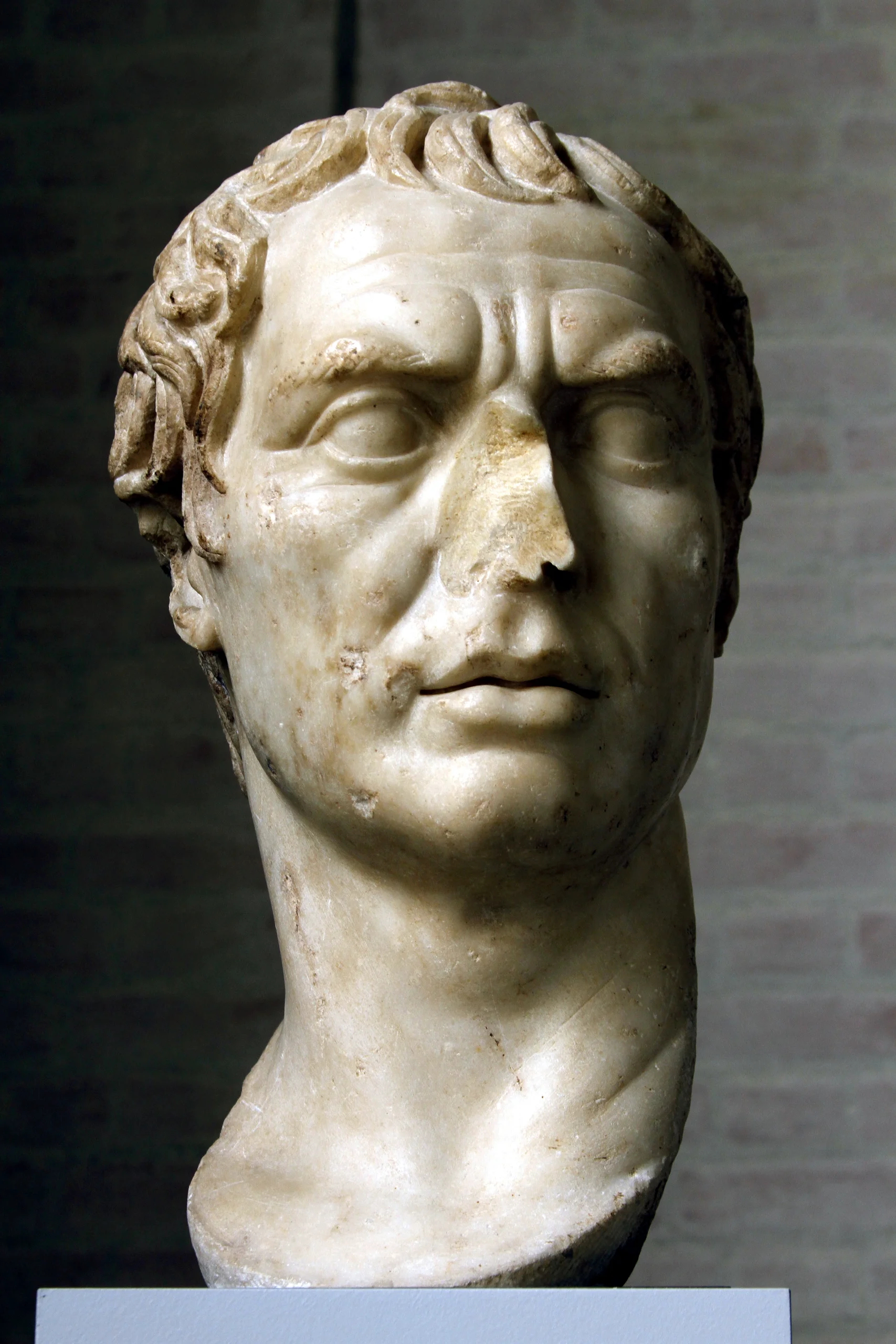
Scipio Africanus
Also known as: Scipio Africanus the Elder
Birthday
236 BC
Birth Sign
Birthplace
Ancient Rome
Age
Died at 53
About
Publius Cornelius Scipio Africanus was a Roman general and statesman who secured Rome's victory over Carthage in the Second Punic War. Born into the patrician Cornelia gens, he rose to prominence by defeating Hannibal at the Battle of Zama in 202 BC, an achievement that earned him the honorific Africanus. Modern historians rank him among the most brilliant tacticians of antiquity, and his flawless battlefield record kept him undefeated across two decades of campaigning. He is remembered today as the man who broke Carthage's power and set Rome on the path to Mediterranean dominance.
Early Life & Background
Scipio was born in 236 or 235 BC into one of Rome's most influential patrician families. His father, Publius Cornelius Scipio, served as consul, and his upbringing followed the standard aristocratic curriculum: military training, oratory, and law. A well-known story from his youth places him at the Battle of the Ticinus in 218 BC, where he reportedly charged into the fray to rescue his wounded father, an act that foreshadowed his future military brilliance. He survived the catastrophic Roman defeat at Cannae in 216 BC, where some 50,000 Romans perished. In the aftermath, he allegedly prevented other young nobles from abandoning Rome by forcing them to swear loyalty to the Republic.
Scipio's path to command was forged in tragedy. Around 211 BC, his father and uncle, Gnaeus Cornelius Scipio Calvus, were both killed in Hispania during campaigns against Carthage. Despite having held no senior office, the 25-year-old Scipio was elected by the Roman people to take command of Roman forces in Hispania, a nearly unprecedented move that bypassed the traditional cursus honorum. This moment launched his career.
Career Growth
Scipio arrived in Hispania in 211 BC as proconsul. In 209 BC, he captured the Carthaginian stronghold of Carthago Nova in a daring combined land-and-sea assault, securing a major treasury and a strategic base. His greatest tactical victory in Hispania came at the Battle of Ilipa in 206 BC, where he used a double-envelopment maneuver to decisively defeat a larger Carthaginian army led by Mago Barca and Hasdrubal Gisco, effectively ending Carthaginian control of the Iberian Peninsula.
Elected consul in 205 BC, Scipio overcame strong senatorial opposition, particularly from Fabius Maximus, to invade North Africa in 204 BC. He forged a crucial alliance with the Numidian prince Masinissa, securing a powerful cavalry force. After defeating a combined Carthaginian-Numidian army at the Battle of the Great Plains in 203 BC, he forced Carthage to recall Hannibal from Italy. At the Battle of Zama in 202 BC, Scipio faced Hannibal for the first and only time. Using a brilliant tactical formation and his superior Numidian cavalry, he routed Hannibal's army, ending the Second Punic War. For this victory, he was granted the honorific Africanus.
After returning to Rome in triumph, he served as censor in 199 BC and as consul for a second time in 194 BC. He later served as legate to his brother Lucius in the war against Antiochus III the Great, contributing to the Roman victory at the Battle of Magnesia in 190 BC.
Career Timeline
Public Image & Style
Scipio's public image is that of the Pious General: cool, calculating, and divinely favored. He was a master of psychological warfare, often projecting an aura of divine inspiration. In historical fiction, he is consistently portrayed as a hero, appearing in the Rome TV series (played by Ray Stevenson) and in novels by Ross Leckie and Santiago Posteguillo. His battles are endlessly recreated in miniature wargaming and video games like the Total War series. He is studied primarily by classicists, ancient history enthusiasts, and military history buffs, with no official fandom name.
Fame & Fandom (iFAMOUS Rankings)
Scipio Africanus stands as a titan of antiquity, his name echoing through military academies and history books for two millennia. Despite this enduring legacy, the iFANN Global Fame Engine evaluated him in August 2026 and determined that he currently holds no placement in the published rankings, including the Global Top 1,000 or any Top-100 scope list. He is not among the living celebrities driving contemporary media cycles, nor does he hold a specific numeric rank in modern fame metrics. His audience consists of classicists, strategists, and students rather than a mobilized fanbase. There is no formal fandom name documented for the Roman general; while historical fiction like the Rome TV series and novels by Ross Leckie keep his image alive, these works do not generate an organized group of admirers with chart pushes or birthday rituals. The concept of a modern fanclub is anachronistic for a figure who died in 183 BC. Instead of viral campaigns or social media trends, his presence is felt through scholarly engagement and the study of his tactical innovations. Recent publications like Simon Hornblower's Hannibal and Scipio: Parallel Lives from 2025 reflect this academic devotion. Unlike modern stars whose popularity fluctuates with streaming numbers, Scipio's fame is static and monumental. He remains a legend defined by the Battle of Zama, where he defeated Hannibal, securing Rome's dominance. This victory is the core of his mythology, retold not as gossip but as a foundational moment of Western history. While some confuse him with Scipio Africanus Jones, the 19th-century attorney, the Roman general stands alone in his sphere. No one organizes events to celebrate his birthday, yet his story persists as a benchmark for leadership. The absence of a ranked position in iFANN's data simply confirms that his influence operates outside the realm of current celebrity culture.
Interesting Facts and Legends
Scipio cultivated a belief that he had a special relationship with the gods, often spending time alone in the Temple of Jupiter before battle. At Carthago Nova, he claimed Neptune had appeared to him in a dream, boosting troop morale. When accused of bribery, he dramatically tore up the financial ledgers in the Senate. His apocryphal epitaph reads: Ungrateful fatherland, you will not even have my bones. Unlike Caesar or Sulla, he never attempted to seize absolute power, remaining a loyal republican even in exile. A defining legend surrounds the Battle of Zama, where the young general vanquished the seemingly invincible Hannibal Barca on the plains of North Africa. This decisive victory ended seventeen years of war and earned him the title Africanus, cementing his status as the savior of Rome. Modern analysis also highlights his use of military intelligence in Hispania, where he outmaneuvered Carthaginian forces through comprehensive data cross-checking rather than traditional spying. These stories function as the lore of his life, studied today in military academies alongside the works of Alexander and Napoleon.
Notable Quotes
“We shall either find a way, or make one.”
“Ingrata patria, ne ossa quidem mea habes.”
Family & Personal Life
Scipio married Aemilia Tertia, a patrician Roman woman of high status. They had two sons, Publius Cornelius Scipio and Lucius Cornelius Scipio, and two daughters, Cornelia Africana Major and Cornelia Africana Minor. Cornelia Minor became the mother of the Gracchi brothers, the famous populist reformers, making Scipio their grandfather. He was also the father-in-law of Scipio Aemilianus, who was adopted into the Cornelii Scipiones family and later destroyed Carthage in the Third Punic War.
Notable Connections
Scipio's greatest rival was Hannibal Barca, whom he defeated at Zama. His crucial ally was Masinissa, the Numidian king who provided the decisive cavalry. His lifelong friend and second-in-command was Gaius Laelius. His primary political enemy was Cato the Elder, whose attacks led to his retirement. The Greek historian Polybius wrote extensively about him, providing a primary source for his life.
Relationships & Dating History
Scipio married Aemilia Tertia, a patrician Roman woman, in an arrangement that was politically and socially advantageous. The marriage produced several children, including two sons and two daughters. Aemilia predeceased him, and he died a widower around 183 BC. There are no credible reports of other romantic relationships in the historical record.
- MarriedAemilia Tertia? - c. 183 BCShe was a patrician Roman woman; the marriage was politically advantageous.
Death & Aftermath
Died
183 BC (aged 53)
Death Place
Liternum, Campania, Italy
Cause of Death
Natural causes following depression and ill health
Publius Cornelius Scipio Africanus died in 183 BC at his estate in Liternum, a coastal town in southern Campania. The Roman general spent his final years in self-imposed exile after facing relentless political attacks from tribunes who accused him of embezzlement and treason. Ancient historians like Livy and Appian describe a man consumed by deep melancholy and declining health, though they do not record a specific illness or accident that ended his life. Some accounts suggest he may have starved himself out of despair, but modern scholars view this as a later embellishment rather than a confirmed fact. Public reaction to his death remained muted during his lifetime due to his political isolation, yet the Senate eventually moved to rehabilitate his reputation once the dust settled.
Tributes from peers were limited at the moment of death because of his exiled status, but later generations honored him extensively through literary works and state dedications. His burial took place at Liternum, likely within a private tomb on his estate, although some traditions claim his remains were later moved to Rome. Archaeologists have never definitively identified the location of his grave. Posthumously, Scipio Africanus cemented his status as one of history's greatest military commanders through countless books, films, and academic studies. He has been inducted into various halls of fame and received numerous dedications, including statues and monuments throughout the Roman world and beyond. His estate passed to his heirs according to Roman inheritance laws, though details of the settlement remain undocumented.
Net Worth (Estate Value)
$0
iFANN Editorial Team estimate
Per iFANN's editorial analysis, Scipio Africanus has a net worth of $0. As a historical figure who died in 183 BC, he possesses no personal estate or active revenue stream. His value exists entirely within the cultural and historical spheres. The Italian government oversees sites like the ruins of his villa at Liternum, and tourism to these locations generates indirect economic activity. Sales of books, documentaries, and merchandise featuring his likeness contribute to the broader economy, but no direct income flows to his heirs. The Italian state holds any intellectual property rights related to archaeological discoveries associated with him. His financial footprint is purely symbolic, representing a cornerstone of Western history rather than a quantifiable asset.
Awards Won (4)
Ancient Rome did not have formal awards ceremonies. Scipio's honors included the honorific name Africanus (c. 201 BC), a Roman Triumph, election as Censor (199 BC), and a second Consulship (194 BC). These were the highest civic and military distinctions of the Roman Republic.
201 BC · Military Honor
Second Punic War
201 BC · Military Honor
Victory over Carthage
Known For
Battle of Zama
202 BC · Roman General
Second Punic War
218-201 BC · Roman Commander
Conquest of Hispania
211-206 BC · Proconsul
Keywords
Quick Facts
- Profession
- General, Statesman
- Born
- 236 BC
- Birthplace
- Ancient Rome
- Died
- 183 BC
- Death Place
- Liternum
- Gender
- Male
- Spouse
- Aemilia Tertia
- Children
- Publius Cornelius Scipio, Lucius Cornelius Scipio, Cornelia Africana Major, Cornelia Africana Minor
Personal Details
- Full Name
- Publius Cornelius Scipio
- Spouse
- Aemilia Tertia
- Children
- Publius Cornelius Scipio, Lucius Cornelius Scipio, Cornelia Africana Major, Cornelia Africana Minor
Frequently Asked Questions
What is Scipio Africanus famous for?
How did Scipio Africanus die?
Did Scipio Africanus ever lose a battle?
Was Scipio Africanus related to Julius Caesar?
Why did Scipio Africanus go into exile?
Similar People
Join the community
fans discussing