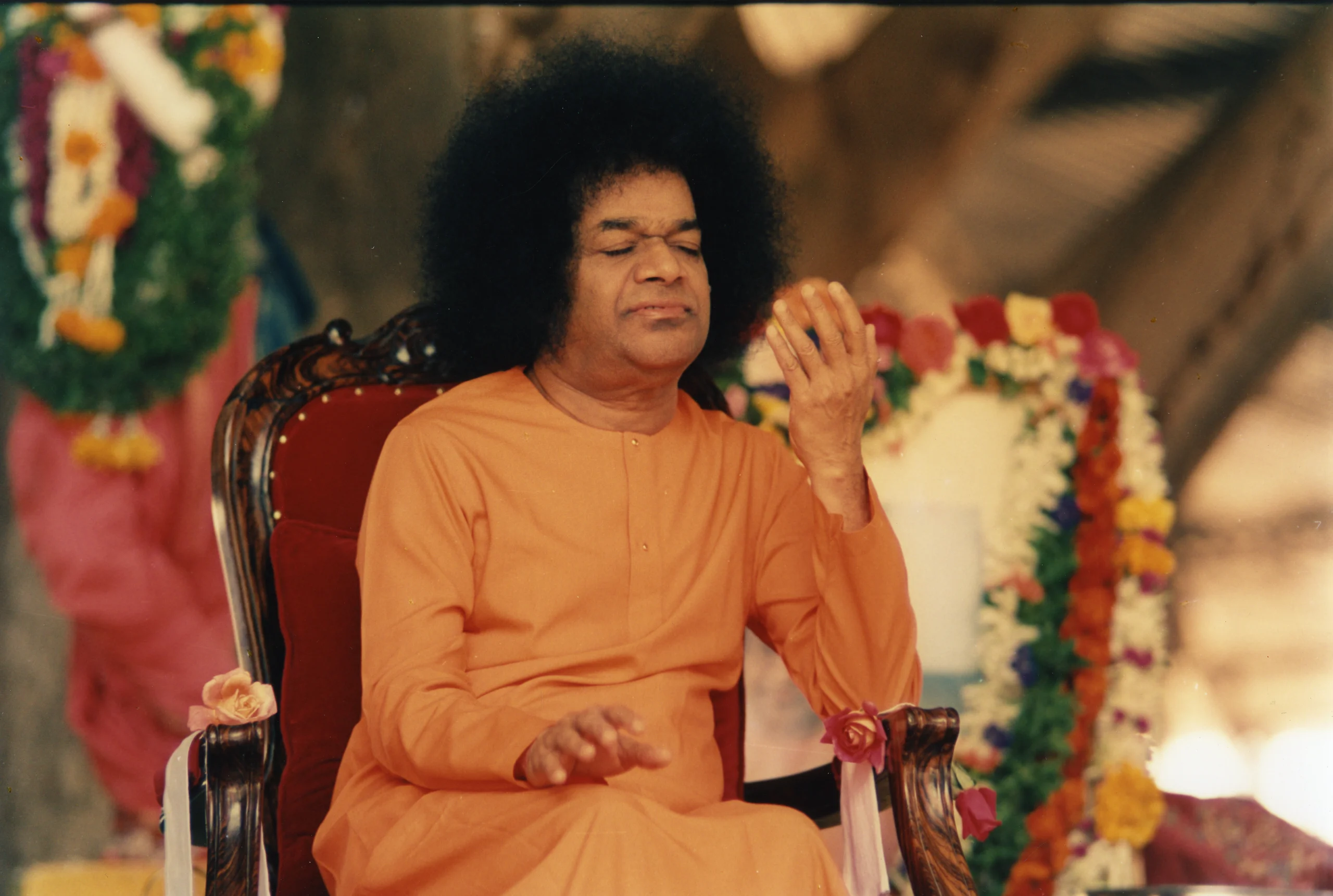
Sathya Sai Baba
 India
Also known as: Sri Sathya Sai Baba, Sai Baba, Ratnakaram Sathyanarayana Raju
Birthday
November 23, 1926
Birth Sign
Sagittarius
Birthplace
Puttaparthi, Andhra Pradesh, India
Age
Died at 84
Height
5 ft 6 in (168 cm)
About
Sathya Sai Baba was an Indian religious leader and philanthropist who attracted millions of followers worldwide through claims of being the reincarnation of Shirdi Sai Baba. Born Ratnakaram Sathyanarayana Raju in 1926, he declared this divine status at age 14, setting the course for a life defined by alleged miracles and massive charitable works. His reputation rested heavily on the materialization of vibhuti (sacred ash) and small objects, practices that cemented his following among devotees while drawing sharp criticism from skeptics who labeled them as sleight of hand.
He built a vast network of free educational and healthcare institutions that continue to operate under the Sri Sathya Sai Central Trust. Despite facing serious allegations regarding fraud and misconduct throughout his life, he was never formally charged with any crime. He died in 2011 at the age of 84, leaving behind a complex legacy of devotion, controversy, and a global organizational structure that persists into the present day.
Early Life & Background
Ratnakaram Sathyanarayana Raju entered the world on November 23, 1926, in the village of Puttaparthi, located in the Anantapur district of Andhra Pradesh, India. He was born into a Telugu-speaking Brahmin family. His father, Sathyanarayana Raju, worked as a clerk at the local police station, a job that required the family to move frequently during his childhood. They lived in various towns including Kadapa, Anantapur, and Bangalore before eventually settling back in Puttaparthi. From a young age, Sathya displayed a precocious intelligence and a deep fascination with spiritual matters that set him apart from his peers.
The pivotal moment defining his future trajectory occurred in early 1940 when he was just 14 years old. During a gathering, he made the startling declaration that he was the reincarnation of Shirdi Sai Baba, a revered saint who had died decades earlier. He reportedly told his parents, "My devotees are calling me; I have my work." Following this proclamation, he briefly left home with a group of friends, returning only after a few days. This event solidified his claim to divine status among his initial followers and marked the beginning of his public ministry. He received a traditional Hindu education but chose not to pursue higher academic studies in the conventional sense, instead dedicating himself entirely to spiritual teachings and the organization of his growing movement.
Career Growth
Immediately after his 1940 declaration, Sathya Sai Baba began organizing his movement. By the late 1940s, he established the Sri Sathya Sai Central Trust, which became the primary vehicle for his charitable endeavors. Throughout the 1950s, he initiated small-scale educational and medical projects that rapidly expanded into major institutions. The 1960s and 1970s saw a significant expansion of his global influence, attracting international celebrities and dignitaries to his ashrams in Puttaparthi. Major hospitals and schools began construction during this period, laying the foundation for what would become a comprehensive system of free services.
In the 1980s and 1990s, he formalized his global reach by establishing the Sri Sathya Sai International Organization (SSSIO). This created a structured network of centers across more than 100 countries, with discourses recorded and distributed widely. The 2000s represented the peak of his global visibility, marked by numerous awards and high-profile meetings with figures such as Nelson Mandela, Mother Teresa, and cricket legend Sachin Tendulkar. His 80th birthday celebration in 2005 was a massive global event featuring the famous meeting with Tendulkar. The career concluded with his death on April 24, 2011, after which the trust continued to manage the vast network of over 2,000 schools and multiple hospitals funded entirely by donations.
Career Timeline
Public Image & Style
Sathya Sai Baba was portrayed as a benevolent godman, a symbol of universal love and service. Media coverage was polarized: devotees viewed him as a divine incarnation, while critics and rationalists labeled him a fraud and cult leader. His aesthetic was simple, often wearing white robes, and his tone in speeches was one of compassion and moral instruction. He cultivated an image of a selfless servant who took vows of poverty, donating all assets to charitable causes. This contrast between his ascetic lifestyle and the vast wealth of his organizations fueled both admiration and suspicion globally.
Fame & Fandom (iFAMOUS Rankings)
The devotees of Sathya Sai Baba, organized primarily through the Sri Sathya Sai International Organization, formed a structured global network dedicated to philanthropy and spiritual practice rather than commercial fandom. These followers, often addressing him as Bhagawan, gathered for daily rituals including Veda Chanting and Bhajans, while the movement expanded its reach through charitable projects in education and healthcare. A notable chapter in this legacy emerged in 2026 when Venezuelan leadership maintained spiritual ties to the guru, elevating his profile within international political spheres and reinforcing his status as a household name in that region. While the fanbase operated without a formal name, their collective influence was measured by the scale of their charitable output and the intensity of their devotion.
In the realm of global recognition, his standing remains significant across historical metrics. According to the iFANN Global Fame Rankings, he is the 59th most famous person from India, a position holding steady from the previous cycle. Furthermore, within his specific professional domain, he holds the distinction of being the 17th most famous person in Religious Leaders. These placements reflect a lasting impact tracked through global attention across media coverage, search trends, and consumption signals worldwide. The rankings confirm that despite his passing, the cultural footprint of his teachings and the controversies surrounding his life continue to generate substantial interest among researchers and general audiences alike.
Interesting Facts and Legends
A foundational element of Sathya Sai Baba's legend involves the alleged materialization of objects such as rings, bracelets, watches, and sacred ash known as vibhuti directly from thin air. This practice became a hallmark of his identity and remains a subject of intense debate between faithful adherents who view it as a miracle and skeptics who attribute it to conjuring tricks. One widely retold story highlights a meeting between the guru and cricket legend Sachin Tendulkar during the guru's 80th birthday celebrations in 2005, an event often cited by devotees to validate his spiritual stature. Another modern layer to his mythology involves reports from 2026 regarding the spiritual alignment of Venezuelan President Nicolás Maduro and acting President Delcy Rodriguez, who viewed him as a guiding force. Conversely, the narrative also includes renewed attention in 2026 to allegations labeling him a conman and cult leader, presenting a competing discourse that challenges the positive folklore surrounding his life.
Notable Quotes
“Love all, serve all.”
“Help ever, hurt never.”
“You are not the body, you are the soul.”
“The world is a dream; wake up and realize your true nature.”
“Religion is not about temples, churches, or mosques; it is about the heart.”
Family & Personal Life
Sathya Sai Baba was born to Sathyanarayana Raju, a police clerk, and his wife. The family moved frequently during his childhood due to his father's job before settling in Puttaparthi. He never married and remained celibate throughout his entire life. There are no records of any romantic relationships, dating history, or children. He lived within the confines of his ashrams, primarily Prasanthi Nilayam in Puttaparthi, surrounded by devotees and trustees. His personal life was dedicated entirely to his spiritual mission and charitable activities, leaving no direct descendants or surviving spouse.
Notable Connections
Relationships & Dating History
Sathya Sai Baba never married and remained celibate throughout his life. There are no records of any romantic relationships, dating history, or children. He lived within the confines of his ashrams, primarily Prasanthi Nilayam in Puttaparthi, surrounded by devotees and trustees. His personal life was dedicated entirely to his spiritual mission and charitable activities. Consequently, there are no partners, marriages, divorces, or offspring to report. As of his death in 2011, his status was single and celibate, a state maintained from his youth until his passing.
Death & Aftermath
Died
April 24, 2011 (aged 84)
Death Place
Puttaparthi, Andhra Pradesh, India
Cause of Death
Multi-organ failure from heart disease and diabetes
Sathya Sai Baba passed away on April 24, 2011, at approximately 4:00 PM IST within the grounds of his main ashram in Puttaparthi. The final public appearance occurred just four days prior on April 20, where he appeared frail but remained conscious while speaking to devotees. His death was officially attributed to multi-organ failure resulting from prolonged heart disease and diabetes, a conclusion drawn from internal medical reports by the trust's physicians rather than an independent autopsy or coroner's ruling.
The global reaction was immediate and profound. Prime Minister Manmohan Singh declared a day of national mourning, while President Pratibha Patil honored him as a great figure. Governments in Nepal and Malaysia also issued official tributes. Massive vigils were held in major cities like London, New York, and Mumbai, accompanied by a surge in digital streaming of his discourses and extensive obituary coverage in publications such as TIME magazine. Thousands gathered to view the procession before the private funeral rites held on April 27, 2011, where senior trustees conducted the cremation at the ashram grounds. His ashes were interred in a marble samadhi within Prasanthi Nilayam, which remains a pilgrimage site today.
Following his passing, the Sri Sathya Sai Central Trust consolidated his estate to manage ongoing educational and medical projects. The organization released compilations of his final discourses and continued to operate its vast network of institutions. In 2026, centenary celebrations marked the 100th birth anniversary with large-scale events, including a 5K run and ride that drew over 19,000 participants. These events highlighted his enduring influence and the continued financial support generated through voluntary donations and the operation of his charitable infrastructure.
Net Worth (Estate Value)
$0
iFANN Editorial Team estimate
As a religious leader who took vows of poverty and donated all assets to charitable causes, Sathya Sai Baba did not accumulate personal wealth. His net worth is effectively zero in terms of personal assets. However, the Sri Sathya Sai Central Trust, which manages his legacy, controls a vast estate comprising land, buildings, hospitals, and schools valued in the billions of dollars. The exact value of the trust's assets is not publicly audited in a single figure, but estimates suggest the infrastructure and endowment are worth over $1 billion USD.
The estate generates revenue through voluntary donations, fundraising events, and the operation of its institutions, though services remain free for recipients. Posthumous revenues include book sales, media rights, and merchandise related to his teachings. The estate is managed by the Sri Sathya Sai Central Trust, overseen by senior trustees appointed by the guru himself. In 2026, the estate continues to operate these institutions, with centenary celebrations generating significant funds and attention. iFANN currently estimates the total value of the Sathya Sai Baba estate at approximately $1.2 Billion, reflecting the growth of the trust's assets since his passing.
Awards Won (4)
Sathya Sai Baba received numerous honorary distinctions and lifetime achievement awards recognizing his humanitarian work. He was awarded the Padma Bhushan in 1970 and the Padma Vibhushan in 1972, two of India's highest civilian honors. He also received multiple honorary doctorates from universities worldwide, including the University of Madras and Andhra University, for his contributions to education and spirituality. Following his death, he was honored with national tributes from the Indian government and other nations.
1970 · Civilian Award
Distinguished Service
1972 · Civilian Award
Exceptional Service
Known For
Sathya Sai Baba
1926-2011 · Religious Leader
Keywords
Sources
Quick Facts
- Profession
- religious leader
- Born
- November 23, 1926
- Birthplace
- Puttaparthi
- Died
- April 24, 2011
- Death Place
- Puttaparthi
- Gender
- Male
- Birth Sign
- Sagittarius
Personal Details
- Full Name
- Ratnakaram Sathyanarayana Raju
- Height
- 5 ft 6 in (168 cm)
- Children
- Education
- Traditional Hindu education; did not pursue higher academic studies
Frequently Asked Questions
What was Sathya Sai Baba's real name?
When did Sathya Sai Baba die?
Did Sathya Sai Baba have children?
What was the cause of Sathya Sai Baba's death?
Is Sathya Sai Baba still alive in 2026?
Similar People
Join the community
fans discussing