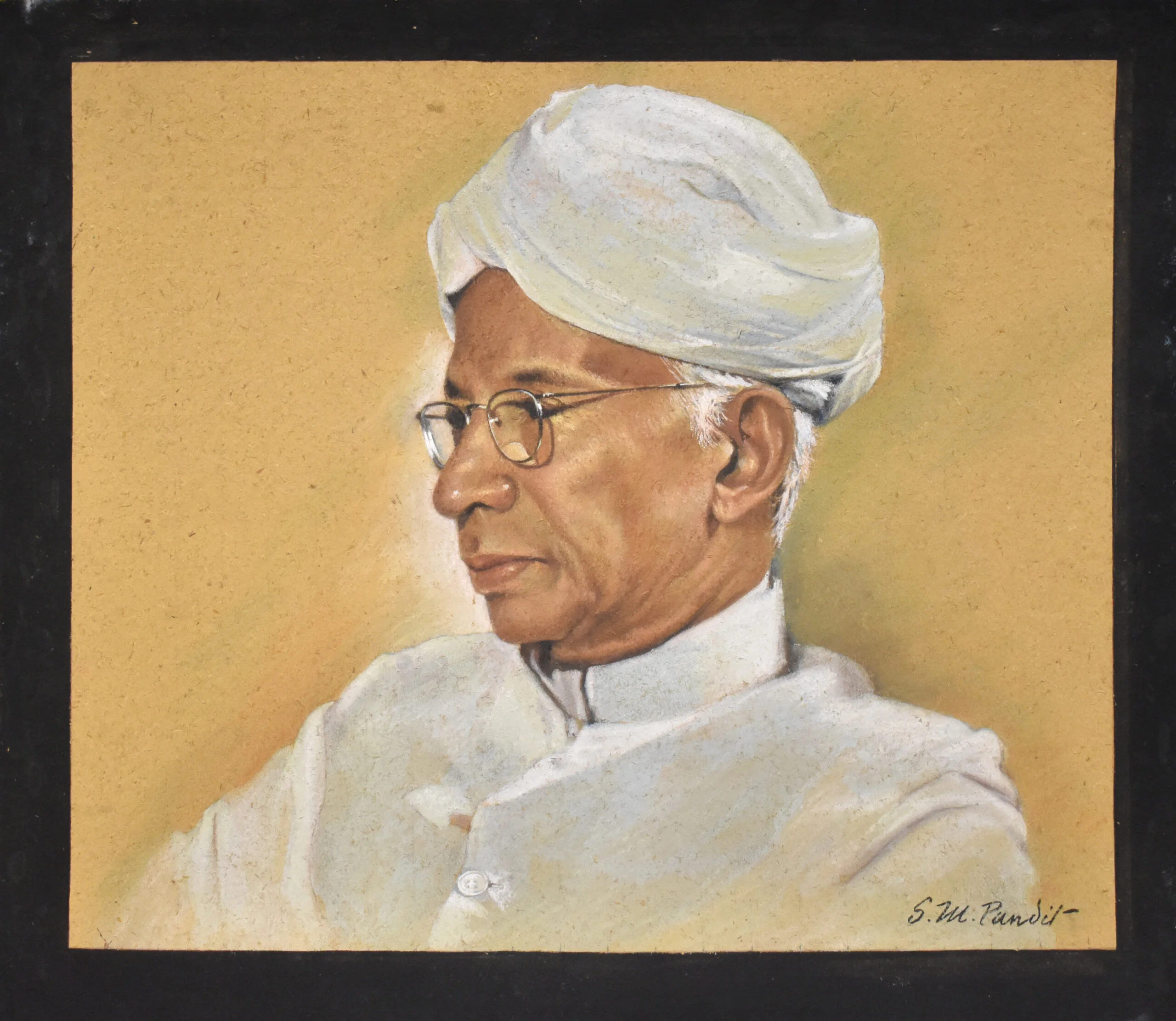
Sarvepalli Radhakrishnan
 India
philosopher•academic•statesman
Also known as: Sarvepalli Radhakrishna, Dr. S. Radhakrishnan
Birthday
September 5, 1888
Birth Sign
Virgo
Birthplace
Tiruttani, Chittoor district, Madras Presidency (now Andhra Pradesh), India
Age
Died at 86
About
Sarvepalli Radhakrishnan was a distinguished Indian philosopher, academic, and statesman who served as the second President of India from 1962 to 1967. A towering intellectual figure of the 20th century, he is best known for his ability to interpret Eastern philosophy, particularly Advaita Vedanta, for Western audiences while simultaneously defending Hinduism against Western misconceptions. His career spanned academia, diplomacy, and high office, making him one of the most influential thinkers in modern Indian history.
Before entering politics, Radhakrishnan held prestigious chairs at the University of Calcutta and the University of Oxford, where he became the first Indian to hold a chair at an English university. He served as Vice President of India from 1952 to 1962 and later as Ambassador to the Soviet Union. His legacy is most enduringly marked by his decision to have his birthday, September 5, celebrated as Teachers' Day in India rather than as his personal celebration, a tradition that continues to honor educators across the nation.
Early Life & Background
Sarvepalli Radhakrishna was born on September 5, 1888, into a humble Telugu Brahmin family in Tiruttani, a small town in what is now the Chittoor district of Andhra Pradesh. His father, Sarvepalli Veeraswami, worked as a minor revenue official, while his mother, Sitamma, was a deeply religious woman who instilled strong moral values in her children. The family faced significant financial difficulties during his childhood, forcing young Radhakrishnan to rely heavily on scholarships to continue his education.
Despite these economic hardships, he excelled academically. He attended Tirupati High School before moving to the Theosophical Society's school in Madras (now Chennai). It was here that he encountered the works of Western philosophers like Plato and Kant alongside traditional Indian spiritual texts. This dual exposure shaped his lifelong commitment to bridging the gap between Eastern and Western thought. He completed his matriculation at the remarkably young age of 14 and went on to graduate with honors from Government College in Madras in 1907, followed by a Master's degree from the same institution in 1909.
Career Growth
Radhakrishnan's professional journey began in academia, where he quickly distinguished himself as a brilliant scholar. In 1909, he started as a lecturer in Philosophy at Presidency College in Madras. His rise was rapid; by 1918, he had been appointed Professor of Philosophy at the University of Mysore. His reputation grew significantly with his appointment to the King George V Chair of Mental and Moral Science at the University of Calcutta in 1921, a position he held until 1932. During this period, he published seminal works such as The Hindu View of Life (1923) and the two-volume Indian Philosophy (1923–1927), which established him as a global authority on Indian thought.
In 1936, he moved to the University of Oxford to take up the Spalding Chair of Eastern Religion and Ethics, becoming the first Indian to hold a chair at an English university. He served there until 1952, delivering the prestigious Upton Lectures and Hibbert Lectures, which were later published as An Idealist View of Life. Parallel to his academic pursuits, he entered public service as Vice-Chancellor of Andhra University (1931–1936) and Banaras Hindu University (1939–1948). His diplomatic career began in 1949 when he was appointed India's Ambassador to the Soviet Union. Following this success, he was elected the first Vice President of India in 1952. Upon the death of Dr. Rajendra Prasad, Radhakrishnan was elected as the second President of India in 1962, serving two terms until 1967.
Career Timeline
Public Image & Style
Radhakrishnan is portrayed as the epitome of wisdom, humility, and integrity. Media outlets consistently describe him as a "scholar-statesman" and a "philosopher-king." His image is one of dignity, often depicted in traditional Indian attire, with a calm and thoughtful expression. His content, whether in speeches or writings, is characterized by a tone of inclusivity, rationality, and a deep respect for human potential. He maintained a presence of quiet authority throughout his public life, avoiding self-aggrandizement even as he reached the highest offices in the land.
Fame & Fandom (iFAMOUS Rankings)
The reverence surrounding Sarvepalli Radhakrishnan operates not through the chaotic energy of modern celebrity culture but through a structured, institutionalized form of national devotion. His followers are effectively the nation itself, specifically the vast community of educators and students who observe his birthday as Teachers' Day. This annual ritual, established in 1962 following his own request to celebrate the profession rather than himself, serves as the primary mechanism for this collective admiration. Schools across India transform into venues where students assume the roles of teachers, presenting gifts and performing cultural programs that honor his legacy as the 'Teacher of Teachers.' This organized commemoration is sustained by permanent academic infrastructure, such as the Dr. Sarvepalli Radhakrishnan Centre at the University of Mysore, and is occasionally reinforced by political discourse invoking his principles of impartiality. While digital tributes appear on social media platforms during September, these sporadic posts lack the coordinated intensity of fan campaigns found among contemporary entertainers. There is no documented name for this group; they remain an unnamed but deeply engaged public acting through state and educational bodies. Despite this enduring institutional presence, the iFANN Global Fame Engine has evaluated Sarvepalli Radhakrishnan and determined that he does not currently hold a placement in the published rankings, including the Global Top 1,000 or any Top-100 scope list.
Interesting Facts and Legends
When his students requested to celebrate his birthday, Radhakrishnan famously replied, "I would be happier if you celebrated September 5 as Teachers' Day instead of my birthday." He authored over 30 books and hundreds of articles, many of which are still used as textbooks in philosophy departments globally. As Ambassador to the USSR, he successfully navigated complex geopolitical waters, strengthening Indo-Soviet relations during a tense period. He was nominated for the Nobel Prize in Literature multiple times but never won it. His philosophical work introduced the concept of "Hinduism" as a unified religion to the West, countering the fragmented view prevalent at the time.
Notable Quotes
“Education is the manifestation of perfection already in man.”
“The aim of education is not the acquisition of information but the development of character.”
“We produce either seers or technicians, but not men who are both.”
“True teachers are those who help us think for ourselves.”
“Education is the transformation of knowledge into experience.”
Family & Personal Life
Sarvepalli Radhakrishnan was married to Sivakamu Radhakrishnan, a partnership that lasted throughout his life. They met through family arrangements, a common practice in traditional Indian society of that era. Sivakamu supported his scholarly and political endeavors, managing their household with grace. Together they had five children: three sons named K.R. Srinivasa Iyengar, K.R. Sadasivan, and K.R. Sankara, and two daughters named Saroja and Lakshmi. There are no records of any other romantic relationships or engagements; his personal life was characterized by devotion to his family and his work. Sivakamu passed away before him, leaving him widowed in his final years.
Notable Connections
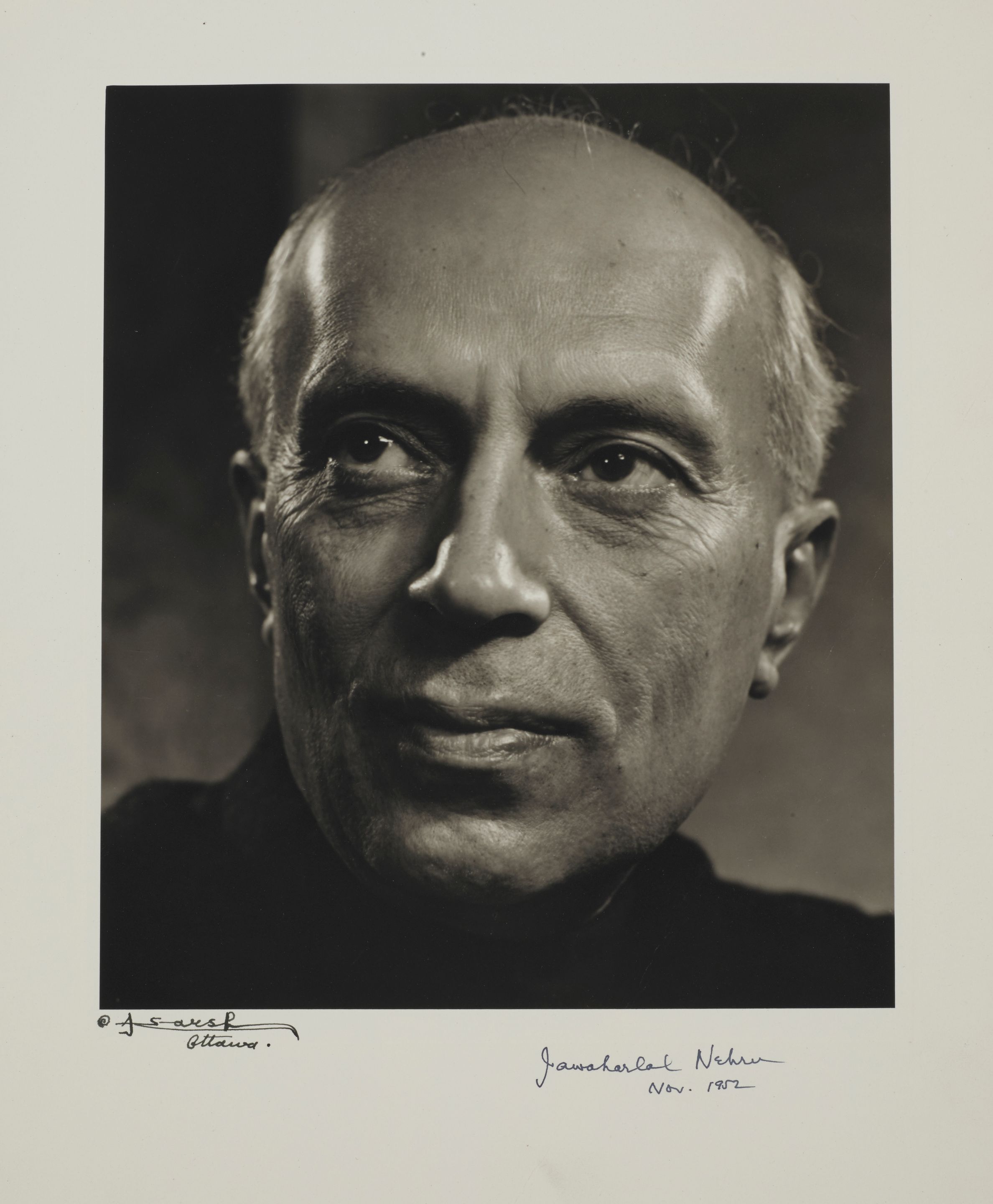
Sivakamu Radhakrishnan (Wife), Dr. Rajendra Prasad (First President of India), Jawaharlal Nehru (Prime Minister), Indira Gandhi (Prime Minister), Jadunath Sinha (Philosopher)
Relationships & Dating History
Sarvepalli Radhakrishnan was married to Sivakamu Radhakrishnan. Their marriage was a long-standing partnership that lasted throughout his life. They met through family arrangements, a common practice in traditional Indian society of that era. Sivakamu supported his scholarly and political endeavors, managing their household with grace. They had five children together: three sons (K.R. Srinivasa Iyengar, K.R. Sadasivan, and K.R. Sankara) and two daughters (Saroja and Lakshmi). There are no records of any other romantic relationships, engagements, or divorces; his personal life was characterized by devotion to his family and his work. As of his passing in 1975, he was widowed following the death of his wife, though specific dates of her death are not widely documented in general biographical summaries, she survived him or passed away shortly before his death, leaving him as a widower in his final years.
- MarriedSivakamu Radhakrishnan1907 - 1975His only spouse; they had five children together.
Death & Aftermath
Died
April 17, 1975 (aged 86)
Death Place
Madras (now Chennai), India
Cause of Death
Natural causes due to old age
Sarvepalli Radhakrishnan spent his final years in retirement following his term as President of India, residing in Madras while maintaining his stature as a preeminent philosopher and statesman. On April 17, 1975, the eighty-six-year-old passed away peacefully in that city due to natural causes associated with old age. Official records treat the event as a quiet conclusion to a long life of public service. The nation observed profound mourning upon the news, reflecting the deep respect held for a man who had shaped modern Indian thought and diplomacy. His funeral adhered to Hindu traditions with a cremation ceremony held in Madras, attended by high-ranking government officials and members of the academic community.
Tributes poured in from peers and institutions, cementing his status as one of the most influential thinkers of the twentieth century. While specific details of the immediate gathering remain unrecorded in standard biographical sources, the day itself became a somber reminder for the educational sector he championed. Posthumously, his legacy has been extensively honored through the annual celebration of Teachers' Day on his birthday, September 5, which he originally requested to be dedicated to educators rather than himself. Various universities and schools have been named in his memory, including the Radhakrishnan Hall at the University of Madras, and he was recognized by UNESCO for his contributions to philosophy and education.
Net Worth (Estate Value)
$0
iFANN Editorial Team estimate
As a public servant and academic who lived primarily on salaries and grants, Sarvepalli Radhakrishnan did not accumulate wealth in the manner of modern celebrities or business tycoons. There is no public record of a specific net worth figure for 2026, as he passed away in 1975. His estate value is not publicly quantified in terms of liquid assets but is understood to be modest, consisting mainly of his literary copyrights, intellectual property rights, and personal effects. The management of his estate and legacy is handled by the Sarvepalli Radhakrishnan Foundation and the Indian government, which utilize his intellectual property for educational purposes. The "wealth" associated with him today is symbolic and institutional, represented by the endowments and scholarships established in his name, such as the Dr. Sarvepalli Radhakrishnan Scholarship.
Awards Won (3)
Radhakrishnan received numerous accolades throughout his life, recognizing his contributions to philosophy, education, and statecraft. He was knighted by the British government in 1931 and awarded the Bharat Ratna, India's highest civilian award, in 1954. In 1963, he received the Lenin Peace Prize from the Soviet Union. He also received numerous honorary doctorates from universities worldwide, including Harvard, Oxford, and Edinburgh. Additionally, he was nominated for the Nobel Prize in Literature multiple times.
1931 · Honour
General Service
1954 · Civilian Award
General Service
Known For
Indian Philosophy
1923 · Author
An Idealist View of Life
1932 · Author
President of India
1962 · Political Office Holder
Keywords
Sources
Quick Facts
- Profession
- politician, diplomat, philosopher
- Born
- September 5, 1888
- Birthplace
- Tiruttani
- Died
- April 17, 1975
- Death Place
- Chennai
- Gender
- Male
- Spouse
- Sivakamu
- Birth Sign
- Virgo
Personal Details
- Full Name
- Sarvepalli Radhakrishna
- Spouse
- Sivakamu Radhakrishnan
- Children
- K.R. Srinivasa Iyengar · K.R. Sadasivan · K.R. Sankara · Saroja · Lakshmi
- Education
- Government College, Madras (B.A., M.A.)
Frequently Asked Questions
Why is Teachers' Day celebrated on September 5?
Who was the second President of India?
What is Sarvepalli Radhakrishnan's greatest contribution?
Did Sarvepalli Radhakrishnan win a Nobel Prize?
Where did Sarvepalli Radhakrishnan die?
Similar People
Join the community
fans discussing