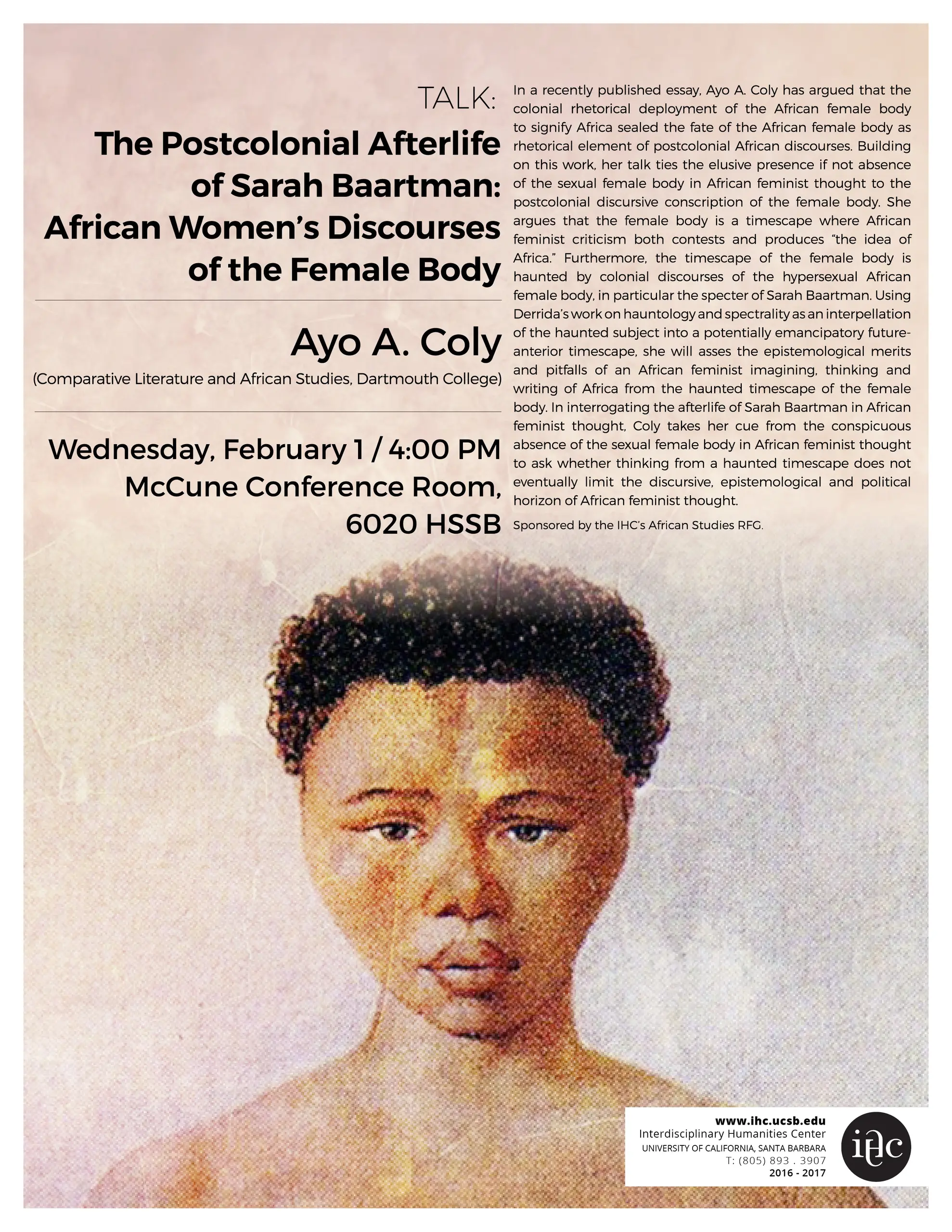
Sarah Baartman
 South Africa
Also known as: Saartjie Baartman, Sara Baartman, Hottentot Venus, Sartjie Baartman
Birthday
1789
Birth Sign
Capricorn
Birthplace
Gamtoos River valley, Cape Colony (now South Africa)
Age
Died at 26
About
Saartjie Sara Baartman was a Khoekhoe woman born around 1789 in the Cape Colony who became a tragic symbol of colonial exploitation. She is remembered not for a voluntary career but for being exhibited across London and Paris as the "Hottentot Venus." Her life ended in poverty and isolation in Paris in 1815, leaving behind a legacy defined by the violation of her dignity and the posthumous scientific dissection of her body.
Her story serves as a defining moment in the history of racial science and the commodification of Black women's bodies under European colonialism. While she had no agency over her own image during her lifetime, her memory has been reclaimed in the modern era as a focal point for anti-racism movements and restorative justice efforts in South Africa.
Early Life & Background
Baartman was born into the Khoikhoi people near the Gamtoos River valley in what is now the Eastern Cape of South Africa. Historical records from this period rarely documented the lives of indigenous people outside of elite circles, so details about her childhood remain sparse. She lived within a community that practiced cattle herding and followed traditional Khoikhoi customs before the full weight of British colonial rule settled over the region.
Before her forced journey to Europe, she worked as a domestic servant for a Dutch farmer named Pieter Cezar, sometimes identified as Hendrik Cesars, near Cape Town. It was here that she first attracted the attention of European settlers who found her physical characteristics unusual. Specifically, she possessed steatopygia, a condition involving excessive fat deposition on the buttocks and thighs, which was rare among Europeans and viewed through a lens of exotic curiosity rather than human variation. In 1810, at approximately age 21, she left her home with her employer to travel to London, initially presented as a curiosity rather than a professional performer.
Career Growth
Baartman's time in Europe was defined by involuntary performance and public objectification. Upon arriving in London in 1810, she was displayed in Piccadilly in a glass cage, often dressed in revealing attire while visitors paid to view her body. She faced legal challenges regarding her freedom, including a court case brought on her behalf, but these efforts failed and she remained under the control of her manager, Benjamin Dunlop. During this period, she learned English and French, becoming fluent enough to converse with visitors, though she was frequently mocked for her speech.
In 1814, Dunlop sold her contract to a French showman named Charles Duval, taking her to Paris where she continued to be exhibited under the derogatory moniker "Hottentot Venus." Unlike in London, where she was a spectacle for the general public, her presence in Paris drew intense interest from scientists and anatomists. She was seen by prominent figures like Georges Cuvier, whose study of her remains after her death turned her corpse into a scientific exhibit. Her performances drew large crowds and sparked debates among scientists about human evolution and racial hierarchy until her health collapsed in late 1815.
Career Timeline
Public Image & Style
Baartman's public persona was constructed entirely by her captors and the colonial gaze. She was depicted as an exotic curiosity and a biological specimen rather than a human being. The media and scientific community of the 19th century focused exclusively on her physical differences, reducing her identity to her body parts. Today, her image has been recontextualized as a symbol of resistance against dehumanization and a reminder of the horrors of scientific racism. Modern discourse views her not as a celebrity but as a victim whose story demands remembrance and restitution.
Fame & Fandom (iFAMOUS Rankings)
In the annals of colonial history, Sarah Baartman holds a unique and somber position. Her legacy transcends the tragedy of her life in 19th-century Europe to anchor a modern reckoning with racism and gendered violence. As of the October 2026 rankings, she stands as the 73rd most famous person in South Africa, a placement noted within the iFANN Global Fame Rankings. This prominence reflects a global attention span that tracks cultural consumption and historical significance worldwide. She is also recognized as the 39th most famous person from South Africa, a ranking solidified by decades of academic study and activist campaigns.
Despite this enduring fame, there is no organized fanbase or community dedicated to her in the traditional sense of celebrity worship. No rituals, inside jokes, or fan-funded projects exist because her history is one of dehumanization rather than stardom. The audience engaging with her memory consists of scholars, activists, and citizens participating in restorative justice efforts rather than fans celebrating a performer. The "Sarah Baartman Centre of Remembrance" serves as a focal point for these movements, marking a shift from victimhood to a symbol of dignity. While some contemporary cultural moments invoke her image to highlight tensions in political spaces, these references remain part of a broader historical narrative rather than a fandom culture.
Interesting Facts and Legends
The term "Hottentot" was a pejorative exonym used by Europeans to refer to the Khoikhoi people, and the nickname "Hottentot Venus" was coined by her captors to describe her body type. Historical accounts confirm she spoke both English and French fluently, a fact often highlighted to emphasize her humanity despite her objectification. A pivotal moment in her legend occurred on March 6, 2002, when her skeletal remains were finally repatriated to South Africa after 187 years in a museum. This event marked the end of a long absence and led to an annual wreath-laying ceremony at her grave in Hankey, Eastern Cape. The "Sarah Baartman Centre of Remembrance" in Hankey recently secured R100 million in funding in 2026 to complete the facility after a decade of delays, transforming her from a historical victim into a focal point for education and anti-racism movements.
Family & Personal Life
Baartman was born into the Khoikhoi people, a community in the Cape Colony known for their cattle herding traditions. Little is recorded about her specific parents or siblings because such records were rarely kept for non-elites in the pre-colonial or early colonial context. She had no known spouse or children, as her movements and interactions were entirely controlled by her managers during her time in Europe. She died alone in Paris, having been abandoned by her former employer and left in the care of French authorities without family support.
Notable Connections
Relationships & Dating History
There are no records of romantic relationships, marriages, or dating history for Sarah Baartman. Her life was defined by captivity and exploitation, leaving no room for personal choice in matters of the heart. She was not free to choose partners; her movements and interactions were strictly controlled by her managers throughout her time in Europe. Historical accounts do not mention spouses, children, or family members beyond her extended Khoikhoi community. She died alone in Paris, having been abandoned by her former manager and left in the care of French authorities without any known partner or family nearby.
Death & Aftermath
Died
1815-12-29 (aged 26)
Death Place
Paris, France
Cause of Death
Severe physical decline; exhaustion and malnutrition
Public reaction to Sarah Baartman's passing was minimal. The European scientific and popular classes viewed her primarily as a specimen rather than a human being worthy of mourning, shifting their immediate interest to the post-mortem display of her body. She died on December 29, 1815, in Paris at the home of her employer, Hendrik Cesars, or in a nearby lodging where she remained under confinement. Her final days were spent in poverty and illness after her contract ended, with her last public appearance occurring in March 1815 when she posed for artists at the Muséum National d'Histoire Naturelle. Her funeral was private and likely perfunctory, taking place shortly after her death in the Vaugirard cemetery without ceremony appropriate for her later historical significance.
Scientists exhumed her body soon after burial to study it further, leading to dissection and the display of her skeleton and organs in the Musée de l'Homme for over a century. This posthumous treatment cemented her legacy as a symbol of colonial exploitation and the objectification of Black women's bodies. It was not until April 6, 2002, that her remains were repatriated to South Africa, followed by a proper burial in the Eastern Cape province on May 9, 2002. Since her return, Baartman has been honored through various cultural works including the documentary Saartjie released in 2004 and the naming of the Saartjie Baartman Memorial. UNESCO initiatives have also included her story in efforts to reclaim her memory.
Net Worth (Estate Value)
$0
iFANN Editorial Team estimate
Sarah Baartman lived in poverty and died destitute, leaving no personal estate or financial assets. Her net worth is effectively zero, as she was a captive whose labor and body were exploited for profit by others. There are no records of earnings belonging to her, nor any property or investments she held. The financial value generated from her exhibitions went entirely to her managers, Benjamin Dunlop and later Charles Duval. In the modern era, her legacy generates no direct income for her descendants, as she had no children. The economic focus today centers on the state-funded Sarah Baartman Centre of Remembrance, which received R100 million in government funding in 2026 to honor her memory and educate the public. This investment represents a societal acknowledgment of past wrongs rather than personal wealth accumulation.
Awards & Accolades
View 6 records, honours and achievementsKnown For
The Hottentot Venus
1810 · Subject of Exhibition
Keywords
Sources
Quick Facts
- Profession
- performing artist
- Born
- 1789
- Birthplace
- Cape Colony
- Died
- 1815-12-29
- Death Place
- Paris
- Gender
- Female
Personal Details
- Full Name
- Saartjie Sara Baartman
- Children
Frequently Asked Questions
What was Sarah Baartman's real name?
Why was Sarah Baartman called the Hottentot Venus?
When were Sarah Baartman's remains returned to South Africa?
What caused Sarah Baartman's death?
Is there a memorial for Sarah Baartman today?
Similar People
Join the community
fans discussing