Sandro Botticelli
Also known as: Alessandro di Mariano di Vanni Filipepi, Il Botticello
Birthday
March 1, 1445
Birth Sign
Pisces
Birthplace
Florence, Republic of Florence
Age
Died at 65
About
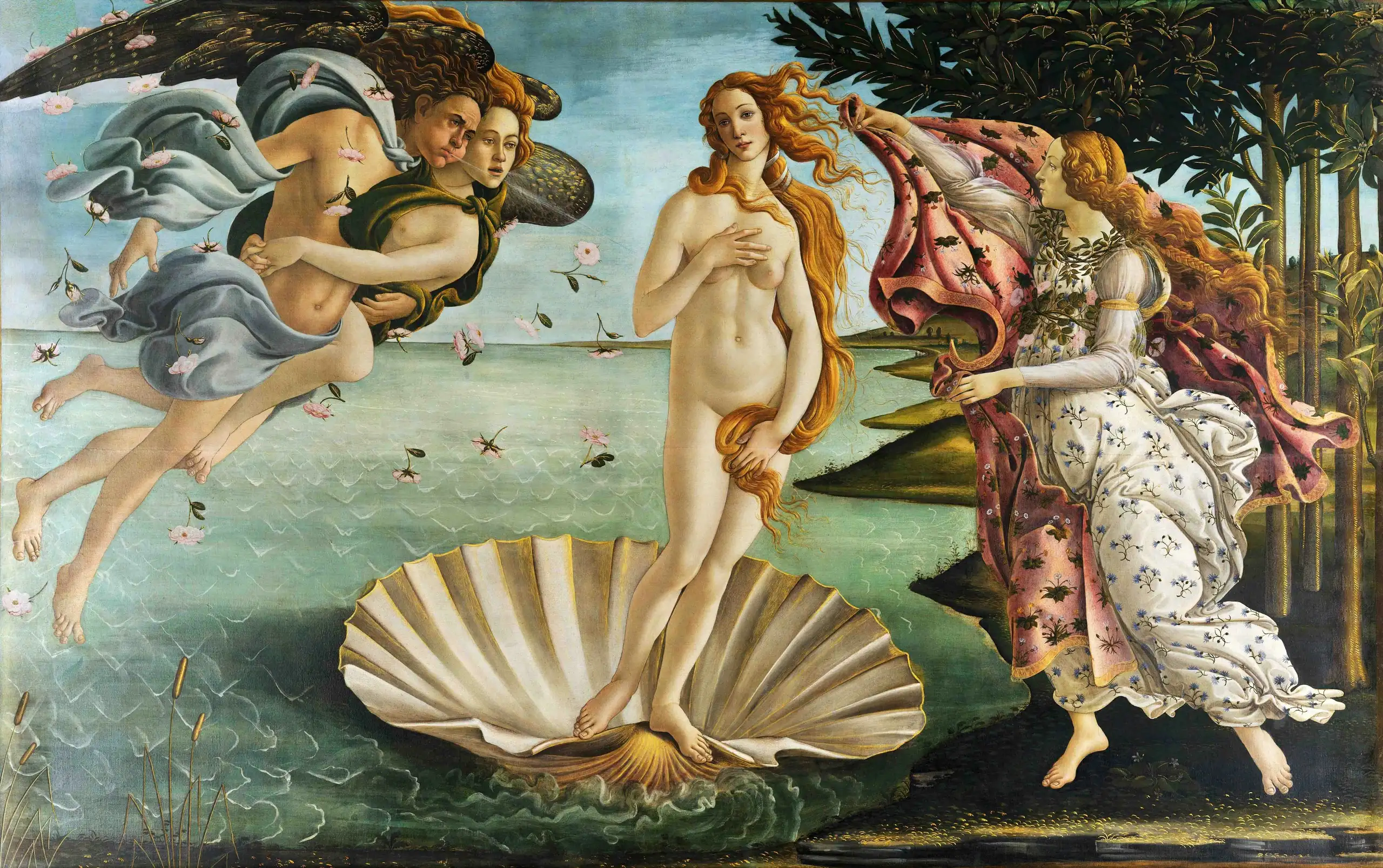
Sandro Botticelli was an Italian painter and draftsman of the Early Renaissance, born in Florence around 1445 and dead there by May 17, 1510. He is the artist behind The Birth of Venus and Primavera, two of the most reproduced images in Western art, both housed in the Uffizi Gallery. His career was built on Medici patronage and a steady output of religious panels, altarpieces, and round Madonna tondos that made him one of the busiest painters in late 15th-century Florence. For nearly three centuries after his death his name faded from view, until the Pre-Raphaelites and Victorian critics revived him in the late 1800s. Today his works anchor major museum collections, and in 2026 the Uffizi reinstalled his two most famous mythologies face to face as part of a renovation. His linear, graceful style shaped generations of artists who came after, and he remains a fixed point in any account of Florentine Renaissance painting.
Early Life & Background
He was born Alessandro di Mariano di Vanni Filipepi in the parish of Ognissanti, Florence, around 1445, the son of a tanner named Mariano. The nickname Botticelli, meaning little barrel, is usually traced to his elder brother Giovanni, a portly man called Botticello, though some accounts link it to a goldsmith he trained under. According to Vasari, the young Sandro first learned goldsmithing before entering the workshop of Fra Filippo Lippi around 1462. Lippi's linear elegance and soft facial types left a permanent mark on him. He later absorbed the muscular energy of Antonio Pollaiuolo and the sculptural clarity of Andrea del Verrocchio. By about 1470 he had his own independent workshop in Florence. His first documented commission came in 1470, when he painted Fortitude for the Tribunale della Mercanzia, a work that showed his early command of allegorical figure painting. Around 1474 he spent several months working in Pisa. The following year brought the commission that changed his standing: an Adoration of the Magi for Santa Maria Novella, packed with Medici portraits, including Lorenzo the Magnificent and, by tradition, Botticelli himself at the far right. That painting opened the door to the Medici circle and set the stage for everything that followed.
Career Growth
The Medici connection turned Botticelli into a painter of the first rank. By the late 1470s he was producing both religious works and private mythologies for the family's inner circle. Primavera, likely painted around 1480 for Lorenzo di Pierfrancesco de' Medici, and The Birth of Venus, from about 1484 to 1486, were among the first large-scale near-life-size depictions of pagan goddesses since antiquity, and the Venus was painted on canvas rather than panel. In 1481 Pope Sixtus IV summoned him to Rome to fresco the Sistine Chapel walls. He contributed The Temptation of Christ, The Trials of Moses, and The Punishment of the Sons of Korah before returning to Florence in 1482, working alongside Perugino, Ghirlandaio, and Cosimo Rosselli. The 1480s were his most commercially successful decade. He produced celebrated round Madonnas, including the Madonna of the Magnificat and the Madonna of the Pomegranate, a format he helped popularize, typically measuring 115 to 145 cm across. The only painting dated by his own hand is the Mystic Nativity in London's National Gallery, inscribed 1501. In the 1490s the preacher Savonarola's influence pushed his style toward a more personal, mannered, and eventually archaic mode, turning away from the High Renaissance direction being forged by Leonardo and younger artists.
Career Timeline
Public Image & Style
In his own day Botticelli was known as a master of line and grace, a painter whose figures seemed to move with an almost musical rhythm. His public persona was that of a trusted Medici artist, busy, prolific, and stylistically recognizable. Later centuries recast him as a tragic figure, the painter who supposedly burned his own work in Savonarola's bonfires and died poor and forgotten. That image, though unverified, stuck. The Pre-Raphaelites in the late 19th century remade him again, this time as a proto-Romantic, a painter of dreamy, melancholy beauty. Today his public image is split between the blockbuster familiarity of The Birth of Venus and the scholarly appreciation of his linear draftsmanship. He is one of the few Renaissance painters whose name is instantly recognizable to people who have never set foot in a museum.
Fame & Fandom (iFAMOUS Rankings)
iFANN has not yet collected fame data for Sandro Botticelli, so there is no published ranking to report. His fame rests on a different kind of measurement: the ubiquity of The Birth of Venus in textbooks, posters, and pop culture. The painting has become a shorthand for Renaissance beauty, reproduced on everything from coffee mugs to Warhol silkscreens. His audience is not a formal fandom with a name or organized campaigns. It is a loose, global public of museum visitors, art students, and casual admirers who recognize the image even if they cannot name the artist. In that sense his fame is visual rather than personal. He was not on the September 2026 iFAMOUS Rankings flagship list, and no fan club or organized following exists in any documented form.
Interesting Facts and Legends
Botticelli was among the first painters to make the round tondo format a staple for domestic devotional art, a shape that became a hallmark of Florentine households. In June 2026 Italy showcased a Botticelli masterpiece in India while planning a 2027 year of culture and tourism. A long-standing story claims Botticelli asked to be buried at the feet of his muse Simonetta Vespucci in the Church of Ognissanti, though no contemporary document confirms it. Researchers reported in October 2026 that a clue in The Birth of Venus suggests Simonetta died of a brain tumour, a 550-year-old medical case they say may now be solved, though the interpretation remains debated. He died centuries before modern awards, Halls of Fame, or magazine covers existed, so there are no Oscars, Grammys, Walk of Fame stars, or TIME covers to list. His height is not documented.
Family & Personal Life
Botticelli was the son of Mariano di Vanni Filipepi, a tanner, and grew up in the Ognissanti quarter of Florence. He had at least one elder brother, Giovanni, whose nickname Botticello, or little barrel, is widely believed to have given Sandro his own nickname. His household in later life is not well documented, but he remained based in the Ognissanti parish for most of his life. The closest thing to a family story in the record is the tradition linking him to Simonetta Vespucci, the young married noblewoman who served as his model for Venus and other figures. She died in 1476 at about 22, and the claim that Botticelli loved her or asked to be buried near her is folklore rather than documented biography. His birth sign is conventionally given as Pisces, which is why some reference works carry a March 1 placeholder date, though no exact birthdate survives.
Notable Connections
Relationships & Dating History
Almost nothing is documented about Botticelli's romantic life. He never married and had no known children. The only relationship that appears in the historical record is his connection to Simonetta Vespucci, a Genoese-born Florentine noblewoman married to Marco Vespucci. She was widely regarded as the model for Venus and several of his female figures. Simonetta died in 1476 at about 22, and the story that Botticelli loved her and asked to be buried at her feet is long-standing tradition rather than verified fact. No other romantic partner is recorded, and as of his death in 1510 he had no spouse or partner. Any modern-style dating history simply does not exist in the sources.
- RumouredSimonetta Vespucci? - 1476Tradition holds that Botticelli was in love with his muse, but no contemporary source confirms a romantic relationship.
Death & Aftermath
Died
May 17, 1510 (aged 65)
Death Place
Florence, Tuscany, Italy
Cause of Death
Undisclosed
Florence recorded the passing of Alessandro di Mariano di Vanni Filipepi, the painter everyone called Sandro Botticelli, in the spring of 1510. Britannica gives the date as May 17, 1510, and the National Gallery dates his life to about 1445 to 1510; he was roughly 64 or 65 years old. He died in Florence, the city where he had spent nearly all his life, and the age of 64 often attached to him is simply his age at death, not a living age.
What happened in his final days rests on tradition rather than documentation. No surviving contemporary source records a cause of death. The durable story, repeated for centuries, is that Botticelli died in poverty and obscurity after Savonarola's rise and the shift toward the High Renaissance had pushed his work out of fashion. That account is a later biographical narrative, not a documented record of his last hours. The tradition of his burial in the Church of Ognissanti, near his muse Simonetta Vespucci, is likewise long-standing but not independently confirmed in the surviving sources.
Public reaction at the time is not recorded in any surviving account of tributes, gatherings or memorial observances. His reputation then languished for nearly 300 years before the nineteenth-century revival that restored him to the canon. Commemoration has since been institutional. In June 2026 the Uffizi Gallery in Florence reinstalled Primavera (c. 1480) and The Birth of Venus opposite one another as part of a broader museum overhaul, and Andy Warhol's 1984 Details of Renaissance Paintings (Sandro Botticelli, Birth of Venus, 1482) kept his imagery circulating in pop culture. He is now routinely named among the greatest painters of the Florentine Renaissance.
Net Worth (Estate Value)
No meaningful net worth can be calculated for a painter who died in 1510. His estate passed through ordinary family inheritance in Florence, and no modern market valuation of his personal holdings exists. His paintings now command prices in the tens of millions when they appear at auction, but those sales involve later owners, not the artist. For this reason iFANN does not publish a dollar figure for Botticelli, and any quoted sum would be a modern invention rather than a record of his finances.
Awards & Accolades
Known For
The Birth of Venus
c. 1484-1486 · Painter
Primavera
c. 1480 · Painter
Adoration of the Magi
c. 1475 · Painter
Madonna of the Magnificat
c. 1481 · Painter
Mystic Nativity
1501 · Painter
Keywords
Sources
Quick Facts
- Profession
- painter, draftsman
- Born
- c. 1445, Florence
- Died
- May 17, 1510, Florence
- Nationality
- Italian (Florentine)
- Period
- Early Renaissance
- Patrons
- Medici family
- Notable works
- The Birth of Venus, Primavera, Adoration of the Magi
- Burial
- Church of Ognissanti, Florence (traditional)
Personal Details
- Full Name
- Alessandro di Mariano di Vanni Filipepi
- Education
- Workshop of Fra Filippo Lippi
Frequently Asked Questions
What is Sandro Botticelli famous for?
Who was Botticelli in love with?
What is Botticelli's most famous painting?
Why was The Birth of Venus controversial?
How do you pronounce Botticelli?
Similar People
Join the community
fans discussing