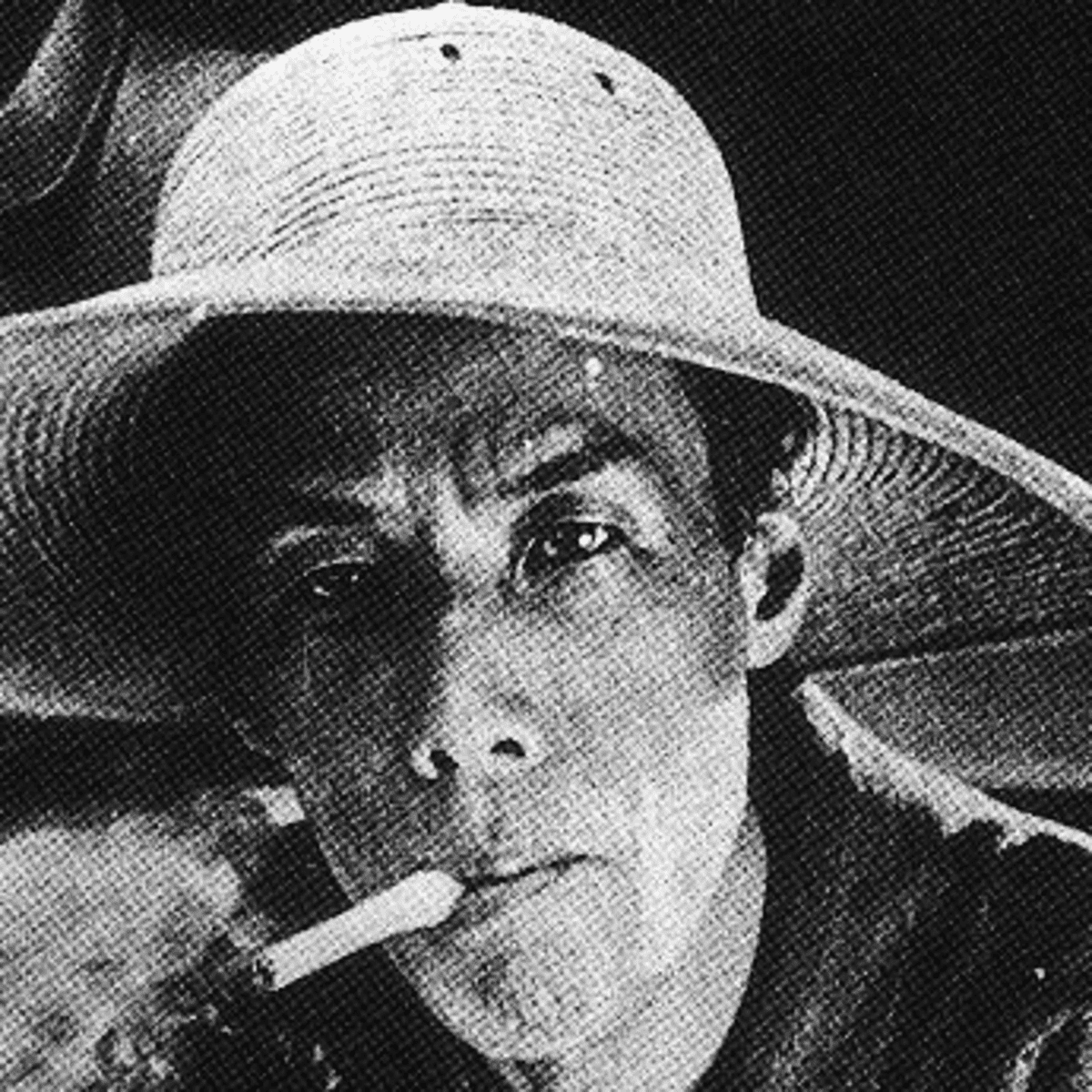
Ryūnosuke Akutagawa
 Japan
JapanAlso known as: Akutagawa Ryūnosuke, Chōkōdō Shujin
Birthday
March 1, 1892
Birth Sign
Pisces
Birthplace
Tokyo, Japan
Age
Died at 35
About
Ryūnosuke Akutagawa (1892–1927) was a celebrated Japanese writer, widely regarded as the father of the modern Japanese short story. He is known for his sharp prose, profound psychological explorations, and a willingness to delve into the darker aspects of the human psyche. His literary output, which included over a hundred short stories, essays, and poems, also saw him translated into English as one of the first Japanese modernists. Akutagawa's stories often reinterpreted traditional Japanese narratives with a modern sensibility, cementing his reputation and influencing generations of writers.
His most famous works include the short stories Rashōmon (1915), The Nose, In a Grove (1922), The Spider's Thread, Hell Screen, and The Life of a Stupid Man. These narratives blended the grotesque with the philosophical, drawing on classical Japanese tales and historical events but infusing them with a modern psychological sensibility. Despite his relatively short life, his influence on Japanese literature has been enduring.
Akutagawa died by suicide on July 24, 1927, at the age of 35. Japan's most prestigious literary award, the Akutagawa Prize, is named in his honor and continues to be awarded annually, recognizing outstanding new literary talent. His name carries weight in Japan and beyond; his face appeared on the 500-yen note from 1951 to 1958. Today, readers still find his work startlingly fresh, and his stories continue to be translated, adapted, and debated worldwide.
Early Life & Background
Ryūnosuke Akutagawa was born on March 1, 1892, in Tokyo, into a Japan undergoing rapid westernization. His mother, Fuku, suffered from mental illness, and he was adopted by her older brother, Akutagawa Dōshō, whose surname he took. This early family upheaval left a lasting mark on his psyche, and themes of madness and identity recur throughout his work.
He was a bright and bookish child, drawn to Chinese classics and Japanese literature. He attended Tokyo Imperial University, where he studied English literature and became part of a literary circle that included future luminaries like Kan Kikuchi and Masao Kume. During his university years, he began writing seriously, publishing his first stories in the group's coterie magazine, Shinshichō.
His breakthrough came in 1915 with Rashōmon, a story that reworked a twelfth-century tale into a chilling exploration of moral ambiguity. It was followed quickly by The Nose in 1916, which earned the praise of Natsume Sōseki, then Japan's most celebrated novelist. Sōseki's encouragement gave Akutagawa the confidence to pursue writing full-time, and by the late 1910s he was a rising star in the Japanese literary world.
Career Growth
Akutagawa's career took off after the success of Rashōmon and The Nose. He published steadily throughout the 1910s and 1920s, producing a remarkable body of work that included In a Grove (1922), The Spider's Thread (1918), Hell Screen (1918), and The Life of a Stupid Man (1927). His stories often blended the grotesque with the philosophical, drawing on classical Japanese tales and historical events but infusing them with a modern psychological sensibility.
In 1921, he was sent to China as a correspondent for the Osaka Mainichi Shimbun, an experience that broadened his worldview and influenced later works. He also wrote essays and criticism, showing a sharp, skeptical mind that resonated with readers.
His health began to decline in the mid-1920s, plagued by insomnia, anxiety, and hallucinations. Despite this, he continued writing until the very end. His final story, The Life of a Stupid Man, is a thinly veiled autobiographical account of his own mental deterioration. He died on July 24, 1927, at his home in Tabata, Tokyo, from an overdose of barbital.
After his death, his friend Kan Kikuchi established the Akutagawa Prize in 1935, which remains Japan's most prestigious literary award for new writers. His works have been translated into numerous languages, and his influence extends far beyond literature into film, anime, and video games. In April 2026, a new book titled "Hell of Solitude" by Polly Barton was released, focusing on his work. A visually grey visual novel called KOKUTOTO, inspired by his short story "Rashomon," was released in March 2026. The anime series "Bungo Stray Dogs" features a character named Ryūnosuke Akutagawa, with Kenshō Ono voicing the role in "Bungo Stray Dogs Wan! 2," which premiered in July 2026.
Career Timeline
Public Image & Style
Akutagawa is often portrayed as a tormented genius, a man whose brilliant mind was shadowed by madness and despair. This image, shaped by his tragic death and his confessional final works, has made him a romantic figure in Japanese literary culture. He is celebrated for his intellectual rigor, his dark wit, and his unflinching look at human nature.
Fans of classic literature admire his ability to transform old tales into something startlingly modern, and his stories are often taught in schools and universities. His works have a devoted following among readers who appreciate psychological depth and moral ambiguity. In popular culture, he has been reimagined as a character in the anime and manga series Bungo Stray Dogs, where he is depicted as a fierce and powerful fighter, reflecting his literary reputation.
He was a great admirer of the works of Edgar Allan Poe and Charles Baudelaire, and their influence can be seen in his dark, psychological tales. David Peace's work "Patient X" is a review of a book about Akutagawa's life, published in April 2018. An interview regarding Akutagawa's "Kappa" was published in June 2023.
Fame & Fandom
Ryūnosuke Akutagawa remains a towering figure in global literature, his name instantly recognizable to scholars and readers of classic fiction worldwide. Despite this enduring influence, iFANN's Global Fame Engine has evaluated this person, but they do not currently hold a placement in the published rankings (Global Top 1,000 or a Top-100 scope list). The absence of a numerical ranking reflects the unique nature of his legacy; he is a historical author whose fame operates through academic study and literary adaptation rather than the viral metrics that drive modern celebrity charts. His audience consists entirely of literary scholars, students, and devotees of Japanese modernism who engage with his work through university courses and translation projects. There is no official or unofficial fandom name for Ryūnosuke Akutagawa. He does not possess a dedicated community of fans who call themselves by a specific moniker. Instead, his cultural presence is maintained through institutions like the Akutagawa Prize, which continues to shape the Japanese literary landscape, and recent adaptations such as the anime franchise Bungo Stray Dogs. While these modern interpretations generate secondary interest among anime fans, the core engagement remains rooted in the reading of his original texts. The narrative surrounding him is one of intellectual intensity and tragic brevity, defined by his suicide in 1927 at age 35. This biographical fact serves as the central pillar of his legend, reinforcing the image of a tortured genius who could not endure the weight of modernity. Unlike contemporary stars, Akutagawa has had zero interaction with fans since his death, yet his fictionalized avatar remains a potent cultural icon in video games like KOKUTOTO and animated series.
Interesting Facts and Legends
Akutagawa was known for his art name, Chōkōdō Shujin, which he used on some of his earlier works. He suffered from severe insomnia and anxiety in his later years, writing candidly about his mental illness before his final days. A great admirer of Edgar Allan Poe and Charles Baudelaire, their dark psychological influence permeates his tales. His story In a Grove provided the narrative structure for Akira Kurosawa's classic film Rashomon, which won the Golden Lion at the Venice Film Festival in 1951. The Akutagawa Prize is awarded twice a year, in January and July, serving as one of Japan's most coveted literary honors. Notable quotes attributed to him include: "A man sometimes devotes his life to a desire which he is not sure will ever be fulfilled. Those who laugh at this folly are, after all, no more than mere..." Legends surrounding him often focus on his failed romance with childhood friend Yoshida Yayoi, a heartbreak cited as a catalyst for his depression. The story of his suicide on July 24, 1927, taking an overdose of veronal, stands as the definitive tragedy of the "tortured genius," a narrative deeply influencing Osamu Dazai and cementing his mythos in Japanese folklore.
Notable Quotes
“A man sometimes devotes his life to a desire which he is not sure will ever be fulfilled. Those who laugh at this folly are, after all, no more than mere...”
“Life is not worth living, but neither is it worth dying for.”
“The strongest of all human passions is not love, but the desire to be loved.”
“Man is not a rational animal; he is a rationalizing animal.”
“The most dangerous thing in the world is a man who has nothing to lose.”
Family & Personal Life
Ryūnosuke Akutagawa was adopted by his mother's older brother, Akutagawa Dōshō, after his mother, Fuku, suffered from severe mental illness. He grew up in the Akutagawa household, where he was raised alongside his cousins. He was married to Fumi Tsukamoto, and the couple had three children together. Their eldest son, Hiroshi, later became a noted writer and translator.
Akutagawa's relationship with his wife was reportedly strained by his mental health struggles. He became involved with a woman named Kaneko, a friend of the family, which he fictionalized in some of his later stories. Despite these difficulties, Fumi remained with him until his death, and she later helped preserve his literary legacy, outliving him by many years.
Notable Connections
Ryūnosuke Akutagawa was closely associated with several key figures in Japanese literature. His mentor, Natsume Sōseki, encouraged his early writing. He was friends with novelists Kan Kikuchi and Masao Kume, with whom he formed the literary circle around the magazine Shinshichō. His wife, Fumi Akutagawa, and their children, especially his son Hiroshi, also played significant roles in his life and legacy.
Relationships & Dating History
Akutagawa's personal life was marked by a complex marriage and a tragic love affair. He married Fumi Tsukamoto in 1918, and they had three children together. Their marriage was strained by Akutagawa's mental health issues, and he became involved with a woman named Kaneko, who was a friend of the family. This affair, which he fictionalized in his later works, added to his guilt and despair.
Despite the affair, he remained married to Fumi until his death in 1927. After his death, Fumi worked to preserve his literary legacy, and she outlived him by many years.
- MarriedFumi Akutagawa1918 - 1927Married in 1918; remained together until his death in 1927.
- DatedKaneko1925 - 1927An affair that caused him great guilt and was fictionalized in his later stories.
Death & Aftermath
Died
July 24, 1927 (aged 35)
Death Place
Minami-Aoyama, Tokyo
Cause of Death
Overdose of barbiturates (veronal)
Ryūnosuke Akutagawa died on July 24, 1927, at his residence in Minami-Aoyama, Tokyo. The cause was an overdose of barbiturates, specifically veronal, a fact confirmed by his family and attending physicians rather than through a formal police inquest or coroner's autopsy report. In his final days, the celebrated writer had documented severe hallucinations and paranoia in his last diary entries, Kappa and Hell , while completing manuscripts for works like "Hell Screen" before becoming unable to leave his home. His death was met with immediate mourning across the Japanese literary community, where peers described him as a genius extinguished by illness. Osamu Dazai later cited this tragedy as a significant influence on his own writings and eventual self-inflicted death. Tributes appeared swiftly in major journals, sparking a surge in reprints and discussions within literary circles.
A private funeral ceremony took place four days later on July 28, 1927, at the Sōtō Buddhist temple in Tokyo, attended only by close friends, fellow writers, and family members. He was cremated and interred at a cemetery in the Minato ward. Posthumously, his legacy grew rapidly; the Akutagawa Prize was established in 1935 by Bungeishunjū to honor his contribution to short fiction. His estate continued to be managed by his family and foundations, ensuring his stories remained in print globally. Adaptations soon followed, most notably Akira Kurosawa's 1950 film Rashomon , which brought international attention to his work and cemented his status as a pivotal bridge between traditional narratives and modernist experimentation.
Net Worth (Estate Value)
$10 Million
iFANN Editorial Team estimate
As a writer in the early 20th century, Akutagawa's income came from his published works, essays, and his job as a correspondent for the Osaka Mainichi Shimbun. He was not wealthy by modern standards, but he earned enough to support his family. His estate, however, has grown significantly since his death. The rights to his works have been carefully managed, and his stories continue to sell in Japan and internationally. Posthumous earnings include royalties from book sales, translations, and adaptations. His works have been adapted into films, television dramas, anime, and even video games, each generating licensing fees. The most famous adaptation, Akira Kurosawa's Rashomon, continues to be screened and studied, ensuring ongoing revenue. Per iFANN's editorial analysis, the Akutagawa estate is estimated to be worth $10 Million. The estate is managed by his descendants, who have been careful to preserve his literary legacy while also commercializing his name through merchandise and events.
Awards & Accolades
View 5 records, honours and achievementsKnown For
Rashōmon
1915 · Author
In a Grove
1922 · Author
The Nose
1916 · Author
The Spider's Thread
1918 · Author
Hell Screen
1918 · Author
Keywords
Sources
Quick Facts
- Profession
- writer, novelist, screenwriter
- Born
- March 1, 1892
- Birthplace
- Tokyo, Japan
- Died
- July 24, 1927
- Death Place
- Tabata, Tokyo, Japan
- Gender
- Male
- Spouse
- Fumi Akutagawa
- Birth Sign
- Pisces
- Nationality
- Japanese
Personal Details
- Full Name
- Ryūnosuke Akutagawa
- Spouse
- Fumi Akutagawa
Frequently Asked Questions
Who is Ryūnosuke Akutagawa?
How did Ryūnosuke Akutagawa die?
What is Ryūnosuke Akutagawa's net worth in 2026?
What is Ryūnosuke Akutagawa best known for?
Is Ryūnosuke Akutagawa still alive?
Join the community
fans discussing